No, not every country has a national bird. Some countries have one designated by law or official proclamation, some have a bird that's widely recognized but never formally adopted by any government body, and some have nothing at all. The distinction matters more than most people realize, and knowing how to tell the difference will save you a lot of confusion when you're trying to look up the real status for a specific country.
Does Every Country Have a National Bird? How to Check

Marcus Chen
21 Apr 2026
What "national bird" really means

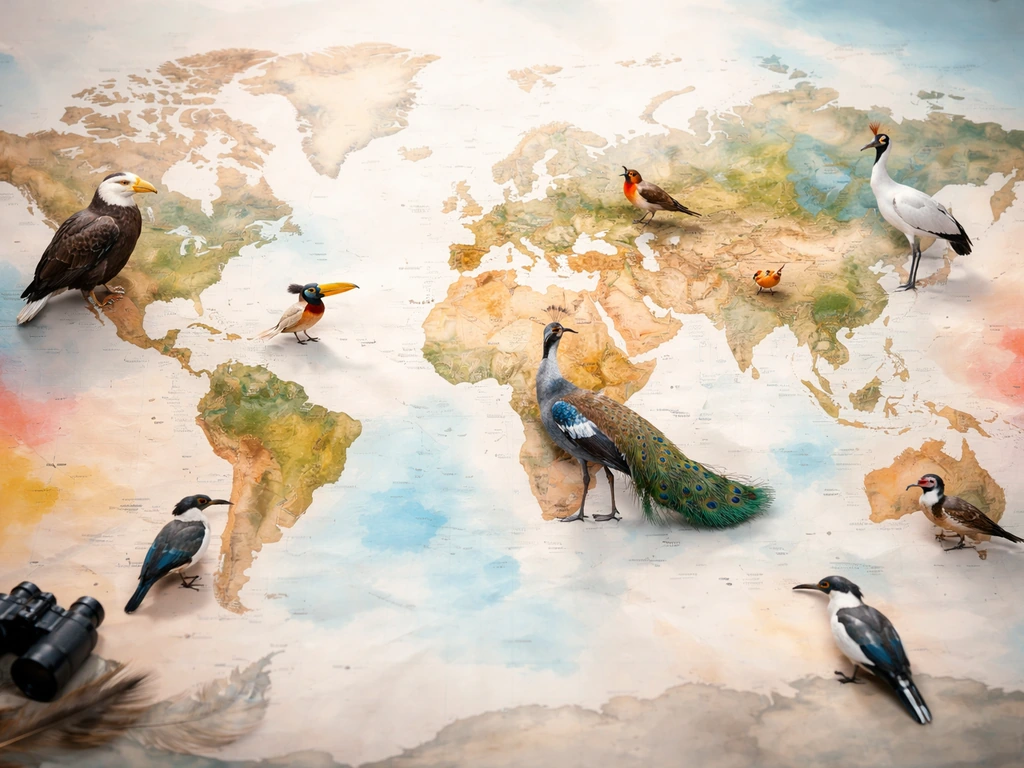
A national bird is a bird species chosen to represent a country as a symbol of its identity, culture, or natural heritage. But the word "national" covers a lot of ground. In practice, it can mean one of two very different things: a bird that a government has formally designated through law, proclamation, or an official gazette, or a bird that has simply become associated with a country through popular use, tradition, or a contest run by a non-government organization.
The formal route looks like this: the Philippines issued Proclamation No. 615 in 1995 explicitly declaring the Philippine Eagle as the national bird. The United States went even longer without a formal designation than most people know. The bald eagle appeared on the Great Seal for centuries and was treated culturally as the national bird, but it was not officially the national bird of the US until Public Law 118-206 was enacted on December 24, 2024. That law amended Title 36 of the United States Code to make it official. Before that date, the bald eagle was the commonly recognized national bird, not the legally designated one.
That gap between cultural recognition and legal designation is the core of what makes this question tricky. When a source says a country's national bird is a certain species, it's worth asking: is that based on a law or proclamation, or is it based on tradition and popular use?
The direct answer: not every country has one
When you look across all recognized sovereign states, the honest breakdown is that a significant number have an officially designated national bird, a somewhat larger group have a bird commonly associated with the country but no formal designation backing it up, and a meaningful number have no national bird of any kind, official or otherwise.
Canada is the clearest example of the middle category. Canadian Geographic ran a project and selected the Canada Jay as the national bird, but the federal government has never formally recognized the designation. There is no law, no proclamation, no government action. So while you'll see the Canada Jay listed in many places as Canada's national bird, it is not official. Malta is in a similar position: a Times of Malta investigation found no legal notice or proclamation in the Malta Government Gazette that ever officially declared a national bird, meaning the commonly cited bird got its title by popular mandate, not government action.
On the other end, countries like Mauritius designated a national bird relatively recently. The Mauritius Kestrel received official national bird status through a government designation in March 2022. This shows that the map of which countries have official national birds is not static. Countries add designations, change them, and occasionally drop them.
Three categories to keep in mind
When you're researching any country's national bird, it helps to mentally sort what you find into one of three buckets. This is the same framework that careful reference works use, and it cuts through a lot of the noise.
| Category | What it means | Example |
|---|---|---|
| Official national bird | Designated by law, presidential proclamation, executive order, or government gazette | Philippine Eagle (Philippines, Proclamation No. 615, 1995); Bald Eagle (USA, Public Law 118-206, 2024) |
| Commonly used / informal | Widely recognized or selected by a non-government body, but no formal government instrument backs it up | Canada Jay (Canada, selected by Canadian Geographic, not adopted by federal government); Malta's unofficial national bird |
| No national bird | No official designation and no widely accepted informal symbol either | Various newly formed states and countries that have simply never gone through a selection process |
Wikipedia's List of national birds actually spells this out in its methodology, noting that entries may be official, once official, or accepted as national symbols for other symbolic roles. That's a useful signal when you're skimming a list and trying to gauge how solid any given entry is.
Why some countries don't have a national bird (or have more than one)

There are several real reasons why gaps exist, and none of them are accidental.
- Newly formed states: Countries that gained independence relatively recently may not have gone through the process of formalizing national symbols. Establishing a constitution, a government, and basic institutions tends to take priority over designating a national bird.
- Colonial-era inheritance: Some countries inherited symbol systems from colonial powers that didn't include a national bird, and the post-independence government never added one.
- Different symbolism priorities: Not every country places the same cultural weight on a national bird. Some focus on national animals, flowers, or trees as their primary natural symbols instead.
- Process stalled at a non-government level: Like Canada, some countries have had informal selection processes run by cultural organizations or media outlets, but the government never ratified the result.
- Multiple candidates and political disagreement: If different regions or political groups each champion a different bird, no single designation may ever get enough consensus to pass into law.
The multiple-bird situation also comes up in a different way: some countries have a national bird in a broader symbolic role alongside a separate bird used as a state emblem. And historically, a country's national bird may have changed. A bird that was once officially designated might have been replaced, or its official status might have lapsed without a clear replacement being named. This is why sources sometimes list a bird as "once official" rather than currently official.
How to find and verify a country's national bird today
The most reliable way to verify a country's national bird is to follow a hierarchy of evidence, starting with the strongest sources and working down. Here's the approach that works consistently:
- Check for a national law or public law: Search for the country's name plus terms like "national bird law," "national bird proclamation," or "national symbols act." For the US, this is Public Law 118-206. For the Philippines, it's Proclamation No. 615. Government legislation databases or supreme court e-libraries often host the original instruments.
- Look for a presidential or executive proclamation: Many countries use executive proclamations rather than full legislative acts to designate national symbols. These are legally binding and count as official.
- Check the national government gazette: Official gazettes publish legal notices and government instruments. If a national bird designation appears there, it's official. If it doesn't, treat the claim with skepticism regardless of how many websites repeat it.
- Look for a national symbols agency or cultural agency page: Countries like the Philippines have agencies (such as the NCCA) that publish official national symbol information, often tied directly back to the legal instrument. These are strong secondary confirmation.
- Use reputable reference works as lower-confidence backup: Wikipedia's List of national birds is useful for a starting overview but explicitly mixes official and informal entries. Treat it as a pointer to investigate further, not a final answer.
- Cross-check with at least two independent sources: If both a government source and a credible reference work agree, and neither flags the designation as informal or disputed, you can feel reasonably confident in the answer.
One practical shortcut: if a country has a strong national symbols framework, its official tourism board or cultural ministry website will often list national symbols clearly. That's not as authoritative as the original law, but it's a fast way to get oriented before you dig deeper.
Handling disagreements, territories, and tricky cases
When sources disagree about which bird is correct
Disagreements between sources almost always come down to one source citing an official instrument and another citing popular usage or an older designation. When you see a conflict, go back to the primary source hierarchy above. The bird backed by a law, proclamation, or gazette entry wins. If neither bird has formal backing, note that both claims exist and treat the status as informal rather than picking one arbitrarily.
Territories and constituent countries vs sovereign states
This is one of the most common sources of confusion. Northern Ireland is a real example: it does not have an official national bird, and an oystercatcher was selected unofficially, but Northern Ireland is not a sovereign state. It's a constituent country of the United Kingdom. The UK itself has a separate national bird situation. Puerto Rico's legislative assembly approved the Puerto Rican tody as an official national bird in 2022, but Puerto Rico is a US territory, not a sovereign country. These cases are genuinely interesting symbolically, but you need to be precise about whether you're looking at a sovereign state or a dependent territory before drawing conclusions.
The same care applies to countries with very similar names. There are real distinctions between, say, the Republic of Congo and the Democratic Republic of Congo, or between different island nations whose names are easy to conflate. Always confirm the exact political entity you're researching before accepting a national bird claim.
When a designation is new or very recent
National bird designations can happen at any time. Mauritius got its official designation in 2022. The US formalized its bald eagle designation at the end of 2024. If a source you're looking at was written before a recent designation, it may still list the country as having no official national bird even though one now exists. Always check the date on your sources and, when in doubt, search for recent government announcements.
When a country is associated with a famous bird but it's not the national bird
Some birds are so closely tied to a country's identity that people assume they must be the national bird. The dodo, for instance, is deeply associated with Mauritius, and the emu is iconic in Australia. If you're asking whether the emu is actually a nation's official national bird, check which country officially designated it emu is the national bird of which country. If you're wondering whether the dodo is the national bird, check which country officially designated it dodo is national bird of which country. But iconic association is not the same as official designation. The same goes for the ostrich in various African countries, the owl (associated with wisdom in many European cultures), the crow in certain Asian nations, and the dove as a peace symbol across many countries. the owl is the national bird of which country. If you are asking whether the dove is a national bird, check which country officially designated it as such the dove as a peace symbol. If you are specifically asking about the crow as a national bird, check which country officially designated it the crow in certain Asian nations. Any of these birds might or might not be an official national bird, depending entirely on whether the relevant government has actually made a formal designation. The story behind why a particular bird was or wasn't chosen is often just as interesting as the designation itself. The ostrich is often discussed in national bird lists, but you should verify which country officially designated it ostrich national bird of which country.
The bottom line
Not every country has a national bird. A question like “owl national bird of which country” usually comes down to identifying the specific country and whether the claim is official or just commonly repeated. Of those that do, not every one has made it official through law or proclamation. When you're researching a specific country, the most useful thing you can do is identify whether the bird you're reading about is backed by a government instrument or just by tradition and popular recognition. That single question will answer most of the confusion you'll encounter across different sources.
The three-category framework (official, commonly used, no national bird) gives you a practical way to label what you find rather than treating every listed bird as equally authoritative. Start with government laws and proclamations, work down to cultural agencies, and use general reference lists only as a starting point. With that approach, you'll get a reliable answer for any country in a few minutes of targeted searching.
FAQ
How can I tell if a country’s national bird is legally official or just commonly used?
Check whether you can find a government instrument, such as a law, proclamation, or an entry in an official gazette. If the source only mentions a museum, tourism site, school project, or media outlet, treat it as popularly associated rather than formally designated.
What if two reputable sources list different birds for the same country, which one should I trust?
Prioritize the bird that is tied to the most direct government evidence. If neither bird is backed by a legal or gazette entry, you can record both claims as informal, instead of choosing one arbitrarily.
Can a bird be a national bird and a state emblem at the same time?
Yes. Some places use one bird as a national symbol and a separate bird or crest element for state or governmental branding. When comparing sources, distinguish “national bird” from “national emblem” or “coat of arms” contexts.
Do national bird designations ever change or get removed?
They can. A country may replace an earlier national bird, or an old designation may remain in circulation even after a new one is named. Always verify whether the designation is current by checking for recent government announcements, not just older reference pages.
If a source page is old, how do I avoid using outdated national bird information?
Look for the publication date, and then search specifically for the latest government action on national symbols. For example, even countries that were long assumed to have a national bird may only become legally official years later, so outdated pages can be misleading.
Does Northern Ireland or another non-sovereign region have a “national bird” like a country does?
Not in the same way. Non-sovereign regions may be assigned unofficial symbols by local groups, but they do not always have a government-level “national bird” designation equivalent to a sovereign state. Confirm whether you are researching a sovereign country or a dependent territory.
What should I do if I am researching a territory instead of a country, like Puerto Rico?
Treat it separately from sovereign-state designations. Territories can have official local symbols, but they are not the same as a sovereign country’s national status. Your conclusion should reflect that difference when you report the result.
How do I handle countries with similar names, for example the Republic of Congo vs the Democratic Republic of Congo?
Verify the exact political entity using its full official name and common abbreviation, then check the government sources for that specific jurisdiction. This prevents you from mixing symbols from neighboring or similarly named states.
Is the most famous or most iconic bird in a country always the national bird?
No. Cultural association can be strong even when there is no formal designation. Iconic birds may show up in lists, but you still need to confirm whether a government has officially adopted them.
Where is the fastest place to start if I need to verify a national bird for a specific country?
Start with government and official-symbol channels if they exist, such as a tourism ministry or cultural ministry page, then move up to the original law or gazette record when available. This reduces time while still steering you toward the highest-quality evidence.