
The kingfisher is the national bird of the Czech Republic. Specifically, it's the Common Kingfisher (Alcedo atthis), known in Czech as 'ledňáček říční'. One important nuance: this designation is widely recognized and cited across reference sources, but it is considered unofficial rather than enshrined in formal government legislation. That said, it is consistently listed as the Czech national bird in ornithological and national-symbol references, and you're unlikely to find any competing claim.
Kingfisher Is the National Bird of Which Country?

Marcus Chen
19 May 2026
Which kingfisher species exactly
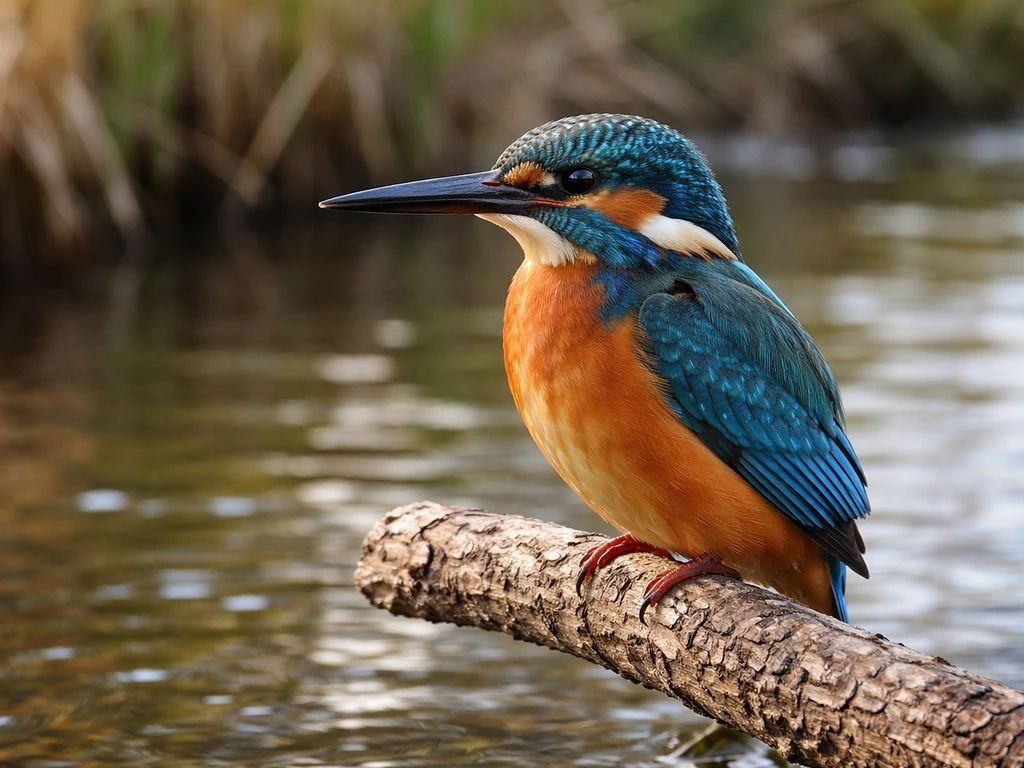
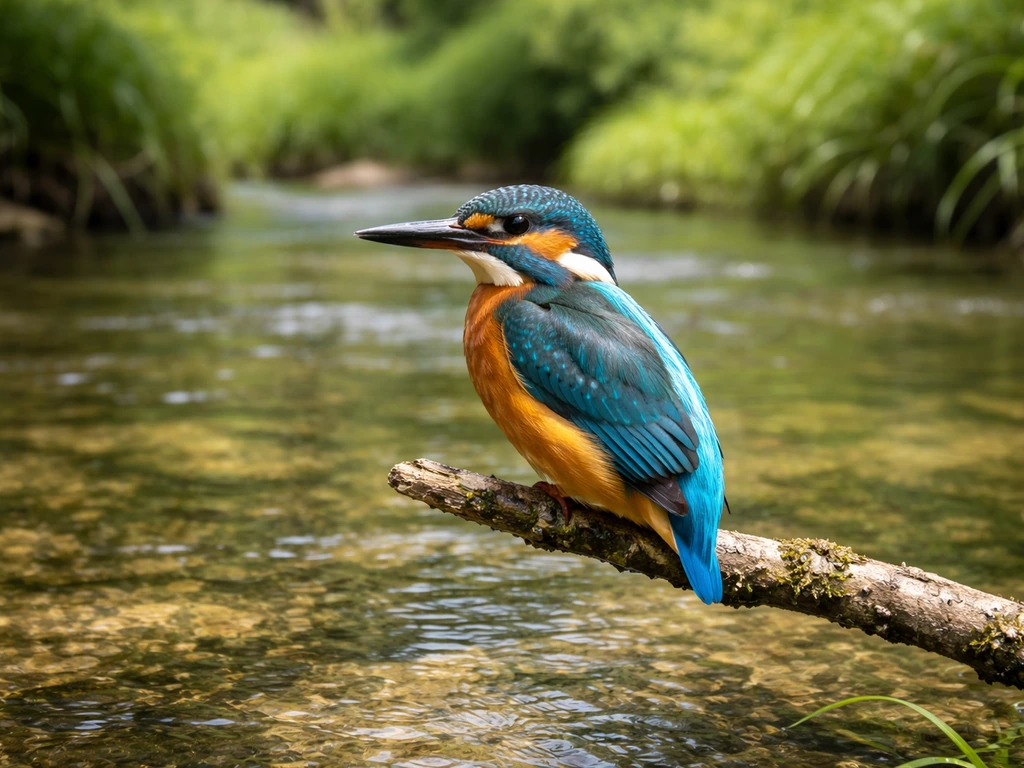
The species tied to the Czech national bird is Alcedo atthis, the Common Kingfisher. It goes by a few English names including Eurasian Kingfisher and River Kingfisher, but Alcedo atthis is the scientific name to look for when verifying this. In Czech, you will see it written as 'ledňáček říční', which translates roughly to 'river kingfisher'.
It's worth being explicit here because 'kingfisher' is a broad term covering hundreds of species worldwide. When the Czech national bird is discussed, it is never the Collared Kingfisher (Todiramphus chloris), the Belted Kingfisher of North America, or any tropical variant. It is specifically Alcedo atthis, the same brilliant blue-and-orange bird most people in Europe would picture if you said the word 'kingfisher'. ISOP Portál (portal.nature.cz) lists the Czech national kingfisher as ledňáček říční, i.e., Alcedo atthis It is specifically Alcedo atthis.
Why the Czech Republic chose the kingfisher
The Common Kingfisher is a bird that is deeply tied to rivers, streams, and clean water. It nests in steep riverbanks, dives for small fish with precision, and is almost never found far from a healthy waterway. That ecological identity maps well onto the Czech landscape, a country with a rich river heritage and a long tradition of connecting nature to national character.
Czech conservation and nature writing often frames the kingfisher as a living indicator of water quality. Because the bird needs clean, fish-rich water to survive, its presence signals a healthy ecosystem. Choosing it as a national symbol reflects a cultural pride in the country's rivers and natural environment, which feels like a more meaningful choice than a purely aesthetic one.
There is also the undeniable visual impact of the bird. The Common Kingfisher is one of the most striking birds in Central Europe, with iridescent blue-green upperparts and vivid orange underparts. Czech nature writing sometimes calls it 'létající drahokam', which means 'flying jewel'. For a bird representing a nation, that kind of immediate, unmistakable identity matters.
Official or unofficial? What you need to know
This is the one sticking point worth understanding. Unlike some national birds that are codified in law or formally declared by a government body, the Czech kingfisher designation does not appear to be backed by a specific statute or official government proclamation. Czech-language sources that list national symbols, including wiki-style reference lists covering Czech national emblems, mark the Common Kingfisher with a notation indicating it is not officially recognized in the formal legal sense.
In practice, this matters less than it sounds. The designation is consistent, widely repeated, and uncontested. Think of it the way some countries have widely accepted national dishes or national flowers that are culturally recognized without being written into law. The Czech kingfisher sits in that same category: accepted by convention, not by decree.
How to verify this quickly

If you want to confirm this for a school project, a quiz, or just for your own confidence, here are the most reliable places to check.
- Wikipedia's 'List of national birds' page: look for the Czech Republic row and you will see 'Common Kingfisher | Alcedo atthis' listed there.
- Czech-language Wikipedia or Czech national symbol reference pages: search 'Národní pták' (national bird) and you will find the ledňáček říční (Alcedo atthis) listed, along with a column indicating its official status.
- Czech nature and conservation databases such as portal.nature.cz (the ISOP portal): these confirm the species name 'Alcedo atthis' linked to 'ledňáček říční' in an institutional Czech context.
- Species-focused bird sites like Birda explicitly state that the Common Kingfisher is the national bird of the Czech Republic, which is a fast secondary confirmation.
The key thing to check when using any source is whether the page distinguishes between 'official' and 'unofficial' designations. If it does not, it may overstate the formality of the Czech claim. That said, every credible source agrees on the country and species, so the core answer is not in dispute. On its ecology page, NP České Švýcarsko uses the Czech name “ledňáček říční” for the species Alcedo atthis the Czech name “ledňáček říční” is used for Alcedo atthis.
Interesting facts and stories about the Czech kingfisher
The Common Kingfisher is genuinely hard to miss once you know what you are looking for, and genuinely hard to see if you don't. It moves in a straight, fast, low-flying line above water, a flash of electric blue that most people walk past without registering. Czech birdwatchers and naturalists often describe it as one of the most rewarding birds to spot precisely because it rewards patience along riverbanks.
The 'flying jewel' nickname is not just poetic. The iridescent blue of the kingfisher's back is not produced by blue pigment but by the microscopic structure of the feathers, which scatter light in a way that creates an intense, almost glowing color. The effect changes slightly depending on the angle of light, which makes the bird look different almost every time you see it.
From an ecological standpoint, the kingfisher is considered a bioindicator species in the Czech Republic. Its population health is used as a proxy for the health of the river systems it inhabits. Conservation programs tracking Czech river ecosystems often use kingfisher sightings as part of their monitoring data. That gives the national bird designation a practical dimension beyond symbolism.
The bird nests by drilling a horizontal tunnel into steep earthen riverbanks, sometimes up to a meter deep, where it lays and incubates its eggs. That kind of intimate dependence on the physical structure of a riverbank makes it an unusually site-specific bird, and another reason Czech nature writers connect it so strongly to the river landscape as a defining element of the country's natural identity.
How the kingfisher compares to other national birds
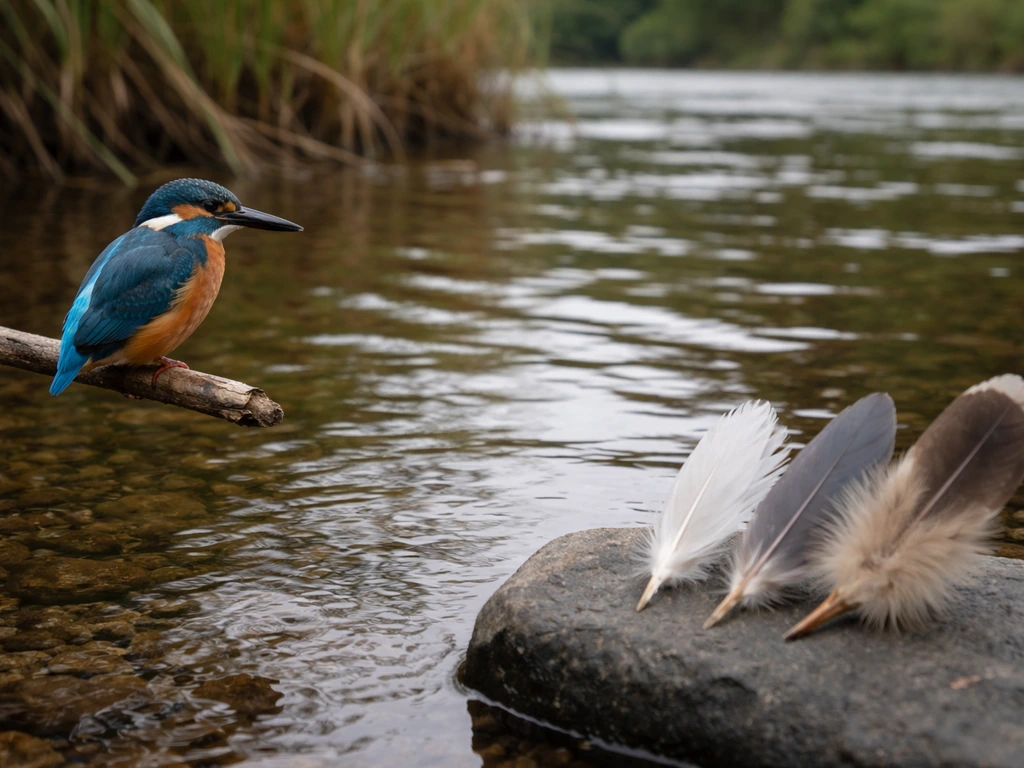
The kingfisher is a fairly unusual choice for a national bird when you look at what other countries pick. Many nations go for large, imposing birds: eagles, cranes, ibises. The giant ibis is the national bird of which country, and that fact is often asked about in quick geography and trivia contexts ibises. Others choose birds with obvious folklore connections, like the swan, which several European countries have strong cultural ties to. Because the swan is a national bird in some countries, it's often mentioned alongside the Czech kingfisher comparison. The kingfisher is small, water-dependent, and not traditionally tied to themes of power or strength. It is chosen more for its beauty, its ecological specificity, and its connection to a particular type of landscape.
Other waterbirds that come up in national-bird discussions include swans, ducks, and even penguins for certain island nations. A common question is where the duck is the national bird, and that varies by country. Some people also look up the penguin which country national bird question, but penguins are not the Czech national bird penguins for certain island nations. The kingfisher stands apart from those for being a freshwater, river-specific bird rather than a coastal or open-water species. That specificity is part of what makes it a fitting emblem for a landlocked Central European country with a river-rich interior.
FAQ
If the article says “kingfisher,” how do I make sure I am not mixing up the wrong species?
When people say “kingfisher,” they might mean different species from different regions. For the Czech national-bird claim, you should verify the common kingfisher specifically, scientific name Alcedo atthis, not a generic kingfisher label.
What is the quickest way to confirm whether the Czech kingfisher is official or just commonly cited?
Because the designation is described as unofficial, the best verification step is to look for wording that distinguishes formal government legislation from commonly used national-symbol references. If a source does not make that distinction, treat it as less reliable for the “official” angle.
What does “ledňáček říční” mean, and how do I connect it to the correct English name?
“Ledňáček říční” refers to the common kingfisher, and its literal translation centers on river habitat. When checking Czech-language lists, matching this name to Alcedo atthis is the safest way to avoid similar-sounding birds or regional variants.
How should I phrase the answer in a school assignment to be accurate?
If you use the bird in a presentation, you can say it is the commonly cited Czech national bird, while adding that it is not clearly tied to a specific statute. That phrasing keeps you accurate without undermining the commonly accepted trivia answer.
What practical reasons make the common kingfisher a good national symbol beyond appearance?
The key ecological detail is the bird’s strong dependence on clean, fish-rich freshwater and nesting in steep riverbank tunnels. If your assignment asks why it fits the symbol, you can point to its river-bioindicator role and site-specific nesting behavior, not just its color.
What field marks should I use to reliably identify the common kingfisher in Czech rivers?
For photos or sightings, look for a fast, low flight line above water and the distinctive blue-green upperparts with orange underparts. If you cannot see both color regions, rely on behavior and habitat (riverbanks) rather than color alone.
What should I do if I find another website naming a different kingfisher as the Czech national bird?
If you see a claim that a different kingfisher species is the national bird, it is usually a mismatch caused by the broad “kingfisher” term. For Czech, the default correction is to revert to Alcedo atthis and “ledňáček říční.”
If I need a legally official national bird for my report, where should I look next?
The article frames the designation as culturally accepted but not codified. If your teacher needs “official,” your next step is to search for a specific government act, presidential decree, or formal national emblem law rather than relying on lists of national symbols.
Next Articles

Penguin Which Country National Bird Officially Uses One?
Find which country officially names a penguin as national bird, plus how to verify and clear common mixups.
Pigeon Is the National Bird of Which Country
Find which country’s national bird is the pigeon and learn the symbolism and history behind it.
What Is the National Bird of Zimbabwe? Symbolism and Facts
Discover Zimbabwe’s national bird, its distinctive traits, and the history and symbolism behind the emblematic choice.