The scarlet macaw (Ara macao) is the national bird of Honduras. It was made official on June 28, 1993, under Decreto Legislativo No. Tunota also reports that Honduras declared the "Guara roja" (Ara macao) the national bird on June 28, 1993 under "blank" rel="noopener noreferrer">Decreto Legislativo No. 36-93.". 36-93. Hondurans call it the "guacamaya" or "guara roja," and it's one of the most visually striking national bird choices anywhere in the world.
Macaw Is the National Bird of Which Country? Answer

Marcus Chen
17 May 2026
Why Honduras Chose the Scarlet Macaw
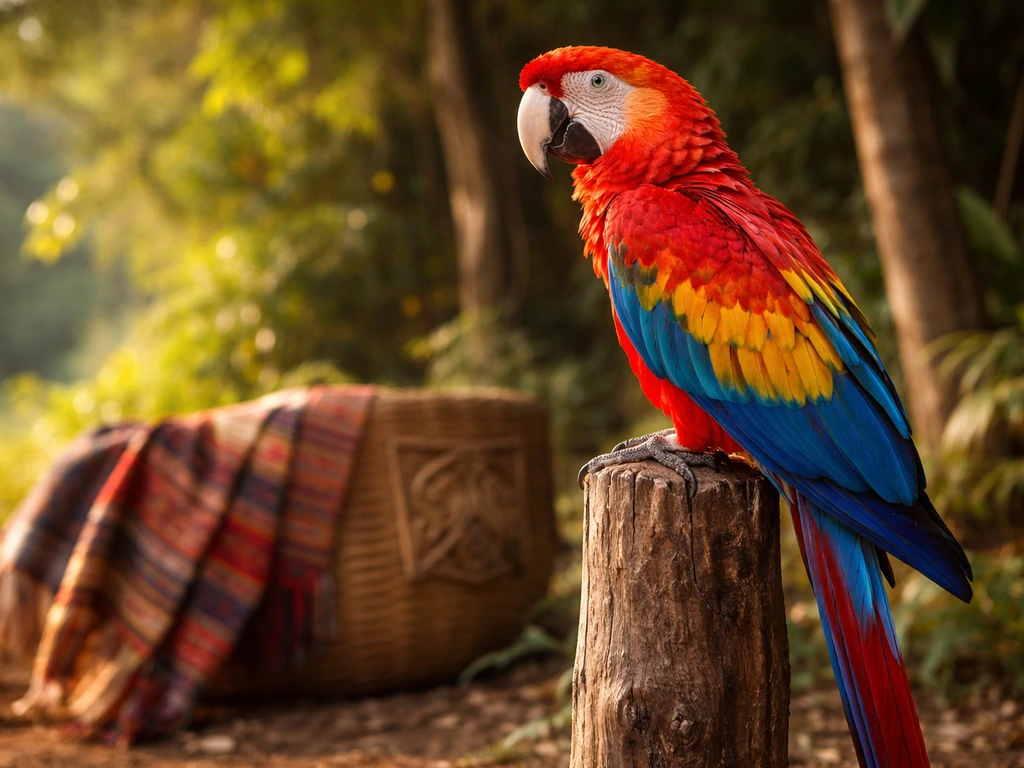
The scarlet macaw isn't just a pretty bird. For Honduras, it represents something deeply tied to the land, the people, and the country's indigenous heritage. The bird's vivid red, blue, and yellow plumage mirrors the colors that appear throughout Honduran cultural art, textiles, and craft traditions going back centuries before Spanish colonization.
The macaw has long held symbolic weight for indigenous peoples across Central America. For communities like the Miskito people in Honduras' Caribbean lowlands, the guara roja is not just a wild animal but a living part of the ecosystem and cultural identity. National Geographic has highlighted how indigenous Miskito conservation efforts are directly tied to protecting this bird, which gives the national symbol a living, practical meaning rather than just a ceremonial one.
The choice also signals something about Honduras' natural environment. The scarlet macaw thrives in humid evergreen forests, the same lowland forest habitats that define much of Honduras' biodiversity hotspots. Designating it as the national bird was partly a statement about what Honduras values and wants to protect.
How the Designation Became Official
The formal declaration came through Decreto Legislativo No. 36-93, signed on June 28, 1993. This is confirmed by multiple Honduran government and civic sources, including the Ministerio Público de Honduras (the public prosecutor's office), the Secretaría de Educación's official teaching guides, and the CONED civic education platform. The decree gave the guacamaya roja the status of "símbolo de fauna nacional" (national fauna symbol), which in practice functions as the national bird designation.
Before the formal 1993 decree, the scarlet macaw was already culturally prominent in Honduras. The legislative move essentially codified what many Hondurans already recognized informally. It placed the bird alongside Honduras' other national symbols: the white-tailed deer (national mammal), the mahogany tree (national tree), and the orchid (national flower).
What the Scarlet Macaw Actually Looks Like
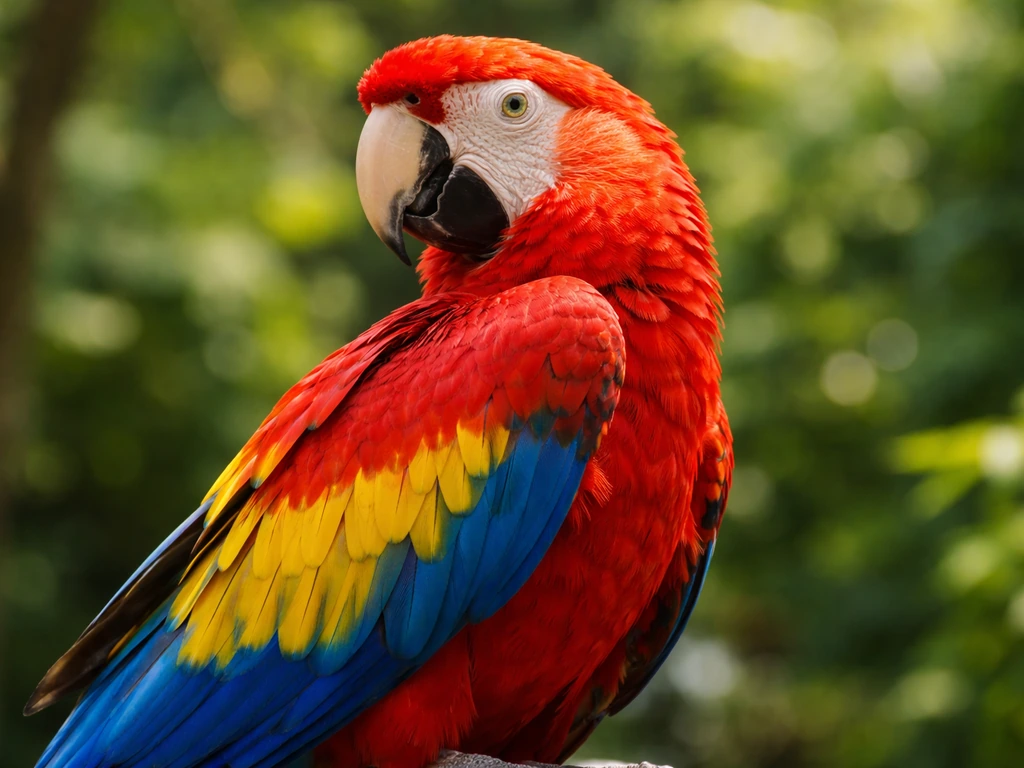
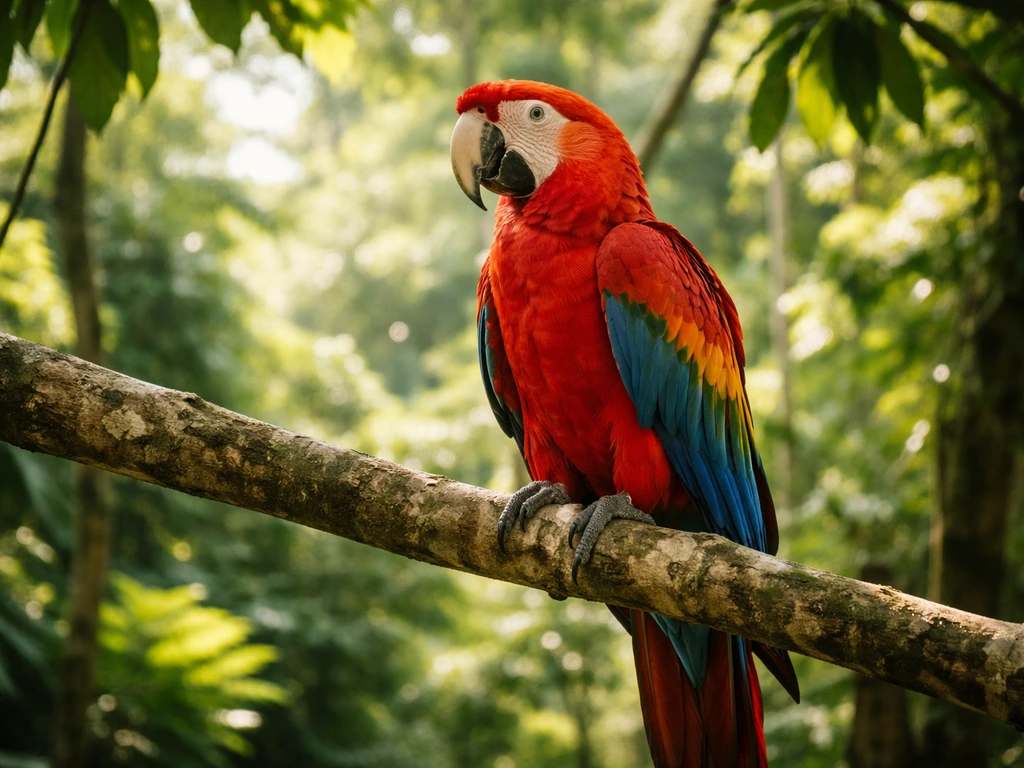
If you've never seen one in person, the scarlet macaw is hard to miss. Its body is predominantly bright red, with blue and yellow wing feathers that shift dramatically in sunlight. The tail is long and tapered, also in red and blue. The eyes have a yellow iris, and the face has a patch of bare white skin around the beak. Smithsonian describes it as recognizable for its "lively red, blue and yellow coat," which is about as accurate a shorthand as you'll find.
Ara macao is a large bird, typically measuring around 81 centimeters (roughly 32 inches) from beak to tail tip. Its range runs from southeastern Mexico through much of Central America, including Honduras, and into parts of South America, mostly in lowland forests up to about 1,000 meters in elevation.
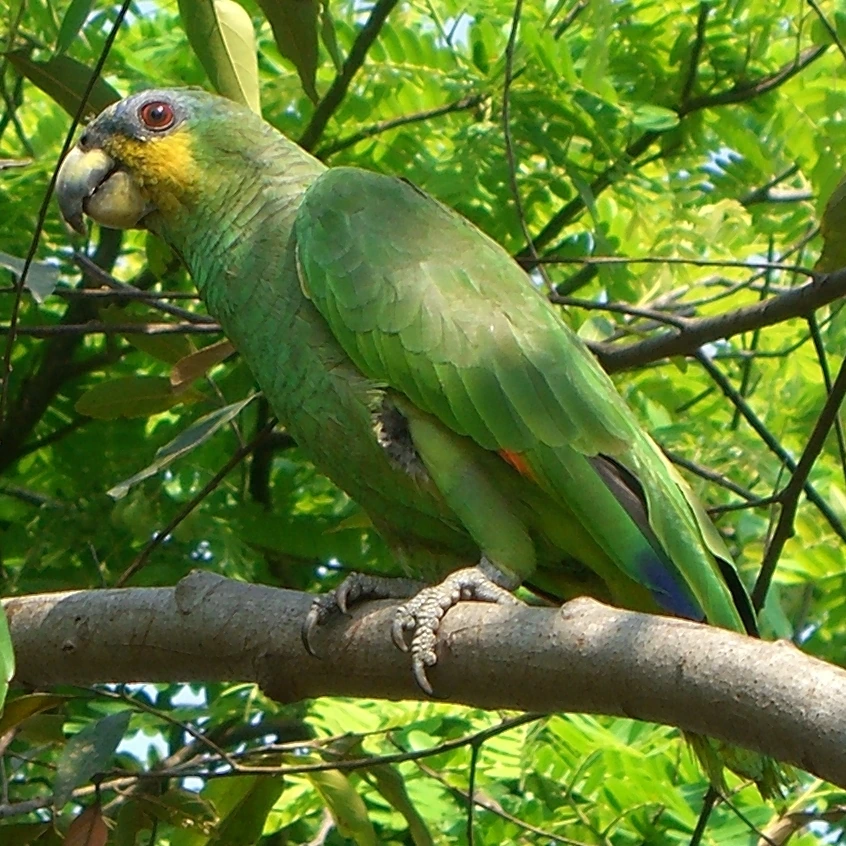
One thing worth knowing: the scarlet macaw is not the same as the great green macaw (Ara ambiguus), which also appears in Central American countries and is critically endangered. One thing worth knowing: the woodpecker is the national bird of which country, but the scarlet macaw is the species Honduras chose as its own national bird. These are two distinct species. The hornbill is often used as a national bird symbol in other countries, depending on the specific designation. If you're trying to identify Honduras' national bird specifically, you want the vivid red-dominant Ara macao, not the larger green-dominant Ara ambiguus. If you are also comparing other national birds, you may wonder which country has a hummingbird as its national bird hummingbird is national bird of which country. If you are asking about a different country, the national bird depends on that country's official symbols Honduras' national bird.
Key Facts at a Glance
| Feature | Detail |
|---|---|
| Scientific name | Ara macao |
| Common names | Scarlet macaw, guacamaya, guara roja |
| Body length | Approx. 81 cm (32 in) beak to tail |
| Plumage | Red body, blue and yellow wings, long red-blue tail |
| Eye color | Yellow iris |
| Lifespan | 40–50 years in wild; up to 80+ years in captivity |
| Habitat | Humid evergreen forests, lowlands up to ~1,000 m |
| Pair bonding | Monogamous, lifelong pairs |
| National bird of | Honduras (since June 28, 1993) |
Cultural Stories and Symbolism
The macaw has been woven into Mesoamerican culture for thousands of years. In pre-Columbian societies across Central America, macaw feathers were prized trade items and symbols of power and divine connection. The vivid red feathers, in particular, were associated with the sun and with fire in various indigenous cosmologies.
In Honduras, the guara roja's connection to indigenous communities remains very much alive. Conservation programs led by or in partnership with Miskito communities along the Caribbean coast have centered on protecting nesting sites for the scarlet macaw, treating the bird's survival as inseparable from cultural continuity. The national bird designation reinforces this link: protecting the guara roja means protecting something fundamental to Honduran identity.
The bird's vocalizations are also part of its cultural footprint. At clay licks (mineral deposits where macaws gather), groups of scarlet macaws are famously loud, with a distinctive, harsh "RAAAAH" flight call that carries long distances through the forest. In areas where the birds are present, that sound is itself a marker of wild, intact habitat. The World Wildlife Fund reports that scarlet macaws typically live in small flocks in the wild and are monogamous, forming bonded pairs. For Hondurans living near these forests, hearing the guara roja is part of the sensory landscape of home.
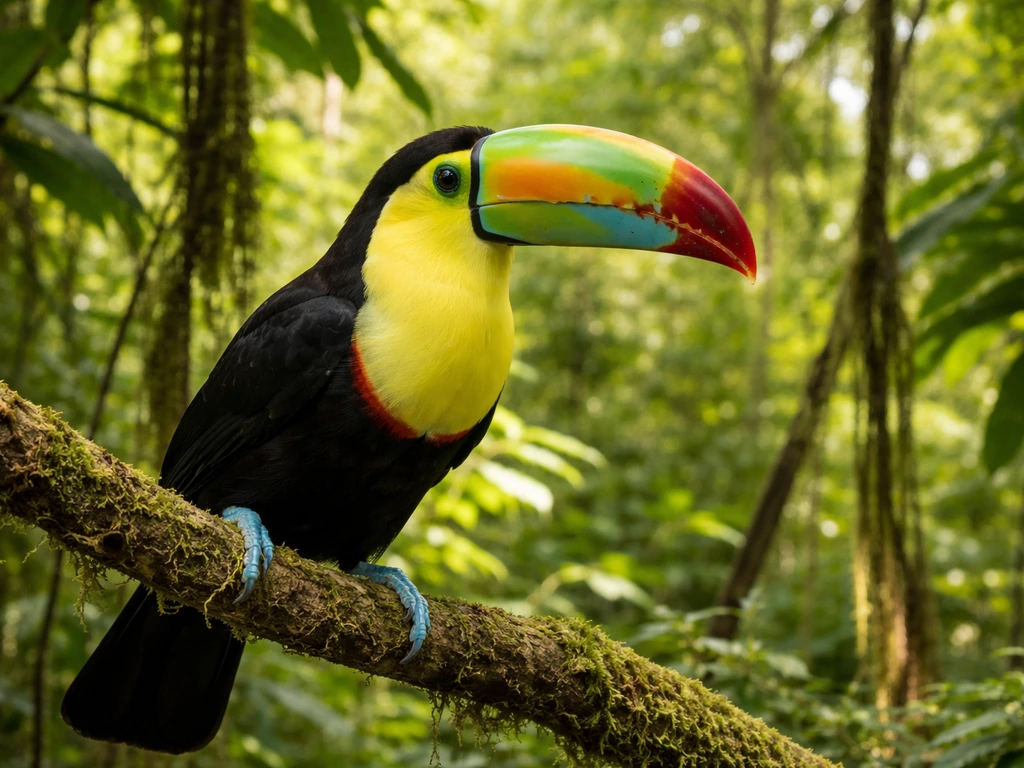
It's worth noting that the macaw family of birds appears in the national symbolism of more than one country in slightly different forms. The toucan and the Andean condor are national birds of other Latin American nations, and parrots (close relatives of macaws) hold national bird status in several Caribbean and island nations. The toucan, too, is the national bird of Colombia, which is why people sometimes ask about the country tied to it toucan is the national bird of Colombia. The scarlet macaw's role in Honduras is specific to that country's geography, indigenous traditions, and legislative history, which makes it distinct from those related designations.
How to Verify This for Yourself
If you need to confirm this for a school project, trivia night, or just personal certainty, here are the most reliable places to check:
- Wikipedia's scarlet macaw entry (Ara macao): Lists Honduras as the country and cites the 1993 decree. It's a good starting point and links to primary sources.
- Wikipedia's list of national birds: A cross-reference table covering every country. Look for Honduras and you'll see Ara macao confirmed.
- Smithsonian Magazine: Has published articles specifically calling the scarlet macaw the national bird of Honduras in the context of conservation reporting.
- National Geographic: Also references Honduras' national bird status for the scarlet macaw, particularly in coverage of Miskito conservation efforts.
- Honduras government and civic sources in Spanish: CONED (Honduras civic education platform), the Secretaría de Educación teaching guides (PDF), and the Ministerio Público de Honduras all confirm Decreto Legislativo No. 36-93 and the June 28, 1993 date. Searching for "guara roja ave nacional Honduras" in Spanish will surface these directly.
The decree number (No. 36-93) and the date (June 28, 1993) are the two most specific pieces of evidence you can use to pin down the claim. Any source that references both the species (Ara macao) and at least the year 1993 is drawing from the same official record. If a source you're checking omits the decree entirely, it's still likely correct, but these details are what separate a verified answer from a repeated assumption.
FAQ
Is the national bird of Honduras definitely the scarlet macaw, not another macaw species?
Yes, Honduras’ national bird is the scarlet macaw, Ara macao. Other macaws may live in the region, such as the great green macaw, but Honduras’ official designation in 1993 is tied to Ara macao specifically.
What do Hondurans commonly call the national bird?
In Honduras, people often refer to it as the guacamaya or the guara roja. The “guara roja” term is especially common in discussions that connect the bird to cultural identity and native-language naming.
Does the 1993 decree mean Honduras chose a new bird that year?
Not exactly. The legislation formalized a symbol that was already widely recognized culturally. The decree primarily turned an existing cultural prominence into an official national fauna symbol.
Are there different names used in English vs Spanish when referring to the same bird?
Yes. In English you will usually see “scarlet macaw,” while Spanish uses guacamaya or guara roja. The scientific name Ara macao is the safest way to confirm you are looking at the correct species across languages.
How can I verify the claim quickly for a school or quiz question?
Use the most specific markers the article mentions: the decree number (No. 36-93) and the date (June 28, 1993), plus the species name Ara macao. If all three align, the match is strongly reliable even if a source uses different wording for “national bird.”
If a website says “macaw” without specifying the species, is that still correct?
It might be, but it is incomplete. “Macaw” alone can refer to multiple species. For Honduras national bird answers, you should expect Ara macao or “scarlet macaw,” not a generic term.
Could the great green macaw ever be mistaken as Honduras’ national bird?
It can be mistaken because it also occurs in Central America, but the national symbol designation is for Ara macao. When comparing, focus on color cues too, scarlet macaws are typically dominated by bright red with blue and yellow, while great green macaws look darker green overall.
Is there any confusion between the “national bird” and “national fauna symbol”?
In practice, Honduras treats the designation as a national fauna symbol functioning as the national bird. If you see wording like “símbolo de fauna nacional,” it is still pointing to the same official status tied to the scarlet macaw.
Does habitat or elevation matter for identifying this bird in Honduras?
Yes, because the scarlet macaw is strongly associated with humid lowland evergreen forests in Honduras. If you are looking at observations from much higher elevations or clearly different habitats, it may be another species rather than Ara macao.
If I’m comparing national birds across countries, how do I avoid mix-ups with other birds like hornbills or woodpeckers?
Treat each country’s national bird as an official, species-specific decision. In particular, don’t assume macaws are universal “macaw countries,” and don’t assume similar-looking birds are related, for example hornbills or woodpeckers can be national birds elsewhere depending on the country’s own designation.