
The white stork (Ciconia ciconia) is the national bird of Lithuania. The bird is known in Lithuanian as the "baltasis gandras," and it was declared the national bird of Lithuania in 1973. That makes Lithuania the primary answer here, even though you'll find the white stork listed under several countries on aggregator sites.
White stork is the national bird of which country?

Marcus Chen
20 May 2026
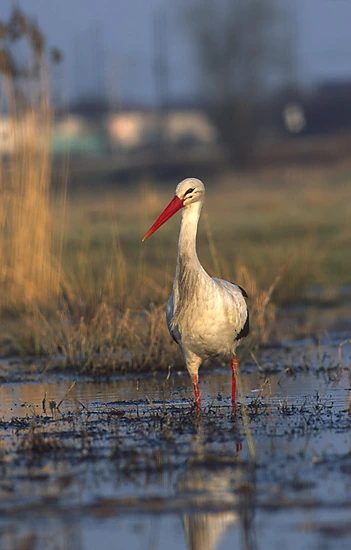
Lithuania is where the white stork really counts
Lithuania takes the white stork seriously as a national symbol, and the recognition goes well beyond a line in a list. Lithuania Post issued an official commemorative postage stamp in April 2013 dedicated specifically to the national bird, with the product description reading "Nacionalinis Lietuvos paukštis. Baltasis gandras" (National Bird of Lithuania. White Stork). That kind of philatelic recognition is a reliable signal of genuine official status. Lithuanian state broadcaster LRT has also produced dedicated coverage explaining the cultural meaning of the gandras, and BirdLife Lithuania formally describes it as "laikomas nacionaliniu Lietuvos paukščiu" (considered Lithuania's national bird) in its published materials.
On the legal side, Lithuania has domestic protections for the white stork that reflect its elevated status. Lithuanian sources, including the news site 15min.lt, have reported on obligations and penalties for harming white storks, which is a real-world indicator of institutional recognition, not just a ceremonial label. So when you encounter the claim, it is backed by ornithological, postal, media, and legal evidence all pointing the same direction.
Why Lithuania chose the white stork
The connection between Lithuania and the white stork is deep and genuinely old. The bird is framed in Lithuanian cultural commentary as a "namų sargas," meaning a guardian of the home. For centuries, white storks have nested on farmhouse rooftops, chimneys, and specially built poles in Lithuanian villages. Having a stork nest on your property was considered a sign of good fortune and prosperity. This human-landscape relationship made the bird a natural fit for a national symbol, because it was not an exotic or distant creature but a familiar neighbor tied to the rhythms of rural Lithuanian life.
The spring return of the white stork carries heavy cultural meaning too. Because the species migrates to sub-Saharan Africa for winter and returns to Lithuania around April, its arrival has long been treated as a seasonal marker, a living announcement that warmer days are coming. That annual homecoming resonates strongly in a country where the contrast between winter and spring is sharp and meaningful.
Lithuanian cultural historian Libertas Klimka has written specifically about why the gandras was chosen as the national bird, pointing to exactly this blend of everyday familiarity and symbolic weight. The stork is not just a pretty bird spotted occasionally; it is woven into folk songs, proverbs, and the visual landscape of the Lithuanian countryside in a way few other species can match.
What makes the white stork recognizable (and symbolically fitting)
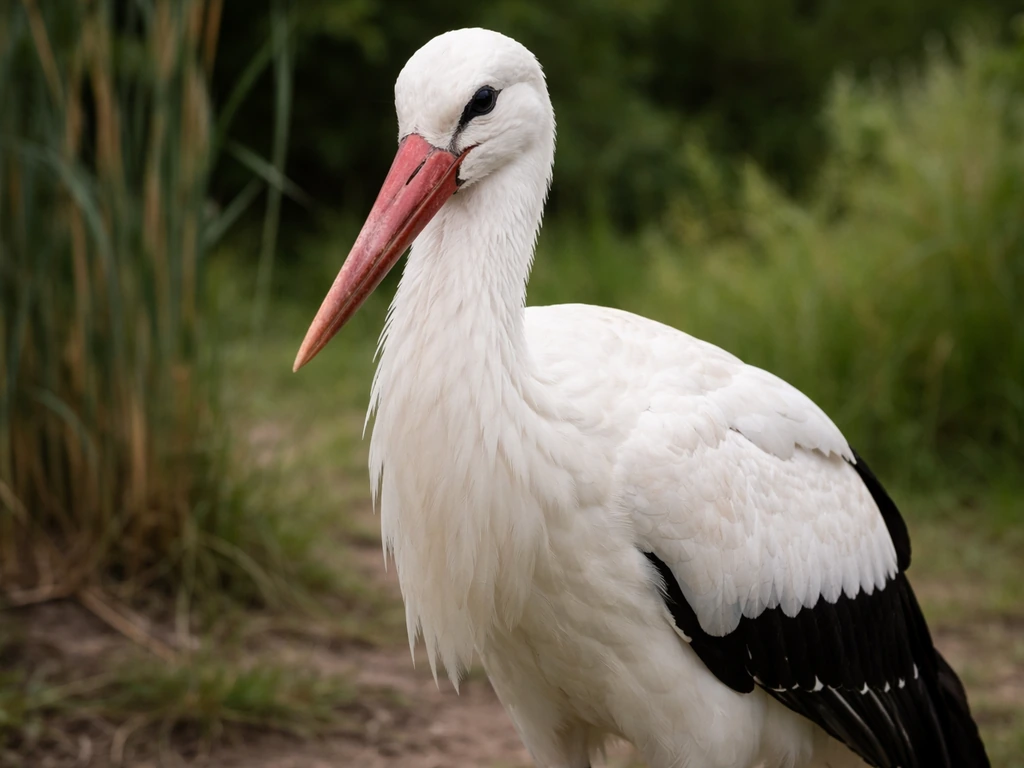
The white stork is a large, striking bird, hard to overlook and easy to identify. Its body is predominantly white with black flight feathers, and it has a long dark-red bill and reddish-pink legs. Adult birds stand roughly 100 to 115 cm tall with a wingspan that can reach around 215 cm. That impressive size, combined with a mostly white plumage, makes it visually distinctive in the field and in national imagery.
Behaviorally, the white stork is a long-distance migrant, breeding across Europe and Central Asia before wintering in sub-Saharan Africa and South Asia. The migration routes are well documented, and the spring return to breeding sites, often the very same nest year after year, fits neatly into the "homecoming" symbolism that resonates in Lithuanian culture. The birds typically arrive back in Lithuania in late March or April, which aligns with the cultural narrative of the stork as a herald of spring.
White storks are also closely associated with agricultural landscapes, hunting frogs, insects, and small mammals in open fields and wet meadows. Lithuania's rural countryside, with its mix of meadows, wetlands, and traditional farmsteads, is genuinely good habitat for the species. blank" rel="noopener noreferrer">BirdLife Lithuania's official checklist includes the white stork as a well-recognized species, and the country hosts a significant breeding population. The bird's presence is not a stretch or a romantic choice; it is genuinely at home there.
Nearby countries and overlapping claims
Here is where things get a little noisy online. Wikipedia lists the white stork as the national bird of Lithuania, Belarus, and Poland, and regional wildlife sites echo that framing. Some listings also mention Brazil, but the best-documented national-bird status discussed here is the Lithuanian designation. It is worth unpacking this, because the claim is not equally solid for each country.
| Country | White stork status | Notes |
|---|---|---|
| Lithuania | Official national bird (declared 1973) | Backed by postal stamps, legal protections, state-adjacent documentation |
| Belarus | Listed as national bird on aggregator sites | Less consistently documented in authoritative primary sources |
| Poland | Iconic national symbol, widely associated | More of a beloved cultural symbol than a formally codified national bird |
| Ukraine | Highly popular and iconic bird | Not officially designated as national bird; described as a well-known species |
| France (Alsace region) | Symbol of Alsace | Regional symbol, not a French national bird; shows how sub-national symbolism spreads online |
The Alsace example is particularly useful context. The white stork is the recognized symbol of the Alsace region in eastern France, and that regional symbolism sometimes bleeds into broader "national bird" claims online. It is a good reminder that a bird being famous in a country does not automatically make it the official national bird. Poland has a huge emotional connection to the white stork, but it does not occupy the same formally designated role there that it does in Lithuania.
A few other regional birds sometimes cause confusion in these lists. blank" rel="noopener noreferrer">Latvia's national bird is the white wagtail, not a stork. Belarus uses the white stork on various cultural materials, but documentation of a formal declaration matching Lithuania's 1973 designation is harder to pin down. And while Ukraine has a rich cultural relationship with storks (it holds one of the largest white stork populations in Europe), ornithological groups like the Ukrainian Nature Conservation Group describe the bird as iconic rather than officially designated.
On the species side, the oriental stork (Ciconia boyciana) is a separate species that sometimes creates search confusion in discussions of "stork national birds" in East Asia. It is a different bird with a different range and is not relevant to European national-bird claims. Similarly, Abdim's stork (Ciconia abdimii) is a sub-Saharan African species sometimes mentioned in general stork discussions but has no overlap with the Lithuanian or Central European context.
How to verify this yourself
If you want to confirm the claim independently rather than just taking my word for it, here is a practical path to follow:
- Check the Seimas of the Republic of Lithuania website (lrs.lt). The parliamentary site covers official state symbols including the flag, coat of arms, and national anthem. The white stork's status as national bird is connected to this institutional context, and the site is the right place to understand what is and is not formally codified.
- Search for the 2013 Lithuanian postage stamp. Look up "Nacionalinis Lietuvos paukštis. Baltasis gandras" on the Lithuanian Post (Lietuvos Paštas) official store or archive. The product description and issue date (April 6, 2013) are a concrete, dateable piece of official documentation.
- Visit the BirdLife Lithuania website or download their published materials. They directly describe the white stork as "laikomas nacionaliniu Lietuvos paukščiu" (considered Lithuania's national bird) and include ecology and cultural context.
- Cross-reference with Encyclopaedia Britannica's entry on the white stork. Britannica provides the species background (scientific name, range, appearance) which you can use to confirm you are reading about Ciconia ciconia and not a different species.
- Use Wikipedia as a starting point, not an endpoint. The Wikipedia article on national symbols of Lithuania lists the 1973 declaration, which gives you a specific claim to verify against the primary sources above. Do not stop at Wikipedia, but it can point you to the right search terms.
If you are a student, teacher, or researcher who needs a citable answer, the Lithuanian postal stamp (with its official product description) and BirdLife Lithuania's documentation are both solid secondary sources. For the most authoritative confirmation, the Seimas state symbols page is the right institutional reference.
The bigger picture of stork symbolism
National birds are often chosen because a species says something true about a country's landscape, history, or values. The white stork does exactly that for Lithuania: it is visually iconic, genuinely native and abundant, deeply embedded in folk tradition, and tied to the agricultural and rural identity that shaped Lithuanian culture for centuries. The 1973 declaration was not an arbitrary choice but a recognition of what Lithuanians already understood about their relationship with this bird.
That is why, even if you find the white stork listed under multiple countries online, Lithuania is the one with the deepest and best-documented claim. If you are wondering about the blue crane instead, the same kind of official-symbol reasoning helps explain why it was chosen why is the blue crane our national bird.
FAQ
Is the white stork definitely the official national bird, or is it just a commonly used symbol?
For Lithuania, it is treated as official. The country has formal designation that is corroborated by institutional markers such as a dedicated national-bird postage stamp and references to state symbols materials, not only cultural write-ups or tourism listings.
Why do some websites list the white stork as the national bird of multiple countries?
Many aggregator sites compile claims without checking whether a country has made a formal legal or government designation. Regional symbolism and popularity (for example, a stork shown on cultural materials) can get misread as national status.
What should I look for to verify a national-bird claim for any country?
Prioritize official or institutional sources, such as a government or state symbols page, a legal/government declaration, or a national commemorative issue (like a stamp) that explicitly labels the species as the national bird.
If Belarus or Poland list the white stork, does that contradict Lithuania’s status?
Not necessarily, but it does mean the evidence level likely differs. Lithuania’s documentation discussed here is more consistently tied to an identifiable designation date and official markers, while other countries often show more informal or less verifiable references.
Could the “stork” confusion be due to the oriental stork or other similar species?
Yes. Some searches mix up different storks, especially the oriental stork, because they share the word “stork” and similar appearance cues. The national-bird claim for Lithuania specifically concerns the white stork (Ciconia ciconia).
Does “white stork” national-bird status mean the bird is protected as part of conservation policy?
Often it correlates with stronger protection, but it is not automatic everywhere. In Lithuania, reporting has pointed to specific obligations and penalties around harming the species, which is a practical indicator of elevated institutional treatment.
Is the spring arrival of storks part of why Lithuania chose it, or is that just folklore?
It is more than generic folklore in Lithuania’s case, because the stork’s seasonal timing (return around March or April) is used in cultural explanations as a real seasonal marker. The symbolism is grounded in how and when the species actually appears locally.
How can I distinguish “national bird” from “national symbol” or “regional emblem”?
National bird is usually a formal designation, while “national symbol” and “emblem” can be used more loosely for identity. Regional emblems can also propagate into wider claims online, so check whether the source states an official national-bird decision rather than just describing cultural importance.
What is the easiest citable confirmation route if I need to reference this in school or research?
Use Lithuania’s dedicated national-bird material, such as the postage stamp product description and BirdLife Lithuania’s documentation. For the most authoritative institutional framing, a state symbols reference page is the best next step.
Is the white stork’s “native and abundant” status part of the national-bird rationale?
Yes, that argument appears in how the choice is explained culturally and ecologically. Lithuania’s countryside, especially rural farm landscapes and wetlands, provides suitable nesting and foraging habitat, which supports the idea that the bird is not an imported or rare symbol.
Next Articles
Flamingo is National Bird of Which Country? Answer
Find which country has the flamingo as its national bird, plus symbolism, verification tips, and species nuance.

What Is the National Bird of Zimbabwe? Symbolism and Facts
Discover Zimbabwe’s national bird, its distinctive traits, and the history and symbolism behind the emblematic choice.
What Is the National Bird of Botswana? Bird ID, Meaning
Answers Botswana national bird name with species ID, how to recognize it, where to spot it, and its cultural meaning