
The green pheasant is called Japan's national bird because the Ornithological Society of Japan selected it on March 22, 1947. The bird in question is the Japanese green pheasant, scientific name Phasianus versicolor, known in Japanese as kiji (雉 / キジ). It is endemic to the Japanese archipelago, meaning it is found naturally nowhere else on Earth, which is a big part of why it felt like the right choice as a national symbol.
Why Is the Green Pheasant Japan’s National Bird

Marcus Chen
1 May 2026

What 'green pheasant' actually means here
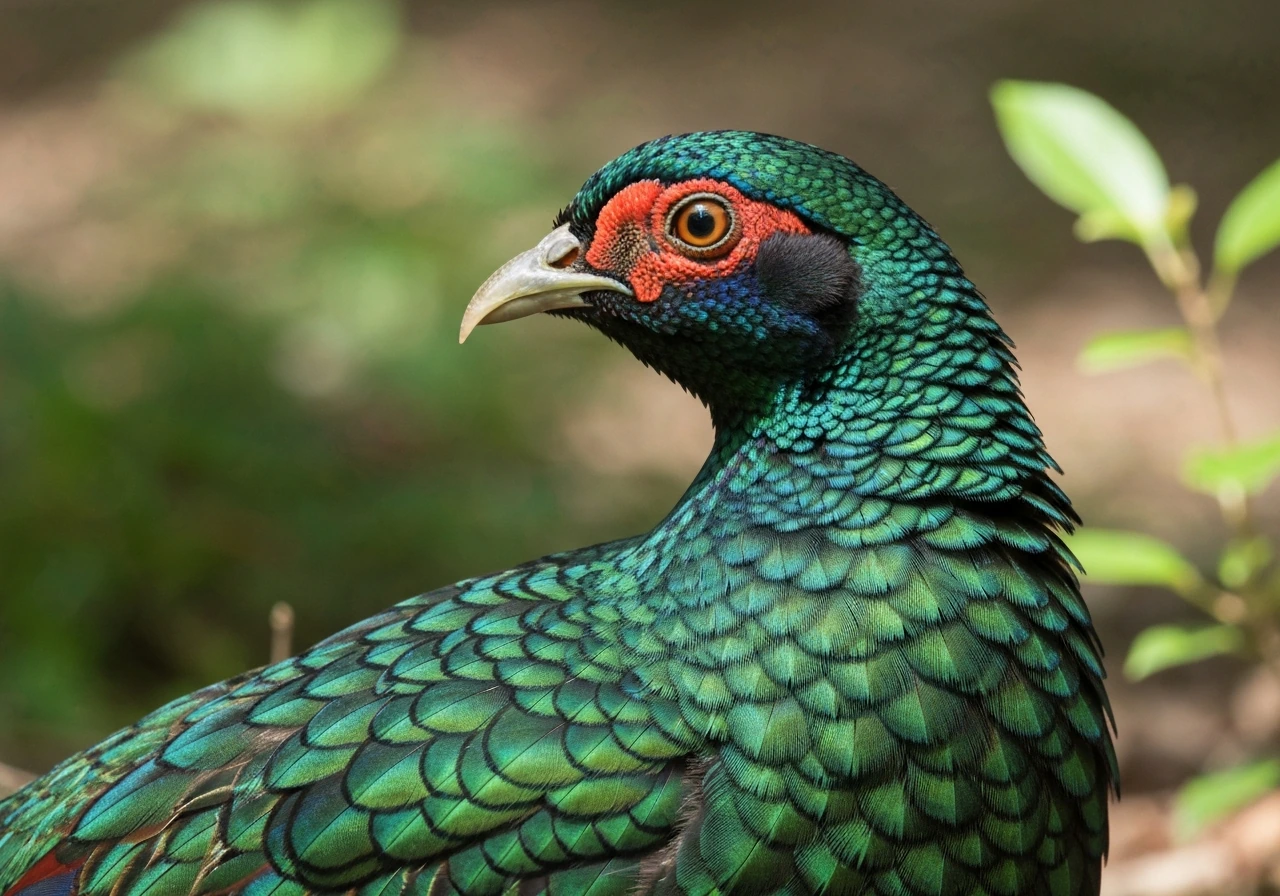
When people search for 'green pheasant Japan national bird,' they are almost always referring to Phasianus versicolor, the species called kiji in Japanese. The name 'green pheasant' or 'Japanese green pheasant' is used in English-language references like Britannica precisely to distinguish it from the far more widespread common pheasant (Phasianus colchicus), which is the ring-necked pheasant familiar across Europe and North America.
The green pheasant gets its name from the distinctive iridescent green plumage on the male's breast and back. Japanese sources note that the most fully green-colored individuals are sometimes called nihon kiji (日本キジ) to separate them from other color forms and subspecies. So when you see 'green pheasant' used in the national bird context, it is specifically this endemic Japanese species, not just any green-colored bird.
Who chose it, and when
The selection was made by the Ornithological Society of Japan (日本鳥学会) in March 1947, specifically on March 22. This is not a government-mandated designation in the way that some national symbols are enshrined in law. Japan does not have a Cabinet decision or legislative act formally establishing kiji as the national bird in the same way Japan's national flag (Hinomaru) and anthem (Kimigayo) are officially designated by the Act on National Flag and Anthem. You may also see the claim that the peacock is the national bird of India, but that is not accurate.
What you have instead is a designation by the country's leading ornithological body, which is the credible institution responsible for bird taxonomy and research in Japan. The Ornithological Society of Japan publishes the authoritative checklist of Japanese birds and is the recognized scientific authority on the subject. Their 1947 selection has been widely accepted and repeated in government-adjacent publications, including Japan's official 'Highlighting Japan' magazine published via gov-online.go.jp as recently as May 2023, which refers to kiji as Japan's national bird and cites the 1947 ornithological society selection.
So the honest framing is: officially recognized by Japan's top bird science organization in 1947, broadly accepted as the national bird in public and educational contexts, and referenced by government-adjacent sources, but not formally written into national law. That distinction matters if you are writing an academic paper or verifying this for a school project.
Why the green pheasant symbolizes Japan
The cultural weight behind kiji goes well beyond biology. The bird is deeply woven into Japanese folklore, seasonal tradition, and even modern currency.
Momotaro and folklore
The most vivid cultural connection is the fairy tale Momotaro, one of the most famous and beloved stories in Japan. In the story, the hero Momotaro (Peach Boy) travels to defeat demons, accompanied by three animal companions: a dog, a monkey, and a kiji (pheasant). Orbis Pictus states that Japan’s national bird is the pheasant (kiji) and that it appears in the tale of Momotaro. The pheasant serves as a brave and loyal ally. This is the kind of deep cultural embedding that makes a bird feel like it belongs to a nation, not just its geography. For Japanese children, kiji is not just a bird in a field; it is a character in a foundational story.
Banknotes and everyday recognition
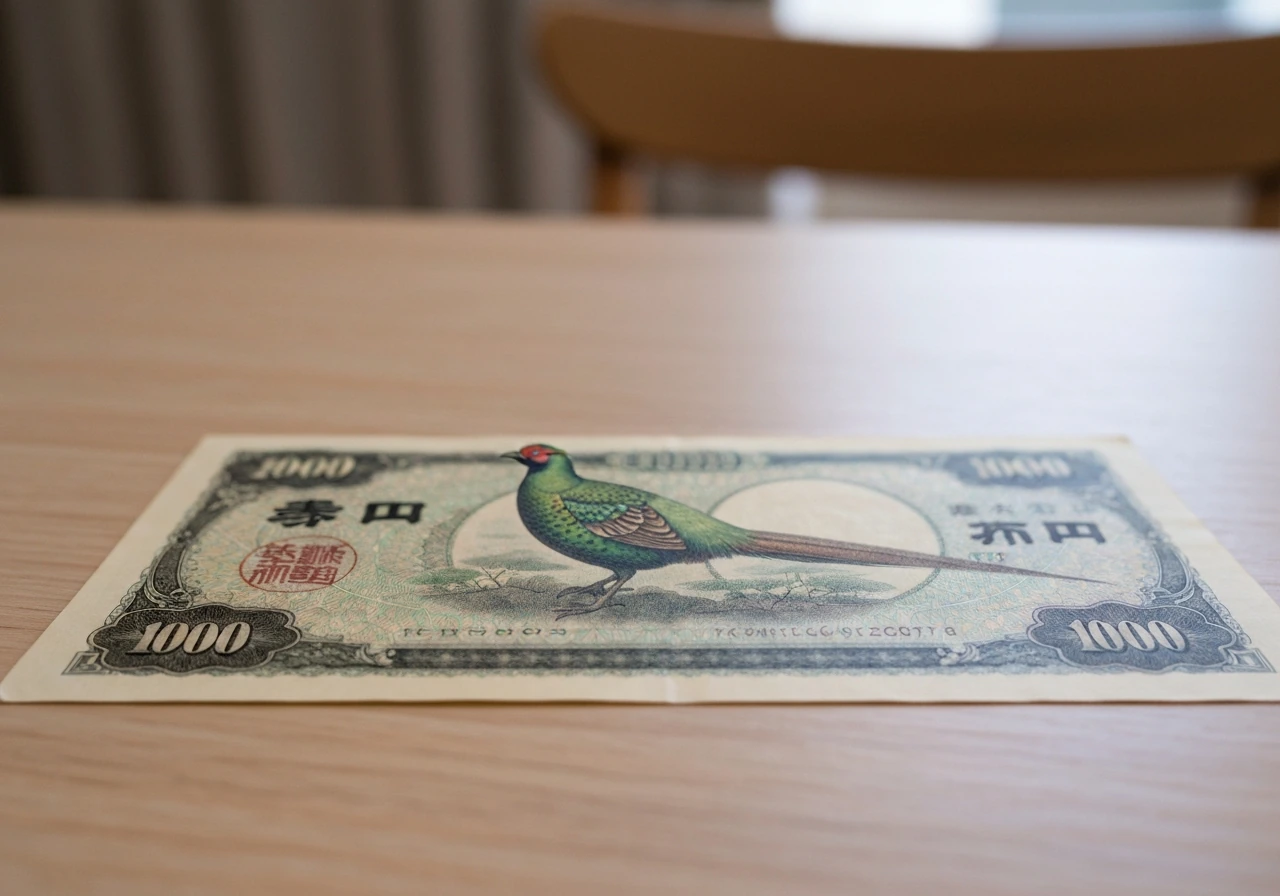
Kiji has also appeared on Japanese currency. A pair of green pheasants featured on the 10,000-yen note in a historical series, placing the national bird in the hands of every Japanese person going about daily life. That kind of integration into everyday material culture reinforces a symbol in ways that formal legislation cannot always achieve.
Seasonal identity

Japan's traditional 72-season micro-calendar (七十二候) includes a period called 'Kiji Hajimete Naku' (雉始雊), meaning 'the pheasant begins to call. The 72-season term 雉始雊(きじはじめてなく) in Tsumura’s traditional seasonal calendar refers to the pheasant beginning to call, and notes kiji (the pheasant) as a familiar countryside bird Kiji Hajimete Naku' (雉始雊). ' This seasonal marker reflects how attuned Japanese culture has historically been to the rhythms of nature, and kiji is one of the birds embedded in that rhythm. The male's distinctive call in late winter signals seasonal change, connecting the bird to the Japanese sense of time and natural cycles.
Where the bird fits in Japan's natural landscape
Phasianus versicolor is endemic to the Japanese archipelago, which is itself a major reason it resonates as a national symbol. Endemism means the bird evolved here and exists naturally nowhere else. It is found across the main islands of Honshu, Shikoku, and Kyushu, living in grasslands, forest edges, farmland borders, and low mountain areas.
It is worth noting that kiji was historically absent from Hokkaido, Japan's northernmost main island, and also from Tsushima island. A Korean pheasant species (sometimes called the Kōrai pheasant) was later introduced to those areas. This regional variation is documented by Japan's Ministry of the Environment biodiversity portal (biodic.go.jp) and is relevant context: the 'true' Japanese green pheasant has a distribution centered on the main island regions of historical Japanese culture, which aligns with its cultural significance.
For Japanese people living in rural or semi-rural areas, especially across central Honshu, seeing a kiji in a rice field or at a forest edge is a genuine, common experience. That accessibility, the fact that ordinary people encounter it, not just bird watchers, makes it a more democratic symbol than a rare or remote bird would be.
How the national bird lives on today
Kiji shows up across Japanese public education and conservation materials as the national bird. Local governments and schools in prefectures like Nagano and Yamagata use it in nature education leaflets, where it is introduced to children specifically in its role as the national bird. Zoos reinforce the connection too: Osaka's Tennoji Zoo, for example, explicitly presents the Japanese green pheasant as the national bird of Japan on its English-language exhibit pages, making the designation part of the public-facing narrative for both Japanese and international visitors.
The 1947 designation by the Ornithological Society of Japan has never been challenged or replaced. No other bird has been proposed as an alternative national symbol with comparable institutional backing. The kiji's status, while not legally codified, is stable and widely accepted across educational, governmental, and conservation contexts.
Common confusion worth clearing up
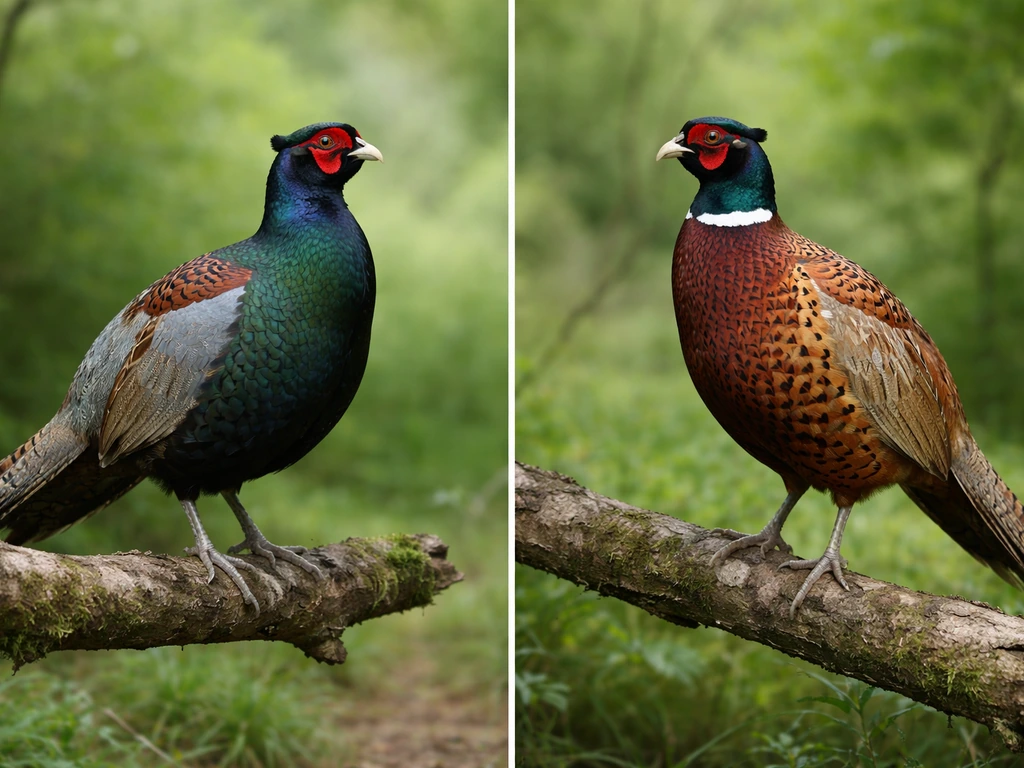
Searches about Japan's national bird sometimes run into a few recurring mix-ups. Here are the main ones:
- Green pheasant vs. common pheasant: Phasianus versicolor (the Japanese green pheasant / kiji) is a distinct species from Phasianus colchicus, the common or ring-necked pheasant found globally. Some English sources blur this by calling kiji a 'green pheasant' while others describe common pheasants as simply 'pheasants,' which creates confusion. The scientific name Phasianus versicolor is the clearest way to confirm you are talking about Japan's national bird.
- Is it truly 'official'? The designation comes from the Ornithological Society of Japan in 1947, not a government act. This does not make it less credible or less accepted, but if you need a legal citation, one does not exist in the way Japan's flag law exists. Government-adjacent publications still use the label, making it effectively recognized at a national level.
- Other bird candidates: Some people wonder whether Japan's national bird might be the red-crowned crane (tanchō), which appears on the 1,000-yen coin and is a powerful symbol in Japanese art. The crane is a significant cultural bird, but it has never been designated as the national bird by any institution. Kiji holds that specific title.
- Subspecies confusion: Within Phasianus versicolor there are recognized subspecies, and some older or regional sources discuss these as if they are separate 'kiji' types. For national symbol purposes, the species as a whole (kiji / green pheasant) is what the 1947 designation refers to.
How to verify this for yourself
If you want to confirm the designation with credible sources, look for three things in any reference: the species name (Phasianus versicolor or kiji / 雉), the selecting body (Ornithological Society of Japan / 日本鳥学会), and the year (1947, specifically March 22). Sources that include all three are drawing from reliable, traceable information. Sources that just say 'Japan's national bird is the green pheasant' without explaining who designated it or when are repeating common knowledge without grounding it.
Practical places to cross-check: Japan's gov-online.go.jp 'Highlighting Japan' publication (the May 2023 issue covers kiji explicitly), the Ornithological Society of Japan's own checklists and publications, Britannica's entry under 'green pheasant,' and Japan's Ministry of the Environment biodiversity portal (biodic.go.jp) for habitat and distribution details.
The short version: why kiji and why it sticks
The green pheasant became Japan's national bird because it is the only pheasant species native exclusively to Japan, it has been part of Japanese folklore and seasonal culture for centuries, and the country's leading ornithological organization formally chose it in 1947. It appears in fairy tales children grow up reading, it has been on the country's highest-denomination banknote, it features in the traditional seasonal calendar, and it is a bird that ordinary Japanese people can actually see in fields and farmland across most of the country. All of those factors together make it feel genuinely representative of Japan, not just assigned to it arbitrarily.
If you are researching national birds more broadly, it is interesting to compare this kind of ornithological-society designation with countries that have formally legislated their national birds. Japan's approach sits somewhere between a legally official emblem and a deeply rooted cultural consensus, which is actually quite common globally. The green pheasant is a good example of how a national bird can carry real meaning through culture and history even when it is not written into law. The country whose national bird is the peacock is another interesting example of how national symbols can differ by tradition and choice country whose national bird is the peacock nyt mini.
FAQ
Is the Japanese green pheasant legally the national bird of Japan, like the flag and anthem are?
No. In Japan, the kiji designation is recognized through the Ornithological Society of Japan’s 1947 selection and broad public adoption, but it is not typically described as a law-based national emblem in the way the Hinomaru and Kimigayo are established by statute.
Are there any other pheasants in Japan that people might confuse with the national bird?
Yes. The most common confusion is mixing the endemic Japanese green pheasant (kiji, Phasianus versicolor) with the non-endemic common pheasant (Phasianus colchicus). Another issue is regional naming, where color forms or related local pheasants can cause English sources to blur the identification.
When English sources say “green pheasant” for Japan, how can I be sure they mean the correct species?
Check that they specify Phasianus versicolor and/or the Japanese name kiji (雉, キジ), and that they tie the national-bird claim to the Ornithological Society of Japan’s 1947 choice (March 22). If they only say “green pheasant” without those identifiers, it is more likely repetition than verification.
Why did kiji not occur naturally in Hokkaido and Tsushima, and does that affect its national-symbol status?
Kiji has a distribution that historically centered on main cultural islands, with related pheasant populations later associated with introductions in places like Hokkaido and Tsushima. This does not undermine the national-symbol status because the designation is tied to the Japanese species recognized as endemic in the archipelago, not to a uniform presence across every island.
Is “nihon kiji” the same bird as the national bird?
“Nihon kiji” refers to fully green-colored individuals as a distinction from other color forms or subspecies. It can help clarify which visual type people are describing, but the national-bird concept still centers on the species kiji (Phasianus versicolor).
Where is kiji most likely to be seen in daily life, not just in birdwatching hotspots?
In many parts of Honshu, especially around rural and semi-rural landscapes, people encounter kiji along farmland edges, grasslands, and forest edges. Its relative accessibility is one reason it functions as a widely recognized symbol rather than something only specialists observe.
If I’m writing a school report, what is the simplest way to “cite” the claim accurately?
State the species (Phasianus versicolor), include the Japanese name (kiji), and mention the selecting body and date (Ornithological Society of Japan, March 22, 1947). Then add one note that it is widely accepted in educational and public materials, even though it is not framed as a law codification like the national flag and anthem.
Has Japan replaced the national-bird designation for kiji since 1947?
No. The kiji designation is described as stable and not replaced by another proposed national bird with comparable institutional backing. You may still see occasional confusion online, but there has not been a widely recognized alternative that supersedes the original selection.