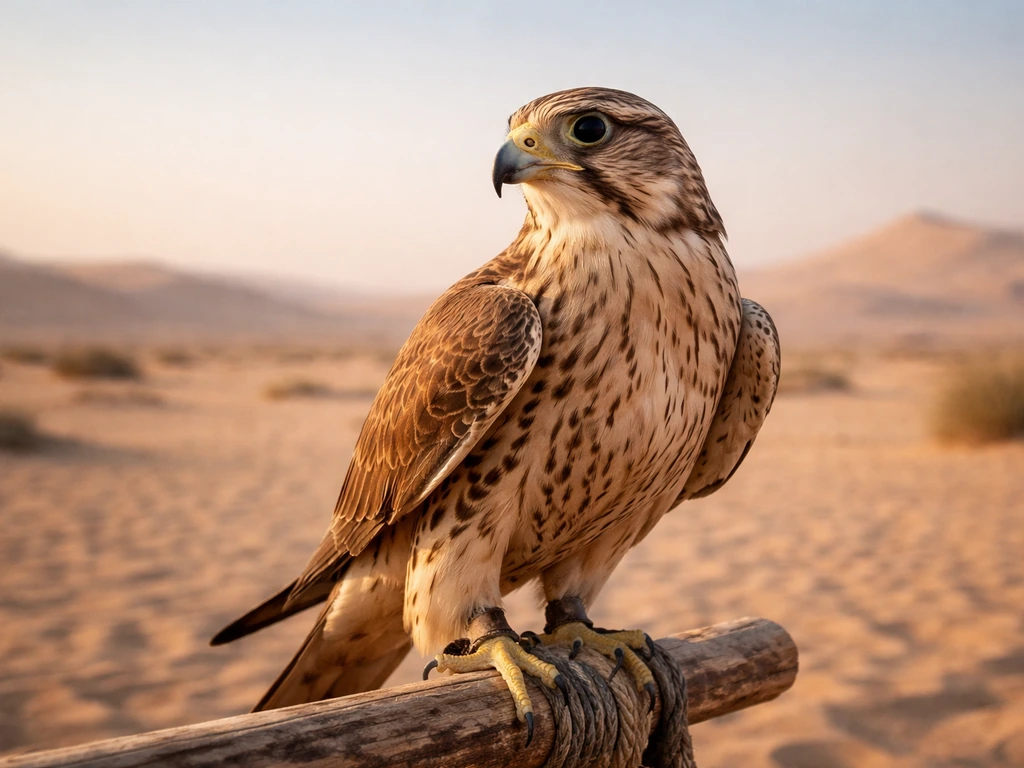
Saudi Arabia's national bird is the falcon. Most national symbols references, including Wikipedia's dedicated page on Saudi national symbols, list the falcon in that role. If you want a species-level answer, the Saker falcon (Falco cherrug) is the most commonly cited specific species, and it has deep roots in Saudi falconry culture and documented presence across the Arabian Peninsula.
What Is the National Bird of Saudi Arabia

Marcus Chen
12 May 2026
Why you might see different answers online
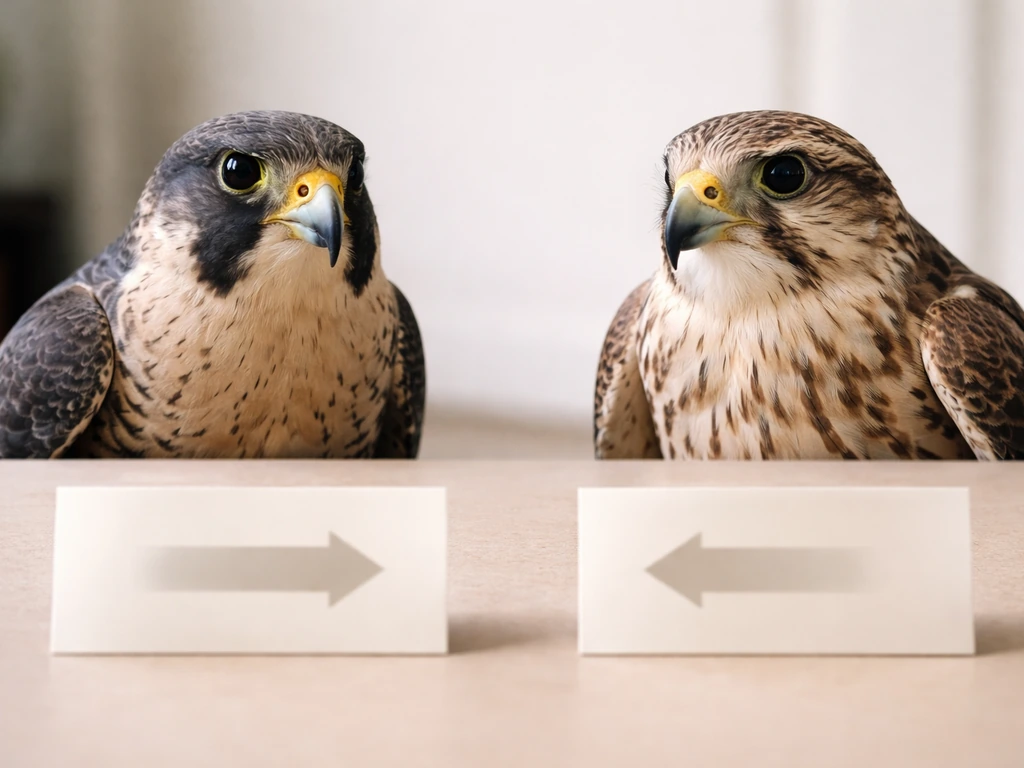
This is where the real confusion starts. Search for Saudi Arabia's national bird and you'll find some sources simply saying "falcon," others specifying "Saker falcon," and occasionally other raptor species floating around. None of these are wildly wrong, but they're not all saying the same thing either.
The core issue is that "falcon" is a broad category, not a single species. Saudi Arabia has a rich falconry tradition involving multiple species: the Saker falcon, the Peregrine falcon (sometimes called Shaheen), and others. When national symbols lists say "falcon," they're usually referring to the cultural institution of falconry and the birds associated with it, rather than pinning the label to one exact species. The Saker falcon gets called out most specifically because it's listed on the blank" rel="noopener noreferrer">Wikipedia Saker falcon page as the national bird of Saudi Arabia (among several other countries).
It's also worth knowing that Saudi Arabia doesn't have a single legislative document that formally declares a national bird the way some countries do. The falcon's status as a national symbol is rooted more in cultural heritage and official branding than in a dedicated law. That gap between formal designation and widely accepted symbolism is exactly why different sources frame it differently.
What the falcon means to Saudi Arabia
The falcon isn't just a pretty bird chosen because it looks good on a logo. In Saudi and broader Arab culture, falcons represent nobility, strength, precision, and a deep bond between humans and the natural world. Falconry has been practiced on the Arabian Peninsula for over two thousand years, and for much of that history it wasn't a hobby. It was a survival skill and a mark of status among tribal leaders and ruling families.
That symbolism carries forward into modern Saudi identity. The falcon appears as one of the five core symbols in Saudi Arabia's Founding Day emblem, alongside the Saudi flag, the palm tree, the Arabian horse, and the traditional souq. The Saudi Falcons Club and the Saudi Press Agency have both documented this connection explicitly, describing the falcon as "deeply ingrained in Saudi heritage." When a government's own press agency and official branding guidelines highlight a bird that prominently, it tells you the symbolism is genuine, not just decorative.
In that sense, the falcon ties together Saudi Arabia's past and its present identity. It connects the Kingdom to its Bedouin roots while also projecting an image of precision and power that resonates with modern Saudi self-presentation.
The history behind the choice
Falconry in Saudi Arabia predates the modern state by centuries. Historical accounts link falcon training to the First Saudi State period (established in the mid-18th century), and the Founding Day brand guidelines reference this era specifically when explaining why the falcon was included in the Founding Day visual identity. The tradition runs through Saudi history as a constant thread.
The formal Saudi national emblem was adopted in 1950 and features a palm tree above two crossed swords. The falcon isn't part of that emblem directly, which is one reason some sources are cautious about calling it the "official" national bird. But the Founding Day emblem (which commemorates the founding of the First Saudi State in 1727) was developed more recently as a broader cultural identity framework, and it does explicitly include the falcon. So the selection story is less about a single moment of formal designation and more about the falcon's gradual, consensus-driven elevation to national symbol status through culture, branding, and heritage documentation.
Facts about the Saker falcon worth knowing
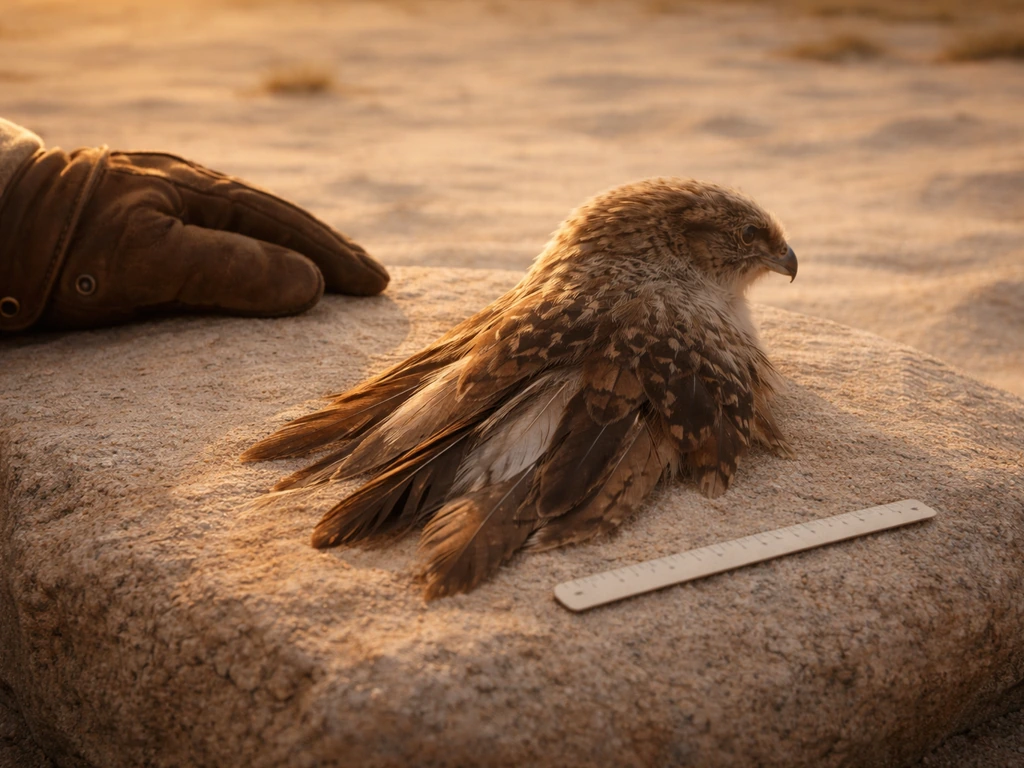
If the Saker falcon is the species most tightly linked to Saudi Arabia's national bird identity, it helps to know what you're actually talking about. The Saker (Falco cherrug) is a large falcon, typically 45 to 57 centimeters long with a wingspan that can reach 126 centimeters. The national bird of Iraq is a different species than Saudi Arabia’s Saker falcon Falco cherrug. It's built for speed and power, which is exactly what makes it prized in falconry.
- The Saker falcon is classified as Endangered on the IUCN Red List, largely due to trapping for the falconry trade and habitat loss on its breeding grounds in Central Asia and Eastern Europe.
- It's a migratory species, and Saudi Arabia sits along important migration corridors it uses when moving between breeding grounds and wintering areas.
- In the wild, Saker falcons hunt ground squirrels, other small mammals, and birds. Their hunting style, fast stoops and ground-level chases, made them particularly useful for traditional Arab falconry.
- Saudi Arabia is a known wintering and passage ground for the species, which means wild Sakers are genuinely present in the Kingdom, not just culturally claimed.
- UNESCO recognized Arab falconry (including Saudi falconry practice) as Intangible Cultural Heritage in 2016, a formal international acknowledgment of how central the tradition is to regional identity.
- The Saudi Falcons Club operates breeding and conservation programs, reflecting the Kingdom's active role in protecting these birds beyond their symbolic value.
One thing that makes the Saker falcon a particularly fitting national symbol is this overlap between cultural history and ecological reality. The bird isn't just a symbol plucked from legend. It actually lives in and passes through Saudi Arabia, and Saudis have been working with it in partnership for millennia.
Saudi Arabia vs. its neighbors: a regional pattern
Saudi Arabia is far from alone in honoring falcons. The UAE's deep connection to the falcon is well documented, and the bird holds national symbol status across several Gulf states. If you mean the UAE, you may see the same broader falcon theme, so it helps to look up the specific bird listed for Dubai versus the wider emirate.
This is why falcons are also widely treated as the national bird of the UAE The UAE's deep connection to the falcon. Countries like Qatar, Kuwait, Bahrain, and Oman all share elements of this falconry heritage, which makes sense given the shared Bedouin cultural roots across the Arabian Peninsula. If you're curious about another Gulf state, you can also look up what Qatar recognizes as its national bird Countries like Qatar, Kuwait, Bahrain, and Oman.
Bahrain is also commonly associated with falcons in national-symbol discussions, even though the species details can vary by source what is the national bird of bahrain. If you're curious about Oman specifically, its national bird is a different species than Saudi Arabia's falcon. For Kuwait, the national bird is also commonly listed as the falcon, reflecting the region's shared falconry traditions.
If you're exploring the national birds of the wider Middle East, you'll find the falcon theme recurring throughout the Gulf region in particular, though each country frames it through its own history and specific traditions.
How to verify this for yourself

Because sources disagree on the species level, and because there's no single law you can point to, it's worth knowing where to look if you need to confirm this for a school project, research paper, or just personal certainty.
- Start with Wikipedia's "National symbols of Saudi Arabia" page. It lists the falcon as the national bird and is a reasonable first-pass reference, though it should be cross-checked.
- Check Saudipedia (saudipedia.com), the official Saudi encyclopedia. It covers national symbols and has dedicated entries for falconry in Saudi Arabia and the Saker falcon specifically, written from a Saudi institutional perspective.
- Review the Saudi Founding Day brand guidelines (foundingday.sa). The official PDF explicitly lists the falcon as one of five Founding Day symbols and provides cultural rationale in English.
- Look at the Saudi Press Agency (spa.gov.sa) for news coverage of Founding Day and falconry heritage. Government press releases are useful for confirming how the Saudi government itself frames the falcon's symbolic role.
- For species-level verification, the IUCN Red List entry for Falco cherrug and the CMS (Convention on Migratory Species) document on Saker falcons in Saudi Arabia both confirm the species' documented presence and conservation status in the Kingdom.
- The Aramco "Birds of Saudi Arabia" book series is the primary natural history reference for avifauna in the region if you want habitat and ecology details that go well beyond the symbolism.
No single source will give you a perfectly clean, legally codified answer the way some countries' national bird designations work. But between Saudipedia, the Founding Day guidelines, and Wikipedia's national symbols page, you'll have enough cross-referenced evidence to state confidently that the falcon, most specifically the Saker falcon, is Saudi Arabia's recognized national bird. Many people also ask a similar question for Jordan, where the national bird is the black francolin Jordan national bird.
| Source | What it says | Reliability level |
|---|---|---|
| Wikipedia (National symbols of Saudi Arabia) | Lists falcon as national bird | Good starting point; cross-check recommended |
| Saudipedia | Covers falconry as national heritage; Saker falcon entry confirms Saudi presence | Strong; official Saudi encyclopedia |
| Saudi Founding Day brand guidelines (PDF) | Falcon is one of five official Founding Day symbols | Very strong; government-issued document |
| Saudi Press Agency (SPA) | Documents falcon's role in Founding Day identity | Strong; official government news agency |
| IUCN Red List / CMS documents | Confirms Saker falcon species ecology and Saudi presence | Strong for species-level verification |
| Wikipedia (Saker falcon article) | Lists Saudi Arabia as one of several countries with Saker as national bird | Useful; check against primary Saudi sources |
FAQ
Should I answer “falcon” or “Saker falcon” when asked what the national bird of Saudi Arabia is?
Yes, but the safest wording depends on your purpose. For a general answer, “falcon” is widely used as the national-symbol bird. If you need a species name, “Saker falcon (Falco cherrug)” is the most commonly cited match, and it is the species most sources highlight when they move from the general falcon category to a specific bird.
Why do some websites list different falcon species for Saudi Arabia?
When sources differ, it usually comes from whether they are describing the cultural symbol of falconry (broad “falcon”) versus naming one falcon species that is repeatedly associated with Saudi national symbolism (often the Saker falcon). You can note both in one line to avoid losing points in assignments.
Is there a law or official government document that formally designates Saudi Arabia’s national bird?
Saudi Arabia is often described as not having one single statute that legally declares a national bird. That means you may find the bird listed through cultural heritage documentation, state branding materials, or national symbol compilations rather than a law that “names” one species outright.
How can I verify the answer reliably for a school project or paper given that sources disagree?
If you are writing for school or research, use a two-step citation approach in your notes: first confirm the general national symbol category (“falcon”), then document the species-level association (“Saker falcon”) as the most frequently specified option. This mirrors how the public record is framed, where “falcon” is the umbrella and “Saker falcon” is the common species tie-in.
Could the Saker falcon also be Saudi Arabia’s national bird if a different falcon is listed for a neighboring country?
If your goal is accuracy, avoid treating other Gulf falcon species as interchangeable. For example, Iraq and some other countries associated with Falco cherrug may still be different cases for the national bird question, so make sure you are not mixing “Saker falcon as a symbol in the region” with “Saker falcon as Saudi Arabia’s national bird.”
Does the falcon appear in Saudi official emblems, or is it only a general cultural symbol?
If you are trying to match logos, emblems, or Founding Day visuals, the key is that the “falcon” theme is used in official identity contexts even when the emblem itself may not be the same as a national emblem adopted in 1950. So, for design-based questions, “falcon as a founding identity symbol” is often more directly supported than “falcon as an element of the older national emblem.”
What is the most concise correct way to answer in one sentence?
The “Saker” in “Saker falcon” is the species name detail, but the broader message is the falconry heritage. If you need the shortest correct phrasing, use “falcon,” and if you need the most specific phrasing, use “Saker falcon (Falco cherrug).”
How do I compare Saudi Arabia’s national bird with other Gulf countries without mixing up species?
Yes, in the Gulf, falcons are a recurring national-symbol theme, but each country’s national bird can still be framed differently, and some countries name different species. If you are comparing countries, list the country-specific species exactly as given, then add a note that “falconry heritage is shared across the region” to explain why the theme looks similar.
Next Articles
What Is the National Bird of Dubai and the UAE
Find the UAE national bird and whether Dubai has its own; learn symbolism, history, and how to verify the official desig
What Is the National Bird of Iraq? Symbol, Facts, Verification
Find Iraq’s official national bird symbol, key facts and meaning, plus reasons answers differ and how to verify.
What Is the National Bird of Jordan? Meaning and Facts
Learn Jordan’s national bird, its official meaning, symbolism, and key facts tying the emblem to real wildlife.