Germany's national bird: the direct answer
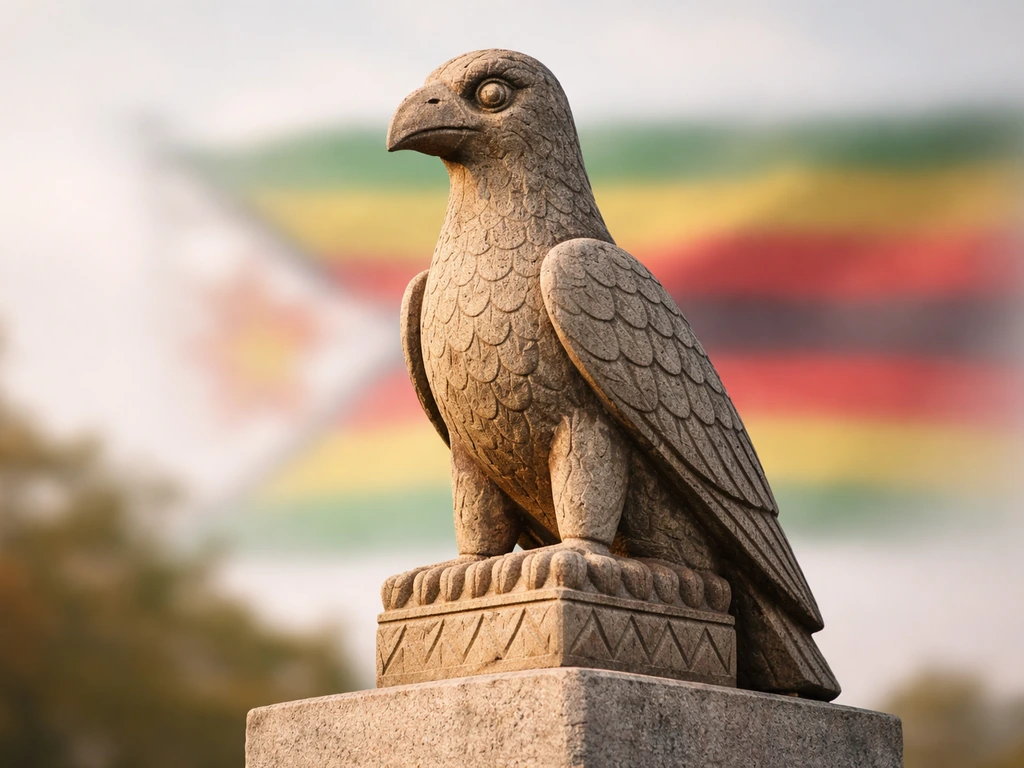
Germany's national bird is the eagle, specifically the black eagle. While Germany does not have a formally designated "national bird" in the way some countries do (a separate legal ornithological title), the eagle has been the undisputed national symbol of Germany for centuries. It appears on the coat of arms, on official government documents, and across federal institutions. When people say "Germany's national bird," they are referring to this bird, and no other bird comes close in terms of national recognition.
What "national bird" actually means in Germany

This is where Germany gets a little different from countries like the United States or India. Germany has no specific law called a "Nationalvogel" designation that says, formally, "the eagle is our national bird." Instead, the eagle's status comes through state-symbol law. The official legal instrument is the "Bekanntmachung betreffend das Bundeswappen und den Bundesadler" (the proclamation concerning the federal coat of arms and the Federal Eagle), issued on January 20, 1950. This proclamation established the Bundesadler (Federal Eagle) as the official state symbol.
Importantly, the German Bundestag itself makes a distinction worth knowing: only the federal flag is explicitly anchored in the Basic Law (Grundgesetz). The Bundesadler, the national anthem, and other state symbols are officially recognized but do not all have the same constitutional footing. So the eagle is very much a legitimate national symbol, just one that lives in state-symbol law rather than a standalone "national bird" ordinance.
There is also a separate concept in Germany called "Vogel des Jahres" (Bird of the Year), a designation run annually by the nature conservation organizations NABU and LBV. LBV explains that the “Vogel des Jahres” is selected each year jointly with NABU and that a professional expert panel and a public selection process are involved (for example, the 2021 Rotkehlchen) Vogel des Jahres" (Bird of the Year), a designation run annually by the nature conservation organizations NABU and LBV.. Each year a different bird is chosen to highlight conservation issues. This is sometimes confused with a national bird, but it is entirely separate: it changes every year and is a conservation tool, not a national symbol.
The history and symbolism behind the eagle
The eagle has been tied to German identity for over a thousand years. Its roots trace back to the Holy Roman Empire and even further to Roman imperial symbolism. The Roman legions carried eagle standards, and as Germanic rulers inherited imperial power, the eagle came with it. By the medieval period, the black eagle on a gold background had become the emblem of the Holy Roman Emperor, and from there it was embedded deeply in Germanic heraldic tradition.
A key moment came in 1848, when the Nationalversammlung (the Frankfurt National Assembly, Germany's first attempt at a democratic parliament) chose the eagle as the symbol of a unified Germany. That decision gave the eagle a democratic, nationalist meaning that went beyond empire. It was no longer just the emperor's bird; it became the people's symbol of a unified German state.
The Weimar Republic (1919–1933) carried this forward, adopting a simplified, modernized eagle design for its coat of arms. When the Federal Republic of Germany was founded in 1949, it deliberately chose to restore the Weimar eagle rather than invent something new. The 1950 proclamation formalized this, and the result is the Bundesadler still used today. The Nazi-era eagle (the Reichsadler, which faced right and clutched a swastika) was explicitly set aside; the postwar Federal Eagle faces left and carries no such associations. The German Bundestag's web archive notes that the Bundesadler was officially introduced by proclamation on blank" rel="noopener noreferrer">20 January 1950 and distinguishes its postwar context from Nazi-era symbolism. This continuity with the Weimar design was a conscious political statement about democratic legitimacy.
The eagle's symbolism is straightforward: strength, sovereignty, and vision. Eagles are apex predators with sharp eyesight, and across cultures they have represented power and authority. For Germany specifically, the black eagle also carries a long thread of heraldic continuity that ties the modern republic back through the Weimar Republic, the German Empire, the Frankfurt Parliament, and the Holy Roman Empire. That's a remarkably long symbolic lineage for any national emblem.
It's worth noting that Germany is not alone in choosing an eagle as its primary bird symbol. Poland's national bird is also the white-tailed eagle, reflecting a similar Central European tradition of eagle-based heraldry. The two countries share a geographic neighborhood and a deep history of using eagles to project national identity.
How the eagle shows up in Germany today

The Bundesadler is everywhere in modern Germany once you start looking. It appears on the coat of arms displayed in the Bundestag chamber, on official government letterheads, on German passports, on euro coins minted by Germany, and on the jerseys of German national sports teams. The German Football Association (DFB) uses an eagle in its crest, and the national team's kit has featured eagle imagery for decades.
The Federal Government's official corporate design guidelines treat the eagle motif (referred to internally as "Adlerschwinge," or eagle wing) as a core visual identity element. This means every government ministry, every official website, and every printed federal document is expected to use the eagle consistently as a branding element. That level of institutional embedding is about as "official" as a national symbol can get, even without a separate "national bird" law.
If you're curious about the eagle's role in German heraldry specifically, the bird on the German flag is closely related to this discussion, since the flag's colors (black, red, and gold) are inseparable from the eagle emblem and the democratic tradition it represents.
Germany's eagle also has a fascinating historical cousin: the double-headed eagle used by the old Prussian and Holy Roman Empire traditions. That double-headed version was the "Reichsadler" of the old empire, and while it no longer represents unified Germany, it survived in regional coats of arms and institutional symbols across Central Europe. The bird on the Prussian flag is a single-headed black eagle, which maps more directly onto the modern Bundesadler lineage.
Interesting facts and things people get wrong
One common source of confusion is that online compilations of "national birds by country" sometimes list different birds for Germany, or leave it blank, because there is no formal "Nationalvogel" law to cite. If you encounter that, the explanation is simple: Germany's eagle is a state/heraldic symbol rather than a designated ornithological national bird. It's still the bird universally associated with Germany; the legal category just works differently here.
- The Bundesadler is a single-headed black eagle facing left (heraldically, its right) with outstretched wings and open talons, set on a gold background.
- The specific design was restored from the Weimar Republic's coat of arms as a deliberate signal of democratic continuity after World War II.
- Germany's eagle emblem appears on every euro coin minted in Germany, making it one of the most widely circulated national symbols in Europe.
- The Frankfurt Parliament of 1848 was the first democratic body to use the eagle as a symbol of a unified German state, giving the bird a specifically democratic meaning beyond its imperial roots.
- The Nazi-era Reichsadler (which faced right and held a swastika wreath) is legally and visually distinct from the current Bundesadler; the two should not be confused.
- The white-tailed eagle (Haliaeetus albicilla) is the actual eagle species most associated with Germany in wildlife terms, and it has made a strong conservation comeback in recent decades after near-extinction.
How Germany compares to its neighbors
Several of Germany's neighbors use eagles in their national symbolism too, which makes for an interesting regional comparison. Poland uses the white eagle, and the bird on the Polish flag is one of the most recognizable eagle emblems in Europe. Serbia also uses an eagle in state symbolism: the bird on the Serbian flag is a white double-headed eagle, drawing on the same Byzantine imperial tradition that shaped much of Central and Eastern European heraldry. The eagle really is the dominant national bird motif across this entire region.
| Country | Bird Symbol | Type | Formal "National Bird" Law? |
|---|
| Germany | Black Eagle (Bundesadler) | State/heraldic symbol | No separate law; covered by 1950 BWappenBek |
| Poland | White Eagle | Coat of arms and flag symbol | Embedded in constitution |
| Serbia | White Double-Headed Eagle | Coat of arms and flag symbol | No separate ornithological law |
| Prussia (historical) | Black Eagle | State/heraldic symbol | Historical only |
Where to go from here
If you want to verify Germany's national bird references for a school project or research purpose, the most authoritative sources are the German Bundestag's own state symbols pages (available in German and English) and the text of the 1950 "Bekanntmachung betreffend das Bundeswappen und den Bundesadler" (BWappenBek). The German Federal Agency for Civic Education (bpb.de) also has a clear explainer on the Bundesadler's history and meaning. These are primary sources, not compiled lists, and they give you the most accurate picture of how Germany actually treats the eagle as a national symbol.
The short version: Germany's national bird is the eagle. It is the Bundesadler, a black eagle on a gold background, formalized in 1950 but with roots going back over a thousand years. It is not designated through a standalone "national bird" law, but through state-symbol law, and it is as official and as deeply embedded in German national identity as any bird symbol in the world.