The bird on Ecuador's flag is the Andean condor
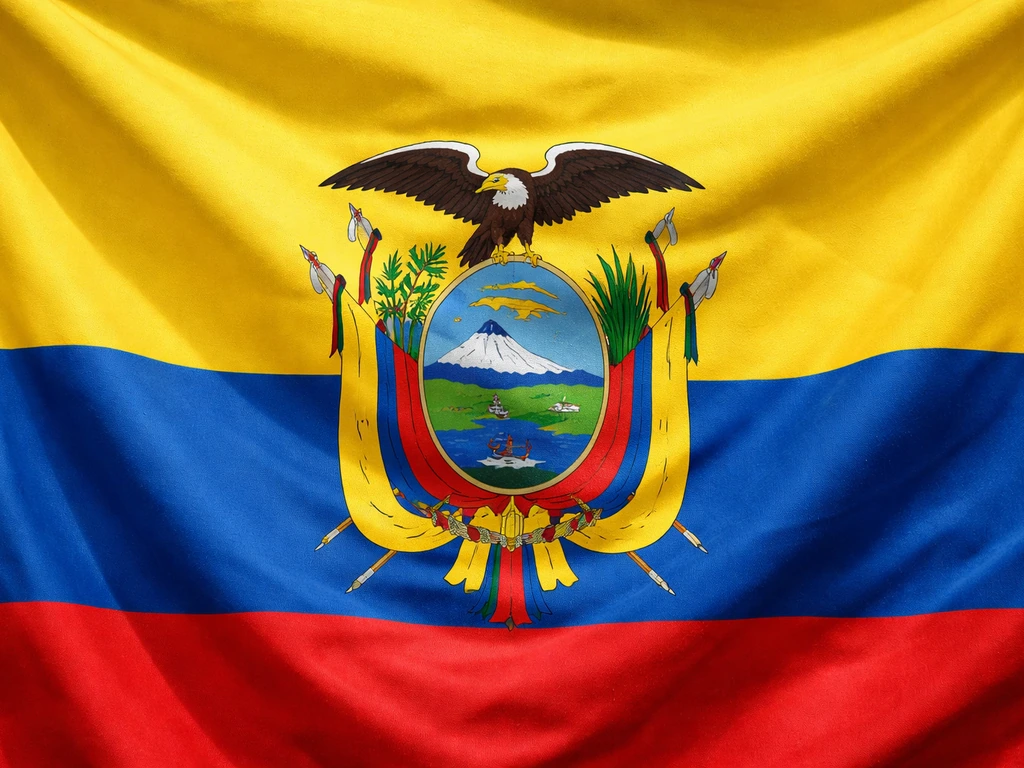
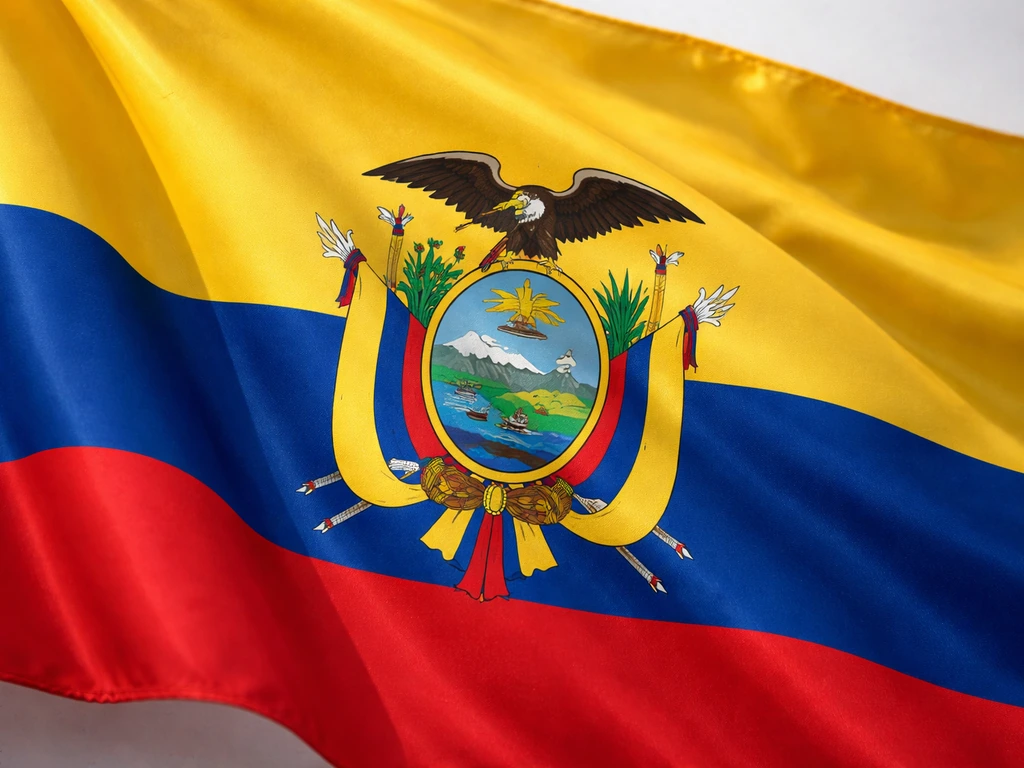
The bird depicted on Ecuador's flag is the Andean condor, known in Spanish as the "cóndor andino." It sits at the top of the coat of arms that appears in the center of the flag, with its wings spread open in a flying posture. The species name is Vultur gryphus. That is the direct answer, full stop.
How the flag design actually works
Ecuador's flag is three horizontal stripes: yellow on top (the widest), then blue, then red. On its own, those stripes do not include a bird. The bird appears because the official version of the flag carries the national coat of arms centered over the stripes. That coat of arms, called the Escudo de Armas, is what features the condor. The bird perches at the very top of the shield as the crest element, wings raised and spread as if about to take flight.
Not every version you see online will show the coat of arms. Civil and informal versions of Ecuadorian flags sometimes drop it, which can cause confusion. The official national flag, however, always includes the emblem, and that emblem always has the condor on top.
Species name and identification details

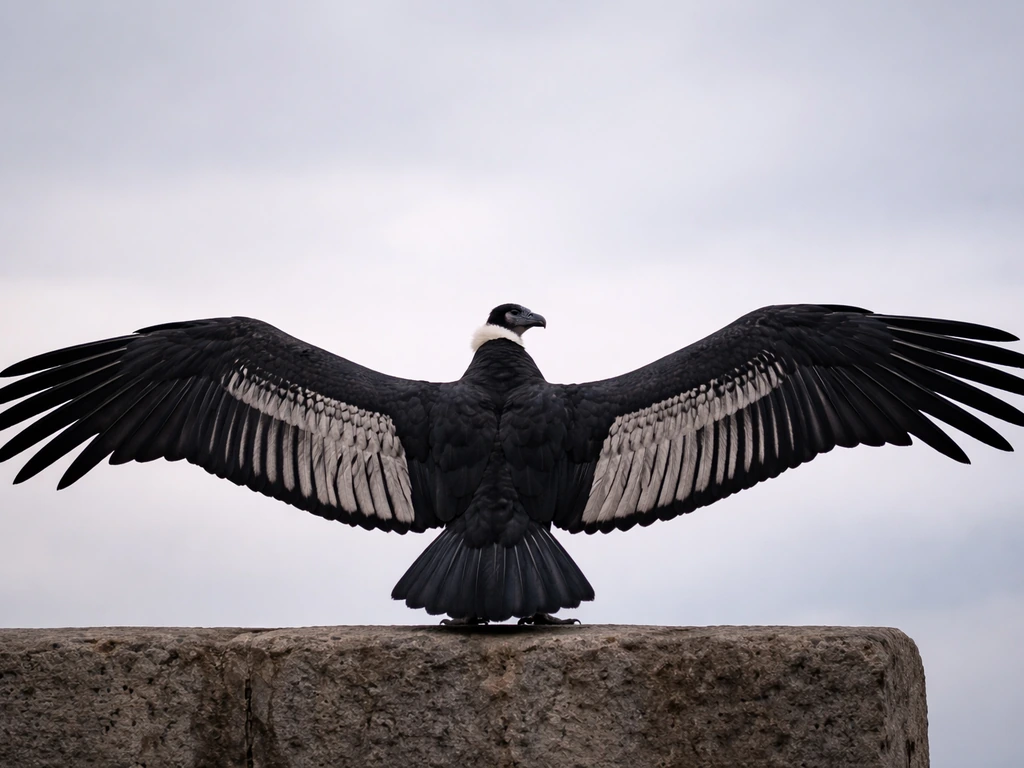
The Andean condor (Vultur gryphus) is one of the world's largest flying birds, with a wingspan that can reach around 3. American Bird Conservancy describes the Andean condor as among the heaviest flying birds, with wingspan up to about 10.5 feet and weight up to about 33 pounds. 3 meters (nearly 11 feet). It is a vulture in the New World vulture family, not related to Old World vultures despite looking similar. The name "cóndor andino" directly translates to "Andean condor," and every credible heraldic and vexillological reference that identifies the crest bird on Ecuador's coat of arms uses that exact species name, Vultur gryphus.
On the coat of arms, the condor is shown with its wings fully open and raised, a posture described in official sources as "alas abiertas" (open wings) or "alas desplegadas y levantadas en actitud de vuelo" (wings spread and raised in a flying attitude). If you are trying to identify the bird just from a visual of the flag, look for the large bird with an imposing wingspan sitting above the oval shield at the center.
Why the condor ended up on the flag
Ecuador's coat of arms was formally regulated by a decree published in the Registro Oficial 1272 on December 5, 1900, which set the legal definition of the national arms and flag composition, including the crest bird. The shield design concept, however, traces back to the poet and statesman José Joaquín de Olmedo, who helped shape Ecuador's early national symbols after independence. The condor was a deliberate choice, not an accident of heraldry.
The symbolism behind choosing the condor comes down to what the bird represents in Andean culture: power, greatness, and altitude. It lives in the high Andes, soars above everything, and has no natural predators. Ecuador's official sources describe it as an "emblema de poderío" (emblem of might) and connect its open-winged posture to the nation's energy and ambition. Wikipedia’s description of Ecuador’s coat of arms notes that the condor’s wings spread to symbolize power, greatness, and strength. Ecuador is not alone in this tradition. The Andean condor appears in the national coat of arms of Bolivia, Chile, Colombia, and Ecuador, making it a shared Andean symbol of regional identity.
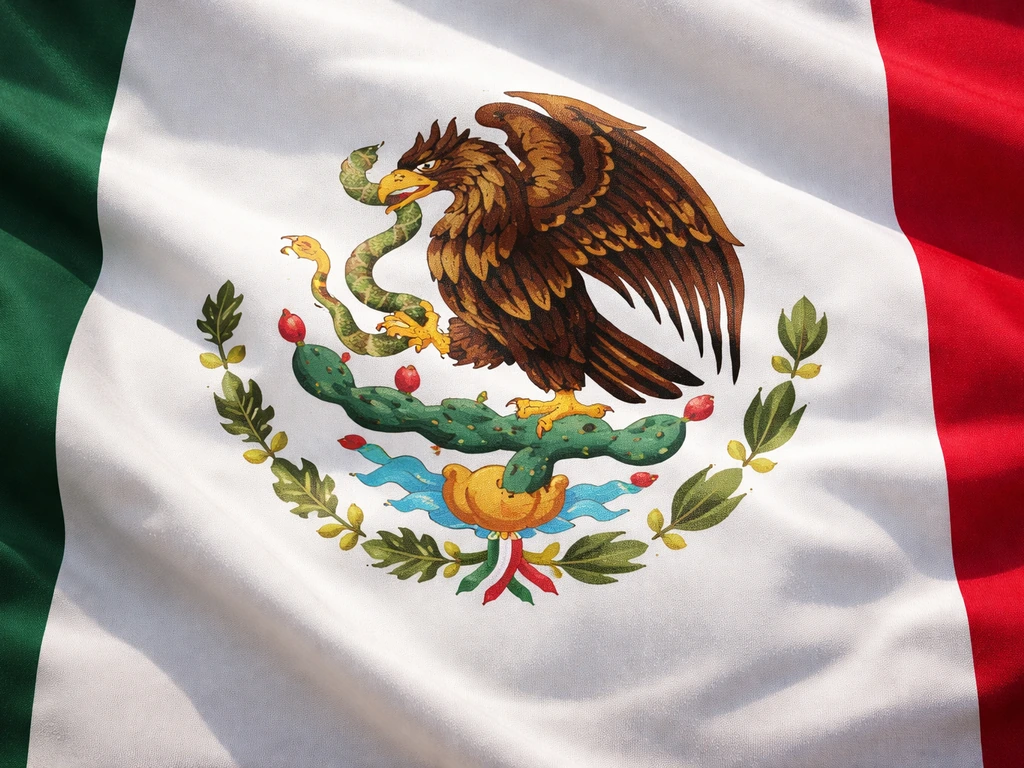
If you find this kind of flag bird symbolism interesting, the story behind the bird on Mexico's flag follows a similarly deep historical and cultural logic, with roots going back centuries before the modern state existed.
Flag bird vs. national bird: clearing up the confusion
This is where people often get tripped up. Ecuador's national bird is also the Andean condor, so in this case the flag bird and the national bird are the same species. But that is not always true for every country, so it is worth understanding the distinction.
The condor on the flag is specifically a heraldic and state symbol embedded in the coat of arms. The condor as "national bird" is a separate designation recognizing the species as Ecuador's official avian emblem. The two overlap completely here, which makes Ecuador a clean example, but do not assume that is always the case when you research other countries. For contrast, look at the bird on the Egyptian flag, where the heraldic eagle has its own distinct identity and symbolism separate from any national bird designation.
How to verify this for yourself
If you want to confirm the identification independently, here are the most reliable places to check:
- Ecuador's National Assembly (Asamblea Nacional del Ecuador) publishes civic education material online, including descriptions of the coat of arms that explicitly name "el cóndor" as the top element.
- The CEHIST (Centro de Estudios Históricos Militares del Ecuador) describes the oval national shield and labels the top bird as "el cóndor andino" within their official national symbols materials.
- Quito Informa, the municipal public information site for Quito, published an explainer on the Andean condor as a national symbol that ties the bird directly to the coat of arms.
- Heraldry references (such as Heraldry-Wiki) identify the crest bird as "condor (Vultur gryphus)" in their entry for Ecuador's national arms.
- Vexillological academic sources, including papers from the FIAV (the international flag research organization), describe the coat of arms on Ecuador's flag as including "an Andean condor (Vultur gryphus) with open wings."
All of these sources converge on the same answer: Vultur gryphus, the Andean condor. You are not going to find a credible source that names a different bird.
A quick comparison: the condor on Ecuador's flag vs. other flag birds
| Country | Bird on flag/emblem | Species name | Posture on emblem | What it symbolizes |
|---|
| Ecuador | Andean condor | Vultur gryphus | Wings open, raised, flying posture | Power, greatness, strength |
| Mexico | Golden eagle | Aquila chrysaetos | Perched on cactus, devouring snake | Sun, victory, ancient Aztec prophecy |
| Egypt | Eagle of Saladin | Stylized eagle (heraldic) | Facing forward, wings spread | Arab nationalism, historic heritage |
| Azores (Portugal) | Goshawk | Accipiter gentilis | Featured in regional emblem | Regional identity, the name "Açor" means goshawk |
The condor stands out in this group because it is a vulture rather than a raptor, yet it carries the same symbolic weight of power and dominion. Its sheer size makes it visually commanding even in a small coat of arms design.
Keep exploring flag birds and national symbols
If the Ecuador flag got you curious about how these bird symbols are chosen and depicted, there is a lot more to dig into. The design choices in national emblems are rarely random. For example, learning how to draw the bird on the Mexican flag is a surprisingly good way to understand the detail and intentionality packed into heraldic bird imagery, because you have to pay attention to every element.
For a less commonly known example, the bird on the Azores flag offers an interesting case study in how regional rather than national identity gets expressed through bird symbolism. It is worth a look if you want to see how the same logic plays out at a smaller geographic scale.
The short version: the bird on Ecuador's flag is the Andean condor (Vultur gryphus), shown with wings spread wide on top of the national coat of arms. It represents power and national pride, it has been part of the official emblem since at least the 1900 decree formalizing the national arms, and it is the same bird Ecuador recognizes as its national bird. No ambiguity, no confusion to sort through once you know where to look.