
Many countries have a bird on their flag. The most well-known examples are Mexico (a golden eagle perched on a cactus, devouring a rattlesnake) and Poland (a crowned white eagle on a red field). Both birds appear as part of the national coat of arms placed in the center of the flag. Beyond those two, dozens of other nations feature eagles, ravens, condors, and other birds either directly on the flag or within a central emblem.
What Country Has a Bird on Its Flag? How to Identify It

Marcus Chen
26 Apr 2026

If you're trying to identify a specific flag, the bird's pose, colors, and surrounding details are your fastest route to the right country. If you want to answer what flag has a bird on it, start by comparing the bird’s pose and colors to the examples in this guide.
If you want to answer what flag has a bird in the middle, start by comparing the bird’s pose and colors to the examples in this guide what flag has a bird on it.
Flag bird vs. national bird: two different things
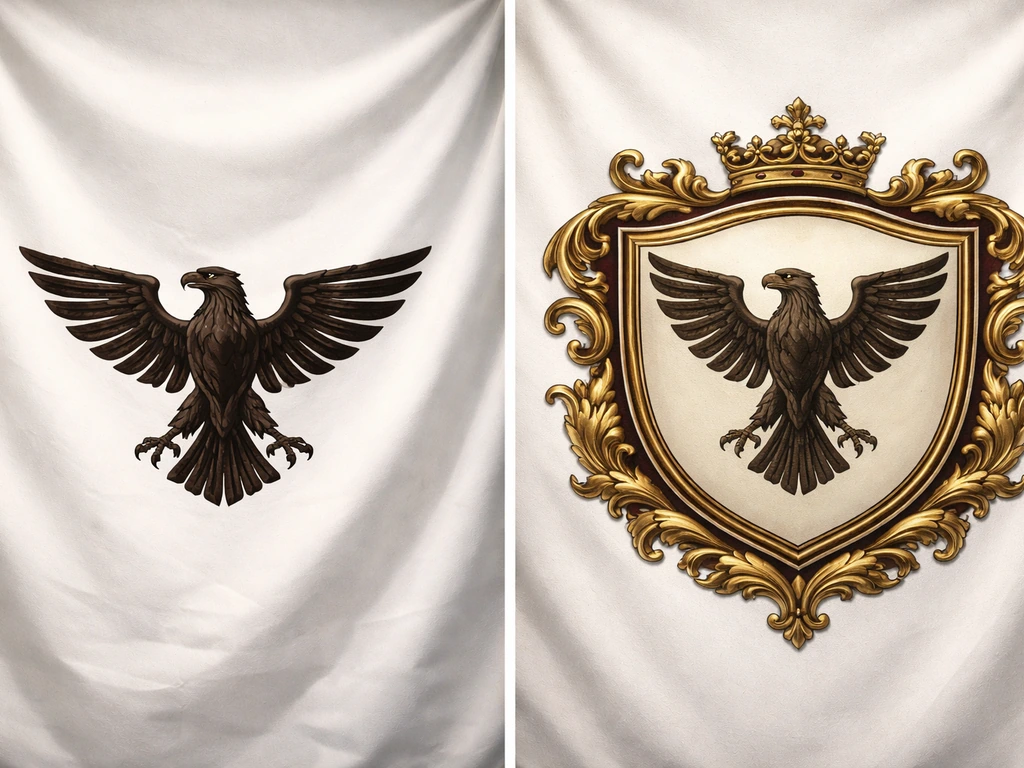
Before going further, it helps to separate two ideas that often get mixed up. A bird on a flag is a visual element of the flag's design. A national bird is an officially (or informally) designated species that represents the country. These sometimes overlap, but not always.
Mexico's flag features a golden eagle, and Mexico also recognizes the golden eagle as a national symbol. Poland's flag uses a white eagle from its coat of arms, and that same white eagle is Poland's centuries-old national emblem. But in other cases, the bird on a flag may be a stylized heraldic raptor that doesn't match any formally designated national bird species. The flag bird is about national imagery; the national bird is about an officially chosen animal representative. They can be the same thing, but you have to verify.
This distinction matters when you're trying to match a flag you've seen to a country. You may be looking at a coat of arms, not a standalone bird drawing, and the answer to 'what country is this?' lives in the heraldic details, not just the bird shape.
How to identify the bird on a flag
Use this visual checklist when you're looking at an unfamiliar flag and trying to pin down the bird:
- Is the bird standalone or inside a coat of arms? A standalone bird sits directly on the flag's color field. A coat-of-arms bird appears within a shield, wreath, or central emblem. Most flag birds fall into the second category.
- What color is the bird? White, gold/yellow, black, and brown are the most common. A white eagle on red is a strong signal for Poland. A golden eagle on green, white, and red points to Mexico.
- What is the bird doing? Flying, perched, or posed heraldically (facing sideways, wings spread)? Mexico's eagle is perched and facing right, devouring a snake on a cactus. Poland's eagle is displayed (wings spread) with a crown.
- Does the bird have a crown, specific beak color, or talon color? Poland's white eagle has a golden crown, golden beak, and golden talons. These details narrow it down fast.
- Are there other elements with the bird? Mexico's eagle is always accompanied by a prickly pear cactus and a rattlesnake. If you see those, it's Mexico.
- What are the flag's background colors? Knowing the flag's stripe colors alongside the bird narrows the options significantly.
Countries whose flags prominently feature birds
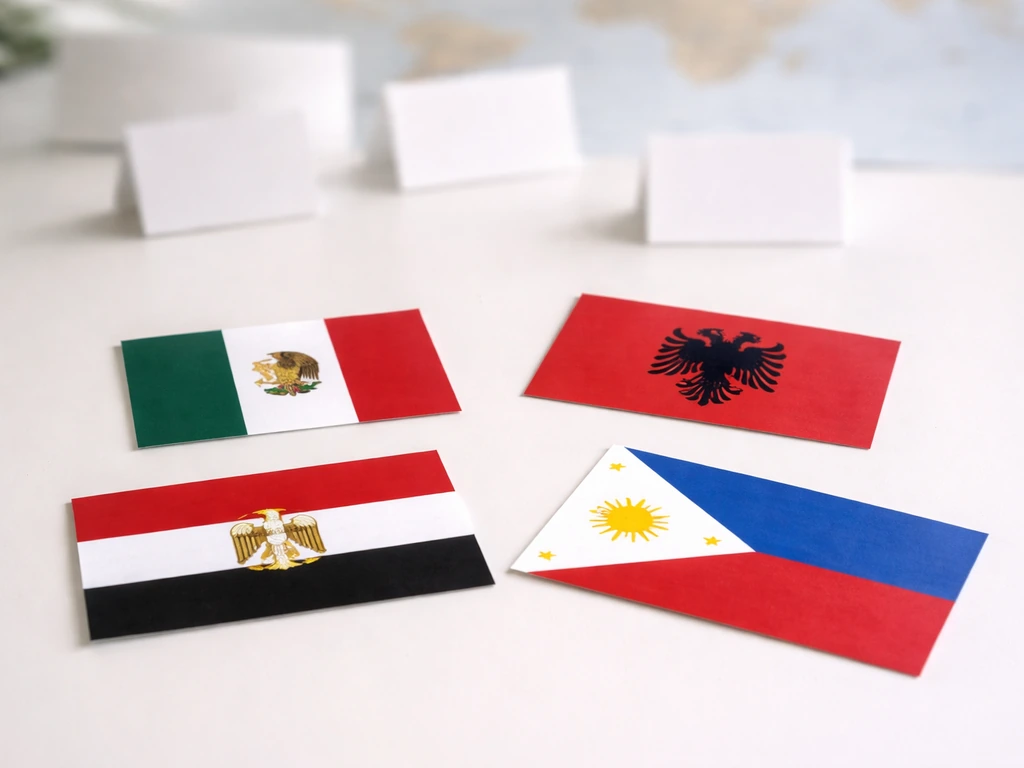
Eagles dominate flag bird imagery globally. There are dozens of countries that feature eagle motifs in their coats of arms, and many place those arms directly on the flag. Here are some of the most commonly encountered examples:
| Country | Bird on Flag | Where It Appears | Key Identifying Details |
|---|---|---|---|
| Mexico | Golden eagle | Center coat of arms | Perched on cactus, devouring rattlesnake; green, white, red stripes |
| Poland | White crowned eagle | Center coat of arms (official/state flag variant) | White eagle, golden crown/beak/talons on red shield; white and red flag |
| Albania | Double-headed black eagle | Directly on the flag field | Two-headed eagle, plain red background, no additional emblem |
| Papua New Guinea | Raggiana bird-of-paradise | Directly on the flag field | Yellow bird on black half; red and black flag with Southern Cross |
| Uganda | Grey crowned crane | Center circle on flag | White circle center, grey crane; black, yellow, red stripes |
| Zambia | African fish eagle | Bottom right corner | Eagle in flight over orange, green, red, black stripes |
| Zimbabwe | Zimbabwe bird | Left side, above red star | Stylized soapstone bird, red stripe on left; multicolor horizontal stripes |
| Ecuador | Harpy eagle (condor) | Top of coat of arms | Condor atop shield; yellow, blue, red stripes with central emblem |
Eagles are by far the most common flag bird, appearing in heraldic form across Europe, the Americas, and Africa. But bird-of-paradise species, cranes, fish eagles, and other birds also appear, particularly on flags from sub-Saharan Africa and the Pacific. If the flag you're looking at has a bird with elaborate plumage or a long trailing tail, Papua New Guinea's Raggiana bird-of-paradise is a strong candidate. The bird of paradise appears on the flag of Papua New Guinea in the Raggiana bird-of-paradise form. A crane-like bird in a circular center emblem over horizontal stripes narrows quickly to blank" rel="noopener noreferrer">Uganda.
Confirm the match: verifying the bird species and emblem
Once you have a candidate country, the next step is confirming you have the right bird. Don't stop at 'it looks like an eagle.' Heraldic eagles all look similar at first glance. The confirming details are in the blazon, which is the official written description of the coat of arms.
For Poland, the blazon describes a crowned white eagle on a red field, with the crown, beak, and talons specified as golden. If the eagle you see is white with a crown and the flag has a white-over-red horizontal bicolor, that's Poland's state flag.
For Mexico, the coat of arms is governed by a specific national law (the Law on the National Arms, Flag, and Anthem). The description is precise: a golden eagle, upright, facing right, perched on a prickly pear cactus growing from a rock in a lake, with a rattlesnake in its beak and talon. If any of those elements are missing from what you're looking at, it's probably a different country.
After matching the visual details to a blazon, cross-check the species name. Poland's eagle is historically identified as a white-tailed eagle (a species native to the region since the Middle Ages). Mexico's eagle is classified as a golden eagle for national emblem purposes, though there have been ornithological discussions about the exact species behind the original Aztec imagery.
What the flag bird tells you about the country's history
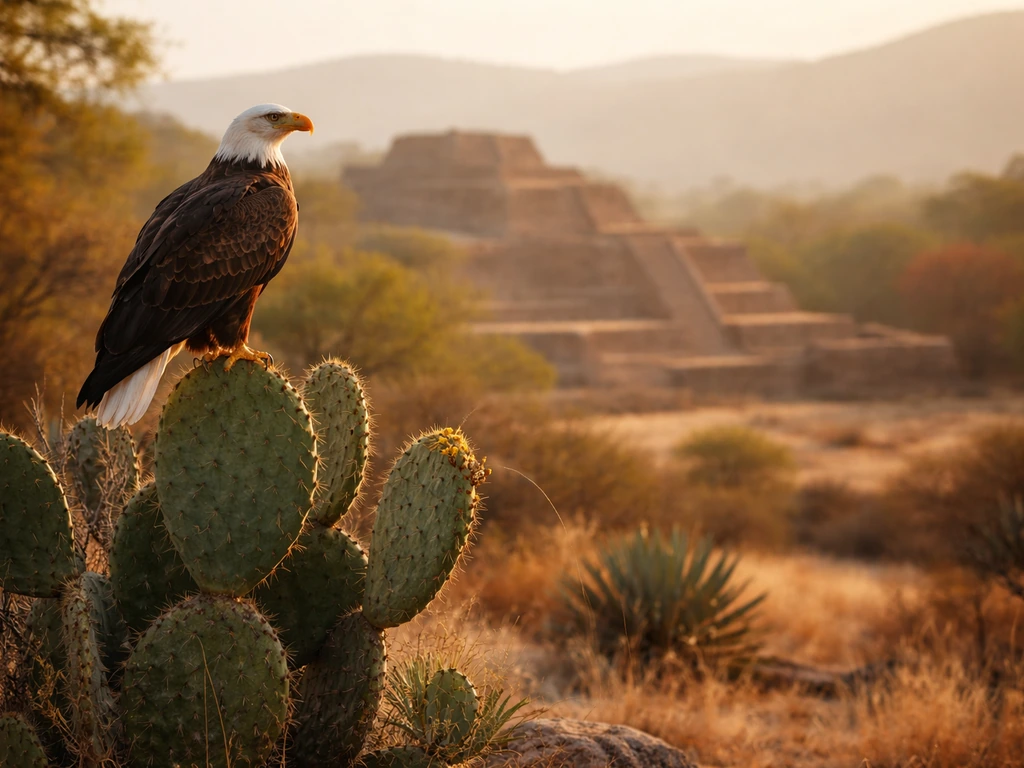
Flag birds almost always carry deep historical or cultural meaning, and understanding that meaning helps you remember which bird belongs to which country.
Mexico's eagle-on-cactus image comes directly from an Aztec legend. The Mexica people were said to have been guided by their god Huitzilopochtli to found their city, Tenochtitlan, at a spot where they would see an eagle perched on a cactus devouring a snake. When the Spanish arrived, that founding symbol had already been a central emblem for centuries. It was incorporated into the flag of the independent Mexican nation and has been there ever since. The bird isn't just decoration; it is the entire founding myth compressed into a single image.
Poland's white eagle has been on the coat of arms since the Middle Ages, making it one of Europe's oldest continuous national symbols. The crowned eagle became associated with the Piast dynasty, Poland's founding royal line, and even during periods when Poland was partitioned and occupied by neighboring powers, the white eagle remained the symbol of Polish identity and statehood. The crown on the eagle is particularly significant: it was removed during Poland's communist era and restored after 1989 as a deliberate signal of national continuity.
For other countries, similar stories apply. Uganda chose the grey crowned crane because it appeared on the colonial-era flag and was already familiar as a regional symbol; it was retained and formalized at independence. Uganda’s flag was adopted on 9 October 1962 and its design includes a central white disc depicting the grey crowned crane facing the hoist side [Uganda chose the grey crowned crane](https://en. wikipedia.
org/wiki/FlagofUganda). Uganda’s national bird is the grey crowned crane (Balearica regulorum), and it is represented on Uganda’s flag and coat of arms Uganda chose the grey crowned crane.
Papua New Guinea's Raggiana bird-of-paradise was selected to reflect the country's unique biodiversity and its identity as something distinct from its colonial past. The flag bird and the national bird story are almost always the same story: a nation choosing a creature that reflects its land, its history, or its founding myths.
It's also worth noting that the relationship between the flag bird and the formally recognized national bird isn't always clean. Some countries feature a heraldic eagle on the flag but have designated a completely different species as the official national bird. The bald eagle of the United States is a famous example in its own way: it appears on the Great Seal and has been the de facto national symbol for centuries, yet it was never formally designated by law as the official national bird (though that may change). If you are wondering which bird is the emblem of the us, this bald eagle on the Great Seal is a key related clue. Always verify the official status separately.
How to look up the national bird and dig deeper
Once you've identified the country from the flag bird, here's how to follow up and get the full picture:
- Search for the country by name on this site. Each country's national bird entry covers the species, the selection history, the symbolism, and interesting facts about why that particular bird was chosen.
- Check the official status. Some national birds are formally gazetted by law; others are 'informal' designations recognized by tradition or popular use but never codified. The distinction matters if you're using this for research or education.
- Compare the flag bird to the national bird entry. For Mexico, you'll find the golden eagle covered in depth, including the Aztec foundation story. For Poland, the white eagle's medieval origins are part of the national bird narrative. For countries where the flag bird and the national bird are different species, both entries are worth reading.
- Use the coat-of-arms description as a reference point. If you want to confirm exact species details, the blazon (official written description) of the coat of arms is the most precise source. Cross-reference it with the national bird's scientific name when available.
- If the bird you saw on the flag doesn't match any coat-of-arms description you can find, look at categories of flags with standalone bird graphics. Several flags place birds directly on the color field without a coat-of-arms frame, and those are worth treating as a separate visual category.
If you're exploring related questions, the specific cases of which flag features a bird of paradise, which country uses the secretary bird as its national emblem, or what appears at the very center of certain bird-flag designs are all worth investigating individually. If you're also wondering what flag has a bird on it, use these visual details to narrow down the country which country uses the secretary bird as its national emblem. The secretary bird is the national emblem of South Africa secretary bird as its national emblem. Each one has its own history that goes well beyond a simple identification exercise.
FAQ
How can I tell if the bird on a flag is a standalone bird or part of a coat of arms?
Start by checking whether the bird is part of a coat of arms placed on the flag’s center. If there is a shield, wreath, crown, or supporters, you are likely looking at heraldic art rather than a standalone “bird illustration,” and the species match may require reading the blazon or official emblem description.
What if the bird looks like an eagle, but I’m not sure which eagle species it is?
Yes. Many flags show a stylized heraldic raptor that can resemble several real species. The fastest safeguard is to compare specific features the blazon usually names (crown color, beak and talon color, direction the bird faces, what it is perched on, and any snake, fish, or ribbon). If those cues do not line up, assume it is not the country you first guessed.
What visual details help most when the bird has elaborate plumage or a long tail?
Look for birds with distinctive anatomy in the design, not just “bird shape.” For instance, a long trailing tail, elaborate fan-like plumage, or very specific head/wing detailing can narrow candidates to birds like the Raggiana bird-of-paradise style shown for Papua New Guinea, even when the artist is stylizing the image.
How do I identify the country if the flag image is blurry or colors don’t match perfectly?
If the bird is monochrome or the image quality is poor (low resolution, embroidery blur, or a photo taken at an angle), focus on emblem structure first (center emblem vs full-field motif) and on color blocks that are less likely to change (background stripe colors, crown presence, and any contrasting beak/talon colors). Then verify the remaining details with an official description.
Is the bird on a country’s flag always the same as that country’s official national bird?
Do not assume the flag bird equals the national bird. The relationship varies by country, and some nations use a heraldic bird on the flag while recognizing a different species as the national bird. Your confirmation step should be separate verification of official status, not just visual similarity.
Can the same country’s flag show different bird details across history or versions?
Check for differences between historical and modern versions, especially changes to crowns, arrangement, and accessory symbols. Poland’s eagle crown is a known example of how a specific element can be intentionally altered and restored over time, which can change which variant you are looking at.
What should I check first if multiple countries seem to use a similar eagle on a flag?
Use the “element checklist” approach: bird pose (upright vs perched), direction (facing left vs right), object context (cactus, rock, lake, ribbon), and any animals in the bird’s grasp or mouth. For Mexico, missing the cactus, rock-in-water setting, or snake-in-talon elements is a strong sign it is not the Mexican design.
What are common mistakes people make when confusing flags with seals or government emblems?
Sometimes the bird motif appears on the seal or on an emblem that is used on government materials, and it gets confused with the national flag. To avoid this, confirm you are looking at the actual flag geometry (colors, field layout, and whether the bird sits in a shield at the center) rather than a related insignia.
Does the bird’s placement (center emblem, full field, within a circle) matter for identification?
If the bird is shown inside a circular center emblem, this can narrow possibilities because design structure is often consistent even when the species varies. For example, a crane-like bird in such a circular emblem is a strong cue toward Uganda’s heraldic style, whereas full-field eagles without an emblem typically suggest a different layout category.
What’s the best next step after I pick a candidate country based on the bird?
Yes. After you identify the likely country, cross-check with the official written description, if available, or at least confirm the named characteristics that the blazon would include (crown details, beak/talon colors, facing direction, and specific objects held). This prevents matching to a visually similar but different heraldic eagle.