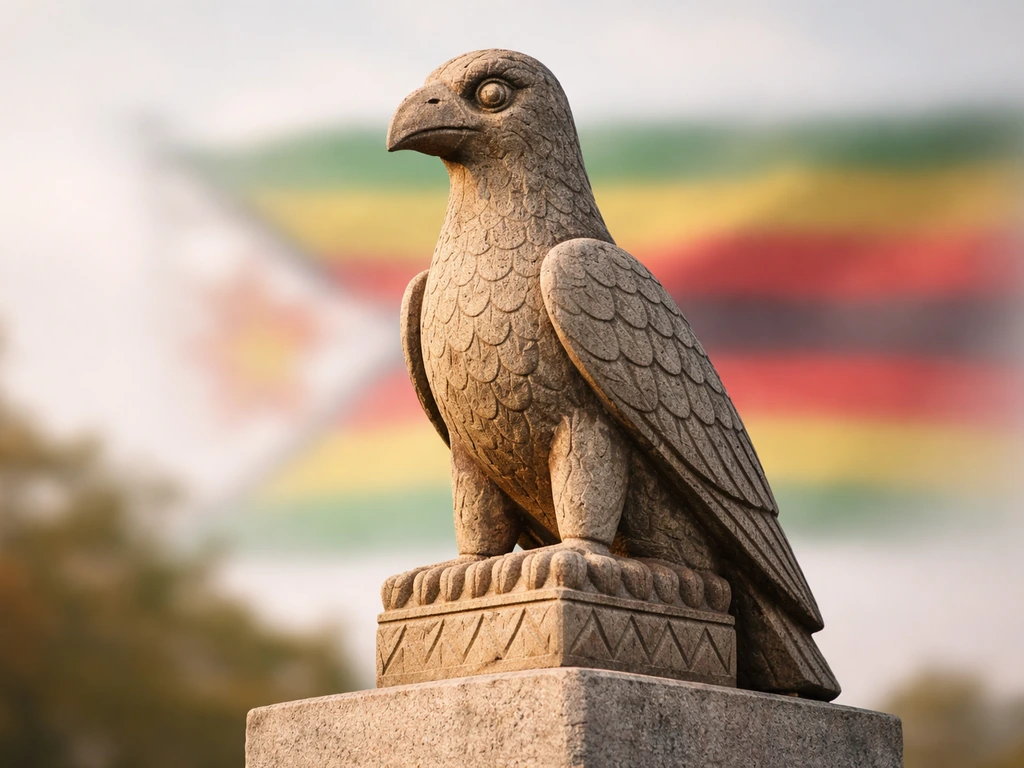
Quite a few flags have birds on them, so the honest first answer is: it depends on which flag you're looking at. Around two dozen national flags feature a bird directly on the flag field or within an embedded coat of arms. If you're staring at a flag and trying to name it, the fastest route is to narrow it down by the bird's shape, color, and where it sits on the flag. If you are trying to pinpoint a bird placed in the middle, you can narrow the match by looking for that central emblem and the bird's silhouette what flag has a bird in the middle. That's exactly what this guide walks you through.
What Flag Has a Bird on It? Quick ID Guide and Examples

Marcus Chen
19 Apr 2026
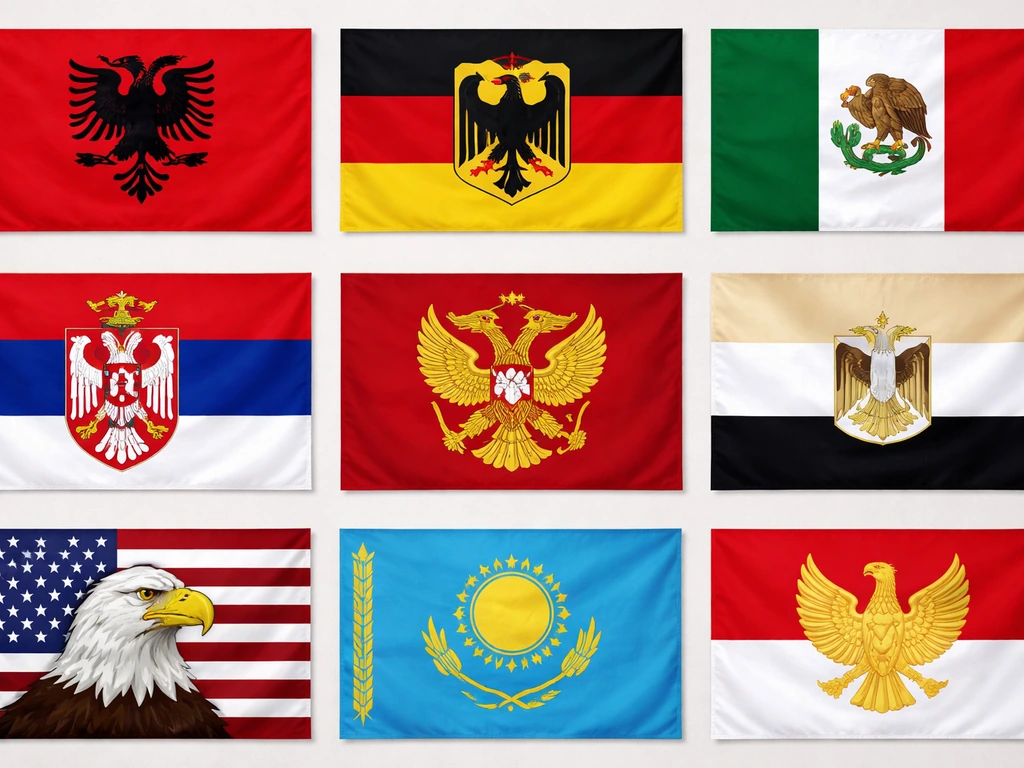
Quick way to identify flags with birds
Start with three visual cues: the bird's silhouette, the bird's color, and its placement on the flag. These three details will eliminate most candidates in seconds.
- Silhouette: Is it an eagle (broad wings, hooked beak)? A stylized/abstract bird? A long-legged bird like a secretary bird? A bird of paradise with flowing tail feathers?
- Color: Black bird on a red background points almost immediately to Albania. A golden or natural-toned eagle on a shield suggests a coat of arms emblem. A stone-gray stylized bird in a white triangle suggests Zimbabwe.
- Placement: Is the bird centered on the whole flag, centered in a triangle or stripe, or nested inside a circular coat of arms? Center placement narrows it down fast.
If you can answer those three questions, you can usually match the flag in one or two guesses. The sections below give you the specific countries to check against.
Match the bird emblem style to specific national symbols
Not all bird flags look alike, and the style of the bird emblem often tells you a lot about the country's heraldic tradition and the species chosen as its national symbol. Here are the main style categories you'll encounter.
Double-headed eagles
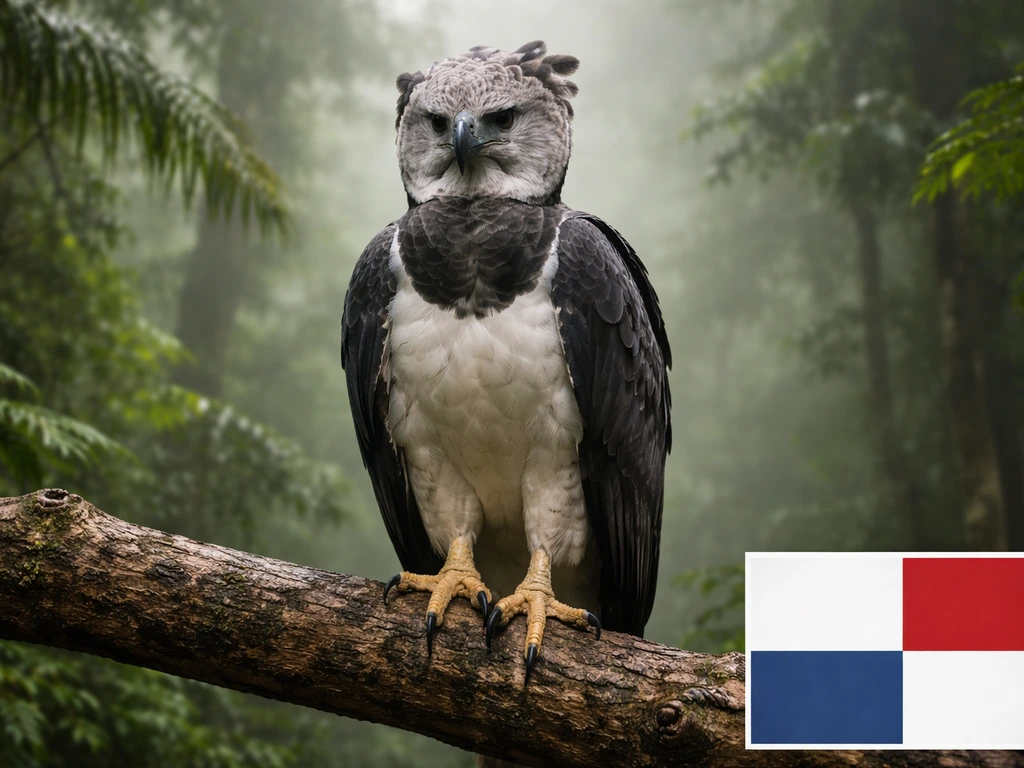
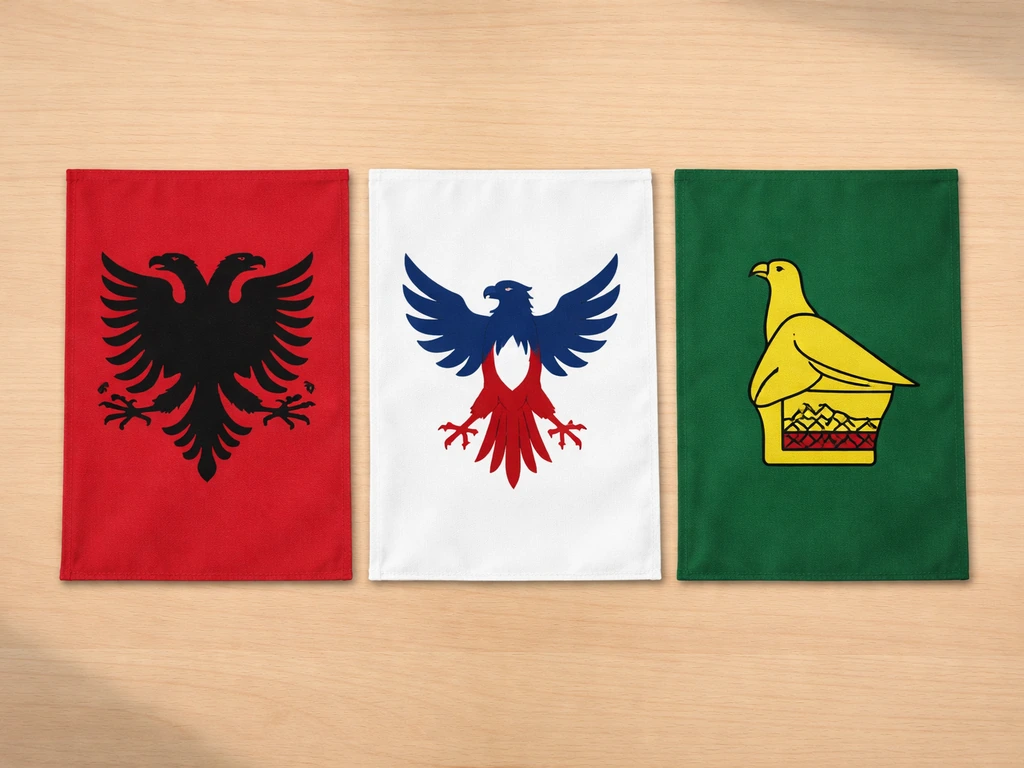
The double-headed eagle is one of the oldest heraldic bird symbols in existence, and it shows up most prominently on Albania's flag. Albania's flag is a plain red field with a black double-headed eagle silhouette dead center. The Albanian embassy officially describes it exactly this way. This design is distinct enough that you won't confuse it with most other bird flags. Serbia and Montenegro have historically used similar double-headed eagle imagery in their coats of arms, so if you see a double-headed eagle embedded in a shield (rather than dominating the whole flag), check those countries.
Single-headed raptors and eagles
Single-headed eagles appear on a number of flags and coats of arms. Panama's coat of arms (which underlies its national symbol imagery) features the harpy eagle, Harpia harpyja, designated Panama's national bird by Law 18 of 2002, declared officially on April 10, 2002, and further specified in Law 50 approved May 17, 2006. The harpy eagle was chosen because it is the largest and most powerful raptor in the Western Hemisphere and is native to Panama's forests. The U.S. uses the bald eagle, which has appeared on the Great Seal since June 20, 1782, and was formally designated the national bird by Public Law 118-206, signed December 23, 2024.
Stylized and abstract bird emblems
Zimbabwe's flag is the best example of this category. It features a stylized carving known as the blank" rel="noopener noreferrer">Zimbabwe Bird, placed in a white triangle on the hoist side of the flag, sitting above a red five-pointed star. The Zimbabwe Bird is based on actual soapstone bird sculptures found at the Great Zimbabwe ruins, first incorporated into official heraldry on the Southern Rhodesian coat of arms in 1924 and carried forward through successive political changes to the present Zimbabwe flag.
Britannica likewise notes that the soapstone bird forms from the Great Zimbabwe ruins later became a national symbol and were incorporated into the Zimbabwe flag carried forward through successive political changes to the present Zimbabwe flag. It does not look like a photorealistic eagle or raptor; it's geometric and angular.
If the bird on the flag you're looking at seems almost sculptural or logo-like rather than naturalistic, Zimbabwe is your top candidate.
Non-raptor birds
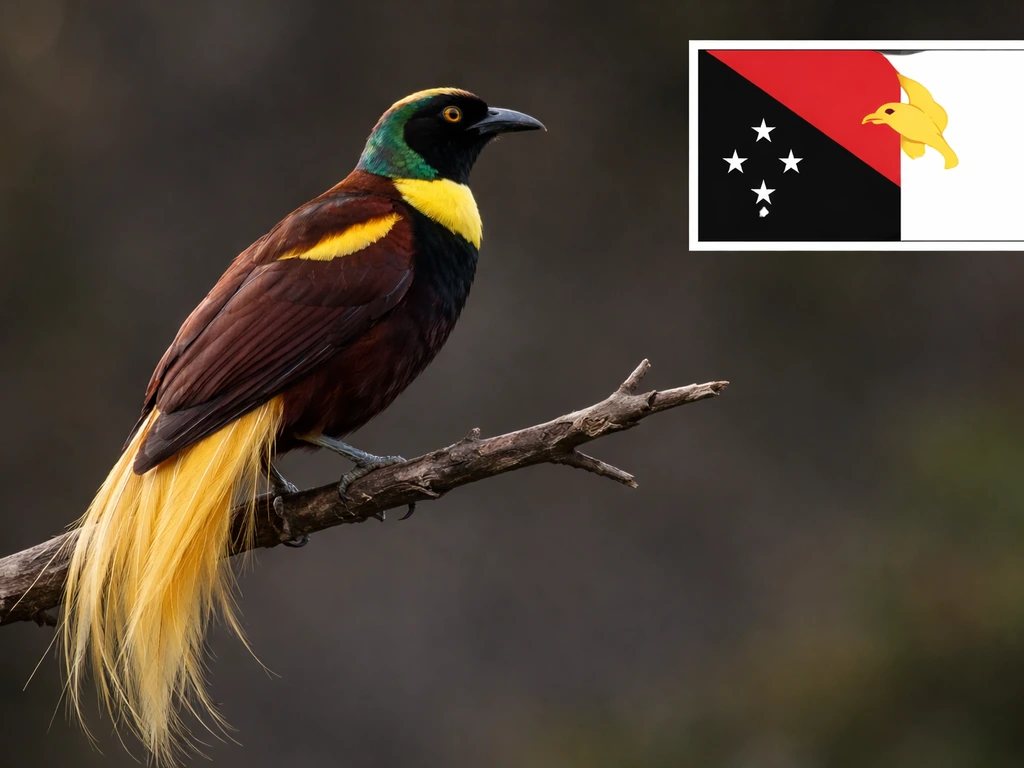
Not every flag bird is an eagle. Papua New Guinea's flag includes a bird of paradise, which is a topic explored separately when looking at which nation's flag features a bird of paradise. Sudan's emblem uses a secretary bird, which is a long-legged African raptor that looks nothing like a typical eagle silhouette and is notably associated with the national emblems of certain Arab nationalist traditions. Secretary bird is the national emblem of Sudan. If the bird on the flag you're examining has long legs, a distinctive crest, or flowing ornamental tail feathers, you're almost certainly outside the eagle/raptor category.
Common countries whose flags feature birds
Here's a practical reference table covering the most commonly searched flag-bird pairings, the bird species involved, and a note on placement so you can quickly cross-check what you're seeing.
| Country | Bird on Flag/Emblem | Species | Placement on Flag |
|---|---|---|---|
| Albania | Double-headed eagle | Stylized heraldic eagle | Centered on red field |
| United States | Bald eagle | Haliaeetus leucocephalus | On Great Seal/coat of arms embedded in flag contexts |
| Zimbabwe | Zimbabwe Bird | Stylized stone-carving bird (Zimbabwe Bird) | White triangle, hoist side, above red star |
| Panama | Harpy eagle | Harpia harpyja | On national coat of arms |
| Papua New Guinea | Raggiana bird of paradise | Paradisaea raggiana | Right half of flag, in flight |
| Zambia | African fish-eagle | Haliaeetus vocifer | Top right corner of flag |
| Uganda | Grey crowned crane | Balearica regulorum | Centered on white disc |
| Bolivia | Andean condor | Vultur gryphus | On coat of arms within flag |
| Ecuador | Andean condor | Vultur gryphus | Atop coat of arms within flag |
| Mexico | Golden eagle | Aquila chrysaetos | Centered coat of arms on white stripe |
A few things worth noting: the African fish-eagle is the national bird of multiple countries including Zambia, Zimbabwe, Malawi, and Namibia, but it appears on flags in different forms. If you are trying to figure out which country has a bird centered on the flag, use the placement and silhouette cues before you rely on a bird name African fish-eagle. Zimbabwe uses the abstract blank" rel="noopener noreferrer">Zimbabwe Bird rather than a naturalistic fish-eagle image. Zambia uses the fish-eagle directly in the corner of its flag. This kind of overlap is exactly why species name alone is not enough to identify a flag.
How national birds became flag emblems (symbolism and history)
Birds end up on flags through one of a few routes: ancient heraldic tradition, colonial-era coat of arms adoption, post-independence nation-building choices, or formal legal designation. Understanding which route a country took helps you understand why the bird looks the way it does on the flag.
Albania's double-headed eagle goes back centuries to Byzantine and medieval Albanian heraldic tradition. It was associated with the 15th-century national hero Gjergj Kastrioti (Skanderbeg) and became the defining visual of Albanian national identity. By the time modern Albania formalized its flag, the double-headed eagle was already inseparable from the nation's self-image.
The U.S. bald eagle was chosen for the Great Seal in 1782 largely because it was uniquely North American, physically impressive, and carried connotations of strength and freedom. For the U.S., the emblematic bird most closely associated with national symbolism is the bald eagle. It appeared on official seals and currency for over 240 years before Congress formally codified it as the national bird in December 2024, which is a surprisingly recent legal formality for such an iconic symbol.
Zimbabwe's bird emblem takes a different path entirely. The Zimbabwe Bird is directly tied to archaeological heritage: the soapstone bird carvings discovered at the Great Zimbabwe ruins are believed to represent the bateleur eagle or a fish-eagle, and they became symbols of the ancient civilization that built the stone city. When Southern Rhodesia adopted the bird for its coat of arms in 1924, and when Zimbabwe gained independence in 1980, the bird was retained as proof of deep historical roots in the land. The national bird designation (African fish-eagle) and the flag emblem (the stylized Zimbabwe Bird) are technically different but historically connected.
Panama's harpy eagle designation is more recent and more straightforwardly practical: Panama has significant harpy eagle habitat, the species is the largest raptor in the Americas, and formal legal designation under Law 18 of 2002 gave the country an official national bird that was both ecologically significant and internationally recognizable. The coat of arms bird imagery followed, reinforcing the connection between the species and national identity.
One important caveat: national emblems do change. Syria updated its eagle-type emblem recently, and such changes mean older flag images or older reference materials may not match the current official design. Always verify against current official sources, especially for countries in the Middle East and Africa where heraldic choices can shift with governments.
Use a photo or description workflow to narrow the answer
If you have a photo of the flag (or a clear description), here's a practical step-by-step process to identify it.
- Count the bird's heads. One head or two? A double-headed eagle points you directly toward Albania and Eastern European heraldic traditions.
- Check the background color. A plain red background with a black bird center? That's Albania. A multicolored striped flag with a bird in the center? Check Uganda, Zimbabwe, or Zambia depending on the bird's style.
- Look at the bird's posture and detail. Geometric and stylized (almost like a logo)? Zimbabwe. Naturalistic, in flight with spread wings? Papua New Guinea or Zambia. Perched, facing sideways on a shield? Likely a coat-of-arms bird on a flag like Mexico or Ecuador.
- Note the bird's color. Black bird suggests Albania or heraldic coat-of-arms styling. White or light-colored bird on a dark background suggests Poland (white eagle on red). Golden or yellow bird typically signals a coat-of-arms emblem.
- Check for additional elements around the bird. A star below the bird in a triangle is Zimbabwe. A wreath or shield around the bird usually signals a coat of arms embedded in the flag rather than a standalone bird emblem.
- If the bird has long legs, a crest, or ornamental tail feathers, move away from the eagle list entirely and look at secretary birds (Sudan), crowned cranes (Uganda), or birds of paradise (Papua New Guinea).
- Match your visual findings to the table in this article. If you still have two or three candidates, go to the verification step below.
Where to verify: reliable references for each country's national bird
Once you have a candidate country, verifying the specific bird-flag pairing is straightforward if you go to the right sources. Here's where to look.
- Official government websites and embassy pages: The Albanian Embassy, for example, directly states the flag description including the double-headed eagle. Panama's national symbols page specifies the harpy eagle and references the enabling law. These are the most authoritative sources available.
- National legislation and legal texts: Panama's Law 18 of 2002 and Law 50 of 2006, and the U.S. Public Law 118-206 (December 2024), are examples of how bird designations are codified. If you need certainty, the law text is the final word.
- Conservation organization records: The Peregrine Fund maintains detailed species profiles that include the country designations and official dates (for example, they document Panama's harpy eagle designation date as April 10, 2002). These are well-researched and regularly updated.
- Encyclopedic flag references: Resources like Flags of the World (FOTW) and the official heraldry records maintained by countries' governments describe exact flag specifications, including bird emblem design, colors, and placement. These are useful for technical details like whether the eagle is single- or double-headed.
- This site's national bird profiles: Each country's national bird page on this site covers the species, the cultural symbolism, and the history of how the bird was selected. If you've narrowed it down to a country, checking that country's entry here will confirm whether the bird appears on the flag and why it was chosen.
One practical warning: image search results and general trivia sites often mix up national bird designations with flag emblem details, especially for countries like Zimbabwe where the flag bird (the Zimbabwe Bird) and the national bird species (African fish-eagle) are related but not identical. Always cross-check with an official or legally-grounded source when precision matters.
If you're trying to answer a more specific version of this question, like which exact country has a bird centered in the middle of the flag, or which country's flag features a bird of paradise specifically, those are narrower questions worth exploring in their own right, and they come up often enough that they deserve focused answers. If you are also comparing birds on flags by region or by legal national-bird designations, you may find the broader overview in the guide helpful too which country has a bird on its flag. The same identification workflow applies: start with the bird's shape and placement, then match to a country, then verify with an official source.
FAQ
If there are many bird flags, what’s the fastest way to narrow it down beyond “it depends”?
Start by describing the bird’s outline first, not its species name. For example, a true double-headed eagle silhouette narrows you quickly to Albania, while an angular, carved-looking “logo” bird like Zimbabwe’s points away from naturalistic eagles even if it resembles a raptor in concept.
How can I tell whether the bird on a flag is centered, cornered, or inside an emblem?
Look for whether the bird is centered in the field, placed in a corner, or embedded in a shield or triangle. A bird centered on the main field can still be an eagle-type, but corner placement is a common clue for flags like those using fish-eagle imagery in a specific quadrant.
Can the bird on the flag be different from the country’s official national bird?
Yes, the bird you see on the flag may not match the legal national-bird species. Zimbabwe is the clearest example: the flag shows the stylized Zimbabwe Bird, while the national bird designation is different (African fish-eagle), so don’t assume the two are always visually identical.
What visual signs indicate the bird is a heraldic emblem versus a realistic wildlife depiction?
Use the style cues the guide mentions, but add one more: check whether the bird has heraldic geometry (angular lines, simplified shapes) versus naturalistic feather detail. Geometric and sculptural designs tend to correlate with heraldic or emblem traditions rather than realistic wildlife illustration.
What if I suspect the flag design has changed since older photos or souvenirs were made?
Watch for “updates” across time. If the flag in front of you looks like an older version (different eagle stance, different shield shape, altered line thickness), you may be seeing a design that changed with a government or official re-adoption, so rely on current official references when possible.
What should I do if my photo is blurry or the flag is cropped?
If your image is low-resolution or cropped, placement becomes your anchor. For instance, identify which side the hoist is on (left side when the flag is on a pole, facing the viewer), then note where the bird sits relative to stars, triangles, or the coat of arms boundary.
How do I avoid confusing countries that use the same bird type (like fish-eagle imagery)?
Beware of overlap where the same species is used in different layouts or stylizations across countries. The guide’s fish-eagle example matters here: multiple countries use the same general bird idea, so you must compare both the species silhouette and the exact placement (corner versus center versus emblem).
How can I identify a flag when the question is more specific, like “bird of paradise” or “bird centered in the middle”?
Treat “which country has bird of paradise” and “bird centered in the middle” as separate filters. Birds of paradise are usually identified by a distinctive long, ornamental tail and crest-like shapes, while a bird centered in the middle suggests a symmetrical composition that you should compare to official, current flag diagrams.
What’s a good strategy when the bird doesn’t look like an eagle at all?
If the bird looks non-eagle (long legs, crest, flowing tail ornaments), switch your mental category immediately to secretary bird or other emblematic raptors rather than forcing an eagle match. This reduces guesswork before you consult pairings tables or country lists.
When I need an exact match, how do I verify it without getting misled by trivia sites?
Use legal or official sources when precision matters, especially when national-bird designations and flag emblems differ. Generic trivia sites often blur the relationship, so confirm the specific flag emblem description or the underlying coat-of-arms symbolism before you settle on an answer.
Next Article
What Is the National Bird of Zimbabwe? Symbolism and Facts
Discover Zimbabwe’s national bird, its distinctive traits, and the history and symbolism behind the emblematic choice.