
Papua New Guinea is the country whose national flag features a bird of paradise. Specifically, the flag shows a stylized silhouette of the Raggiana bird-of-paradise in mid-yellow (gold), soaring across a red background on the upper portion of the flag. The lower portion is black and shows the Southern Cross constellation in white stars. If you see a flag split diagonally into red and black with a golden bird on the red side and stars on the black side, that is Papua New Guinea.
Which Nation’s Flag Features a Bird of Paradise?

Marcus Chen
1 May 2026
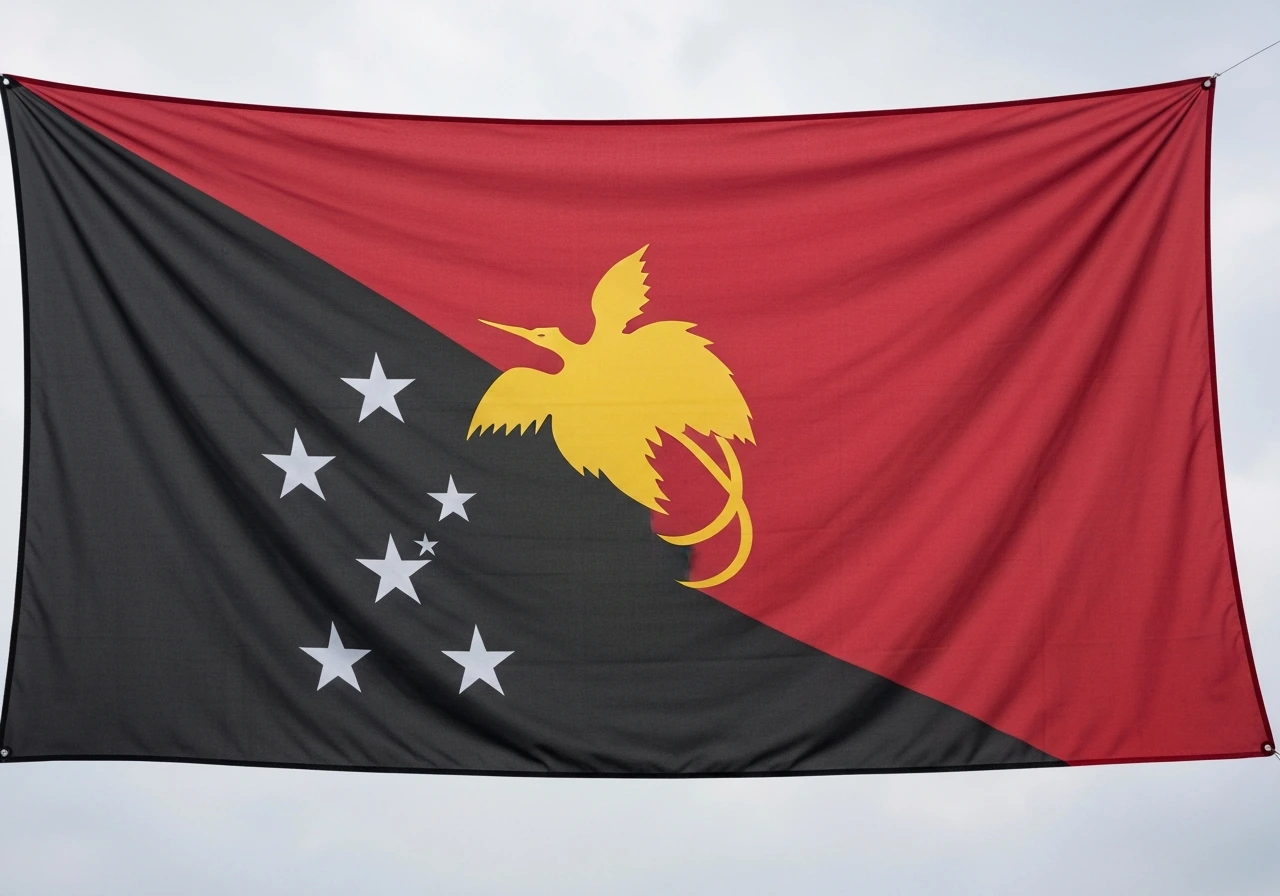
What the bird looks like on the flag
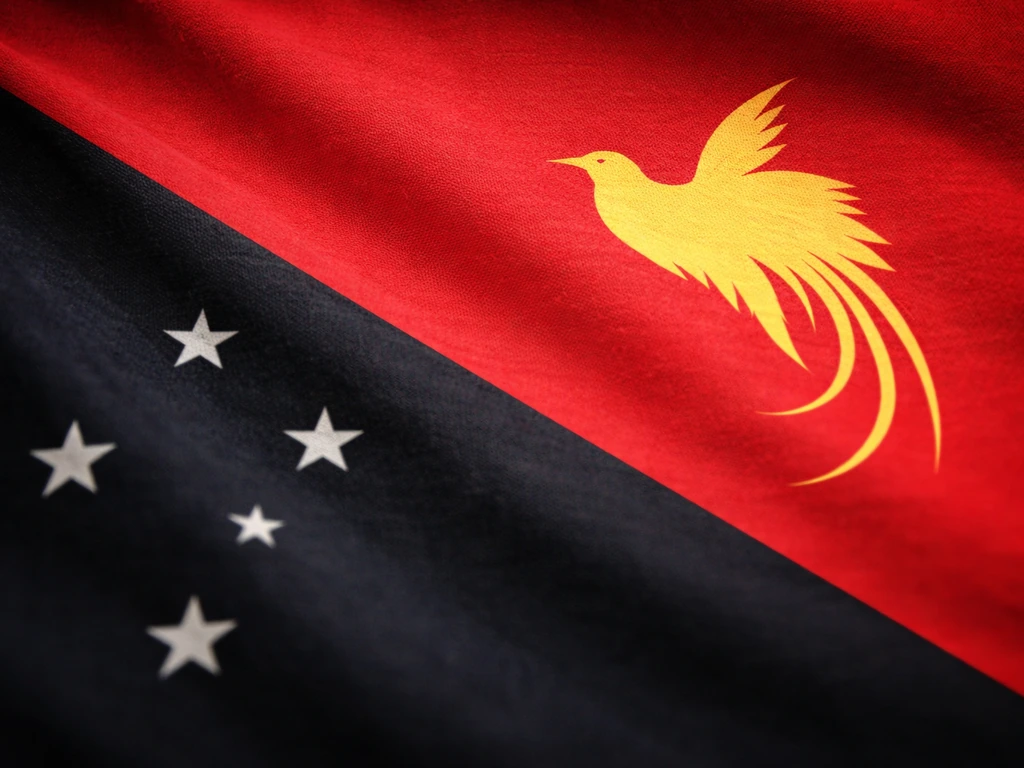
The flag is divided diagonally from the lower-left corner to the upper-right corner. The red triangle is in the upper-fly section, and that is where the bird sits. The bird appears as a clean, mid-yellow silhouette of a Raggiana bird-of-paradise in full flight, wings spread, with the long decorative tail plumes trailing behind it. The official flag description from Papua New Guinea's National Identity Act 1971 calls it precisely a 'mid-yellow (Collies No. 537) representation of a soaring Bird of Paradise.' It is a stylized emblem, not a naturalistic painting, so the shape is bold and immediately recognizable even on a small flag.
The black triangle in the lower-hoist section contains the Southern Cross: five white stars of varying sizes arranged in the same pattern visible in the night sky of the Southern Hemisphere. So the two main visual elements are the golden bird on red, and the Southern Cross on black. You will not confuse the two halves once you know what to look for.
Why a bird of paradise on a national flag
The Raggiana bird-of-paradise is the blank" rel="noopener noreferrer">national bird of Papua New Guinea, and it has been deeply woven into the culture of the islands long before the flag existed. In Papua New Guinea's many indigenous traditions, the bird's spectacular plumage carried spiritual and ceremonial significance. Its feathers were used in traditional dress and ritual, and the bird was seen as a connection between the earthly and the divine.
The bird is also known locally as the 'Kumul' (from Tok Pisin, the national creole language) and as 'Logohu' in Motuan, one of the indigenous languages of the Port Moresby region. The Logohu has been the official national symbol of Papua New Guinea since independence. Placing the Raggiana on the flag was a way of anchoring a modern national identity to something ancient and genuinely local, rather than borrowing symbols from colonial traditions.
The bird-of-paradise family (Paradisaeidae) is native to New Guinea and nearby islands, which makes it uniquely Papua New Guinean in a way few national bird choices manage to be. It is not a bird shared with neighboring countries or one that migrates across continents. That exclusivity made it a natural choice for a symbol of national identity.
How the flag and national bird were officially chosen
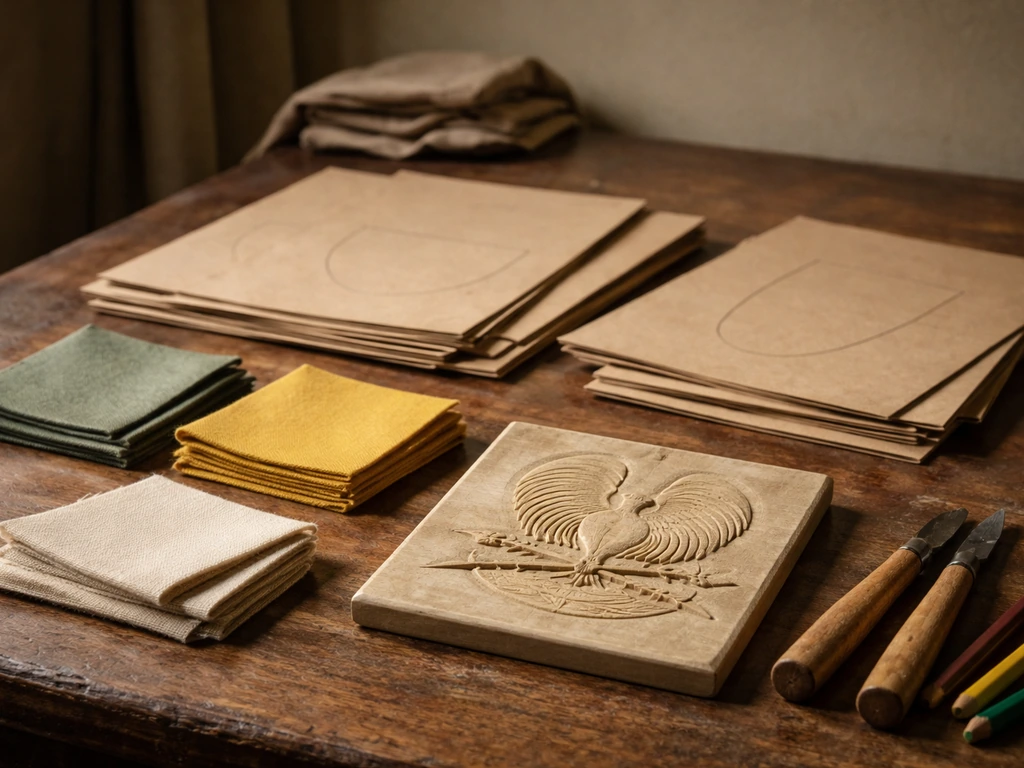
Papua New Guinea was moving toward independence from Australian administration in the early 1970s, and there was a real desire to establish national symbols that reflected the people rather than the colonial past. Earlier proposals for a coat of arms were met with little enthusiasm from islanders. The flag design that gained widespread support came from Susan Karike, a local designer who sketched a concept on an exercise book page. Her design incorporated the bird-of-paradise as the central emblem on the red field.
The national emblem, including the bird-of-paradise motif, was formally ratified by the National Identity Ordinance on 24 June 1971. The flag as used today has been in continuous use from 1971 through independence in 1975 to the present. The Raggiana bird-of-paradise was simultaneously established as the national bird, cementing the link between the flag's imagery and the country's official avian emblem. The National Aviary states that the Raggiana bird-of-paradise is the national bird of Papua New Guinea and appears on the country’s flag.
How to confirm the identification yourself
If you want to verify this beyond a general article, here are the most reliable places to check, ordered from most authoritative to most accessible:
- Papua New Guinea's National Identity Act 1971 (available via PacLII, the Pacific Islands Legal Information Institute): This is the primary legal source. The Schedule to the Act contains the official written description of the flag, including the specification of 'a soaring Bird of Paradise' in mid-yellow on the red field. It does not get more official than the law itself.
- The Embassy of Papua New Guinea to the Americas: The embassy's own flag description page explicitly identifies the bird as the 'Kumul' (Bird of Paradise) on the upper red background. Embassy sources are official government communications.
- Britannica's entry on the Flag of Papua New Guinea: Britannica identifies the bird as a yellow bird-of-paradise paired with the Southern Cross, and frames it as a stylized emblematic silhouette rather than a naturalistic depiction.
- Wikipedia's entries on the Flag of Papua New Guinea and the Raggiana bird-of-paradise: Both pages connect the flag's bird to the specific species (Raggiana bird-of-paradise) and reference the 1971 national emblem legislation.
- The National Aviary (US): Confirms the Raggiana bird-of-paradise as Papua New Guinea's national bird and notes its appearance on the country's flag.
For quick visual confirmation, search for the official flag image on any reputable vexillology (flag study) site and look for the diagonal split, the golden soaring bird on red, and the Southern Cross on black. The combination is unique and there is no other national flag that closely resembles it.
Common confusions to watch out for
The most frequent source of confusion is mixing up 'bird of paradise' as a general decorative or floral term with the actual bird family Paradisaeidae. The bird of paradise flower (Strelitzia) is a completely different thing and does not appear on Papua New Guinea's flag. When people search for flags with birds of paradise, they sometimes land on unrelated results because of this naming overlap.
Another area of confusion involves other flags that feature birds. Many national flags around the world include bird imagery, from eagles and condors to cranes and parrots. The Raggiana bird-of-paradise is distinctive because of its long flowing tail plumes, but in a stylized silhouette those plumes can look like a generic decorative bird to someone unfamiliar with the species. Knowing that the bird is specifically in the red upper-fly section, in gold, and that it is soaring (not perched), helps distinguish it from other bird-themed flags.
Some people also confuse the national bird with the national emblem or the national crest. Papua New Guinea's full coat of arms does include a bird-of-paradise, but it is a different, more elaborate artistic rendering than the clean silhouette on the flag. Both refer to the same species, but the flag version is the one that specifically answers the question of which flag features a bird of paradise. If you want the direct match, this flag is the answer to what flag has a bird in the middle, referring specifically to the golden bird-of-paradise centered on the red diagonal area.
| Feature | Papua New Guinea Flag | Other Bird Flags (general) |
|---|---|---|
| Bird species | Raggiana bird-of-paradise (Paradisaeidae) | Varies: eagle, condor, crane, parrot, etc. |
| Bird position on flag | Upper-fly red triangle | Varies by country |
| Bird color | Mid-yellow / gold silhouette | Varies |
| Bird posture | Soaring in flight, tail plumes trailing | Varies: perched, displayed, stylized |
| Flag background | Diagonal red and black | Varies |
| Other element | Southern Cross stars on black field | Varies |
Practical next steps for going deeper
If this answer came up as part of a quiz, trivia game, or research project, you now have everything you need: the country is Papua New Guinea, the bird is the Raggiana bird-of-paradise, and the legal source is the National Identity Act 1971. That is a complete, verifiable answer. If you are looking for a different bird emblem, the secretary bird is the national emblem of which country is commonly asked as a separate question.
If you want to go further and explore the broader world of national bird emblems, it is worth knowing that Papua New Guinea is just one example of a country that put its national bird directly on its flag. If you are wondering which bird is the emblem of the US, note that it is not a bird-of-paradise like Papua New Guinea's. Many countries choose a national bird that appears on their coat of arms, currency, or official seal without placing it on the flag itself. Papua New Guinea made the stronger commitment by centering the bird on the flag, which is part of what makes this case so striking.
For anyone interested in the broader pattern of birds appearing on national flags, the Raggiana's place on PNG's flag connects naturally to wider questions about what flags have birds on them, which countries use birds as central national emblems, and how those choices reflect a country's geography, culture, and history. If you are specifically looking for the answer to which country has a bird on its flag, start with Papua New Guinea what flags have birds on them. If you are comparing multiple countries, a good next step is to look at what flags have birds on them and how each bird is used. The bird-of-paradise is among the most visually spectacular of all national bird choices, and Papua New Guinea's decision to make it the face of the nation, literally on the flag, is one of the more memorable examples in vexillology and national symbolism.
FAQ
How can I confirm the bird is the Raggiana bird-of-paradise and not a generic bird?
The bird is the Raggiana bird-of-paradise, but it is shown as a stylized silhouette rather than a realistic illustration. Look for the gold bird with wings spread and long tail plumes, positioned on the red upper half of the diagonally split flag.
What quick visual check prevents mixing up the bird side versus the star side?
Use the placement. The bird appears on the red triangle (upper-fly section), while the Southern Cross stars are on the black triangle (lower-hoist section). If the stars and bird are on the opposite colors, you are likely looking at a different flag.
Why do search results bring up the wrong “bird of paradise,” and how do I avoid it?
The bird-of-paradise flower (Strelitzia) is a common search confusion. Papua New Guinea’s flag does not show the flower shape, it shows the Raggiana bird as a national emblem.
How is Papua New Guinea’s flag different from other national flags that have birds?
Birds can appear on many flags (eagles, parrots, cranes), but Papua New Guinea’s bird is the bird-of-paradise type with distinctive long flowing tail plumes, rendered in gold on the red diagonal field. Generic birds are usually more upright or lack the pronounced plumes.
Is the Southern Cross part of the “bird of paradise” design?
No. The Southern Cross constellation is not the bird, it is the set of five white stars on the black triangle. If you only recognize stars and not the bird silhouette, you may still identify the flag correctly by checking the red upper diagonal area.
Does the bird-of-paradise shown on the flag have the same status as the national bird?
The bird-of-paradise is closely tied to national symbolism beyond the flag, including an official national bird designation and its use in cultural traditions. However, the question about a bird of paradise on a national flag specifically points to Papua New Guinea’s flag imagery.
What’s the difference between the bird on the flag and the bird in Papua New Guinea’s coat of arms?
If you are comparing the flag to the national coat of arms, they feature the same species but are rendered differently. The flag uses a clean, bold silhouette, while the coat of arms typically presents a more elaborate artistic version.
What combination of elements should I use when identifying the flag in a photo or low-resolution image?
For the most reliable identification, use the combination of three features: diagonal split (red and black), gold bird-of-paradise silhouette on the red upper portion, and Southern Cross stars on the black lower portion. Any flag missing one of these elements is unlikely to be Papua New Guinea.
Next Articles

What Country Has a Bird on Its Flag? How to Identify It
Identify which country has a bird on its flag using emblem location, bird type, and how to verify its national bird.
What Flag Has a Bird in the Middle? How to Identify It
Identify flags with a central bird using a step-by-step checklist, likely matches, and meaning of the symbol.
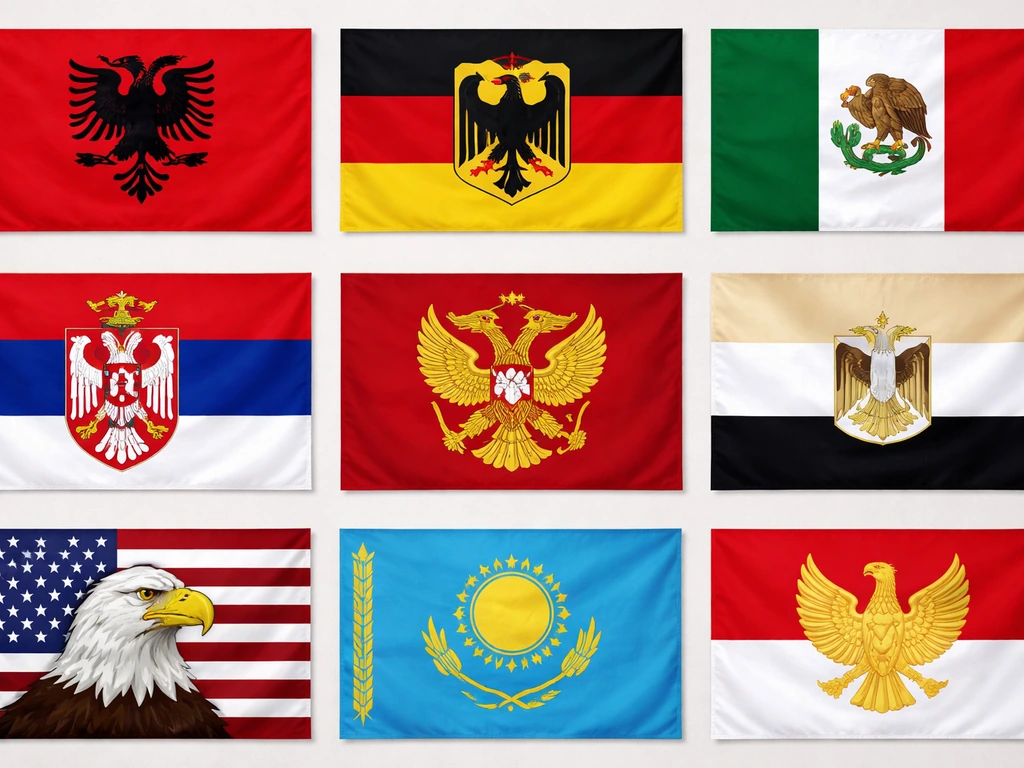
What Flag Has a Bird on It? Quick ID Guide and Examples
Quickly identify which national flag has a bird by matching bird shape and placement, with flag and national bird storie