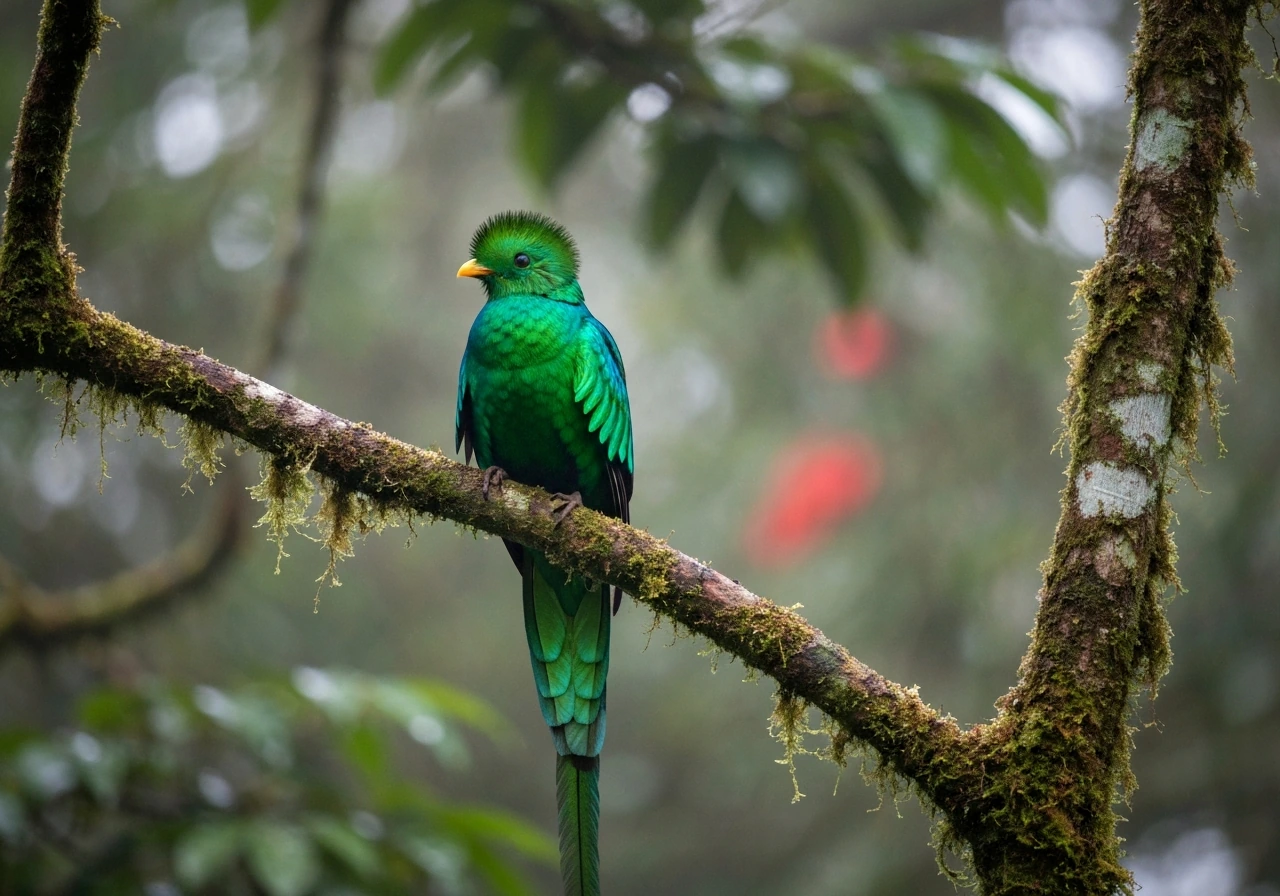
Guatemala's national bird: the resplendent quetzal
Guatemala's national bird is the resplendent quetzal, known scientifically as Pharomachrus mocinno. That's the short answer, and it's a clear one. The quetzal isn't just a beloved bird in Guatemala, it's woven into the country's flag, its coat of arms, its currency, and its national identity in a way few animals are tied to any nation. If you've ever wondered what bird represents Guatemala, this is the one.
Spotting the quetzal on the Guatemalan flag
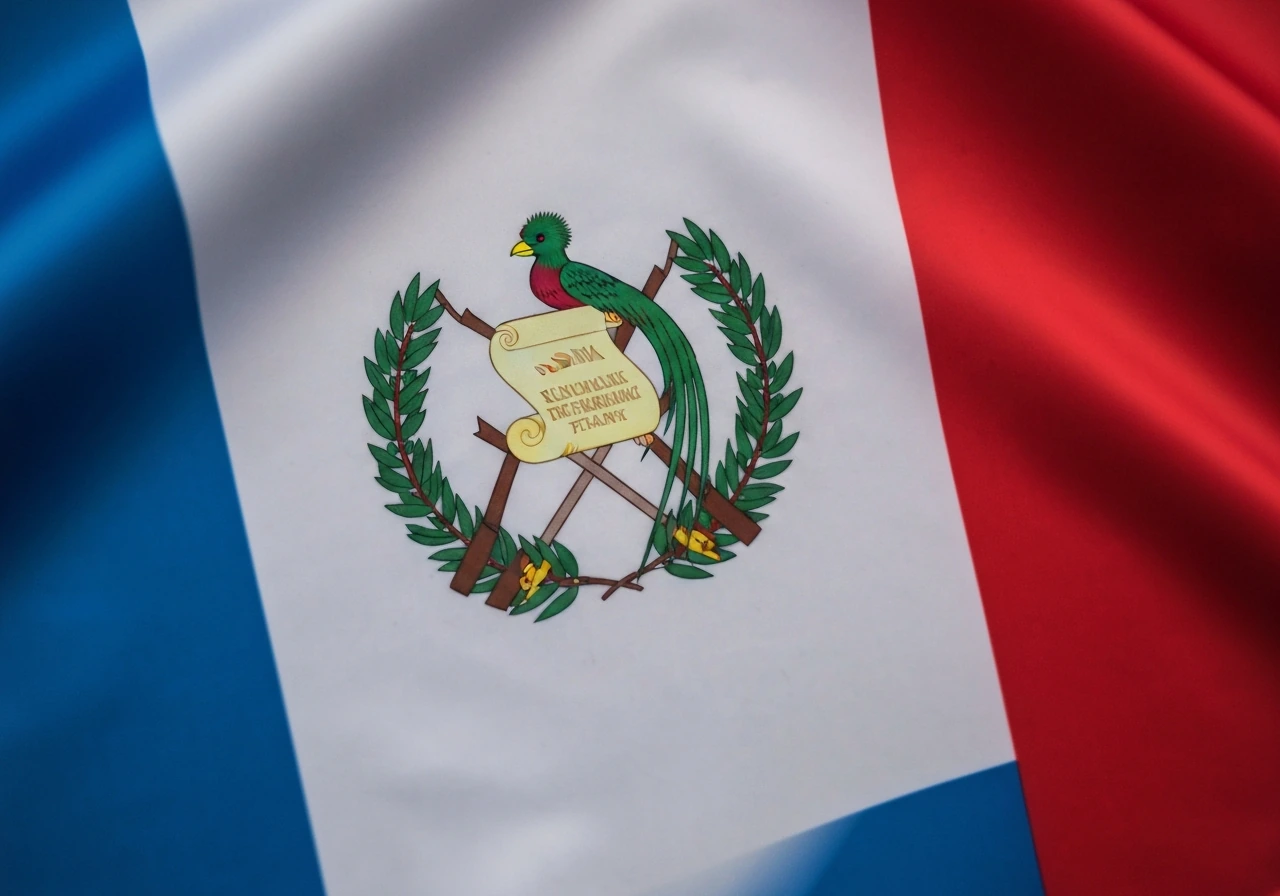
The Guatemalan flag features a coat of arms at its center, and that's exactly where you'll find the quetzal. The bird is depicted perched prominently within the national arms, and once you know what to look for, it's unmistakable. The image shows a bird with vivid metallic green upperparts covering the head, back, and wings, contrasted against a bright red breast and belly. Most strikingly, the depiction captures the male quetzal's signature long tail streamers flowing downward, that dramatic ribbon-like train is the single biggest visual giveaway.
If you're trying to confirm that the bird on the flag is indeed the quetzal and not some other species, focus on those three things: the green-and-red color contrast, the long trailing tail feathers, and the rounded, crested head. No other Central American bird combines all three in quite the same way. The coat of arms also includes a scroll beneath the quetzal bearing the date of Guatemalan independence, which helps anchor the whole emblem in national history.
What the quetzal means to Guatemala
The quetzal is deeply associated with freedom and liberty in Guatemalan culture. This isn't a modern marketing angle, the symbolism goes back centuries, rooted in Mesoamerican tradition. Ancient Maya revered the quetzal's tail feathers as sacred objects, used in ceremonial headdresses by rulers and priests. Killing a quetzal was considered a grave offense.
That connection to freedom persisted into the modern era. The idea is that the quetzal cannot survive in captivity, it would rather die than be caged, which made it a natural emblem for a nation that had fought for independence. Why the quetzal became the national bird of Guatemala is a story that blends pre-Columbian reverence with 19th-century nation-building, and the symbolism still resonates today.
Beyond cultural symbolism, the quetzal also functions as a flagship conservation species. Guatemala's national council for protected areas (CONAP) has invested in national conservation strategies specifically around the quetzal, treating it as a bellwether for the health of the country's montane cloud forests. Protecting the quetzal means protecting entire ecosystems.
How the quetzal became the official national bird
The quetzal was formally declared Guatemala's national bird by Decree No. 33 on November 18, 1871. That decree made it an official state symbol, and since that date the bird's image has appeared on the national flag and coat of arms. Guatemala's Congress has reaffirmed this status in more recent civic messaging, describing the quetzal as the nation's emblematic bird and emphasizing its role in state symbolism going back over 150 years.
It's worth noting that blank" rel="noopener noreferrer">the quetzal also gives its name to Guatemala's currency, the guatemalan quetzal, which is another layer of how thoroughly this bird is embedded in national life. Few countries honor their national bird quite so completely across their symbols, currency, and conservation policy all at once.
Key facts about the resplendent quetzal
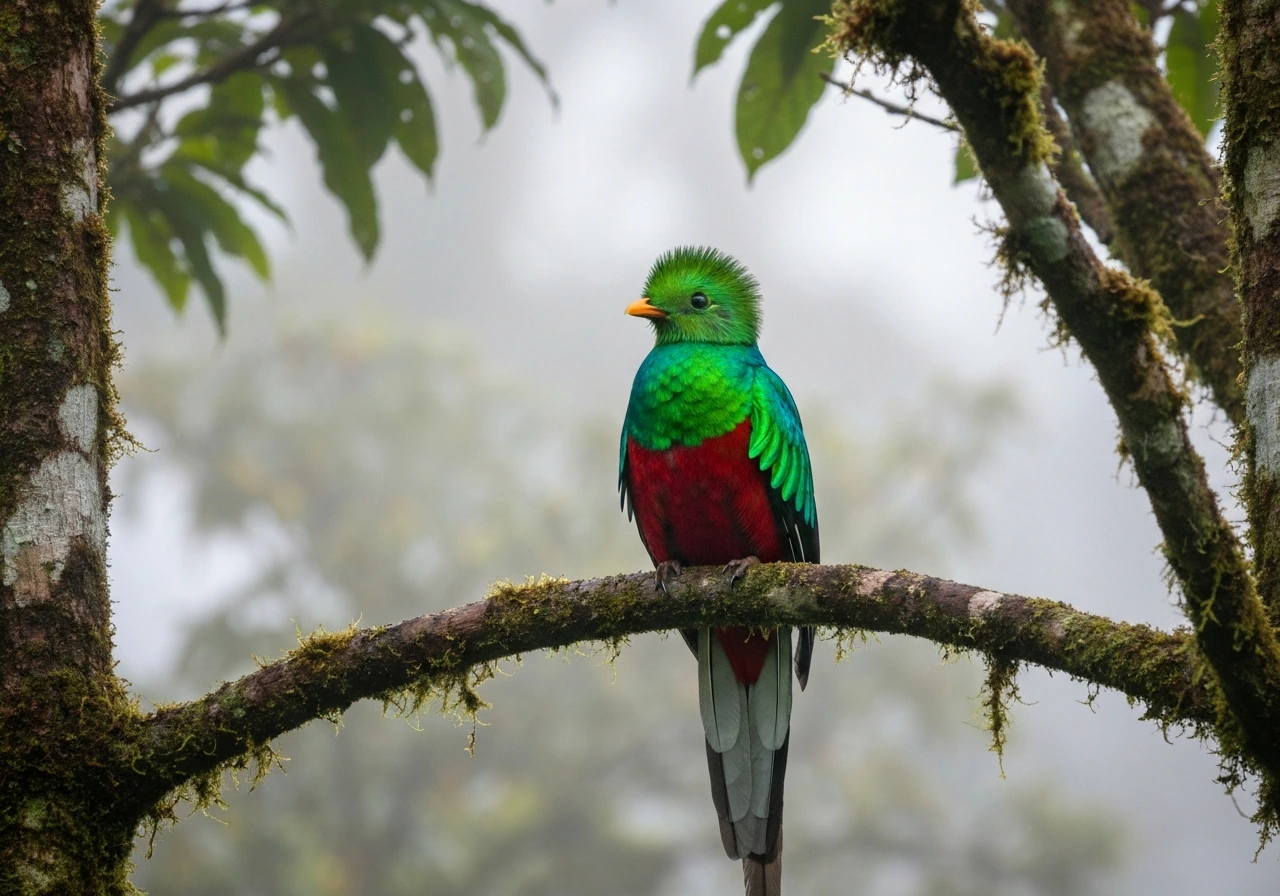
What it looks like
The resplendent quetzal is genuinely one of the most visually striking birds in the world, and that's not hyperbole. Adult males have iridescent metallic green upperparts that shift in the light, a vivid crimson-red chest and belly, a small rounded crest on the head, and, during breeding season, upper-tail covert feathers that form a flowing "train" up to roughly one meter (about 3 feet) long. Those twin streamers trail behind the bird in flight and are what give it such an otherworldly appearance.
Females share the general red-and-green color pattern but lack the long tail train and have a less intense coloration overall. Both sexes are unmistakably quetzals in the right habitat, but the male in full breeding plumage is the image most people associate with the species.
Where it lives
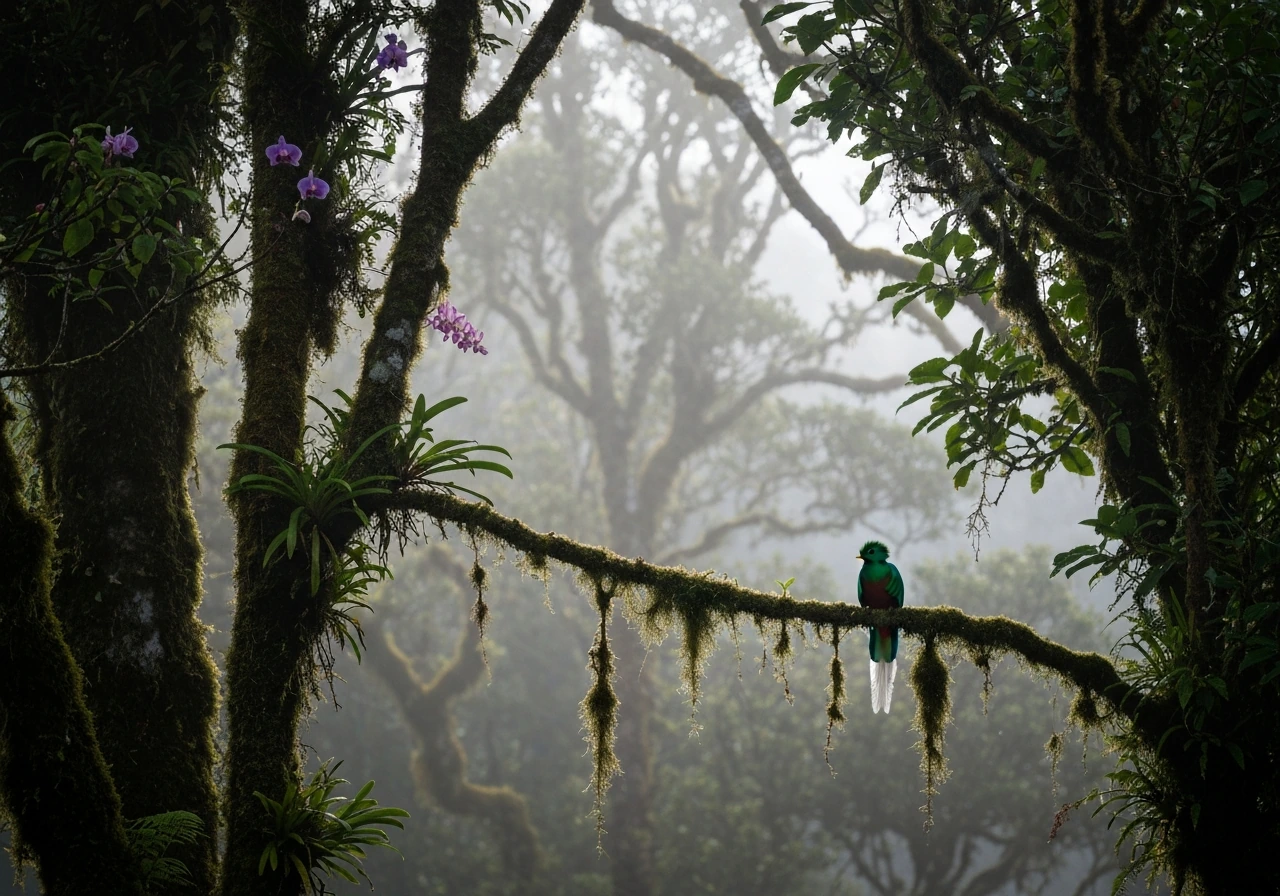
Resplendent quetzals are cloud forest specialists. They live in montane tropical forests at elevations roughly between 1,400 and 3,000 meters, where cool, misty conditions support the fruiting trees they depend on. Their range runs through Central America and into southern Mexico, but Guatemala's highland forests, particularly around the Verapaces region, are among the best places to find them. The species also overlaps into neighboring countries, which is something the Mexican national bird article touches on when discussing the birds that define the region.
Diet and behavior
Quetzals are primarily fruit eaters, with a particular fondness for wild avocados and other forest fruits. This makes them important seed dispersers in cloud forest ecosystems, they swallow fruit whole and drop seeds across wide areas as they move through the canopy. They also eat insects and small lizards, especially when feeding chicks.
Quick reference: resplendent quetzal at a glance
| Feature | Detail |
|---|
| Scientific name | Pharomachrus mocinno |
| Common name | Resplendent quetzal |
| Male plumage | Metallic green upperparts, red breast/belly, long tail train |
| Female plumage | Similar green/red pattern, no tail train |
| Tail train length (male) | Up to ~1 meter (about 3 feet) in breeding season |
| Habitat | Montane cloud forests |
| Elevation range | Approximately 1,400–3,000 meters |
| Geographic range | Guatemala, Central America, southern Mexico |
| Primary diet | Fruit (especially wild avocados), insects |
| National bird since | 1871 (Decree No. 33, November 18, 1871) |
How Guatemala's quetzal compares to its neighbors
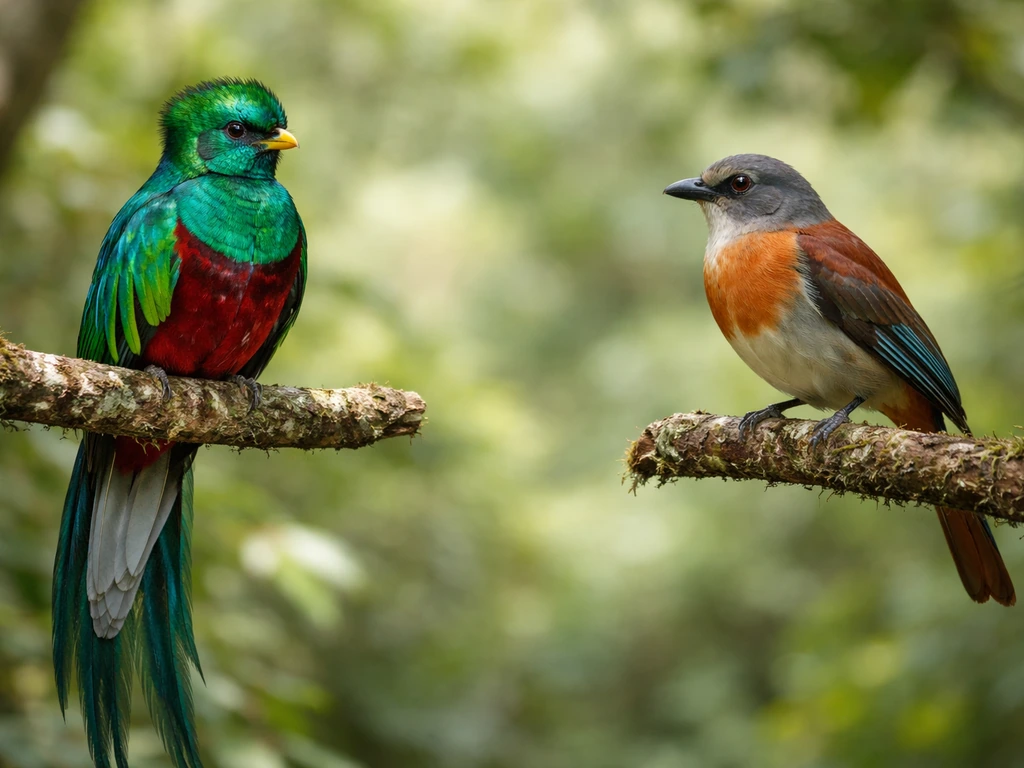
Guatemala isn't the only Central American country with a striking national bird. Just across the border, Belize chose a completely different direction. If you're curious about the contrast, the national bird of Belize is the keel-billed toucan, a bird that couldn't look more different from the quetzal, which makes the comparison genuinely interesting. And if you want to dig into why Belize made that choice, the reasoning behind why the toucan is Belize's national bird follows a similar logic of cultural identity and ecological significance, even if the bird itself is completely different.
What makes the quetzal stand out even in this regional context is the combination of ancient cultural weight and modern conservation urgency. It's rare for a national bird to be simultaneously a pre-Columbian sacred symbol, a 19th-century independence emblem, and a 21st-century conservation flagship. The resplendent quetzal earns every one of those roles.