Beyond freedom, the bird stands for beauty, prosperity, and sacred power. Its iridescent plumage made it a symbol of wealth in pre-Columbian Mesoamerica, and that meaning has carried forward into modern national identity. When Guatemalans look at the quetzal, they are seeing centuries of cultural layering compressed into one animal.
Which quetzal species, exactly
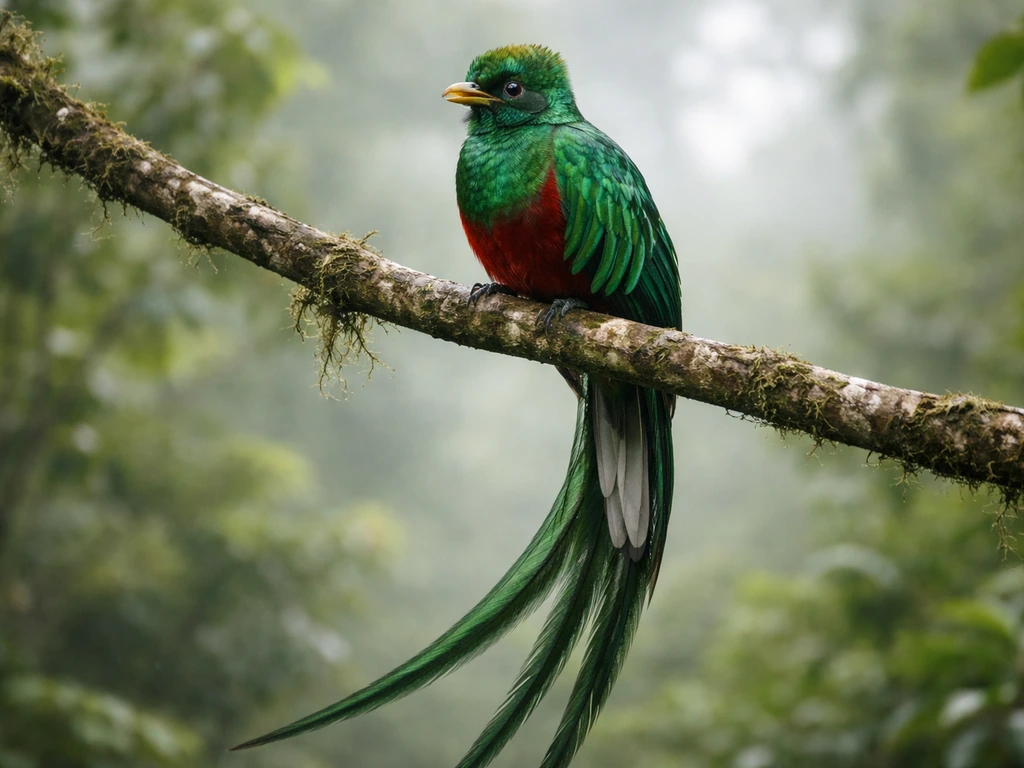
There are several quetzal species in the Americas, so it is worth being precise. Guatemala's national bird is specifically the Resplendent quetzal, scientific name Pharomachrus mocinno, and more precisely the subspecies Pharomachrus mocinno mocinno, which is the form that lives in Guatemala's highland cloud forests. Guatemala's environmental authority, CONAP, uses that subspecies name in its official conservation documents, so this is not just a common-name situation.
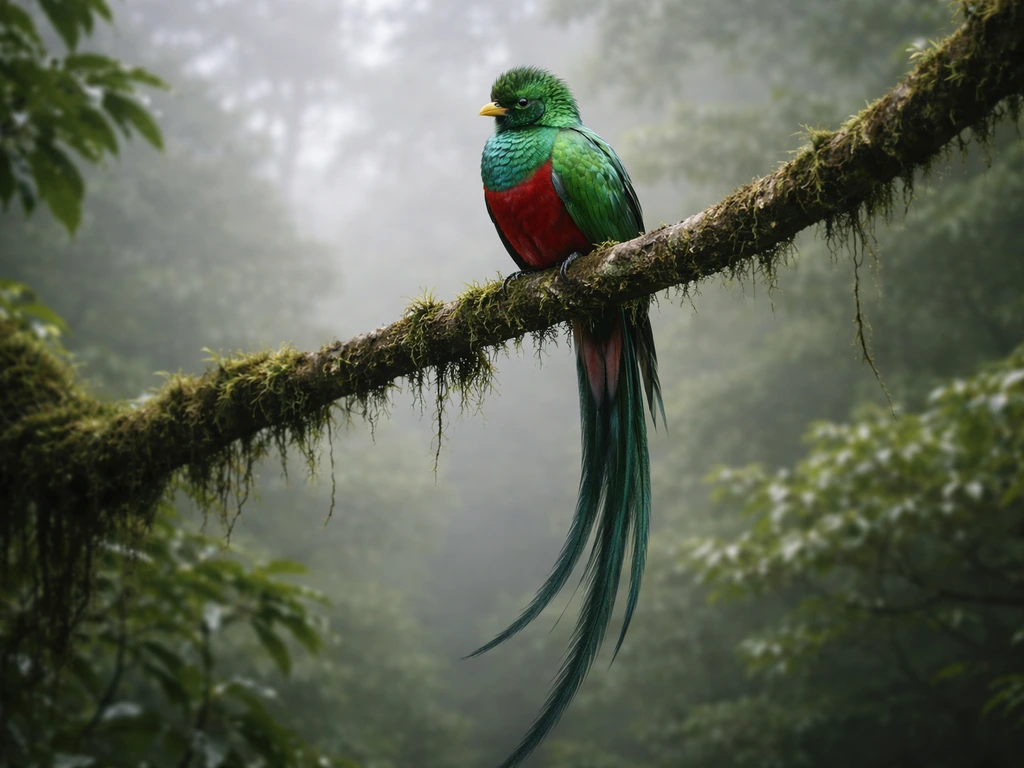
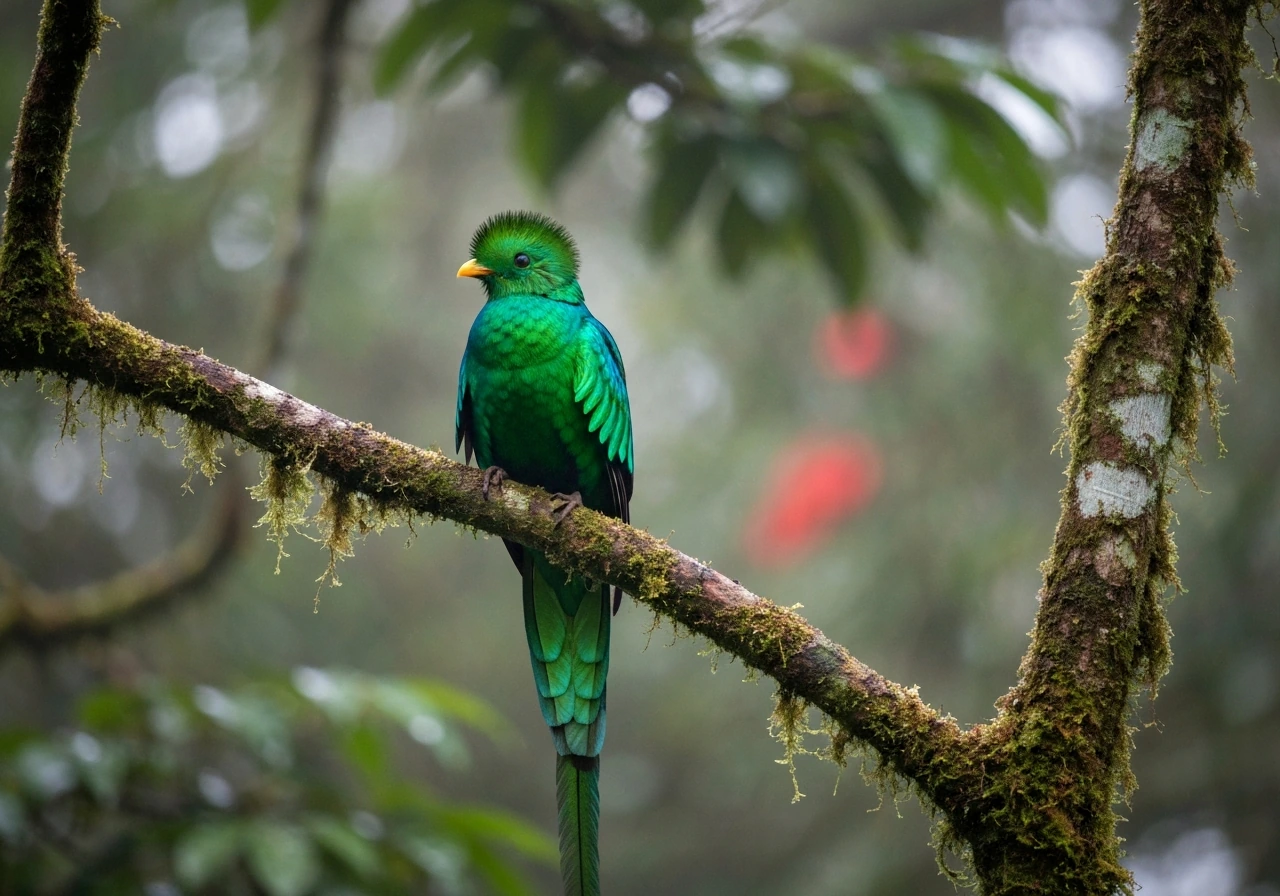
The male Resplendent quetzal is one of the most visually dramatic birds on the planet. Its iridescent green and red plumage is striking on its own, but the defining feature is its tail: the male grows extraordinarily long upper tail coverts, sometimes called streamers or a "train," that can reach up to about three feet (roughly one meter) in length. That single physical trait made the bird impossible to ignore for ancient civilizations and modern nations alike.
Indigenous and Mesoamerican roots of the symbol
The quetzal's status as a sacred and powerful bird goes back thousands of years in Mesoamerican culture. For the Maya, the iridescent tail feathers of the male were a mark of elite status. Maya rulers and priests incorporated those feathers into elaborate headdresses and regalia, treating them as prestige objects of the highest order. You can think of quetzal feathers as the ancient equivalent of gold: rare, beautiful, and reserved for those at the top of society.
The Aztec tradition extended this reverence even further. The feathered-serpent deity, widely depicted with quetzal plumage, connected the bird to one of the most important religious figures in the broader Mesoamerican world. BirdLife International notes that the quetzal dominated beliefs and traditions for centuries across both Maya and Aztec cultures in Central America, making it one of the most culturally loaded birds in the entire region.
Guatemala's living Maya heritage keeps these connections active rather than purely historical. The ancient Maya worldview is documented partly through texts like the Popol Vuh, and UNESCO-recognized Maya archaeological sites in Guatemala reflect how deeply that cultural framework persists. When Guatemala chose the quetzal as a national symbol, it was drawing on a tradition of reverence that had already been in place for well over a millennium.
How the quetzal officially became Guatemala's national bird
The formal designation happened on November 18, 1871, through Decree No. 33. That date is the legal foundation for everything that followed, including the establishment of September 5 as National Quetzal Day in Guatemala, which is explicitly tied to that same decree. So while the bird had been a cultural icon for centuries, it became an official state symbol in the second half of the 19th century, during a period of nation-building across Latin America when governments were actively constructing national identities.
The timing matters. Guatemala was a young independent nation still defining itself, and choosing the quetzal was a deliberate act of rooting national identity in the region's pre-Columbian heritage while also invoking freedom as a core value. The bird already appeared on the coat of arms in connection with independence imagery, so formalizing it as the national bird was a natural extension of symbolism that had already been developing.
It is worth noting that the quetzal also gives its name to Guatemala's currency, the quetzal (GTQ). That crossover from wildlife symbol to monetary unit underlines how completely the bird is woven into Guatemalan national identity.
The ecological connection and why it strengthens national identity
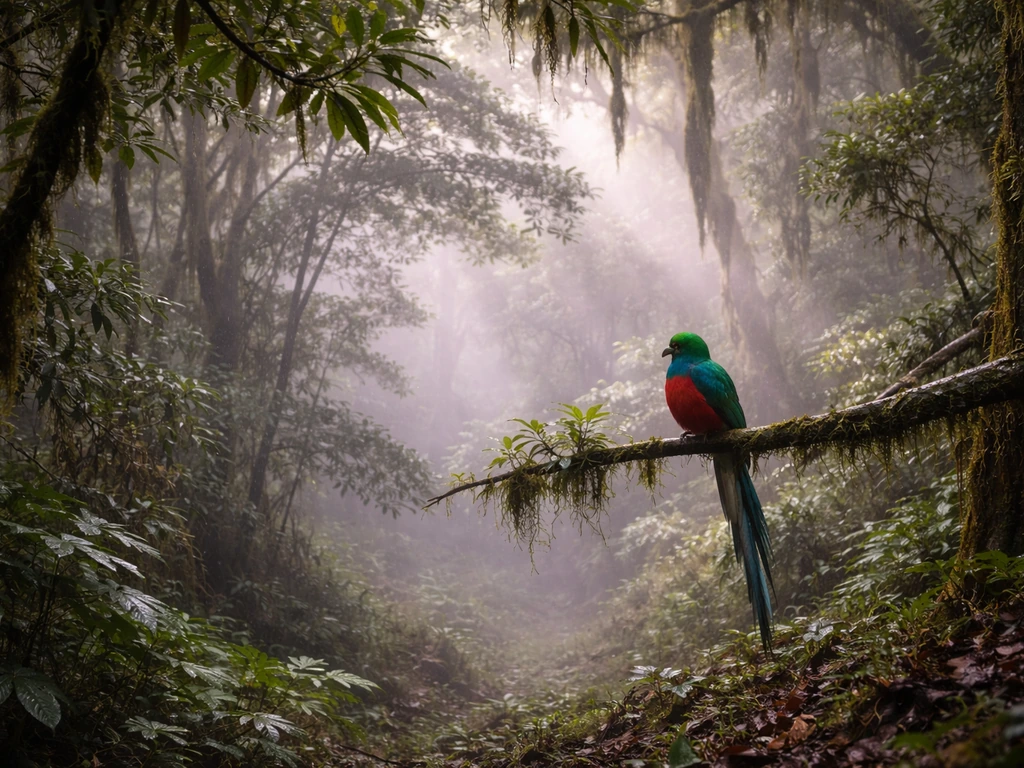
The quetzal is not just a symbolic choice, it is a genuinely Guatemalan bird in ecological terms. It lives in cloud and mountain forests at altitudes roughly between 1,500 and 2,700 meters above sea level, and Guatemala's highlands provide exactly that habitat. Key areas include the Verapaces (Alta and Baja), Huehuetenango, Quiché, San Marcos, and Sololá, as well as the volcanic highland chain. A published study of the high-altitude cloud forests of Alta Verapaz, Guatemala, confirms the quetzal's role as a cloud-forest specialist tightly linked to these mountain ecosystems.
That geographical specificity matters for national identity. The quetzal is not a bird you find everywhere in Central America, it is associated with particular highland ecosystems that are distinctly Guatemalan in character. Choosing it as a national bird was also, implicitly, a celebration of those landscapes. This is a meaningful contrast to countries that choose birds with wide regional ranges. Guatemala's quetzal is tied to a very specific type of place.
For readers curious about how nearby countries make similar choices, it is interesting to compare Guatemala's situation with Belize, which shares a border and some overlapping ecosystems. The national bird of Belize also reflects the country's distinct forest habitats, though the choice and reasoning differ significantly from Guatemala's.
Conservation status and what that means for the symbol
The Resplendent quetzal is currently listed as Near Threatened on the IUCN Red List. That status reflects real pressure on wild populations. CONAP is direct about the main driver: habitat loss is the greatest threat to the quetzal in Guatemala. Cloud forest destruction, combined with hunting and capture for the wildlife trade, has pushed populations downward in recent decades.
CONAP has responded with an official National Conservation Strategy for the quetzal (Estrategia de Conservación del Quetzal), which focuses specifically on Pharomachrus mocinno mocinno and its habitat. The strategy involves protected-area declarations and biological corridors designed to keep fragmented forest patches connected so quetzal populations can function as a whole rather than as isolated groups.
There is something worth reflecting on here: when your national symbol is Near Threatened, conservation becomes a matter of national identity, not just ecology. Guatemala cannot protect its cultural and political image while allowing its symbolic animal to disappear. That overlap between pride and policy gives conservation work a motivational dimension that goes beyond biodiversity numbers. Understanding why Belize made the keel-billed toucan its national bird offers a useful comparison, since Belize also ties its national bird choice to specific habitat and cultural identity in ways that overlap with conservation priorities.
How quetzal symbolism fits into the broader region
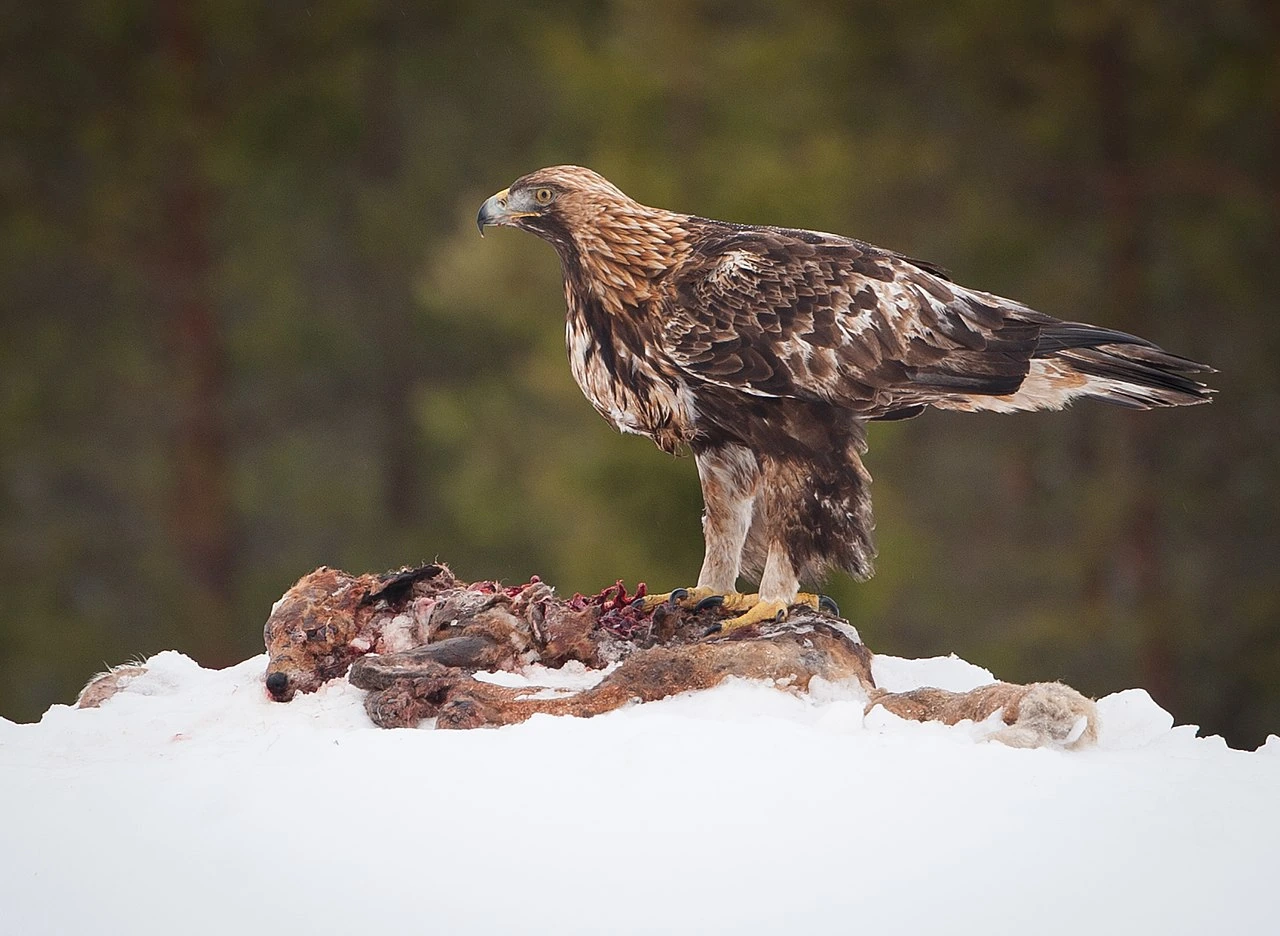
Guatemala sits between Mexico and Belize, and all three countries have national birds with deep cultural roots. Mexico's national bird, the golden eagle, is similarly tied to pre-Columbian mythology and appears on the Mexican flag. If you want to understand the regional pattern of how Mesoamerican countries chose birds that reflect their indigenous heritage and independence narratives, the story of Mexico's national bird is a direct parallel worth reading alongside Guatemala's.
The common thread across these choices is that national birds in this region almost always combine three elements: visual distinctiveness, pre-Columbian cultural meaning, and a narrative about freedom or sovereignty. The quetzal checks all three boxes more completely than almost any other bird in the world.
Where to verify this and what to look at next
If you want to go deeper or verify specific claims, the most authoritative sources are straightforward to find. CONAP (Guatemala's Consejo Nacional de Áreas Protegidas) publishes official documents on quetzal conservation in Spanish, including the full Estrategia de Conservación del Quetzal, and these are the best primary sources for habitat data, subspecies identification, and conservation policy. For the legal basis of the national bird designation, looking up Decreto No. 33 of November 18, 1871, in Guatemalan government archives or official legislative databases will confirm the formal adoption date.
Guatemala's coat of arms is publicly documented and can be verified through official government sources. The coat of arms itself is one of the clearest primary sources because it visually encodes the quetzal's connection to independence and liberty in a way that no secondary source can alter.
For wildlife context, the U.S. Fish and Wildlife Service maintains a species profile for the Resplendent quetzal (Pharomachrus mocinno) that covers its regulatory and conservation status from a North American perspective. The IUCN Red List entry for the species provides the most current global assessment of population trends and threats.
If you are planning to see quetzals in Guatemala, the cloud forests of the Verapaces, particularly around Cobán and the Biotopo del Quetzal reserve in Baja Verapaz, are the most established viewing areas. Always check current protected-area rules before visiting, follow guidance from local conservation rangers, and avoid any operation that offers captive quetzals or feathers for sale. Given the Near Threatened status, ethical wildlife tourism is not just a preference, it is a meaningful act of support for the species' survival.
| Attribute | Detail |
|---|
| Official species | Pharomachrus mocinno (Resplendent quetzal) |
| Official subspecies in Guatemala | Pharomachrus mocinno mocinno |
| National bird designation date | November 18, 1871 (Decree No. 33) |
| National Quetzal Day | September 5 |
| IUCN Red List status | Near Threatened |
| Habitat in Guatemala | Cloud and mountain forests, 1,500 to 2,700 m elevation |
| Key Guatemalan regions | Verapaces, Huehuetenango, Quiché, San Marcos, Sololá, volcanic chain |
| Primary threat | Habitat loss (cloud forest destruction) |
| Key conservation document | Estrategia de Conservación del Quetzal (CONAP) |
| Primary cultural meaning | Freedom, beauty, wealth, sacred power (Maya and Aztec traditions) |
| Appears on | National coat of arms, currency (quetzal/GTQ) |