
The green pheasant is the national bird of Japan. Known in Japanese as "kiji," it was blank" rel="noopener noreferrer">designated Japan's national bird in 1947 by the Ornithological Society of Japan (OSJ). That designation has never been formally written into law, but it is universally recognized and even appears on Japanese currency.
Green Pheasant National Bird of Which Country

Marcus Chen
1 Jun 2026
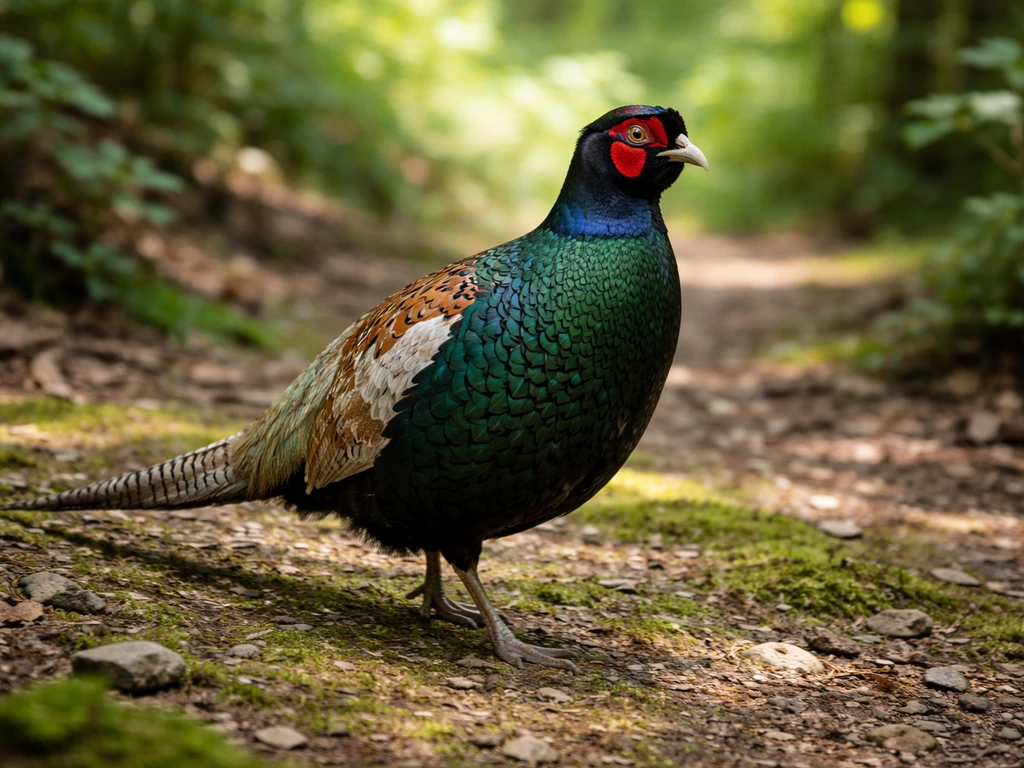
What exactly is the "green pheasant"?
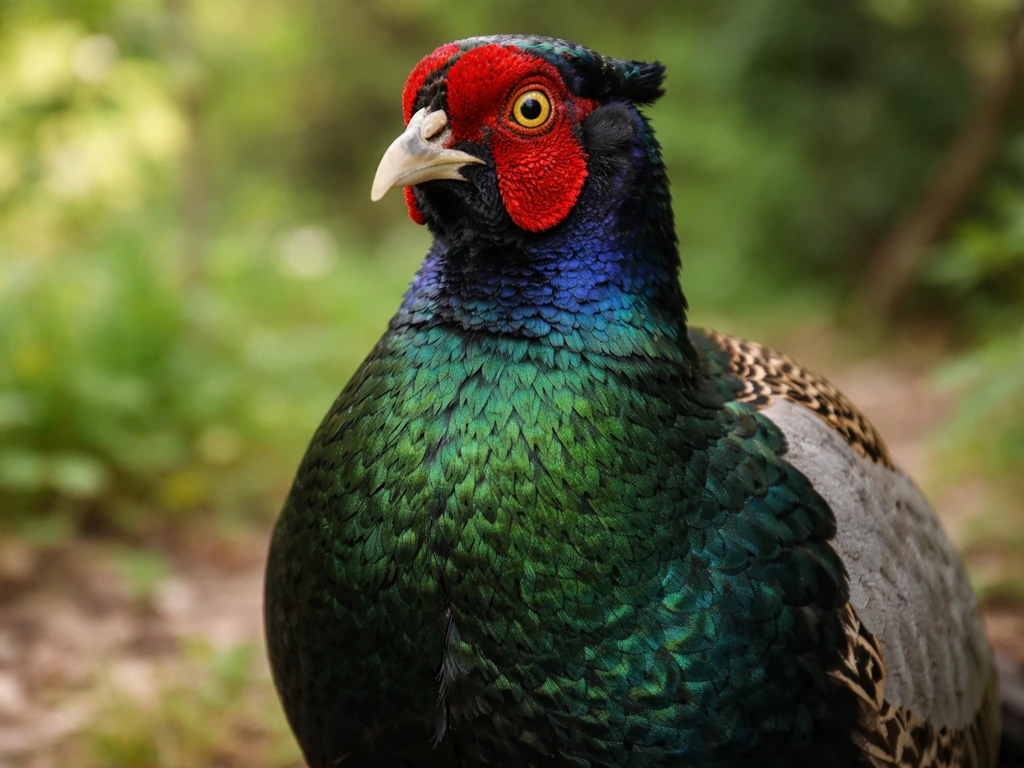
The green pheasant's scientific name is Phasianus versicolor. It goes by several common names: green pheasant, Japanese green pheasant, and its Japanese name "kiji." This is a distinct species from the common pheasant (Phasianus colchicus) that most people in Europe or North America are familiar with, so it is worth being precise.
The male is the striking one, with iridescent green plumage on its breast and belly, a red face wattle, and a long, barred tail. The female is more subdued, with brown mottled feathers for camouflage. The species is endemic to the Japanese archipelago, which is a key reason it was a natural choice as a national symbol.
You might occasionally see the bird listed simply as "pheasant" or "kiji" in Japanese sources, and as "green pheasant" or "Japanese green pheasant" in English ones. Britannica maps all of these directly to Phasianus versicolor, so if you see any of those names in a national-bird context relating to Japan, they all refer to the same bird.
How and when it became Japan's national bird
The designation happened in 1947, when the Ornithological Society of Japan officially declared the green pheasant to be Japan's national bird. The timing is significant: Japan was in the middle of post-war reconstruction, and identifying a national bird was part of a broader cultural reaffirmation of Japanese identity.
There is one important nuance worth knowing: the Japanese government itself has confirmed in publications (including a 2023 issue of the government's official Highlighting Japan magazine) that this designation has never been legally codified. In other words, no act of parliament or imperial decree formalized it. The OSJ, a respected professional ornithological body, made the call, and it stuck through cultural consensus rather than legislation.
This puts Japan's green pheasant in an interesting category among national birds globally. It is widely accepted, appears on official materials, and is cited by government sources as the national bird, yet it lacks the formal legal status that some other nations' bird designations have. “Kiji” (pheasant) is designated as Japan's national bird in 1947 government sources. For most practical purposes, including reference guides and school curricula, it is treated as fully official.
What the green pheasant means to Japan

The kiji's cultural roots in Japan run deep, well before the 1947 designation. In Japan's oldest chronicle, the Kojiki, a divine pheasant called Kigishi no Nanakime appears as a messenger. The pheasant is also one of the companions of the hero Momotaro (Peach Boy) in the famous folktale, one of the most beloved children's stories in Japanese culture. That kind of embedded presence in mythology and folk literature is exactly the kind of cultural weight that makes a good national symbol.
The bird is also associated with motherly devotion in Japan. A traditional phrase, "kiji mo nakazuba utaremai" (a pheasant would not be shot if it did not cry), references the idea that a mother pheasant calls out to protect her chicks even at risk to herself. This has long been used as a proverb about parental love and sacrifice.
On a more practical visibility note, the green pheasant appears on the reverse side of certain Japanese 10,000 yen banknotes. The National Printing Bureau of Japan specifically notes that two Japanese pheasants (identified as the national bird) are depicted on those notes. That is about as mainstream as national symbolism gets.
How to verify this for yourself
If you want to cross-check this claim, here are the most reliable places to look:
- The Japanese government's official Highlighting Japan publication (available on gov-online.go.jp) directly states the 1947 OSJ designation and notes its legal status.
- The Ornithological Society of Japan's website (osj.or.jp) provides institutional background on the organization that made the designation.
- The U.S. Fish and Wildlife Service maintains a species profile for Phasianus versicolor under the name "Green Pheasant," useful for confirming the scientific name.
- Encyclopaedia Britannica's entry on the green pheasant explicitly maps the common name, Japanese name "kiji," and scientific name Phasianus versicolor together.
- Japan Search (jpsearch.go.jp), Japan's national aggregator of cultural and historical records, has a dedicated gallery page for the kiji confirming its national bird status.
- The National Printing Bureau of Japan's FAQ confirms the pheasant's appearance on banknotes as the national bird.
Using at least two of these sources together gives you a solid confirmation. The government publication is particularly useful because it also honestly flags the "not legally recognized" caveat, which shows you are getting the nuanced, accurate picture rather than a simplified version.
How Japan's national bird compares to other national birds
| Country | National Bird | Scientific Name | Officially Designated by Law? |
|---|---|---|---|
| Japan | Green pheasant (Kiji) | Phasianus versicolor | No (OSJ designation, 1947) |
| India | Indian peacock | Pavo cristatus | Yes (government designation) |
| United States | Bald eagle | Haliaeetus leucocephalus | Yes (Act of Congress, 1782) |
Japan's situation is actually less unusual than it sounds. Several countries have nationally recognized birds that are driven more by cultural consensus and institutional declarations than hard law. What makes Japan's green pheasant stand out is how thoroughly it has been absorbed into the cultural fabric regardless of the legal technicality.
Want to keep exploring national birds?
If this topic caught your interest, there is a lot more to dig into on this site. Japan's national bird question connects naturally to a broader look at what Japan's national bird is and why the green pheasant was specifically chosen over other options native to Japan. Both of those topics go deeper into the ornithological and cultural reasoning.
For comparison, India's national bird story is a fascinating contrast. The Indian peacock (Pavo cristatus) has a formal government designation and a rich tie to Hindu mythology, making it one of the most symbolically loaded national birds in the world. You can learn more about the country whose national bird is the peacock in a quick NYT Mini guide Indian peacock. The Indian peacock is often discussed in relation to being designated as India's national bird, and that designation dates back to 1963 Indian peacock (Pavo cristatus). In fact, the Indian peacock, or peacock is the national bird of India, is officially recognized as such. The country whose national bird is the peacock is India Indian peacock. The Indian peacock is often described as a national bird as well, reflecting its strong cultural and religious symbolism peacock is national bird. The peacock also shows up across multiple countries as a candidate national symbol, which raises interesting questions about how nations distinguish their choices. Exploring those comparisons gives you a richer sense of how the whole national-bird tradition works globally.
FAQ
Is the green pheasant the only national bird of Japan?
Yes for the national-bird convention, Japan’s commonly recognized national bird is the green pheasant (kiji). If you see other birds mentioned in Japanese contexts, they are usually regional symbols, wildlife icons, or separate designations, not the national-bird label.
Does “kiji” always mean the green pheasant in Japanese sources?
In most national-bird contexts, yes, kiji refers to the green pheasant (Phasianus versicolor). However, in casual conversation some people may use “pheasant” more loosely, so look for the scientific name or clear national-bird wording to be sure.
Why isn’t the designation legally codified, and does that affect how it is treated?
Japan’s national-bird recognition is based on institutional and cultural acknowledgment rather than an act that puts it into statute. Practically, schools, reference materials, and official publications still treat it as the national bird, but legally it is not equivalent to a bird mandated by law.
What are common mix-ups with the species name?
A frequent mistake is confusing Phasianus versicolor (green pheasant, kiji) with Phasianus colchicus (common pheasant). The two are closely related pheasants, but they are not the same species and only the Japanese green pheasant is tied to Japan’s national-bird designation.
Are there similar “green pheasant” birds in other countries that could cause confusion?
The phrase “green pheasant” can be used generically for pheasants with greenish plumage, so it can be ambiguous without the scientific name. When the discussion is about Japan’s national bird, the correct match is Phasianus versicolor, endemic to the Japanese archipelago.
Does the green pheasant appear on all Japanese yen banknotes?
No. It is associated with specific denominations, for example the reverse side of certain 10,000 yen banknotes. If you are checking a specific note, confirm the denomination and side, since not every note design includes pheasants.
How can I verify a national-bird claim without relying on just one page?
Use one source that states the bird directly and another that either names the scientific species or explicitly mentions the legal status (for example, whether it was codified). Cross-checking both reduces the risk of encountering simplified statements that omit the “not legally codified” nuance.
Is there a formal process that countries usually follow for national-bird designations?
Not always. Some countries codify the designation through legislation, while others rely on institutional declarations and long-standing cultural consensus. Japan’s case fits the latter pattern, which is why you may see it described as widely accepted but not formally written into law.