A national bird is an officially recognized avian symbol chosen by a country to represent its identity, values, and culture. When people search for 'national bird meaning,' they're usually asking one of two things: what the bird itself stands for symbolically, or why that specific country picked that specific bird. Both questions have real, evidence-backed answers rooted in history, law, and cultural tradition, and this guide walks you through how to find them for any country you're curious about.
National Bird Meaning: Definition, Symbolism, and History

Marcus Chen
30 Apr 2026

What a national bird actually is (and what it isn't)
A national bird is a distinct category of national symbol, not just any bird that appears on a flag or coat of arms. In the United States, for example, the bald eagle is formally designated under 36 U.S. Code § 306, which places it in the same statutory chapter as the national anthem, motto, floral emblem, march, and tree. That chapter title alone tells you something important: 'national bird' is a precise, official category, not a casual nickname or marketing label.
Not every country formalizes its national bird through legislation. Some do it through government proclamation, some through cultural adoption over decades, and some through a combination of both. Canada, for instance, distinguishes between symbols officially adopted by the Government of Canada and those that gained symbolic status through widespread popular use. That distinction matters when you're trying to verify what a country's national bird actually is versus what someone on a travel blog claims it is.
The key takeaway: a national bird is a recognized emblem of nationhood. It is separate from a national animal, national tree, or national flower, even if some of those symbols happen to feature birds. When you're researching national bird meaning, you want to confirm the bird is genuinely recognized as the national bird, not just a popular local species or a heraldic figure on a seal.
Why countries choose a national bird at all
Countries choose national birds for the same reason they choose flags, mottos, and anthems: to tell a story about who they are. A national bird gives a country a living, visible symbol that ordinary people, tourists, and students can connect with emotionally. Unlike abstract concepts like liberty or unity, a bird is tangible. You can see it, hear it, photograph it, and protect it under conservation law.
The choice is rarely random. A country typically selects a bird that is native to its territory, carries positive cultural associations, and reflects something aspirational or historically significant about the nation. Sometimes the bird is already woven into mythology and folklore before it ever gets an official designation. The quetzal of Guatemala, for example, was a sacred symbol in ancient Mesoamerican culture long before Guatemala named it the national bird or printed it on the currency.
How national birds reflect culture, identity, and values

The symbolism attached to a national bird almost always reflects something the country wants to project about itself. That projection operates on a few different levels: the bird's natural characteristics, its role in local history and mythology, and its ecological relationship to the land.
Take the bald eagle. The United States chose it because it is native only to North America, making it a distinctly American symbol, and because its size, power, and long lifespan aligned with the ideals of strength and longevity the founding generation wanted to project. The peacock of India communicates something entirely different: grace, beauty, and a deep connection to Hindu mythology, where the bird is associated with the deity Kartikeya. Same category of symbol, completely different set of cultural messages.
In southern Africa, the African fish eagle serves as the national bird of Zimbabwe (also closely associated with Zambia), and its image has appeared on flags, coins, and emblems across the region. Its haunting cry over lakes and rivers is so closely tied to the landscape that it became a kind of auditory identity for the land itself. That's a very different kind of cultural meaning than a heraldic eagle on a European coat of arms.
National birds also carry conservation meaning. When a country designates an endangered species as its national bird, it signals a commitment, sometimes legally enforced, to protect that animal. The quetzal's status in Guatemala makes harming or capturing it a criminal offense. The bird's symbolism of freedom reinforces that protection: a caged quetzal, according to tradition, will die rather than live without liberty.
How a national bird gets officially selected
The selection process varies widely from country to country, but it generally falls into one of three categories: formal legislation, executive or governmental proclamation, or long-standing cultural recognition that eventually gets codified.
- Legislative designation: A parliament or congress passes a law explicitly naming a bird as the national symbol. The U.S. bald eagle is the clearest example, codified in federal statute under Title 36.
- Government proclamation: A head of state or cabinet-level body officially declares a bird to be the national symbol, often as part of a broader national identity initiative.
- Cultural adoption with later formalization: The bird becomes so deeply embedded in national culture, appearing on currency, seals, and in poetry, that its status as the national bird is acknowledged even before any formal legal step is taken.
- Popular vote or public competition: Some countries have held organized public votes to select a national bird. India's selection of the peacock in 1963 followed a structured evaluation by the Indian Board for Wild Life.
The U.S. Code is explicit that designating the bald eagle as the national bird does not affect or limit any government plans, policies, or actions. That kind of language in legislation tells you the government was careful to make the designation symbolic without creating unintended legal obligations. It's a small detail, but it illustrates how seriously some countries treat the formal process of defining what a national symbol means in legal terms.
The different kinds of meaning people are actually looking for
When someone searches for 'national bird meaning,' they're not all asking the same question. Here are the main types of meaning attached to national birds, and what each one involves:
| Type of Meaning | What It Covers | Example |
|---|---|---|
| Symbolic meaning | What the bird's natural traits represent (strength, freedom, grace) | Bald eagle: power, independence, long lifespan |
| Cultural and religious meaning | The bird's role in mythology, folklore, or spiritual tradition | Peacock: associated with Hindu deity Kartikeya, representing beauty and protection |
| Historical meaning | Why and when the country chose the bird, what was happening at the time | Quetzal: chosen to link modern Guatemala to its pre-Columbian Mayan and Aztec heritage |
| Conservation meaning | Whether the bird's designation carries legal protection or reflects ecological identity | Quetzal: legally protected in Guatemala; harming it is a criminal offense |
| Geographic meaning | How the bird connects to the country's specific landscape or ecosystem | African fish eagle: tied to the rivers and lakes of southern Africa as a sonic and visual landmark |
Most readers land on one or two of these, but a complete picture of any national bird's meaning usually involves all of them. The symbolism makes more sense when you know the history, and the history makes more sense when you understand the cultural context.
Concrete examples: what meaning looks like in practice
The bald eagle (United States)
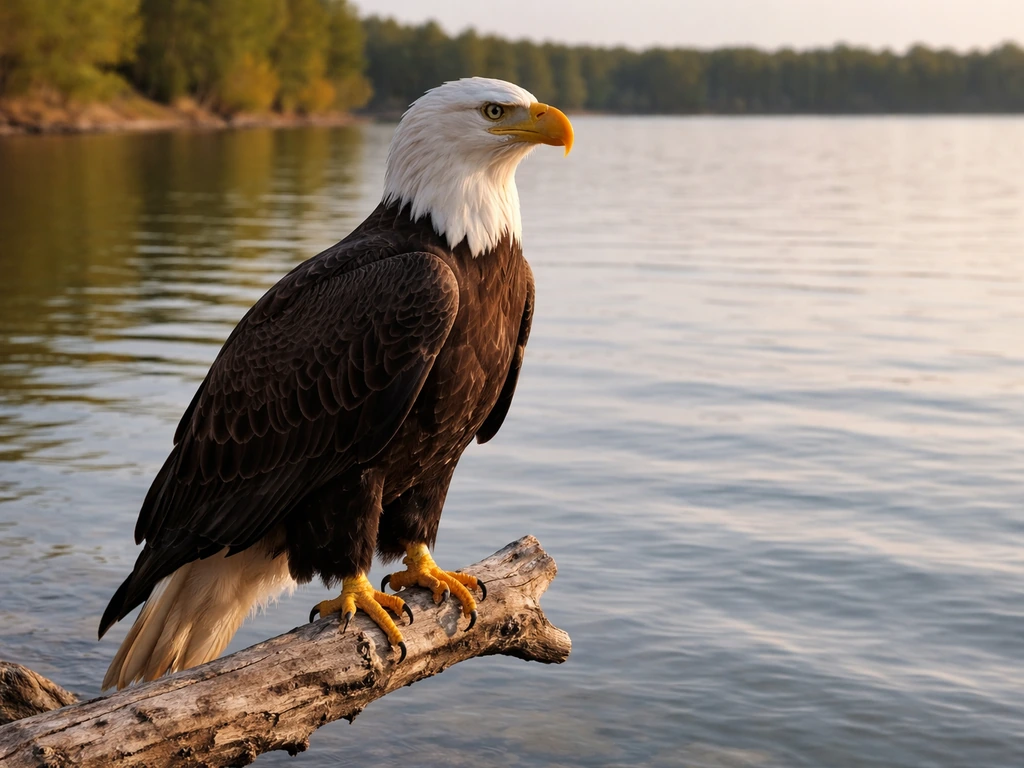
The bald eagle was adopted as the U.S. national emblem in 1782 and formally codified as the national bird in federal statute under Title 36. Its meaning is layered: it is native exclusively to North America, making it geographically appropriate; it was chosen over Benjamin Franklin's suggested wild turkey specifically because of its perceived majesty and power; and it appears on the Great Seal of the United States, holding arrows (war) in one talon and an olive branch (peace) in the other. The combination tells a story about a country that values both strength and diplomacy.
The peacock (India)
India designated the Indian peafowl (Pavo cristatus) as its national bird in 1963. The peacock has been part of Indian art, mythology, and royal imagery for thousands of years. In Hindu tradition it is the vehicle of Kartikeya, the god of war, and its feathers appear in depictions of Lord Krishna. The Indian Board for Wild Life selected it partly because it was already so deeply embedded in the country's cultural fabric that the designation felt like formal acknowledgment of something everyone already knew. It is also fully protected under India's Wildlife Protection Act.
The resplendent quetzal (Guatemala)
Guatemala's quetzal is probably the most symbolically loaded national bird in the world. The bird appears on the national flag, the coat of arms, and even the national currency (which is called the quetzal). In a Reddit post, people also discuss how Guatemala’s currency name “Quetzal” connects to the national bird and appears as part of Guatemala’s identity on symbols like the flag [even the national currency (which is called the quetzal)](https://www. reddit.
com/r/NatureIsFuckingLit/comments/1rpv1vi/abeautifulresplendent_quetzal/). In ancient Mayan and Aztec civilization, the quetzal's long tail feathers were more valuable than gold and were worn only by royalty and high priests. The bird's association with the feathered serpent deity Quetzalcoatl reinforced its sacred status. For modern Guatemala, the quetzal represents the indigenous heritage of the country, as well as freedom: the bird is believed to be incapable of surviving in captivity, making it a living metaphor for liberty.
The blue crane (South Africa)
South Africa's national bird, the blue crane (Anthropoides paradiseus), is endemic to southern Africa and was revered by the Zulu people, who called it indwe. Zulu chiefs awarded blue crane feathers to warriors who had shown great bravery, making the bird a symbol of honor and military distinction long before it was formally designated. Its meaning in the South African context is therefore both ecological (it exists almost nowhere else on Earth) and deeply tied to indigenous cultural tradition.
The KZN Crane Foundation identifies the blue crane (Anthropoides paradiseus) as South Africa’s national bird and notes its endemic distribution in the region. If you're exploring the national bird of South Africa meaning in depth, that dual layer of endemism and Zulu heritage is central to the story.
How to find reliable national bird information for any country

The internet is full of lists claiming to document every country's national bird, but many of them recycle each other's errors. Here's how to verify the information you find and make sure you're reading something accurate.
- Start with the country's official government website or national archives. If a bird was designated by law or proclamation, you should be able to find a reference to it in official sources, just as the U.S. bald eagle appears in 36 U.S.C. § 306.
- Check whether the symbol is formally adopted or informally recognized. Canada's framework is a useful model: it distinguishes official symbols adopted by the government from those that are culturally widespread but not codified. Apply the same standard when evaluating any country's national bird claim.
- Look for corroboration from national museums, wildlife agencies, or tourism boards. These sources typically reflect government-endorsed designations.
- Be skeptical of crowdsourced lists alone. Wikipedia compilations of national birds are useful starting points, but they often cite secondary sources rather than primary government documents. Use them to locate a lead, not as the final verification.
- For symbolism and cultural meaning, look for academic sources, national cultural institutions, or established encyclopedias that document indigenous traditions, mythology, and historical context.
When you encounter conflicting claims, the one backed by primary documentation (a statute, a government proclamation, an official cultural institution) wins over a blog post or a tourism brochure. Conflicts often arise because a country has multiple bird symbols: a bird on the coat of arms, a bird in folklore, and a formally designated national bird are three different things.
What to do with national bird meaning once you have it
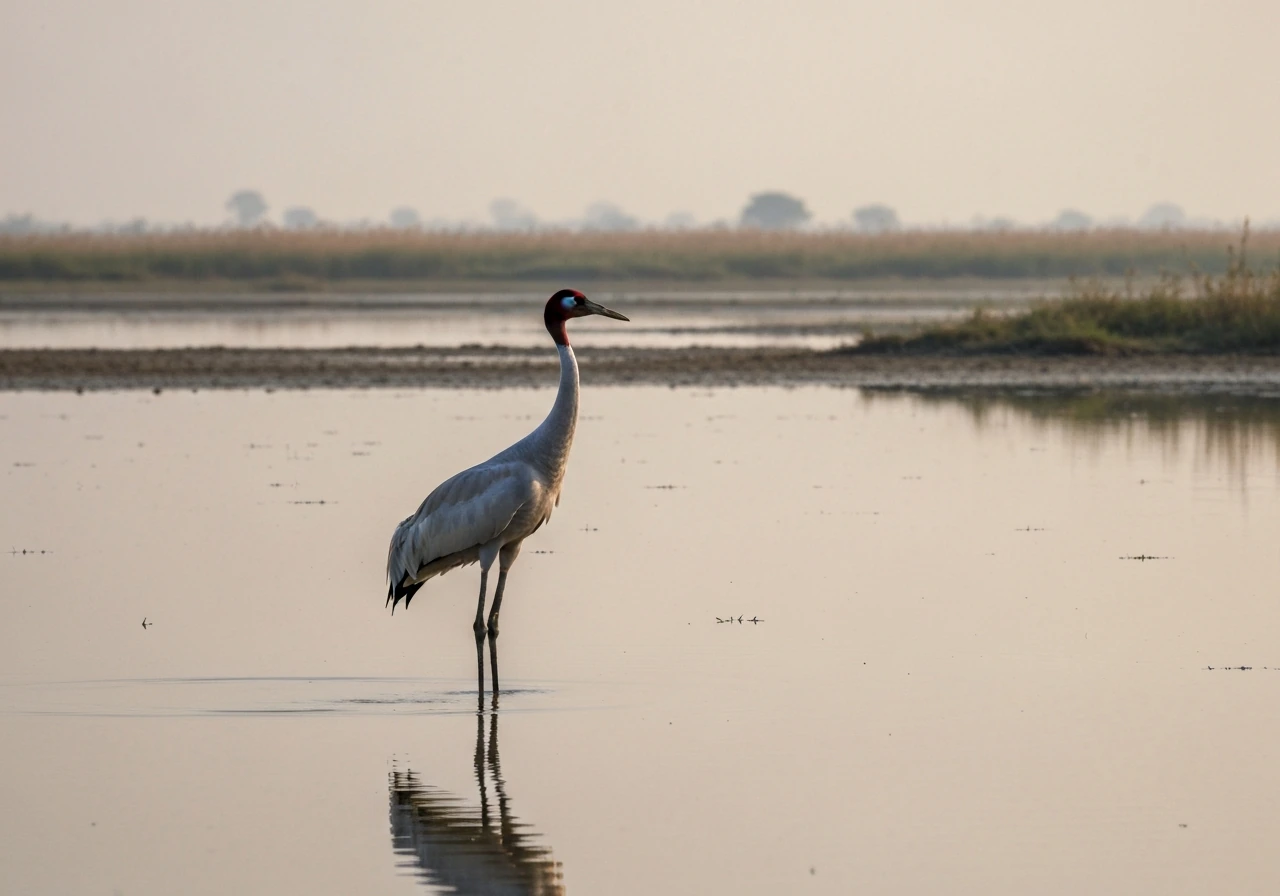
Once you've confirmed a country's national bird and understood its meaning, you've got a surprisingly rich window into that country's values, history, and self-image. Keoladeo National Park is famous for birds like the sarus crane, and it is also associated with the park's rich wetland birdlife. The blue crane of South Africa tells you something about Zulu warrior culture. The quetzal of Guatemala tells you about pre-Columbian civilization and the weight of indigenous heritage in national identity. The hoopoe of Israel, chosen by public vote in 2008, tells you about a country that values participatory civic engagement even in symbolic matters.
If you're researching multiple countries, comparing national birds side by side is one of the most efficient ways to understand regional differences in how nations construct identity. Southern African countries like Zimbabwe and Botswana each have their own distinct avian symbols tied to the landscape and culture of that specific region, even though they share geographic proximity. For Botswana specifically, the national bird is the black-breasted snake eagle. The same comparison works in East Asia: South Korea's national bird, the crane, carries Confucian associations with longevity and noble character that you wouldn't find attached to a European nation's eagle.
National bird meaning is never just ornithology. It's a shortcut to understanding what a country finds worth celebrating about itself, filtered through centuries of culture, history, and sometimes, very deliberate political choice.
FAQ
How can I tell if a country’s “national bird” is officially designated or just popularly claimed online?
Check whether the bird is defined in a statute, an official government proclamation, or by an authoritative national institution. If the only evidence is a tourism page, a social media post, or a generic list, treat it as a claim, not confirmation, especially if the bird also appears on one emblem but not as a formally designated national symbol.
Can a country have more than one “national bird” or multiple birds with national-symbol status?
Yes. Some birds may be nationally recognized through different channels, such as appearing on a coat of arms while another species is formally codified as the national bird. When you compare “national bird meaning,” verify the category you are looking at so you are not mixing heraldic symbolism, folklore, and legal designation.
Is a national bird always the same as the bird on a flag, coat of arms, or currency?
Not necessarily. A bird can be used in heraldry or on currency for visual identity while the legally designated national bird is a different species. For accurate meaning, confirm whether the bird in the image is the officially designated national bird or a separate national symbol.
What does it mean when legislation says the designation has no effect on government policy or actions?
It usually signals the emblem is meant to be symbolic without automatically changing other laws or creating new operational obligations. In practice, conservation protections still depend on separate wildlife and enforcement provisions, so you should not assume the bird is protected solely because it is the national bird.
Does national bird meaning include conservation, or is it mainly cultural symbolism?
Both, but conservation is strongest when the bird is also protected under wildlife or endangered-species rules. If the national bird is rare or threatened, the designation can function as an additional national signal of commitment, yet the real protection comes from specific conservation statutes and enforcement.
Why do some sources list different birds for the same country at different times?
Changes can happen through new legal proclamations or updates to national symbols, and confusion also comes from mixing “national bird” with other national emblems. Look for the most recent official documentation, and note whether the source is claiming a legal category or describing common cultural associations.
What should I look for in the bird’s symbolism to understand the “meaning” accurately?
Map the meaning to three drivers: what the species is like in nature (behavior, habitat, rarity), what it meant historically or in mythology (stories, deities, rituals), and what the country wants to communicate publicly (values like honor, freedom, strength). If a meaning explanation ignores one of these layers, it is often incomplete.
How do I verify “national bird meaning” when multiple interpretations exist (for example, freedom vs. honor)?
Treat interpretations as different layers rather than mutually exclusive claims. Look for primary or institutional context such as museum explanations, official education materials, or government statements, and separate folkloric meaning from the officially stated rationale if both are available.
Is the national bird always native to that country, or can it be introduced elsewhere?
It is commonly native or closely tied to the territory, but not guaranteed. Even when a species is not exclusive, countries may still choose it because of cultural history or established ecological presence. When researching, distinguish “native,” “endemic,” and “national association” so the story does not overclaim biology.
If I want to use national birds for comparisons across countries, what’s the best method to avoid misleading conclusions?
Compare the same category of meaning across countries (official designation, legal status, and stated symbolism), then compare the underlying drivers (ecology, mythology, and political aspiration). Avoid using only “birds that appear on flags,” since that mixes different symbol types and can distort what each country actually celebrates.
Next Article
Keoladeo National Park Famous for Which Bird and How to See It
Keoladeo National Park is famed for the Siberian crane. Learn when to spot it, where to go, and what else to see.