South Africa's national bird: the Blue Crane
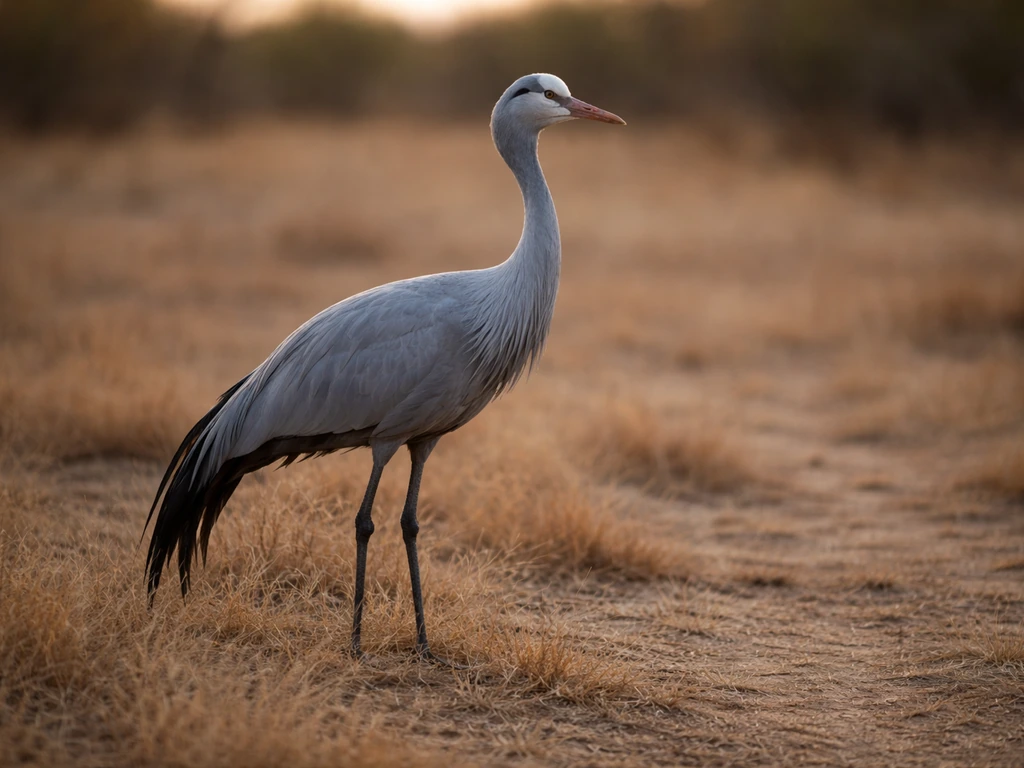
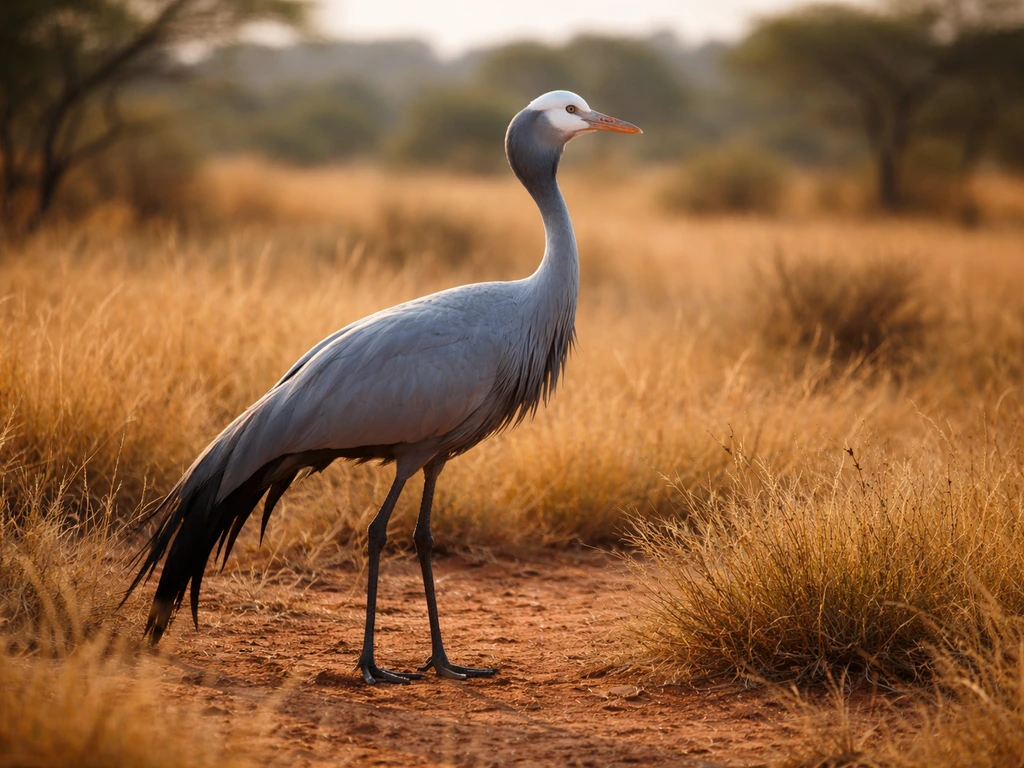
South Africa's national bird is the Blue Crane, known scientifically as Anthropoides paradisia (also written as Anthropoides paradiseus in some biology references). This is the official answer, confirmed on the South African Government's own website (gov.za) and in a dedicated national-symbols document published by the Department of Sport, Arts and Culture (DSAC). If you've seen the secretarybird mentioned in this context online, that's a common mix-up. The Blue Crane is the designated national bird, full stop.
What the Blue Crane means to South Africa
The Blue Crane carries deep cultural weight that goes well beyond being a pretty bird on a government list. The national bird of South Africa meaning is especially strong for the Blue Crane because it reflects long-standing cultural honour as well as official national symbolism. For the amaXhosa people, it is known as 'indwe,' and it holds a place of real social honour. Blue Crane feathers were historically awarded to warriors for exceptional bravery in a tradition called 'ukundzabela.' The title 'isitwalandwe,' meaning roughly 'the one who wears the plumes of the rare bird,' was bestowed on only the most valiant fighters. That's the kind of status the bird held long before any modern government gave it an official designation.
Among the Zulu, Blue Crane feathers also appear in the headdresses of notable warriors and royalty, reinforcing the bird's association with distinction and courage across different South African cultures. So when the Blue Crane became the national bird, it wasn't an arbitrary choice. It was recognizing something that already existed in the country's cultural fabric.
Beyond indigenous symbolism, the Blue Crane's near-exclusivity to South Africa makes it a fitting national emblem. More than 99% of the global Blue Crane population lives within South Africa's borders, according to the International Crane Foundation. A bird that is almost entirely yours, found in your grasslands and Karoo plains, naturally becomes part of national identity.
How it became the official national bird

The Blue Crane's status as South Africa's national bird is documented in official government materials and backed by long-standing reference literature. The gov.za national-bird page draws on sources including FG Brownell's 'Nasionale en Provinsiale Simbole' (1993) and Kenneth Newman's 'Birdlife in Southern Africa' (1971), which means the attribution has roots that predate the internet by decades. The DSAC national-symbols PDF states plainly: 'The National Bird is the BLUE CRANE (Anthropoides paradisia).' The Presidency's own national-symbols pages list it the same way.
Official recognition has also translated into real policy. The South African government has stepped up legal protections for the Blue Crane specifically because of its national-bird status, treating conservation as a responsibility tied to its symbolic role. The International Crane Foundation even describes a media and marketing campaign built around the bird's national status to drive public engagement in protecting it.
Key facts about the Blue Crane
If you want to recognize one in the wild, or just want to know what makes it distinctive, here are the most useful facts from official and scientific sources. Keoladeo National Park is famous for which bird? It is best known for its large variety of birds, especially the sarus crane.
| Feature | Detail |
|---|
| Scientific name | Anthropoides paradisia / Anthropoides paradiseus |
| Height | Up to 117 cm (about 4 ft), or roughly 1 meter (3.5 ft) in some reports |
| Colour | Light blue-grey overall, with a bulbous head, long neck, and long legs |
| Distinctive trait | One of only two crane species without red on its head |
| Call | A rattling, fairly high-pitched croak that carries far; otherwise quiet |
| Diet | Seeds, insects, and reptiles |
| Nesting | Lays eggs directly on bare veld, often near water |
| Habitat | Open grasslands, Karoo plains, KwaZulu-Natal highveld |
| Social behaviour | Usually seen in pairs or small family groups |
| Range | Almost entirely restricted to South Africa; over 99% of global population |
That light blue-grey colouring, combined with the long trailing wing plumes, makes the Blue Crane genuinely elegant in appearance, which helps explain why its feathers carried ceremonial prestige. The bird's long legs and neck give it a tall, stately silhouette on open plains that is hard to miss.
The story behind the choice
The Blue Crane was not chosen because someone in government thought it looked nice on a logo. The selection reflects a combination of factors that make a national bird feel earned rather than assigned. First, the bird is genuinely South African. Being endemic to southern Africa, with the overwhelming majority of individuals living in South Africa itself, means this species cannot really represent any other nation. Second, it already had deep symbolic meaning in multiple indigenous cultures, particularly among the amaXhosa and Zulu, long before formal national-symbol designations existed. National bird meaning can be understood through how the Blue Crane already carried symbolic weight in indigenous cultures before it became an official emblem.
The 'indwe' connection to the amaXhosa is particularly layered. The crane feather wasn't just decorative; it marked a person as someone who had done something exceptional for their community. Translating that existing cultural symbolism into a national emblem gave the designation real grounding rather than making it feel invented from scratch.
It's worth noting that this is a different kind of story from, say, Zimbabwe's national bird, the Zimbabwe Bird (based on carved soapstone birds with ancient historical significance), or Botswana's Kori Bustard, which was chosen largely for being the world's heaviest flying bird and a recognizable icon of the southern African savanna. Botswana's national bird is the Kori Bustard, chosen for its distinctive savanna presence and flight record Botswana's Kori Bustard. If you’re curious about Zimbabwe specifically, see what is the national bird of zimbabwe for the official species name. South Africa's choice leans heavily into living cultural tradition and biological endemism as its twin justifications.
A quick note on the secretarybird confusion
You'll sometimes find the secretarybird mentioned alongside South Africa online, possibly because it appears in other South African imagery and wildlife discussions. The secretarybird is a remarkable bird in its own right, but it is not South Africa's national bird. If you're also wondering what is south korea's national bird, the official national-symbol sources for that country will give you the exact species name. The gov.za official national-bird page specifically names the Blue Crane and provides a full species account for it. If any source tells you otherwise, that source is wrong. The official documentation is unambiguous.
Where to verify this for yourself
If you need to confirm the Blue Crane's official status for a school project, presentation, or just personal certainty, here are the most reliable places to check.
- The South African Government's national-bird page at gov.za, which lists 'National bird: Blue crane' and provides a species description including appearance, diet, habitat, nesting, and call.
- The DSAC national-symbols PDF, which uses the exact phrase 'The National Bird is the BLUE CRANE (Anthropoides paradisia)' and is an official government document.
- The Presidency's national-symbols section at presidency.gov.za, which lists the Blue Crane and contextualises it within South Africa's broader set of official symbols.
- SANBI (South African National Biodiversity Institute), which confirms national-bird status and also covers the cultural 'indwe' significance to the amaXhosa.
- The International Crane Foundation's Blue Crane species page, which confirms national-bird status and provides solid biological data on population and range.
- The Smithsonian National Zoo's Blue Crane page, which cross-confirms the national-bird designation from an internationally respected zoological institution.
Between gov.za and the DSAC PDF, you have direct official government confirmation. The other sources are useful for corroboration and for getting richer detail on the bird's biology and cultural meaning. If you're looking for the deeper 'why' behind national bird choices more broadly, this kind of layered symbolism (endemic range plus indigenous cultural meaning plus conservation significance) is actually a common pattern across many countries' national bird selections.