
Botswana's national bird is the Kori Bustard (Ardeotis kori). The national bird meaning of Botswana's choice is tied to the Kori Bustard's identity as a powerful symbol rooted in local culture and the natural environment. It was officially designated as the national bird on May 12, 2014, when Botswana's Department of Wildlife and National Parks unveiled the country's national symbols. If you want a one-line answer you can verify: the Kori Bustard, scientific name Ardeotis kori, is the official national bird of Botswana.
What Is the National Bird of Botswana? Bird ID, Meaning

Marcus Chen
5 May 2026
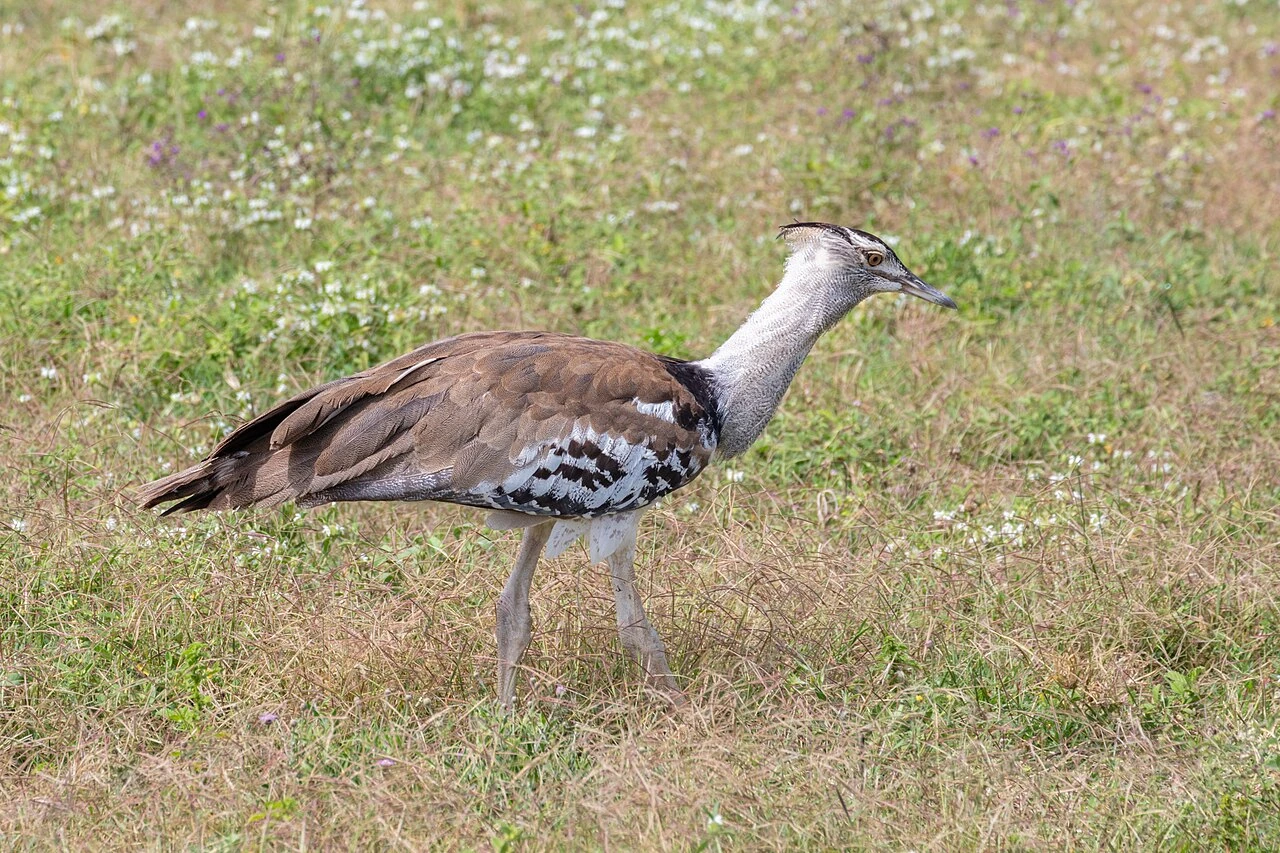
The bird itself: name, species, and how to recognize it
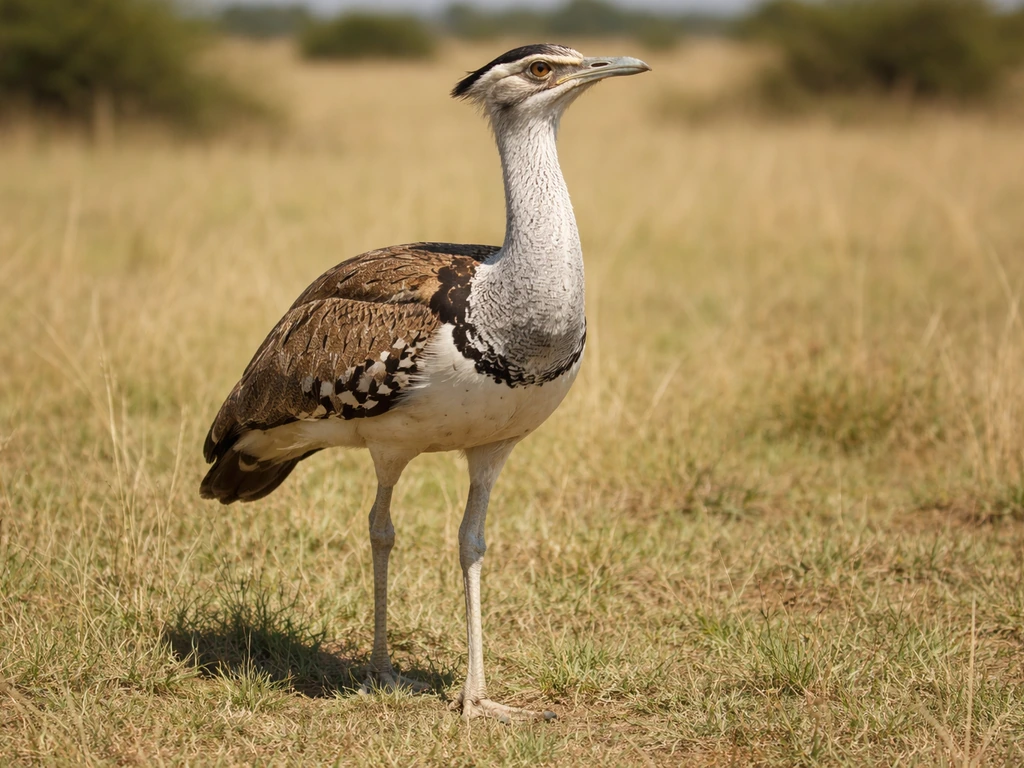
The Kori Bustard belongs to the family Otididae, the bustards, and carries the full scientific name Ardeotis kori. The subspecies found across southern Africa, including Botswana, is Ardeotis kori kori, while a separate subspecies (A. kori struthiunculus) lives in parts of East Africa. So when Botswana claims this bird as its emblem, it is specifically the southern African form that lives across Botswana's open landscapes.
Recognition is pretty straightforward once you know what to look for. The Kori Bustard is massive. Adult males are among the heaviest living flying animals on earth, which the Botswana Tourism Organisation highlights as the bird's standout "wow" fact. Think of a large, heavily built bird walking slowly and deliberately through open grassland or savanna, and you have the right mental image.
- Size: Males are very large, making them among the heaviest birds capable of flight on the planet.
- Plumage: Brown and buff tones on the back, with a finely barred grey-and-white neck and a distinctive black-and-white crest on the head.
- Posture: Upright and ground-level. The Kori Bustard walks rather than perches. You will almost never see it in a tree.
- Habitat: Open grasslands, semi-arid savannas, and lightly wooded plains. It prefers wide-open spaces where it can spot threats from a distance.
- Behavior: Ground-dwelling. It nests on the ground, feeds on the ground, and spends most of its life walking through open terrain.
- Range in Botswana: Found across much of the country, especially in the Kalahari and central Botswana's open savanna zones.
If you are in the field and see a very large bird striding through grass or dry scrub in southern Africa, and it is too big to be a francolin or guineafowl but clearly not a secretary bird or ostrich, there is a good chance you are looking at a Kori Bustard. The range spans southern Angola, Namibia, Botswana, Zimbabwe, South Africa, and southern Mozambique, so this is a regionally shared species that Botswana has chosen to represent itself. The national bird of Zimbabwe is the Southern Ground Hornbill.
Why Botswana chose the Kori Bustard
The symbolism here is not complicated, but it is well chosen. The Kori Bustard is one of the most iconic birds of Botswana's open landscapes, and it connects the national identity directly to the natural environment the country is famous for. If you are also curious about the national bird of South Africa and what it symbolizes, look up its meaning for a quick comparison. Botswana built much of its international reputation on wildlife and ecotourism, and the Kori Bustard is a genuine representative of the Kalahari and savanna ecosystems that define the country's geography.
There is also a cultural layer that goes deeper than tourism. The Kori Bustard is specifically associated with traditional authority in Botswana, a concept described locally as "Bogosi." A Guardian Sun report covering the Regional Youth Games mascot (named "Kgori" after the bird) noted that the organising committee chose the Kori Bustard precisely because it is iconic and connected to that traditional authority context. The name "Kgori" is the Setswana word for the Kori Bustard, and using it as a mascot name signals how embedded the bird is in local culture and identity.
The bird's imposing size and presence also align naturally with the qualities a national symbol is meant to project: strength, groundedness, and a sense of commanding presence without aggression. Unlike many national birds chosen for flashy colors or aerial acrobatics, the Kori Bustard is deliberate, substantial, and deeply tied to the land.
When and how it became official

The Kori Bustard became Botswana's official national bird on May 12, 2014. A BirdLife Botswana publication from 2015 records that date specifically, noting that the formal designation "finally happened" that day when Botswana's Department of Wildlife and National Parks publicly unveiled the country's national symbols. A report in Botswana's Daily News covered the announcement the following day, confirming the 2014 selection period.
The timing is significant. By 2014 Botswana had been independent for nearly five decades (independence came in 1966), and the formalisation of national symbols like the national bird reflects an ongoing process of nation-building and cultural identity consolidation that many countries go through well after independence. It is worth noting that BotswanaPost, the national postal service, has published a philately booklet titled "Endangered Birds of Botswana: THE BUSTARDS" that explicitly names the Kori Bustard as the national bird, linking the formal designation to a broader conservation and education message.
Cultural stories and connections
The cultural roots of the Kori Bustard in Botswana go well beyond the 2014 official designation. The San people, one of the oldest indigenous groups in southern Africa and historically prominent in what is now Botswana, have long incorporated the Kori Bustard into their cultural expression. The bird features in San dances and songs, and paintings of bustards appear in ancient San rock art. That is a meaningful depth of cultural presence for a species that was later formalised as a national symbol.
The Kgori mascot story is another good example of the bird living in everyday Botswana culture. When a regional youth games competition needed a mascot, the organising committee reached for this bird by name. That kind of choice does not happen with an unfamiliar species. It happens with a bird that people already recognize, already name in their own language, and already associate with something meaningful.
The male Kori Bustard's display behavior also makes it visually striking in a way that sticks in memory. Males are polygynous, meaning one male mates with multiple females, and they perform elaborate display rituals to attract mates. The male inflates its throat, fans its tail, and puffs up to appear even larger than its already impressive size. For anyone who has seen this in the field, it is hard to forget. That kind of display presence likely contributed to the bird's cultural visibility over centuries.
It is also worth noting that Zimbabwe has its own nationally significant bird, the African Fish Eagle, and South Africa's national bird is the Blue Crane. Botswana's choice of the Kori Bustard distinguishes it clearly from its neighbors while still celebrating a bird that is genuinely native to the whole southern African region.
Quick facts and what to explore next
| Detail | Information |
|---|---|
| Official common name | Kori Bustard |
| Scientific name | Ardeotis kori |
| Southern Africa subspecies | Ardeotis kori kori |
| Year designated national bird | 2014 (officially May 12, 2014) |
| Notable physical trait | Among the heaviest living flying birds on earth |
| Habitat | Open grasslands and savannas |
| IUCN conservation status | Near Threatened (since 2013) |
| Setswana name | Kgori |
| Cultural connection | Featured in San dances, songs, and ancient rock art |
The Kori Bustard is currently classified as blank" rel="noopener noreferrer">Near Threatened by the IUCN, a status it has held since 2013. That makes the BotswanaPost conservation framing quite pointed: Botswana chose a national bird that itself needs protection. That connection between national pride and conservation responsibility is something worth carrying away from this topic. If you are comparing other countries' national birds next, you can also look up what is South Korea's national bird. The keoladeo national park is famous for which bird, and learning that answer helps you compare Botswana's national bird with the species found in India Kori Bustard.
Where to go from here
- Check the Botswana Tourism Organisation's birdwatching pages for guidance on where to look for the Kori Bustard in the wild. They flag it prominently as one of the country's flagship bird species for visitors.
- Look up Ardeotis kori on Encyclopaedia Britannica or a trusted ornithology database to get a solid grounding in the species' ecology, distribution, and behavior beyond the national symbol angle.
- If you want to see the bird in person, the central Kalahari and open savanna zones of Botswana are your best bets. It is a ground bird, so scan open ground and grassland edges rather than tree canopies.
- For the cultural dimension, search for San rock art featuring bustards. Several academic and museum resources document these images and can give you a richer sense of how long this bird has mattered to people in the region.
- The BotswanaPost philately booklet on bustards is a useful and accessible starting point if you want to understand the conservation context alongside the national symbol story.
- If you are exploring national birds across the region, the African Fish Eagle (Zimbabwe) and the Blue Crane (South Africa) make natural comparisons to the Kori Bustard, especially in terms of what each symbol says about a country's identity and natural heritage.
FAQ
Is Botswana’s national bird definitely the Kori Bustard, or could it be another bustard species?
Yes. The official national bird is the Kori Bustard, scientific name Ardeotis kori (the Botswana population corresponds to the southern African form, Ardeotis kori kori). If you see smaller bustards, they are likely different species, not the national bird.
How can I tell I’m not mixing Botswana’s national bird up with a similar bird in nearby countries?
Botswana’s selection is the Kori Bustard, not the “national bird” of any neighboring country. For a quick check, confirm the bird you are comparing to is also named in the relevant country’s official symbols program, not just a tourism poster or local guide.
Does the national bird’s presence or likelihood of sightings change by season in Botswana?
The national-bird designation does not change by season, but what you can observe can. During dry periods the Kori Bustard may be harder to spot in dense vegetation because it forages and displays in open, visibility-friendly habitats.
What practical field marks should I use to identify the Kori Bustard versus other large birds?
If your bird is very large, walking slowly in grassland or savanna, and not an ostrich or secretary bird, it is a strong match. A helpful field clue is that male display involves throat inflation and tail fanning, which is more specific than general “big bird” size alone.
Does the Kori Bustard being Near Threatened affect how Botswana presents it as a national symbol?
Botswana’s national bird is Kori Bustard regardless of its conservation status. However, the IUCN Near Threatened listing means the species needs protection, so activities like harassment, collecting, or disturbing display areas are especially problematic even for “just photos.”
What’s the simplest correct way to state Botswana’s national bird in one line?
If you want a version for quizzes, trivia, or a one-line answer, use “Kori Bustard, Ardeotis kori.” For more accuracy in scientific form, Botswana is associated with Ardeotis kori kori rather than the East Africa subspecies.
Did the Kori Bustard become Botswana’s national bird only in 2014, or was it a symbol earlier too?
The 2014 designation date matters for “when it became official,” but older cultural references do not mean it was already the formal national bird. Cultural symbolism can predate state symbolism, so both can be true without implying an earlier official status.
What local name should I look for if I see references to “Kgori” in Botswana?
In Botswana contexts, the Setswana name “Kgori” is used for the Kori Bustard, and that can show up in mascots or cultural references. Using this local name is a good way to confirm you are talking about the same bird as the national emblem.
If a park is famous for a different bird, does that mean Botswana’s national bird is different there too?
You can treat the national-bird designation as separate from protected-area “famous birds.” Even where another species is the headline in a park or lodge list, the national bird remains the Kori Bustard, so park signage should not be assumed to override the national symbol.
What’s the best way to avoid mistakes when using this fact in a report or presentation?
Because the national bird is a specific species, educational materials from postal, youth games, or wildlife departments may emphasize it even when other bustards are present. If you are using the information for a school assignment, rely on the bird’s scientific name (Ardeotis kori) to avoid confusion.