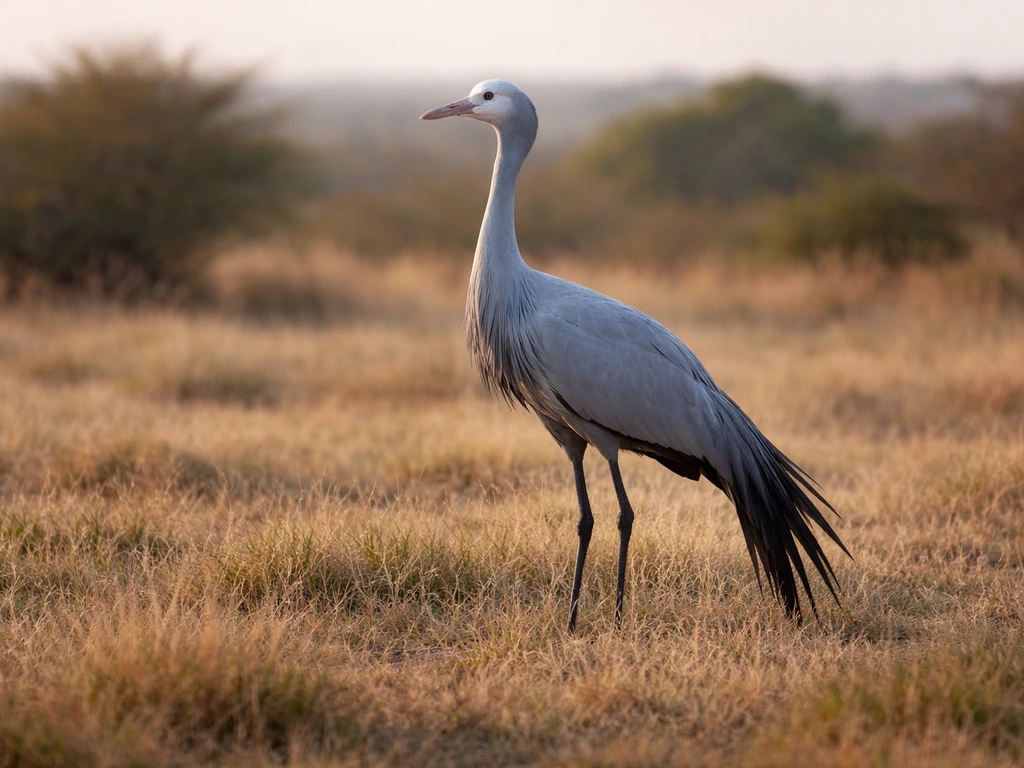
South Africa's national bird is the Blue crane (Anthropoides paradisia), sometimes called the Stanley crane or paradise crane. It's a tall, elegant, light blue-grey bird standing about one meter high, and it's one of the most distinctly South African animals on the planet: roughly 99% of the world's entire blue crane population lives within South Africa's borders.
National Bird of South Africa Meaning: History and Symbolism

Marcus Chen
2 May 2026
South Africa's national bird, clearly identified
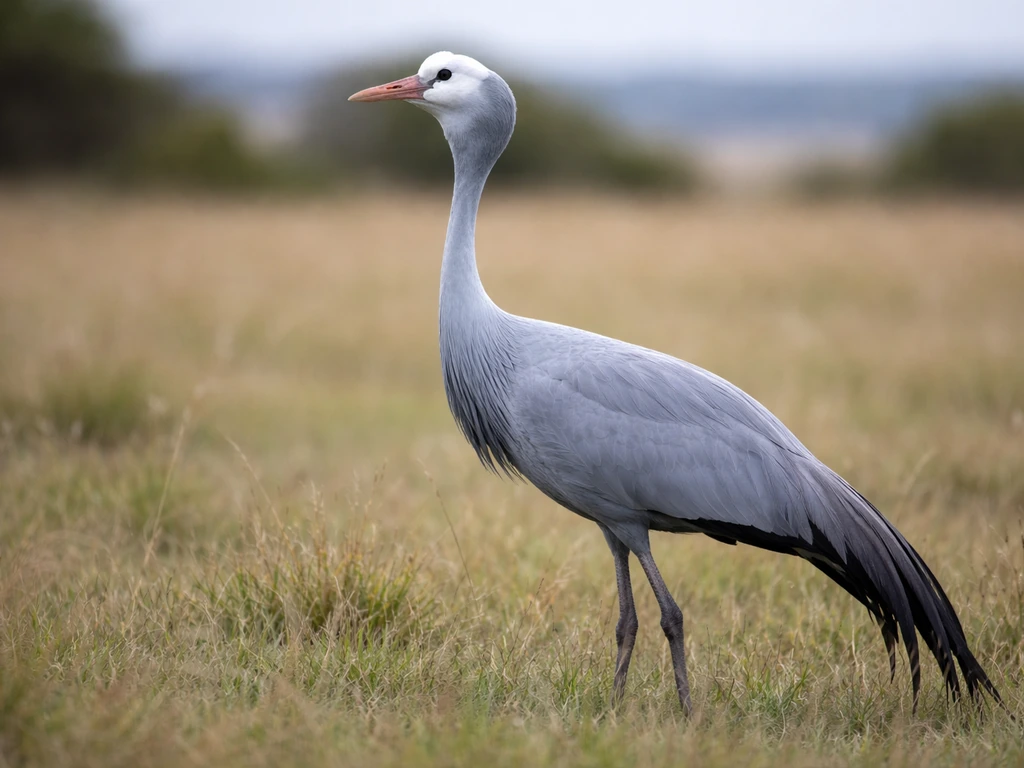
Both the South African Government's official website (gov.za) and the Department of Sport, Arts and Culture (DSAC) national symbols publication list the same bird: the Blue crane, scientific name Anthropoides paradisia. If you've seen the name 'Stanley crane' or 'paradise crane' floating around, those are just alternative common names for the exact same species. There's no ambiguity at the official level.
The bird is immediately recognizable. It has a long neck, a distinctively bulbous head, and long dark wing plumes (not tail feathers, despite how they look) that sweep elegantly all the way to the ground. It's also mostly quiet, which makes its loud, rattling croak all the more striking when you do hear it. That call carries across open plains and can be heard from a considerable distance.
What the blue crane symbolizes for South Africa
The official symbolism is grounded in the bird's natural identity rather than a single neat slogan. The gov.za national symbols page ties the blue crane's meaning to three things: its near-exclusive association with South Africa's landscape, its distinctive and elegant appearance, and its characteristic habitat across the country's most iconic open terrains, including the Karoo, the KwaZulu-Natal grasslands, and the highveld.
The near-endemism angle is genuinely powerful as a symbol. A species that exists almost entirely within your borders isn't just a national bird in name, it's a natural emblem in fact. The DSAC frames national symbols as representing national heritage and identity, and the blue crane fits that framing well: it's a bird you find in South Africa and almost nowhere else on Earth.
There's also a deeper cultural layer. The blue crane's feathers are historically linked to bravery and honour. The South African Government's 2003 invitation to design new National Orders explicitly states that the blue crane, known as the indwe, has tail feathers (called isithwalandwe) used as symbols of bravery. Conferring these feathers was a mark of honour connected to warrior tradition and restoring peace and order.
The award name Isithwalandwe/Seaparankoe, one of the most prestigious honours in the country, literally translates to 'the one who wears the plumes of the rare bird,' with the rare bird in question being the blue crane. That connection between the bird and the concept of extraordinary honour runs deep in South African public life.
How and when the blue crane became the national bird
The official government sources don't publish a detailed public timeline of a formal selection date in the way some countries document their national symbol choices. What the official sources do confirm is that the blue crane is listed among South Africa's constitutionally recognised national symbols alongside the national flag, coat of arms, anthem, and others. The DSAC national symbols publication, which is the government's own reference document for all national symbols, lists the blue crane plainly and without qualification as the national bird.
The references cited on the gov.za national bird page point to ornithological sources including Brownell (1993) and Newman (1971), which suggests the biological description of the bird underpinning the official listing draws from established South African natural history literature. South African History Online also cites the same references, reinforcing that the foundational description is consistent across official and heritage sources.
What's clear from the official record is that the blue crane's selection reflects both its ecological uniqueness to South Africa and its long cultural standing within indigenous South African traditions, which predates the modern formal designation.
The blue crane in South African culture and identity
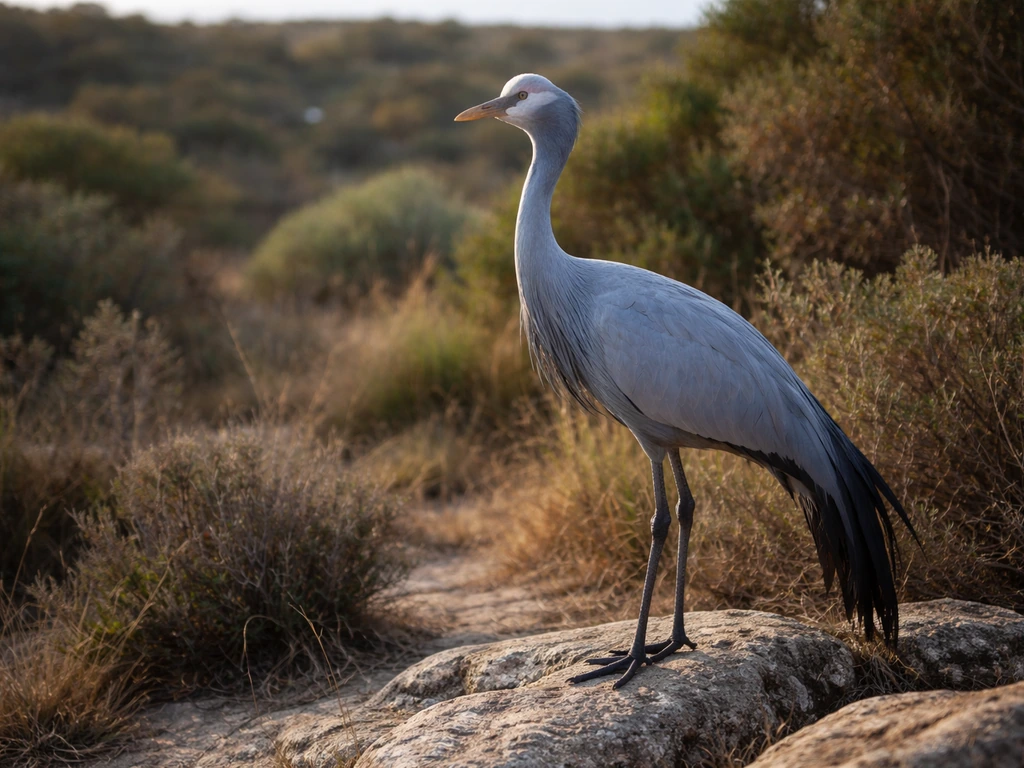
The amaXhosa people call the blue crane the indwe. The Presidency's official national symbols page makes this connection explicit: the bird's name in amaXhosa is tied to a tradition of honouring those who show exceptional bravery or service. Warriors who distinguished themselves were adorned with the feathers of the indwe, marking them as people worthy of the highest regard.
This tradition feeds directly into modern South African public honours culture. The Isithwalandwe/Seaparankoe award, given by the African National Congress to those who make extraordinary contributions to the liberation and progress of South Africa, takes its name and imagery from this same cultural context. Recipients are metaphorically the ones who carry the blue crane's plumes.
Beyond formal honours, the blue crane appears across South African landscapes in ways that reinforce national connection. It's a common sight in the Karoo, in KwaZulu-Natal grasslands, and on the highveld, often seen in pairs or small family groups. For people living in and traveling through South Africa, encountering a blue crane in the open veld is a recognisably South African experience.
If you're interested in comparing how neighbouring countries chose their own national bird symbols, Zimbabwe's choice carries similarly layered cultural significance, and Botswana's national bird has its own strong ecological tie to its landscape. Botswana also has its own national bird, chosen for its connection to the country’s landscapes Botswana's national bird. Zimbabwe's national bird is different from South Africa's blue crane, reflecting its own layered cultural and ecological significance Zimbabwe's choice. The pattern of choosing birds that reflect both natural habitat and cultural heritage is common across southern Africa.
Why the blue crane specifically, and what makes it special
The blue crane has the smallest natural range of any crane species in the world. And within that small range, approximately 99% of all blue cranes on Earth live in South Africa, with a global population estimated between 12,000 and 23,000 birds according to Smithsonian National Zoo. No other country can reasonably claim this bird as its own.
Physically, the blue crane is built for the open South African landscape. It stands about a meter tall, is coloured a distinctive light blue-grey, and those long trailing feathers (which are actually elongated wing feathers, not tail feathers) give it an unusually graceful silhouette on the ground. It doesn't have the red facial patches typical of most crane species, which makes it look calmer and more composed in appearance.
Its diet and nesting behaviour also match its habitat perfectly. The blue crane eats seeds, insects, and small reptiles, foraging across open grasslands and Karoo-like plains with low shrubby vegetation. It nests on bare veld, often near water, laying its eggs directly on the ground. There's no elaborate nest, just a bird closely connected to the raw landscape it inhabits.
That rattling croak worth mentioning again: the blue crane is mostly quiet, but its call is loud and distinctive enough to carry across wide open spaces. That combination of reserved presence and unmistakable voice when it does call is a trait that resonates well with the symbolism of a national bird.
A quick look at key blue crane facts
| Feature | Detail |
|---|---|
| Scientific name | Anthropoides paradisia |
| Common alternative names | Stanley crane, paradise crane |
| Height | About 1 metre |
| Colour | Light blue-grey |
| Distinctive features | Long neck, bulbous head, trailing wing plumes |
| Call | Loud rattling croak, usually quiet otherwise |
| Diet | Seeds, insects, small reptiles |
| Habitat | Open grass fields, Karoo plains, KwaZulu-Natal grasslands, highveld |
| Nesting | Bare veld, often near water, ground-nesting |
| Global range | Smallest of any crane species; ~99% live in South Africa |
| Estimated population | 12,000 to 23,000 birds globally |
| amaXhosa name | Indwe |
How to verify the meaning and cut through conflicting claims
One source of confusion you'll run into online is the multiple common names for this bird. 'Blue crane,' 'Stanley crane,' and 'paradise crane' all refer to the same species, Anthropoides paradisia. If you see an article saying the Stanley crane or paradise crane is South Africa's national bird, it's not wrong, it's just using a different common name. The species name is the reliable constant.
A second confusion point is whether someone might claim a different bird entirely. If you want to verify the official answer, go directly to these sources: South Korea has its own national bird as well, so if you're looking for a country comparison, it's worth checking which species is officially recognized there what is south korea's national bird.
- The South African Government's official national symbols page at gov.za, which lists the Blue crane (Anthropoides paradisia) explicitly.
- The Department of Sport, Arts and Culture (DSAC) national symbols PDF, which independently confirms the same bird and species name.
- The Presidency's national symbols page at presidency.gov.za, which adds the cultural and indigenous context around the indwe and the isithwalandwe feather tradition.
- The Smithsonian National Zoo's blue crane profile for reliable biological and range facts that reinforce the symbolism.
Wikipedia can be a useful starting point for national symbols, but it reflects the common-name confusion pattern well, with terms like 'Stanley crane' and 'blue crane' appearing interchangeably. Always cross-check Wikipedia entries against the official government sources listed above before using the information for anything important, like a school assignment or a formal presentation.
The bottom line for verification is simple: if both gov.za and the DSAC list the same bird with the same scientific name, that's your answer. They do, and it's the blue crane. In Keoladeo National Park, the famously distinctive bird you would look for is the blue crane. The cultural meaning comes from the Presidency's page and the government's own National Orders documentation, which together give you the most authoritative account of both the ecological and symbolic reasons South Africa chose this particular bird.
FAQ
When people ask for the “national bird of south africa meaning,” are they usually asking about symbolism, or just the species name?
Most of the time they mean both. The species answer is the blue crane (Anthropoides paradisia), while the meaning comes from how South Africa links the bird’s near-endemism, distinctive look, and open-land habitat to national identity, plus a cultural association through the indwe feathers used in honours.
If I see “Stanley crane” or “paradise crane,” is that a different bird from the national bird?
No. Those are alternative common names for the same species, Anthropoides paradisia. If you want to be certain, match the scientific name, because common names can vary by region and by website.
Why does the article say the blue crane’s wing feathers look like tail feathers, does that affect the meaning?
It can affect how people misidentify the bird visually, but it does not change the symbolic connection. The cultural link described in the article is specifically about plumes used in honours (the isithwalandwe concept), not about tail versus wing anatomy in casual sightings.
Is the national bird’s “meaning” the same as the “National Orders” meaning linked to indwe feathers?
They overlap but are not identical. The national symbol meaning is based on ecological association and national heritage framing, while the National Orders meaning is tied to a specific cultural honours tradition using indwe plumes. Treat them as related layers rather than one identical message.
How can I verify the national bird quickly for a school project without getting tripped up by conflicting web pages?
Use a two-step check: first, confirm the official listing (gov.za and the DSAC national symbols publication). Second, confirm the scientific name is Anthropoides paradisia. If both match, the identification is reliable even if other sites use different common names.
Does South Africa still recognize the blue crane officially, given there is no widely published “selection date” in the sources mentioned?
Yes. Lack of a publicly documented selection date does not remove official status. What matters is that it is listed alongside other constitutionally recognized national symbols in government references and repeated consistently in the DSAC national symbols documentation.
Are there any similar-looking cranes in South Africa that could cause confusion when trying to spot the national bird?
Yes, people often misread crane silhouettes at a distance. The blue crane is distinctive for its light blue-grey colour, bulbous head shape, and lack of the red facial patches typical of many other crane species, so focus on these traits when field-identifying.
If 99% of blue cranes are in South Africa, does that mean the bird is exclusive to South Africa?
Not entirely, but it is strongly concentrated. The article’s point is “near-exclusive association” (very small global range and most individuals within South Africa). That is the practical reason it works so well as a national symbol, even though a small number exist elsewhere.
What is the best practical way to encounter the bird if I’m traveling in South Africa?
Look in open veld and grassland habitats where it forages and calls across open spaces. The article highlights the Karoo, KwaZulu-Natal grasslands, and the highveld, and notes it is often seen in pairs or small family groups.
Can I use a Wikipedia entry as my final source for the national bird meaning?
You can use it as a starting point, but it should not be your final authority for assignments or formal work. The article emphasizes that common-name confusion is common online, so cross-check Wikipedia against official government sources and the scientific name.