No, the hummingbird is not the national bird of Trinidad and Tobago. The official national birds are the blank" rel="noopener noreferrer">Scarlet Ibis (Eudocimus ruber) for Trinidad and the Cocrico, also known as the Rufous-vented Chachalaca (Ortalis ruficauda), for Tobago. This is confirmed by the Ministry of Foreign and CARICOM Affairs and backed by the country's National Emblems legislation.
Is the Hummingbird a National Bird of Trinidad and Tobago?

Marcus Chen
2 Jun 2026
Why so many people think it's the hummingbird
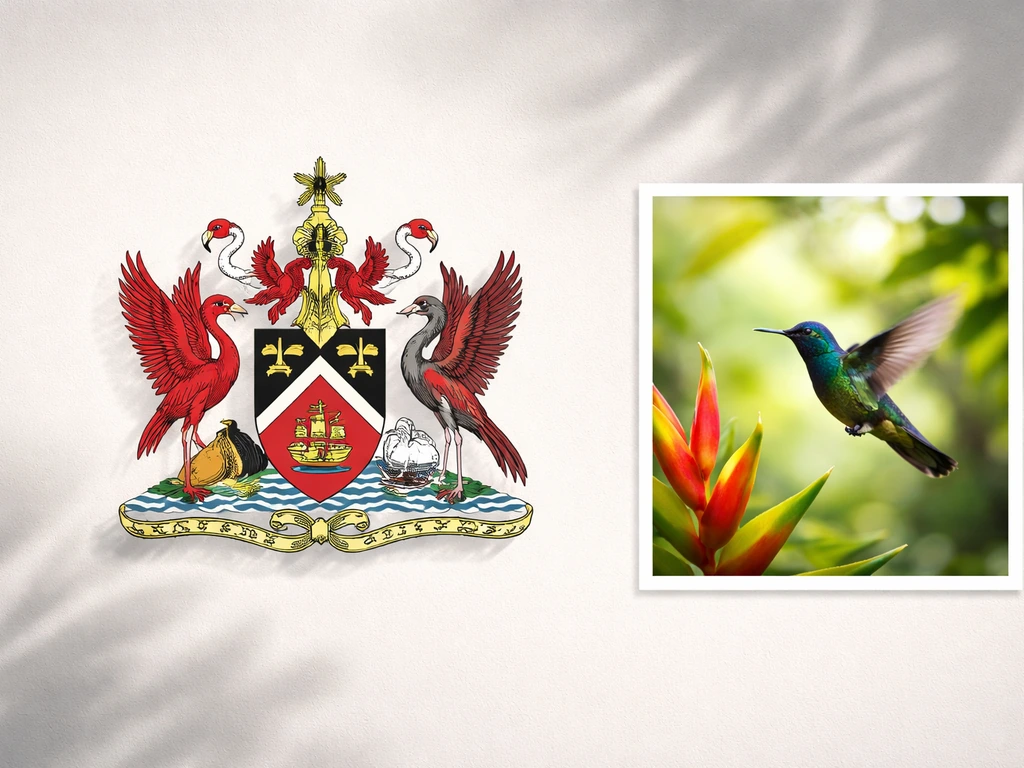
The confusion is completely understandable, and it comes from one very specific place: the national Coat of Arms. If you look at the Coat of Arms of Trinidad and Tobago, you will see hummingbirds right there on the shield. The official legal description of the arms, under the National Emblems Act, explicitly states "two Hummingbirds respectant gold" appear on the shield itself. That is prominent, official, and easy to notice.
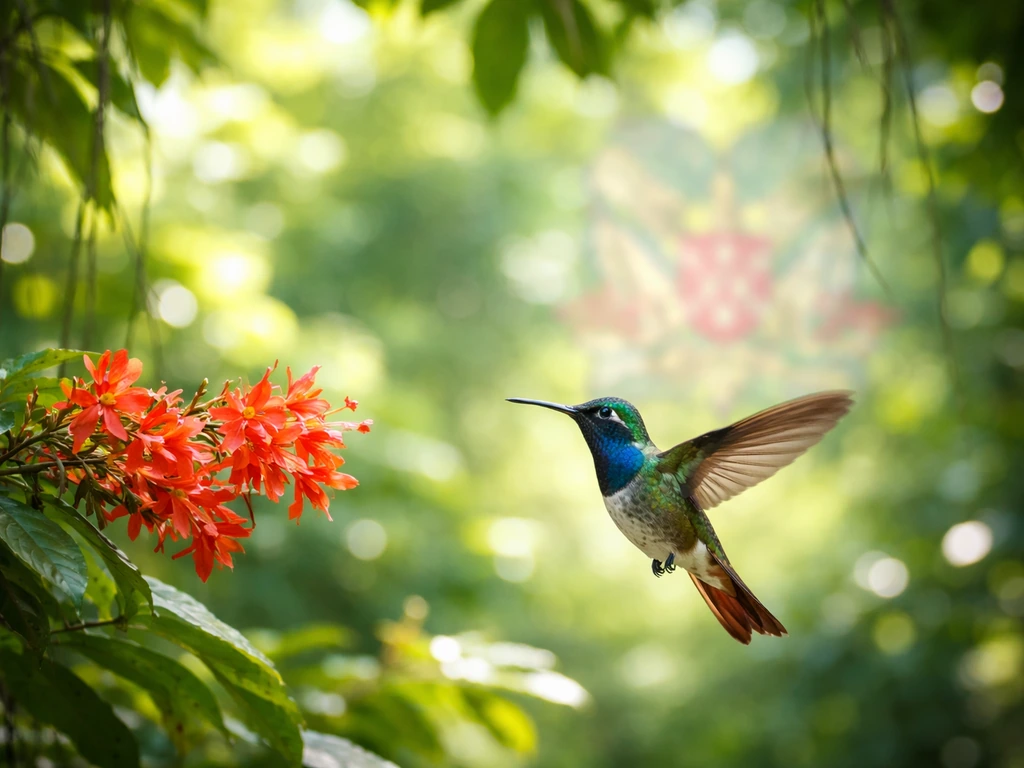
On top of that, Trinidad and Tobago has a strong cultural connection to hummingbirds. There are 18 recorded hummingbird species across the islands, and the birds hold significance tied to Indigenous peoples of the region. Trinidad itself is sometimes nicknamed "The Land of the Hummingbird," a name rooted in the original Amerindian name for the island. When you combine visible coat-of-arms imagery with a well-known nickname, it is easy to see how the hummingbird gets mistaken for the national bird.
Wikipedia even notes that the hummingbird is "considered another symbol" of the country due to its Indigenous significance, but is careful to add that it is not a national bird. That distinction matters, and it is where a lot of casual searches go wrong.
National bird, national emblem, and popular nicknames are not the same thing
This is worth slowing down on because the terminology gets muddled online. In Trinidad and Tobago, the National Emblems Act defines "National Emblems" as the Coat of Arms, the National Flag, and the National Flower. The national bird is a separate official designation that sits outside of that specific legal category of "emblems," even though the national birds appear on the Coat of Arms as supporters.
So when you see the hummingbird described as part of the "national emblems" or on official symbolism, it refers to its role in the Coat of Arms imagery, not a "national bird" designation. The Coat of Arms has two supporting birds (the Scarlet Ibis on the left and the Cocrico on the right) and the hummingbirds on the shield itself. Those are heraldic roles, not national bird titles.
Then there are popular nicknames. "Land of the Hummingbird" is a cultural nickname, not a legal or official bird designation. Nicknames and coat-of-arms motifs do not equal national bird status. The Ministry of Foreign and CARICOM Affairs is the authoritative source for what is and is not an official national bird, and they are clear on this.
The two official national birds and what they are
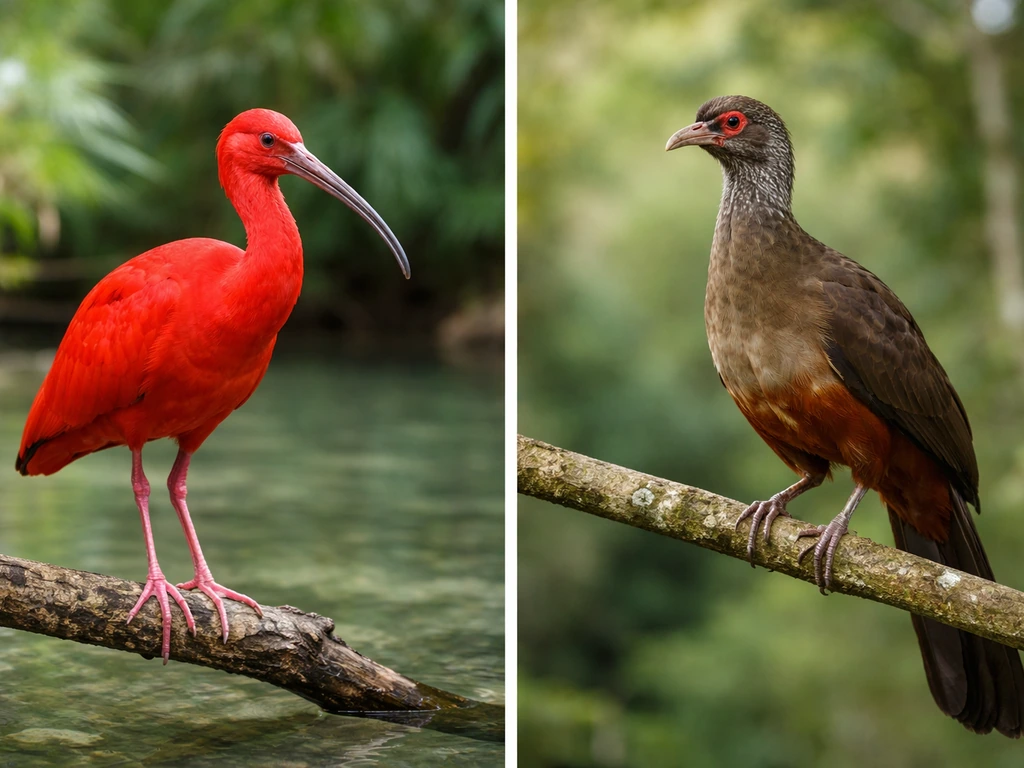
Trinidad and Tobago is one of the few countries in the world that has two official national birds, one for each island. Here is a quick breakdown:
| Island | National Bird | Scientific Name | Also Known As |
|---|---|---|---|
| Trinidad | Scarlet Ibis | Eudocimus ruber | N/A |
| Tobago | Cocrico | Ortalis ruficauda | Rufous-vented Chachalaca / Red-tailed Guan |
Both birds are native to their respective islands, both are protected by law, and both appear on the national Coat of Arms as supporters, flanking the shield. The Scarlet Ibis is on the left side of the shield and the Cocrico on the right, while the hummingbirds appear on the shield itself as decorative heraldic elements.
The story behind how these birds became national symbols
The Scarlet Ibis and Trinidad
The Scarlet Ibis was declared Trinidad's national bird in 1962, the same year the country gained independence. The timing was deliberate. The ibis is one of the most visually striking birds in the Western Hemisphere, with vivid crimson plumage that comes from the carotenoid pigments in the crustaceans it feeds on. It nests in massive colonies in the Caroni Swamp on Trinidad's west coast, where tens of thousands of birds roost together and create one of the most dramatic natural spectacles in the Caribbean. Choosing the Scarlet Ibis was a statement of national pride rooted in Trinidad's unique natural landscape.
Despite its iconic status, the Scarlet Ibis has faced real pressure. National Geographic has reported on the bird being hunted for bush meat in Trinidad, which makes its legal protection as a national bird more than symbolic. It represents an ongoing conservation commitment for the country.
The Cocrico and Tobago
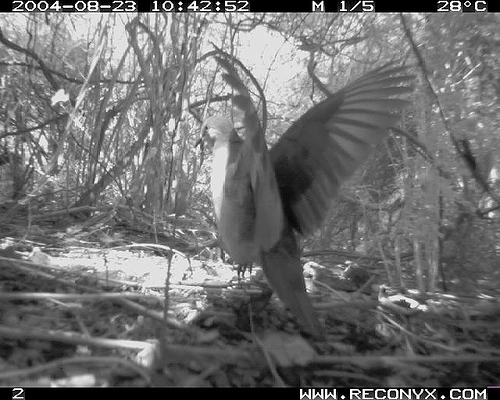
The Cocrico, or Rufous-vented Chachalaca, is a loud, ground-foraging bird found only on Tobago and a few small nearby islands. It is notably absent from Trinidad, which is exactly why it was chosen as Tobago's national bird. The Cocrico represents something distinctly Tobagonian, a bird that belongs specifically to that island and nowhere else in the twin-island republic. The national bird of Grenada is the Grenada Dove. The University of the West Indies' Online Guide to the Animals of Trinidad and Tobago confirms the Cocrico is "regarded as Tobago's national bird" and appears on the Coat of Arms alongside the Scarlet Ibis.
The choice of two separate national birds reflects something meaningful about Trinidad and Tobago's national identity: each island has its own distinct ecology and character, and the national symbolism acknowledges that rather than forcing a single unified symbol onto both.
Where the hummingbird fits in the story
The hummingbird's place in Trinidad and Tobago's symbolism is real and significant, just not as a national bird. The Amerindian name for Trinidad is believed to have inspired the association with hummingbirds, and the birds hold deep cultural meaning tied to the island's pre-colonial history. The National Library and Information System Authority (NALIS) of Trinidad and Tobago acknowledges the hummingbird as part of the coat-of-arms symbol set. So the hummingbird is genuinely woven into the country's national identity, just through the Coat of Arms rather than through a formal national bird designation.
How to verify this for yourself
If you want to confirm any of this directly, here are the most reliable places to check and exactly what to look for:
- Ministry of Foreign and CARICOM Affairs (Trinidad and Tobago): Search for their "National Bird" page. It explicitly names the Scarlet Ibis and the Cocrico as the national birds, with scientific names included.
- Laws of Trinidad and Tobago (National Emblems Act): Look for the Schedule, Part I, which contains the official heraldic description of the Coat of Arms. It distinguishes between the hummingbirds on the shield and the Scarlet Ibis and Cocrico as supporters, making the roles of each bird legally clear.
- NALIS (National Library and Information System Authority): Their national symbols content guide lists the Coat of Arms components, including all three birds, which helps you see the hummingbird's role versus the national birds' role.
- UWI's Online Guide to the Animals of Trinidad and Tobago (OGATT): The entry for Ortalis ruficauda (Cocrico) confirms Tobago's national bird designation and places it in ecological context.
When reading any source, pay attention to the exact wording. If it says "national bird," that points to the Scarlet Ibis and Cocrico. If it says "Coat of Arms" or "national emblem," that is where the hummingbird legitimately appears. The distinction is small in wording but significant in meaning.
How this fits with other Caribbean national birds
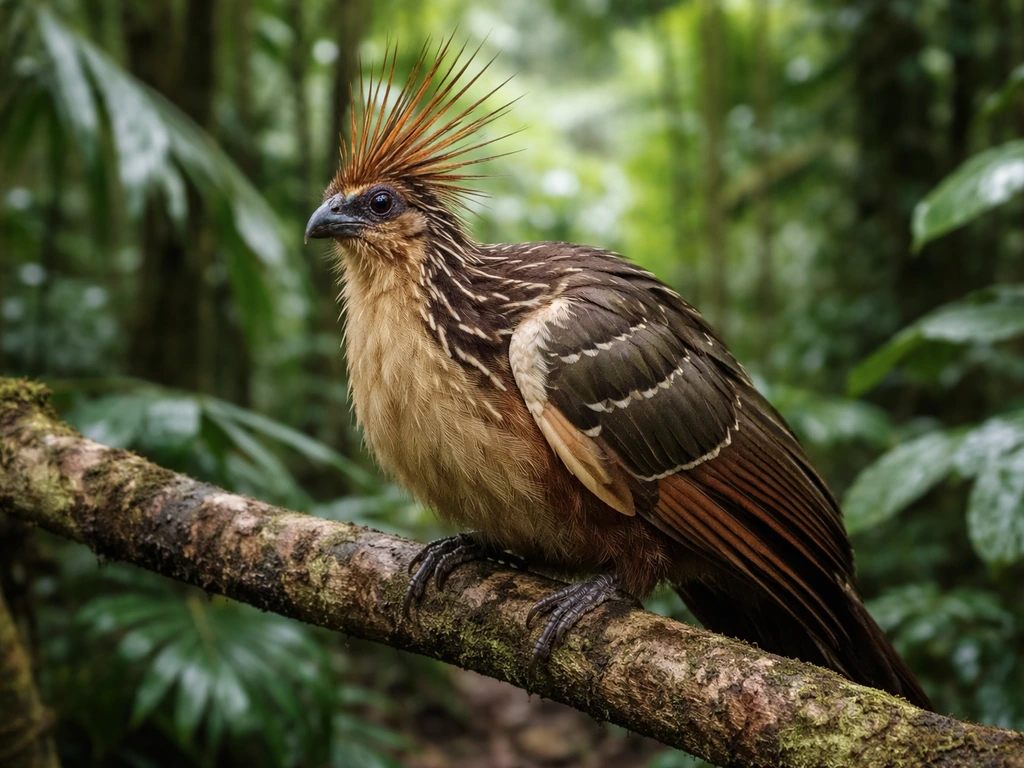
Trinidad and Tobago's dual national bird setup is relatively unusual. Most Caribbean nations designate a single bird. Nearby Guyana chose the Canje Pheasant (Hoatzin), St. Guyana’s national bird is the Canje Pheasant, also known as the Hoatzin Canje Pheasant (Hoatzin).
Lucia designated the St. If you are comparing other islands too, you can also look up what is the national bird of st lucia before deciding which bird is truly official. Lucia Parrot, and Grenada is represented by the Grenada Dove. If you are wondering what the official national bird of Grenada is, the answer is the Grenada Dove Grenada is represented by the Grenada Dove..
Each of these selections, like the Scarlet Ibis and Cocrico, reflects something specific and native to that country's environment and identity. What makes Trinidad and Tobago stand out is both the decision to honor each island separately and the additional cultural weight the hummingbird carries as a third symbolic bird, even without the formal national bird title.
FAQ
So why do so many sites say the hummingbird is the national bird?
No. In Trinidad and Tobago, the hummingbird does not hold the separate legal designation of “national bird.” It appears in the Coat of Arms as a heraldic element, so it functions as part of national symbolism, not as the official bird title held by the Scarlet Ibis (Trinidad) and the Cocrico (Tobago).
What wording should I check in a source to avoid misinformation?
Look for the exact phrase used by the source. If it says “national bird,” you should expect the Scarlet Ibis and Cocrico. If it says “Coat of Arms” or “national emblems,” the hummingbird can legitimately be mentioned because those are the categories where it appears as part of the shield design.
What is the difference between “national bird” and “national emblem” in Trinidad and Tobago?
It can matter whether you are looking at a symbol description versus a bird designation. National birds are an official, named status. The Coat of Arms is defined under the National Emblems framework, and the hummingbirds are included there as supporters or decorative shield imagery, not as a national-bird appointment.
If the hummingbird is on the Coat of Arms, does that make it a national bird anyway?
Yes, but only in a symbolic sense. The Ministry and the law distinguish the national bird titles from the Coat of Arms imagery, so being shown on the shield does not automatically mean the bird is the “national bird.” The hummingbirds are part of the emblem set, while the Scarlet Ibis and Cocrico hold the national-bird designation.
How can I quickly verify which birds are truly national birds?
The easiest practical test is to compare the two halves of the symbolism. The Scarlet Ibis and Cocrico are the two official national birds by island, while the hummingbirds show up on the shield itself within the emblem artwork. If a source lists hummingbirds as a national bird category, it likely missed the legal distinction.
Does “Land of the Hummingbird” mean the hummingbird is an official national bird?
For everyday searches, treat “Land of the Hummingbird” as cultural branding rather than legal status. The nickname and Indigenous associations explain why hummingbirds are widely linked with national identity, but they do not replace the formal national bird designation.
Does Trinidad and Tobago have one national bird or two?
The dual-national-bird setup is specifically about assigning one national bird to Trinidad and a different one to Tobago. If you are reading something that treats Trinidad and Tobago as having a single national bird, that is usually an oversimplification or an error.
What should I do if I need to cite this correctly for a project?
If your goal is accuracy for a school project or publication, avoid relying on general tourism articles or encyclopedia summaries that blur categories. Instead, verify the claim by checking whether the source explicitly says “national bird” and whether it names the Scarlet Ibis and Cocrico, or whether it only references the Coat of Arms.