The Scarlet Ibis was chosen as the national bird of Trinidad in 1962, the same year Trinidad and Tobago gained independence from the United Kingdom. The timing was deliberate: the country needed national symbols that felt genuinely rooted in the land, and this brilliantly red wading bird, found in enormous numbers in Trinidad's Caroni Swamp, was an obvious and emotionally resonant choice. If you are comparing other Caribbean national symbols, you might also look up what is the name of grenada national bird as a related next step. It now appears on the national Coat of Arms, representing Trinidad specifically, while the Cocrico represents Tobago.
Why Is the Scarlet Ibis the National Bird of Trinidad

Marcus Chen
11 Jun 2026
What the Scarlet Ibis actually is
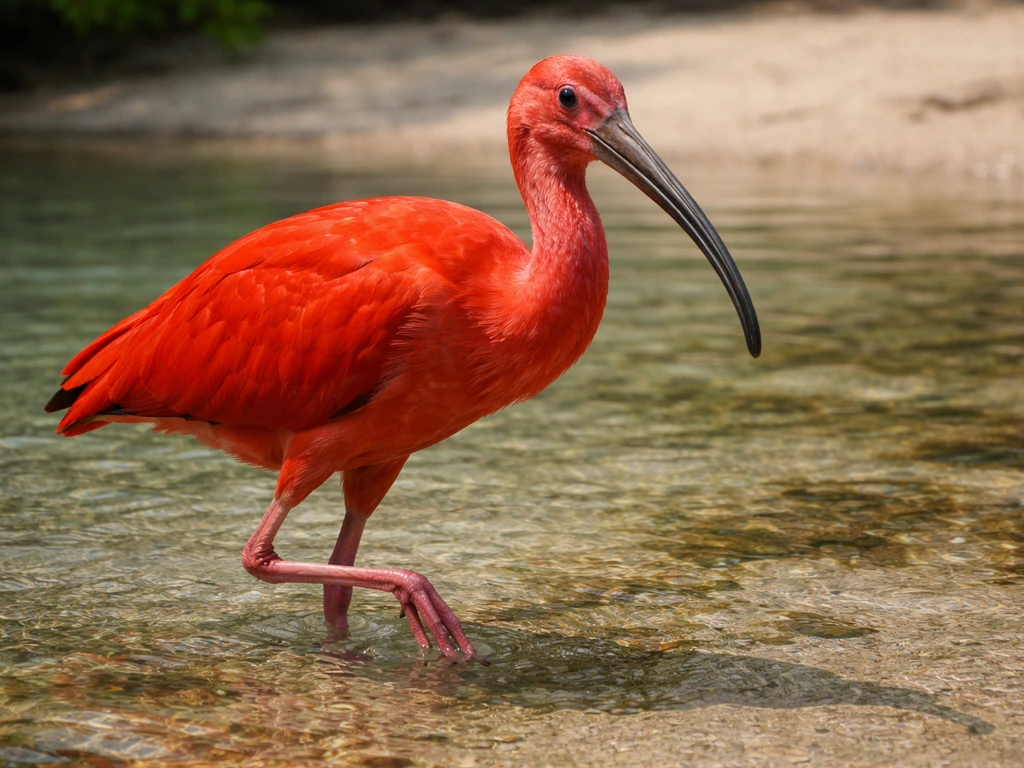
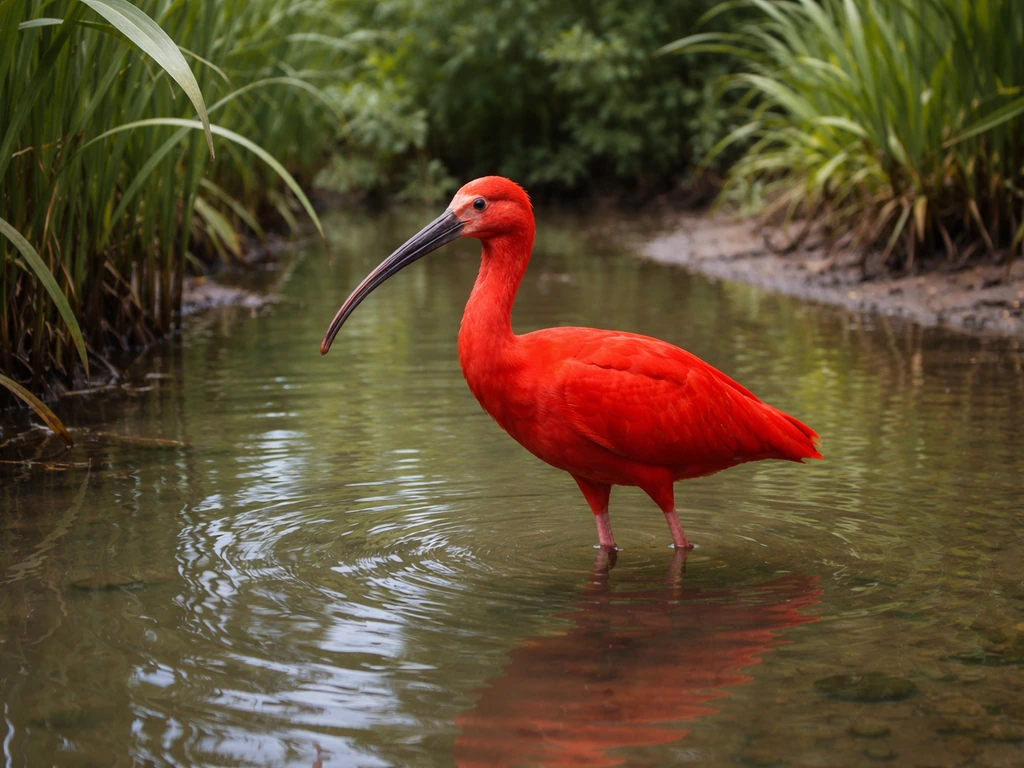
The Scarlet Ibis (scientific name: Eudocimus ruber) is a medium-sized wading bird native to tropical South America and the Caribbean. In Trinidad and Tobago, it is one of the most recognizable birds in the country, and blank" rel="noopener noreferrer">the UWI's guide to local animals describes it plainly as a 'hard bird to miss.' That is an understatement. Adult birds are almost entirely scarlet red, a coloration that comes from the carotenoid pigments in the crustaceans they eat. The only exception is the tips of their wings, which are black. They have long, curved bills suited for probing mudflats and shallow water for food, and they typically move in flocks, calling out most noticeably in the early mornings and late evenings.
The species is listed under CITES Appendix II, meaning international trade is regulated, and it is officially classified as an Environmentally Sensitive Species in Trinidad and Tobago under the Environmentally Sensitive Species (Scarlet Ibis) Notice, 2018 (Legal Notice No. 143 of 2018). That legal designation uses the common name 'Scarlet Ibis' and the scientific name Eudocimus ruber, and it anchors the bird's protection in formal law, not just cultural tradition.
How and when it became a national symbol
When Trinidad and Tobago became independent in 1962, the government formalized a set of national emblems, and the Scarlet Ibis was declared the national bird of Trinidad at that time. BirdsCaribbean explains that at independence in 1962 it was fitting to declare the Scarlet Ibis as the national bird, and it also features prominently on Trinidad and Tobago’s coat of arms.
The bird was incorporated into the national Coat of Arms, where it appears alongside the Cocrico (also called the Rufous-vented Chachalaca), the bird chosen to represent Tobago. According to the Office of the President of the Republic of Trinidad and Tobago, both birds appear on the Coat of Arms 'in their natural colours,' which matters because the Scarlet Ibis's red is central to its symbolic power.
The selection was not arbitrary. Before 1962, hunting of the Scarlet Ibis was actually legal, and according to National Geographic, that hunting pressure had real ecological consequences. BirdsCaribbean notes that hunting historically prevented scarlet ibis from successfully breeding on the island until 1953. The decision to declare it a national emblem effectively tied national identity to the bird's survival, which helped shift public and legal attitudes toward protecting it. National Geographic records that the bird's national emblem status marked a turning point in how Trinidad treated the species.
What the bird symbolizes for Trinidad
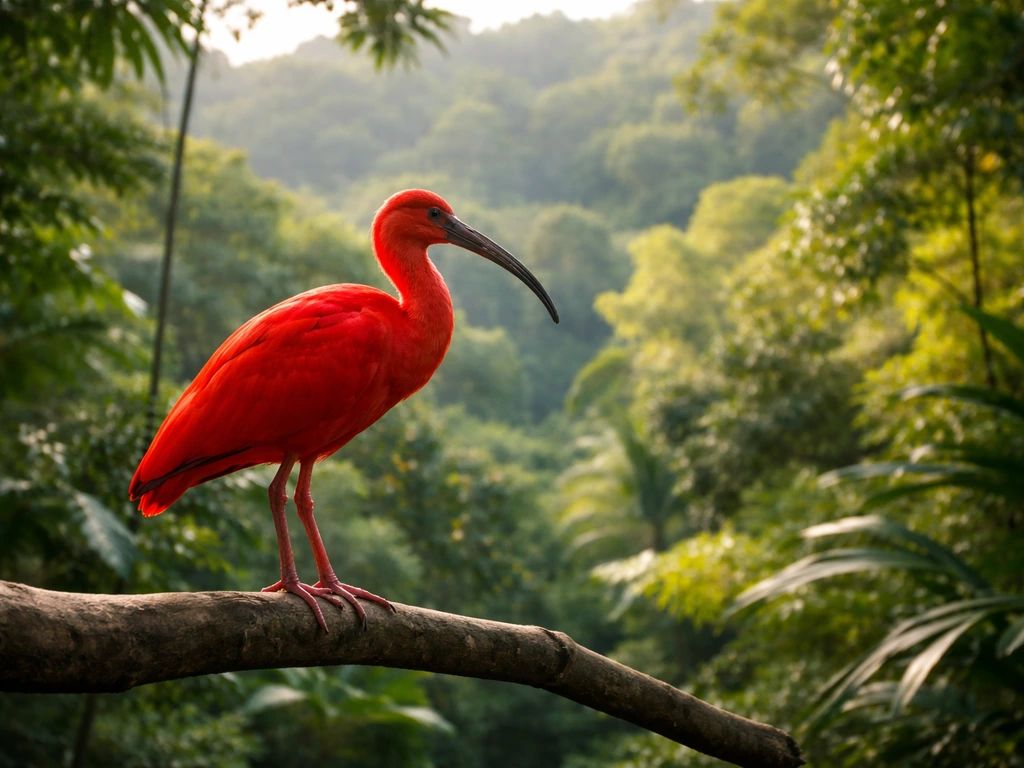
The Scarlet Ibis is specifically identified as representing Trinidad in the national symbol system, a distinction made explicit in the Ministry of Culture's National Identity Guidelines, which state: 'blank" rel="noopener noreferrer">The Scarlet Ibis which represents Trinidad.' That is not a casual phrase. It means the bird carries the identity of one of the two islands that make up the nation, distinguishing Trinidad's emblem from Tobago's.
The bird's color does a lot of symbolic work. Scarlet red is hard to ignore in nature, and in the context of a newly independent nation building its visual identity from scratch, a bird that is almost entirely that color felt like a bold, confident choice. The Coat of Arms presents the birds in their natural colors, so the vivid red of the Scarlet Ibis is literally built into the state's official seal. For a country with a rich, vibrant cultural life including Carnival, steelpan, and a diverse population, a bird this visually striking made sense as a national emblem. It is the kind of image that stays with you.
The bird also represents beauty, grace, and a connection to the natural world that predates colonial influence. Choosing it as a national symbol at independence was a way of grounding the new nation's identity in something genuinely local and visually powerful, rather than inherited symbols from the colonial era.
Where you find it in Trinidad, and why that matters
The Scarlet Ibis is most strongly associated with the Caroni Swamp in central Trinidad, which the Office of the President explicitly identifies as 'the largest habitat of the Scarlet Ibis (Eudocimus Ruber).' The Caroni Bird Sanctuary within the swamp is reportedly home to over 200,000 Scarlet Ibis, according to VisitTrinidad, and the birds roost there nightly, with peak viewing from December to March. The National Trust of Trinidad and Tobago highlights the experience of watching large flocks return to roost in the mangroves in the early evening as a favourite activity for visitors to the sanctuary.
Scarlet Ibis prefer freshwater and brackish water marshes, which makes Trinidad's swampy coastal lowlands an ideal habitat. They forage in shallow water for crustaceans and other invertebrates, and the government's own national symbols page notes they 'go about in flocks of about six' and are most vocal in the early mornings and late evenings. Because the species occurs naturally in tropical South America as well as Trinidad and Tobago, it connects Trinidad's ecology to the broader South American and Caribbean biodiversity region, reinforcing the island's geographic and ecological identity.
The fact that this bird is so observable, so abundant at a specific and well-known location, and so physically distinctive made it a natural candidate for national emblem status. It is not an obscure or rarely seen species. Visitors to Caroni can reliably witness thousands of these birds in a single evening, which gives the national symbol a living, breathing presence that many countries' national birds simply do not have.
Stories and facts worth knowing
A few facts about the Scarlet Ibis come up repeatedly when people discuss its national symbol status, and they are worth knowing because they give the story real depth:
- The 1962 designation coincided exactly with independence, making the Scarlet Ibis one of the founding symbols of the Republic. The Coat of Arms, which includes the bird, is the official seal of the state.
- Hunting the Scarlet Ibis was legal before 1962. Its elevation to national symbol status directly contributed to its protection, showing how cultural designation and conservation can reinforce each other.
- BirdsCaribbean notes the bird was not successfully breeding on the island until 1953, just nine years before independence, meaning its recovery and its national symbol status are closely linked in time.
- The red coloration that makes the bird so striking is entirely diet-driven. Without access to carotenoid-rich crustaceans, the birds would lose their color. This biological detail makes the connection between Trinidad's wetland habitats and the bird's identity literal, not just symbolic.
- Two national birds, one for each island: the Scarlet Ibis represents Trinidad and the Cocrico represents Tobago. This two-bird system is relatively unusual and reflects the distinct identities of the two islands within one nation. It is worth comparing to other Caribbean nations, such as St. Lucia and Grenada, where a single bird represents the entire country.
- The Smithsonian's National Zoo and the National Aquarium both confirm the Scarlet Ibis as the national bird of Trinidad and Tobago, and both note its 'highly protected' status, making it easy to verify the designation through credible international sources.
Where to confirm and go deeper
If you want the official confirmation, the most direct source is the Ministry of Foreign and CARICOM Affairs national symbols page, which states clearly that the national birds are the Scarlet Ibis (Trinidad) and the Cocrico (Tobago). The Office of the President's national emblems page provides the Coat of Arms context. For conservation and legal protection details, the Environmentally Sensitive Species (Scarlet Ibis) Notice, 2018 is the relevant legal instrument, available through the Environmental Management Authority of Trinidad and Tobago. For ecology and natural history, the UWI Online Guide to the Animals of Trinidad and Tobago is a solid Trinidad-specific resource, and BirdsCaribbean provides accessible, well-sourced writing on the bird's history and current conservation status.
If you are exploring national birds more broadly, it is interesting to compare the Scarlet Ibis story with other Caribbean nations like Guyana, whose national bird (the Canje Pheasant, also called the Hoatzin) similarly reflects a strong ecological connection to the country's interior wetlands and rivers.
If you are exploring national birds more broadly, it is interesting to compare the Scarlet Ibis story with other Caribbean nations like Guyana, whose national bird (the Canje Pheasant, also called the Hoatzin) similarly reflects a strong ecological connection to the country's interior wetlands and rivers, and you can also look up what is the national bird of st lucia for another quick comparison.
If you are asking specifically what the national bird of Guyana is, it is the Canje Pheasant (also called the Hoatzin) Guyana, whose national bird. Each country's choice tells you something specific about its geography, culture, and identity. You might also wonder is the hummingbird a national bird of Trinidad and Tobago, but the official national birds are the Scarlet Ibis (Trinidad) and the Cocrico (Tobago).
FAQ
Why is the Scarlet Ibis “for Trinidad” and not the whole country’s national bird?
Trinidad and Tobago uses a split national symbol system, where the Scarlet Ibis represents Trinidad and the Cocrico represents Tobago. That distinction matters because the Coat of Arms treats the two islands separately, with Trinidad’s identity tied to the ibis’s natural red color and Caroni Swamp association, not as a single bird shared across both islands.
Is the Scarlet Ibis the national bird because it is red, or for other reasons as well?
Color is a major part of its symbolism, but it is not the only factor. The choice also reflects visibility and habitat specificity (especially Caroni Swamp), the bird’s ability to exist in huge seasonal numbers for visitors to observe, and a national identity goal of linking symbols to local ecology rather than inherited colonial-era emblems.
Does the ibis need special protection because it used to be hunted?
Yes. The article notes that hunting was historically legal and had ecological impacts, including reduced breeding success until the mid-20th century. Today, the species is covered by Trinidad and Tobago’s legal framework as an Environmentally Sensitive Species, and it is regulated internationally under CITES Appendix II.
What does it mean that the Scarlet Ibis is listed under CITES Appendix II?
CITES Appendix II means international trade is not automatically banned, but it is regulated through permits and controls. Practically, this helps prevent overharvesting driven by demand, so the species can remain abundant in key habitats like Caroni rather than being pressured by export markets.
When people want to see the Scarlet Ibis, is Caroni Swamp the best place, and when should they go?
Caroni Swamp is the strongest, most reliable association. The article highlights that peak viewing is typically December to March, with roosting in the mangroves in the early evening and the biggest flock activity reported around return-to-roost times. If you visit outside those months, you may still see ibis, but large evening concentrations may be less consistent.
Are Scarlet Ibises rare in Trinidad, or can visitors realistically expect to see many?
They are not rare, particularly around Caroni. Because they gather and roost in large numbers, visitors can often see thousands in a single evening, which is a key reason the bird works well as a national emblem that people can actually encounter.
Do the birds’ feeding habits matter to why they became a national emblem?
They contribute indirectly. Because the Scarlet Ibis forages in shallow freshwater and brackish marshes for crustaceans, its presence signals the health and importance of coastal wetland habitats. Using such a habitat-linked species ties national identity to ecosystem protection, not just to a pretty animal.
Is the Scarlet Ibis the only bird connected to Trinidad’s national identity?
No, it is specifically tied to Trinidad, but Trinidad and Tobago also includes a separate emblem for Tobago (the Cocrico). The national Coat of Arms system is designed so each island’s natural symbolism is represented by its own bird, which helps avoid confusion when people think there is one single national bird for the entire country.