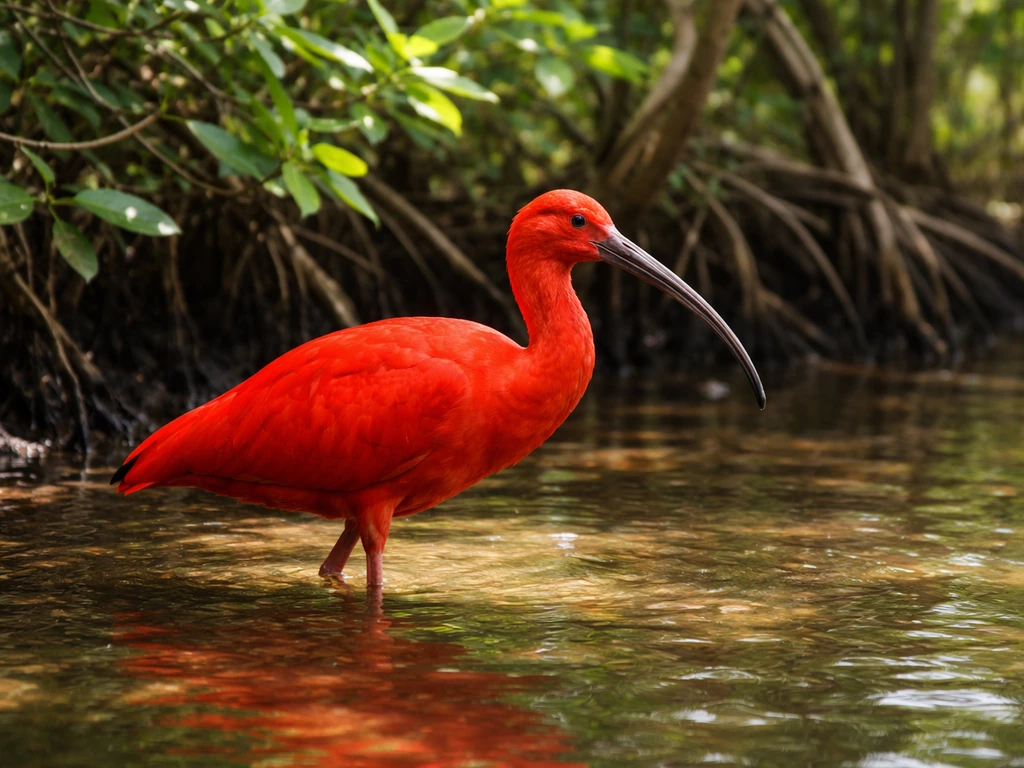
Trinidad and Tobago actually has two official national birds, not one. Wikipedia’s overview of Trinidad and Tobago also identifies the national birds as the blank" rel="noopener noreferrer">scarlet ibis and the cocrico. The Scarlet Ibis represents Trinidad, and the Cocrico represents Tobago. Both are named in the country's National Identity Guidelines, both appear on the Coat of Arms, and both are protected by law. So if you've been searching for 'the national bird of Trinidad,' the answer is the Scarlet Ibis. If you're asking about Tobago specifically, it's the Cocrico.
What Is the National Bird of Trinidad and Tobago?

Marcus Chen
18 Apr 2026
Trinidad vs Tobago: What Each Bird Is Called
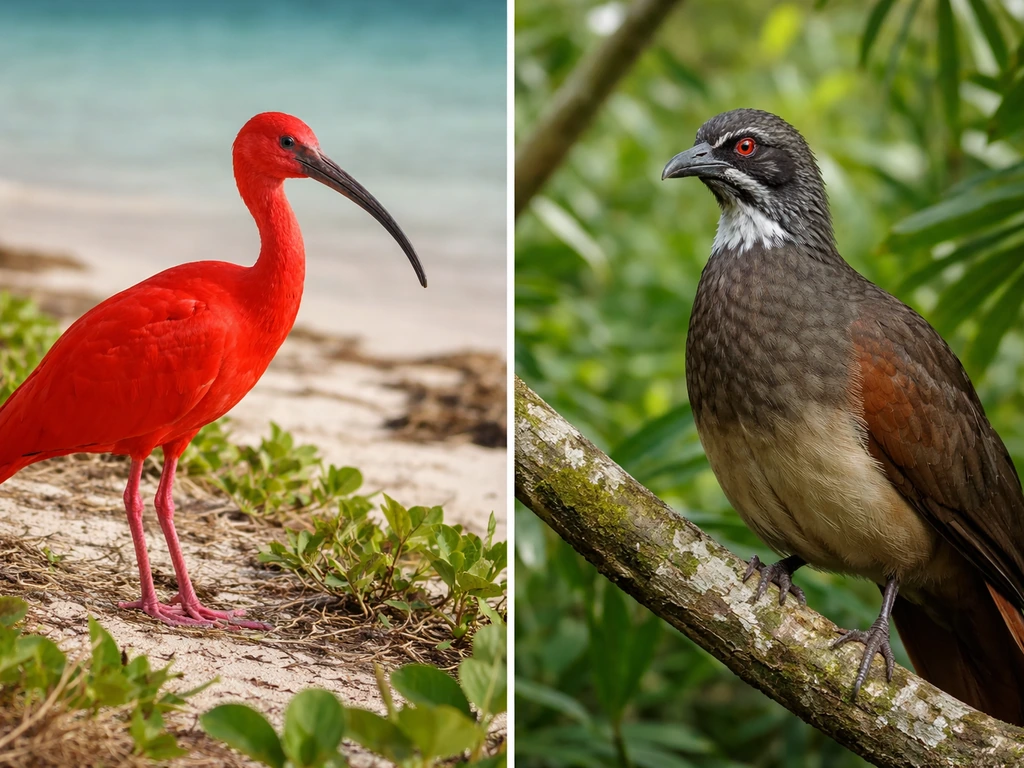
The distinction between the two birds matters, and it's easy to get confused when searches drop one island's name from the query. Here's how the official sources break it down.
| Island | National Bird | Also Known As | Scientific Group |
|---|---|---|---|
| Trinidad | Scarlet Ibis | N/A | Ibis (Threskiornithidae) |
| Tobago | Cocrico (also spelled Cocorico) | Tobago Pheasant | Rufous-vented Chachalaca / Red-tailed Guan |
The Cocrico spelling varies slightly depending on the source. The Ministry of Foreign and CARICOM Affairs uses 'Cocrico,' while NALIS (the National Library and Information System Authority) spells it 'Cocorico' in some gallery captions. Both refer to the same bird. You'll also see it called the Tobago Pheasant in everyday conversation, which is the common local name. Officially, it's identified as the Rufous-vented Chachalaca.
One important clarification: the hummingbird is not a national bird of Trinidad and Tobago, even though many people assume it is. Hummingbirds do appear on the Coat of Arms, which is why the association sticks. But the officially named national birds are only the Scarlet Ibis and the Cocrico.
What These Birds Symbolize for the Nation
The choice of two birds, one for each island, is itself symbolic. Trinidad and Tobago is one country made up of two distinct islands with their own landscapes, wildlife, and identities. Giving each island its own national bird reflects that duality and acknowledges that both halves of the nation have their own character.
The Scarlet Ibis carries obvious visual power. Its vivid red plumage makes it one of the most recognizable birds in the Caribbean, and it's closely tied to the Caroni Swamp in central Trinidad, one of the largest wetland habitats in the region. The bird's color alone communicates vibrancy and life, and watching thousands of them return to roost at the Caroni Swamp at dusk is one of the most striking natural spectacles in the country. That kind of visibility makes it a natural emblem.
The Cocrico's symbolism is quieter but just as fitting. It's a bird found nowhere in Trinidad, only in Tobago and Venezuela. That geographic exclusivity makes it uniquely Tobagonian, which is exactly why it was chosen to represent that island. Its distinctive calls, heard especially in the early morning and late evening, are part of the daily soundscape of Tobago. For people who grew up on the island, the sound of the Cocrico is as much a part of home as the landscape itself.
How and When They Became National Birds
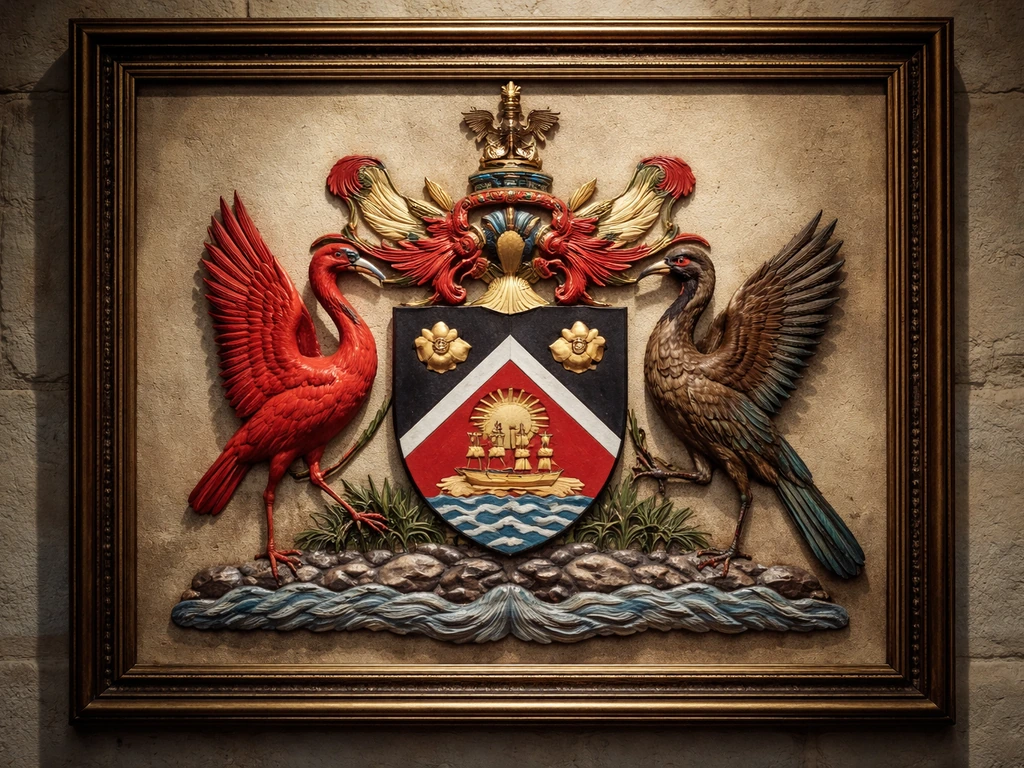
The national birds are tied directly to the Coat of Arms, which was created in 1962 by a Coat of Arms Committee and later approved by the College of Arms. NALISs “National Symbols” page also describes how a 1962 committee selected the national emblems, including the birds created in 1962 by a Coat of Arms Committee. This coincides with Trinidad and Tobago's independence, making the birds part of the founding national identity. A 1962 Ministry of Home Affairs publication titled 'Our Flag and Other National Emblems' is one of the earliest primary sources documenting these symbols.
On the Coat of Arms, the Scarlet Ibis and the Cocrico appear as supporters, meaning they flank the shield on either side. The Scarlet Ibis stands on the left representing Trinidad, and the Cocrico stands on the right representing Tobago. This formal placement in heraldry gave both birds an official, lasting status from the moment the country became independent.
The National Identity Guidelines of Trinidad and Tobago formalize this further, explicitly naming both birds under a section titled 'The National Birds' and stating that both are protected by law. This legal protection means it isn't just a symbolic gesture, there are real consequences for harming either species.
Interesting Facts About Both Birds
The Scarlet Ibis
- Its largest habitat in Trinidad is the Caroni Swamp in central Trinidad, a protected wetland area.
- Young Scarlet Ibises are actually brown, not red. The vivid scarlet color develops as they mature, making the color a marker of adulthood.
- The red pigmentation comes from the carotenoids in the crustaceans and other invertebrates they eat, so their diet directly creates their most famous feature.
- Thousands of Scarlet Ibises roost together at the Caroni Swamp, and watching them fly in at sunset is a major ecotourism draw for Trinidad.
- The Scarlet Ibis is native to Trinidad and is not found on Tobago, which mirrors the Cocrico's island-specific distribution in reverse.
The Cocrico
- The Cocrico is roughly the size of a common domestic fowl, making it a substantial ground-dwelling bird.
- It is native to Tobago and Venezuela, and is entirely absent from Trinidad, making it genuinely unique to Tobago within the national context.
- It is the only game bird on the island of Tobago, which has historically made it significant to local communities.
- Its distinctive calls are most commonly heard in the early morning and late evening, a rhythm that ties it to the daily life of Tobago.
- It belongs to the Chachalaca family (officially the Rufous-vented Chachalaca), a group of birds found across Central and South America and the Caribbean.
If you're interested in how other Caribbean and South American nations have approached similar choices, Guyana's national bird and St. If you're looking for the answer in particular, Guyana's national bird is the Aracari. Lucia's national bird offer interesting comparisons, as do the choices made by Grenada. Grenada’s national bird is the national bird of Grenada, which you can look up by that name. St. Lucia also has its own national bird, which is commonly cited in official tourism and heritage sources national bird of St. Lucia. Each country in the region has picked a bird that reflects something specific about its geography or culture, and Trinidad and Tobago's two-bird system is one of the more distinctive approaches in the Caribbean.
Where to Verify This and Learn More
If you want to confirm any of this from primary sources, these are the best places to go:
- The Ministry of Foreign and CARICOM Affairs of Trinidad and Tobago hosts a dedicated 'National Bird' page that names both the Scarlet Ibis and the Cocrico, with habitat and identity notes for each.
- NALIS (National Library and Information System Authority) has a 'National Symbols' page that covers both birds, explains the hummingbird's role on the Coat of Arms (and why it's not a national bird), and cites the Office of the President of the Republic of Trinidad and Tobago as a further source.
- The National Identity Guidelines of Trinidad and Tobago (available as a PDF) include a dedicated 'National Birds' section with official language and legal status information.
- The Office of the President of the Republic of Trinidad and Tobago is cited by NALIS as an authoritative source on national symbols, making it a solid final verification point.
For students working on a school project, the NALIS national symbols page is probably the most accessible starting point since it consolidates the key facts in one place and links to further official resources. For anyone doing deeper research into the history of the emblems, the 1962 'Our Flag and Other National Emblems' publication is the foundational document, though it may require a library visit or archive request to access in full.
The short version: Trinidad and Tobago has two national birds by design, and both matter. The Scarlet Ibis for Trinidad, the Cocrico for Tobago. Both are legally protected, both appear on the Coat of Arms, and both were chosen because they genuinely belong to the land they represent.
FAQ
What is the national bird of Trinidad and Tobago if someone asks for just one answer?
Officially, there are two national birds. If you need a single, simple response, use the island they mean, Trinidad is the Scarlet Ibis, Tobago is the Cocrico.
How do I cite the Tobago national bird correctly, given spelling differences like Cocrico vs Cocorico?
Use either spelling you see in your source, they refer to the same bird. For the most neutral approach, you can pair the spelling you find with the common name Tobago Pheasant (and note it is the Rufous-vented Chachalaca if precision is required).
Is the hummingbird a national bird of Trinidad and Tobago?
No. A hummingbird is sometimes associated because it appears on the Coat of Arms, but it is not one of the officially designated national birds.
What local name should I expect for the Tobago national bird?
Many people call it the Tobago Pheasant in everyday conversation. The formal identification used in official contexts is the Rufous-vented Chachalaca.
Why do people get the answer wrong when they search online?
Search queries often drop one island name, and many results only describe Trinidad or only describe Tobago. Checking the island mentioned in the question is usually the fastest way to avoid the mix-up.
Are the national birds protected in a practical legal way, or are they only symbolic?
They are legally protected. That means harming or taking them can have real consequences, so treat them as protected species rather than just national emblems.
Do the national birds only appear on the Coat of Arms, or are they listed in official guidelines too?
They are listed in the National Identity Guidelines under a dedicated section naming both birds, and the same two birds are used in the formal Coat of Arms placement.
How can I verify the answer quickly for a school or quiz question?
State both birds and assign them by island, Scarlet Ibis (Trinidad) and Cocrico (Tobago). If your source demands one bird, follow its wording and answer based on whether it says Trinidad or Tobago.
Is the national bird selection tied to the independence or founding period?
Yes. The Coat of Arms and related emblem documentation date to the early independence era, with foundational emblem work beginning around 1962, which is why the birds are treated as part of the founding national identity.
Next Articles
What Is the National Bird of Zimbabwe? Symbolism and Facts
Discover Zimbabwe’s national bird, its distinctive traits, and the history and symbolism behind the emblematic choice.
What Is the National Bird of Botswana? Bird ID, Meaning
Answers Botswana national bird name with species ID, how to recognize it, where to spot it, and its cultural meaning
National Bird of South Africa Meaning: History and Symbolism
Learn the meaning, history, and symbolism of South Africa’s national bird, plus key traits, facts, and how to verify cla