The national bird of Saint Lucia is the Saint Lucia Parrot, locally known as the Jacquot (scientific name: Amazona versicolor). It was officially designated as the national bird in 1979, the same year Saint Lucia gained independence and adopted its coat of arms, where the Jacquot appears as one of the two supporters.
What Is the National Bird of St Lucia? Key Facts and Meaning

Marcus Chen
7 May 2026
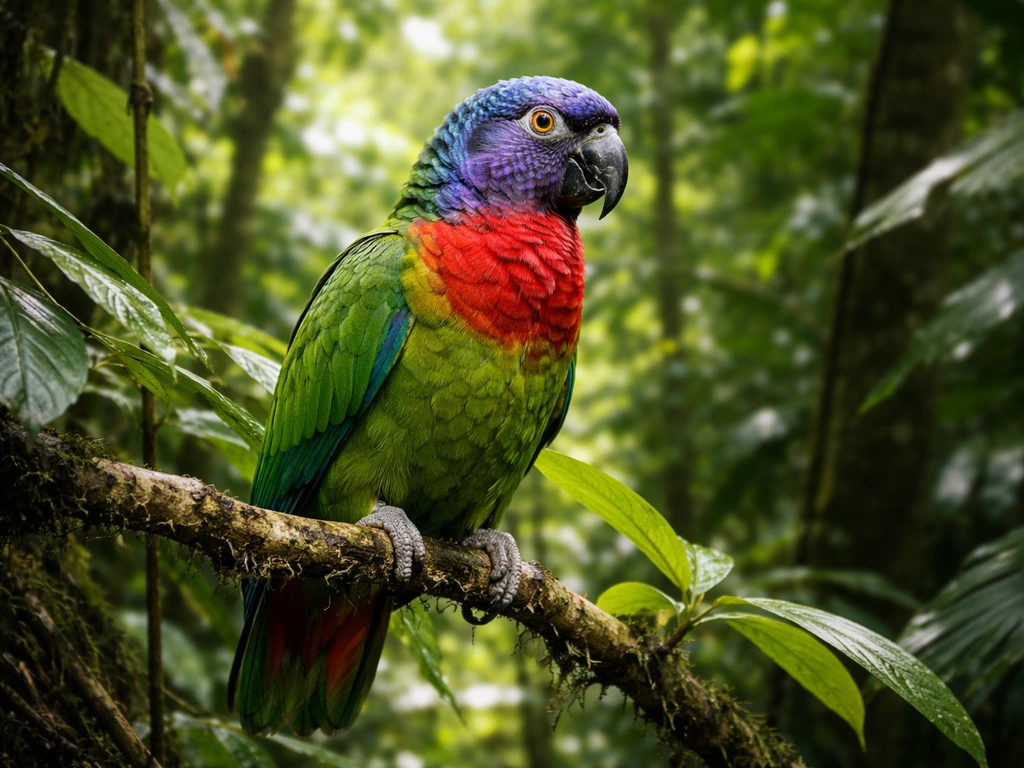
Meet the Jacquot: what it looks like
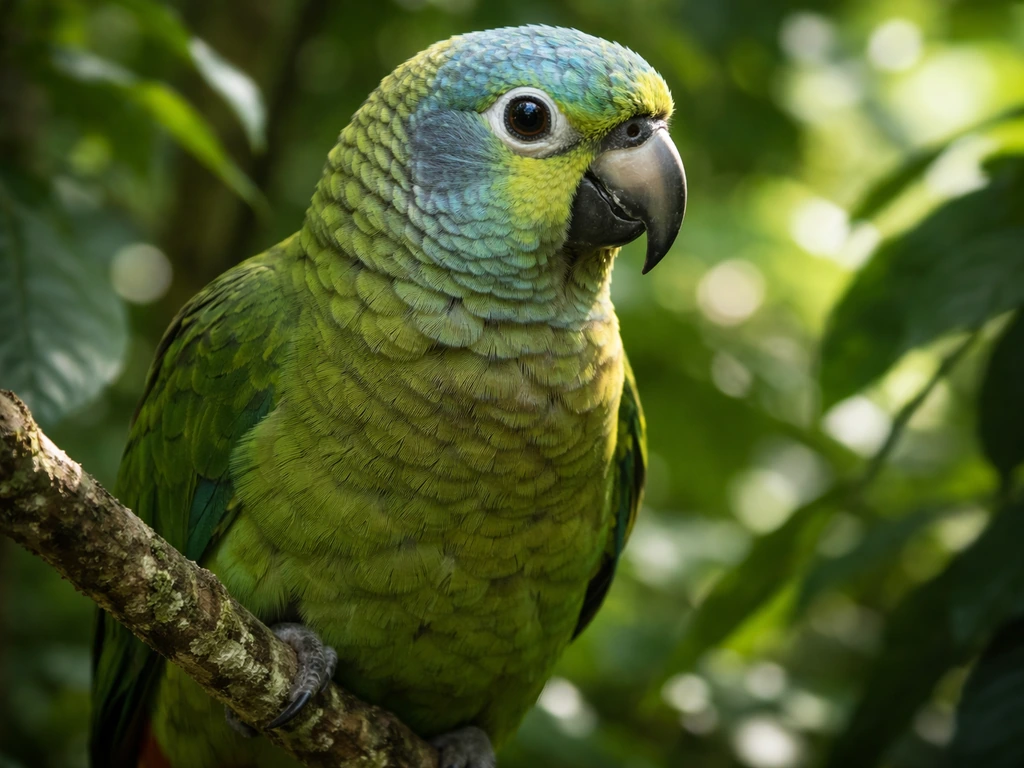
The Saint Lucia Parrot is a medium-sized parrot, measuring around 43 cm (roughly 17 inches) in length. Its body is predominantly green, which gives it good camouflage in the dense rainforest canopy. The features that really set it apart are its face and chest: a cobalt blue forehead that fades through turquoise on the cheeks, and a vivid scarlet breast. Yellow and violet patches add extra colour to the wings. Together, that combination of green, blue, turquoise, red, and yellow makes it one of the more striking parrots in the Caribbean.
It is entirely endemic to Saint Lucia, meaning you will not find it in the wild anywhere else on the planet. That exclusivity is a big part of why it was the obvious choice as a national symbol.
Why Saint Lucia chose the Jacquot
A national bird tends to say something about the country it represents, and the Jacquot does exactly that for Saint Lucia. Being found only on the island ties the bird directly to Saint Lucian identity in a way that no shared or migratory species ever could. It belongs to Saint Lucia and nowhere else.
The choice also carried a practical conservation message. By the late 1970s the population of Amazona versicolor had declined sharply due to habitat loss and hunting. Elevating the parrot to national symbol status was a deliberate signal that the island was serious about protecting it. Saint Lucia’s Ministry of Agriculture and related conservation planning also identifies the “Saint Lucia Parrot Nesting Zone within the Central Forest Reserve” as a conservation priority. The government backed up the symbolism with real action: a parrot reserve was established and hunting was banned. The national-bird designation gave people a reason to care about the species as part of their own national identity, not just as wildlife.
When and how it became the national bird
The Jacquot was officially designated as Saint Lucia's national bird in 1979. That year was a pivotal one for the island: Saint Lucia gained full independence from Britain, and the coat of arms was formally adopted on 8 January 1979. The coat of arms features the Saint Lucia Parrot as a supporter alongside the Amazonian Parrot, and the official coat-of-arms text names it directly: 'Saint Lucia Parrot commonly called Jacquot (Amazona versicolor). Saint Lucia’s coat of arms describes the supporters, including the “Saint Lucia Parrot commonly called Jacquot (Amazonaversicolor),” and it includes the motto “THE LAND-THE PEOPLE-THE LIGHT.” THE Land, The People, The Light. ' The national-bird designation and the independence moment are essentially bound together, which gives the Jacquot a deeper layer of meaning beyond just wildlife symbolism.
The coat of arms carries the national motto 'The Land, The People, The Light,' and the presence of the Jacquot in the emblem connects the island's natural heritage to that broader vision of national identity.
Cultural stories and the name 'Jacquot'
The name 'Jacquot' is deeply embedded in Saint Lucian everyday life. It is not a formal scientific label but the affectionate local name that Saint Lucians have used for the parrot for generations. The fact that the official government coat-of-arms description includes 'commonly called Jacquot' shows how seriously that cultural name is taken at the national level.
The conservation campaign that followed the 1979 designation leaned heavily on that cultural connection. An educational travelling program called the 'Jacquot Express' was created to spread awareness about protecting the species, bringing the national-bird message directly to communities across the island. Using the parrot's beloved local name for the program was a smart move: it framed conservation as something personal and Saint Lucian, not an outside imposition.
In the broader Caribbean context, Saint Lucia is part of a group of islands that have chosen endemic or regionally significant birds as national symbols. Trinidad and Tobago, for example, designated the Scarlet Ibis and the Cocrico, while Guyana chose the Canje Pheasant (Hoatzin) and Grenada the Grenada Dove. The Scarlet Ibis, in particular, is Trinidad's national bird, chosen for its significance to the country's wildlife identity. If you are looking for Grenada's national bird, it's the Grenada Dove Grenada the Grenada Dove. Trinidad and Tobago also has its own national bird question, including whether the hummingbird is recognized as one is the hummingbird a national bird of trinidad and tobago. In Guyana, the national bird is the Canje Pheasant, also known as the Hoatzin what is the national bird of guyana. Trinidad and Tobago’s national bird is the Scarlet Ibis. Like those choices, the Jacquot reflects both ecological uniqueness and a strong sense of local pride.
How to spot the Jacquot and where to learn more

If you want to see the Saint Lucia Parrot in the wild, you need to head into the island's central rainforest. The Government of Saint Lucia specifically notes that the bird may be seen flying across the forests of Quilesse, Millet, and Edmund. These montane rainforest areas are the heart of the Jacquot's territory, and they are also where the parrot reserve is located.
The Millet Bird Sanctuary is one of the best practical starting points. It is managed as a birding destination with trails, and it sits right in the habitat where the Jacquot is most reliably seen. The Saint Lucia Tourism Authority also organises birdwatching in the central rainforest reserve, which is where the bulk of endemic species are concentrated, making it a worthwhile stop even if the Jacquot proves elusive on a given morning.
For research and further reading, the Government of Saint Lucia's official national symbols pages are the most authoritative source for the bird's formal status and description. The World Parrot Trust maintains detailed species profiles for Amazona versicolor if you want deeper biological information. And if you are interested in how the conservation story unfolded after 1979, the American Museum of Natural History has documented the recovery effort, including the Jacquot Express program, as a case study in linking national symbolism to wildlife protection.
| Detail | Information |
|---|---|
| Common name | Saint Lucia Parrot / Jacquot |
| Scientific name | Amazona versicolor |
| Size | Approximately 43 cm (17 inches) |
| Plumage | Predominantly green; cobalt blue forehead; turquoise cheeks; scarlet breast; yellow and violet wing patches |
| Range | Endemic to Saint Lucia only |
| Designated national bird | 1979 (alongside independence and coat of arms adoption) |
| Best places to spot it | Forests of Quilesse, Millet, and Edmund; Millet Bird Sanctuary; central rainforest reserve |
FAQ
Is the national bird of Saint Lucia the Jacquot, or the Amazonian Parrot on the coat of arms?
The national bird is the Saint Lucia Parrot, also called the Jacquot (Amazona versicolor). Its national-symbol status is separate from the island’s coat of arms, though the bird is shown there as well.
If the Jacquot is endemic, can it be found naturally anywhere else in the world?
It is described as endemic to Saint Lucia, meaning it exists naturally only on the island. You might see birds in captivity or collections elsewhere, but they are not wild native populations outside Saint Lucia.
Where should I go on the island to see the national bird in the wild?
The most reliable chances come from Saint Lucia’s central montane rainforest, especially areas tied to government guidance and the parrot reserve. For casual spotting, a birding-friendly starting point is the Millet Bird Sanctuary, where trails and local birdwatching are established.
Is the Jacquot Express something tourists can book, or is it an education program?
The “Jacquot Express” is an education and awareness initiative tied to the conservation message. It is not a tourist attraction ride schedule, so if you plan a visit you should treat it as a program that may run periodically and coordinate with local organizers.
When people say “national bird,” do they always mean an official designation in Saint Lucia?
The national bird designation is a formal status, made in 1979. That differs from informal “national bird” nicknames you may hear, or species promoted in tourism without official national-symbol recognition.
Why can it be hard to spot the Jacquot even if it is the national bird?
Because its population declined in the late 1970s due to habitat loss and hunting, modern sightings are influenced by where suitable habitat remains and whether local protections are actively enforced. In practice, that means your viewing success depends on timing, weather, and access to protected rainforest areas.
What is the best way to verify the official name versus the local name (Jacquot)?
If you want to confirm what is officially recognized, rely on the government’s national symbols materials for the bird’s formal name and local/common naming. The “commonly called Jacquot” phrasing is especially important because it ties the cultural name to the official listing.
Do Caribbean countries choose national birds for the same reasons, or does it vary by country?
If you are comparing countries in the Caribbean, national-bird choices usually aim to reflect either strict endemism or strong national wildlife identity. However, the criteria and context differ by country, so you should check each nation’s specific national-symbol decision rather than assuming the pattern is identical everywhere.
Next Article
What Is the National Bird of Guyana? Meaning and Facts
Find Guyana’s national bird, the Hoatzin, plus its emblem meaning, history, traits, and how to verify the claim.