Quick answer: the bird on Papua New Guinea's flag
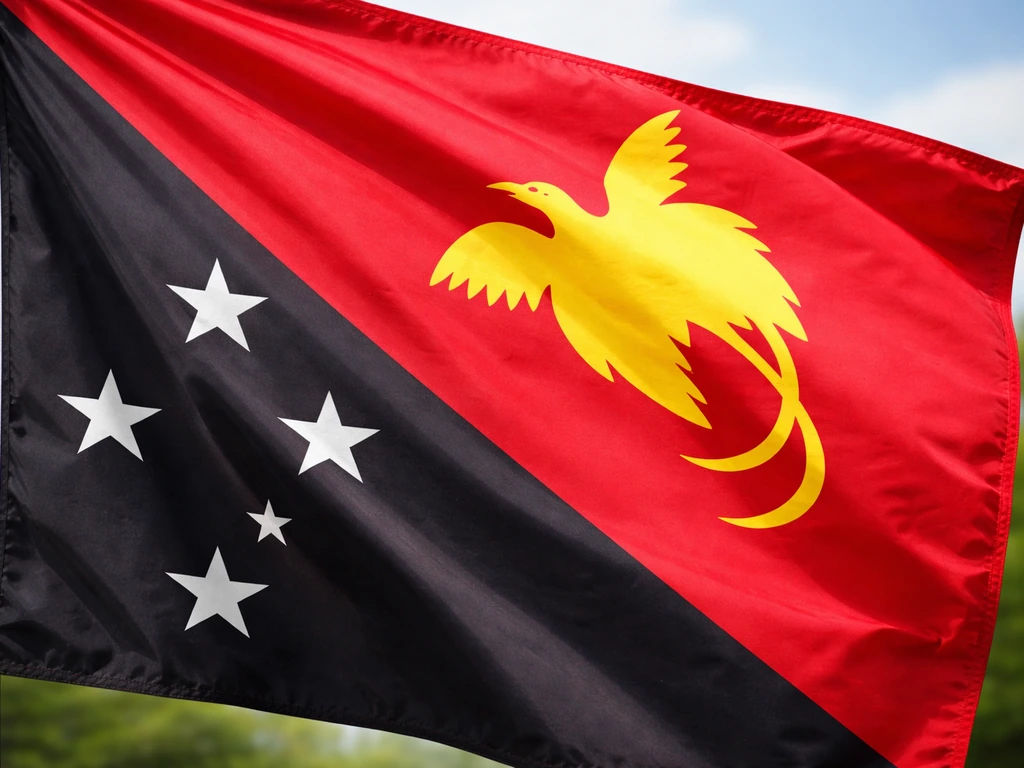
The bird on the Papua New Guinea flag is the Bird of Paradise, specifically identified as the Raggiana bird-of-paradise (Paradisaea raggiana). It appears as a stylized, soaring silhouette in mid-yellow on the upper red diagonal section of the flag. This is also the country's national bird, known locally as the "Kumul," and it has been a central part of Papua New Guinea's national identity since 1971.
Exact identification: common name vs scientific name

There is a slight gap worth knowing about between the flag's official legal description and the species-level identification used by most reference sources. Papua New Guinea's National Identity Act 1971 (Schedule 1) describes the flag's bird simply as a "Bird of Paradise" without naming a specific species. That generic wording is the official legal text.
However, when you look at the national emblem, academic research, and mainstream reference sources, they all consistently point to the Raggiana bird-of-paradise (Paradisaea raggiana) as the species represented. A Cambridge Core journal article on the bird of paradise in cultural history specifically states that the Raggiana bird-of-paradise appears on the national crest and flag. Wikipedia's entry on the Raggiana bird-of-paradise confirms it was designated the national emblem in 1971 and placed on the national flag. So while the flag's legal text stays generic, the species behind the symbol is well-established: Paradisaea raggiana.
| Detail | Value |
|---|
| Common name | Raggiana bird-of-paradise |
| Local name (Tok Pisin) | Kumul |
| Scientific name | Paradisaea raggiana |
| Official flag text wording | Bird of Paradise (generic) |
| Emblem designation year | 1971 |
Where to find the bird on the flag
The PNG flag is divided diagonally from the upper hoist corner to the lower fly corner. The upper-right triangle is scarlet red, and the lower-left triangle is black. The Bird of Paradise silhouette sits in the red (upper) section, rendered in blank" rel="noopener noreferrer">mid-yellow. Britannica describes the Papua New Guinea flag as a diagonal red-black design featuring a yellow “bird-of-paradise” and the Southern Cross constellation blank" rel="noopener noreferrer">Bird of Paradise silhouette sits in the red (upper) section, rendered in mid-yellow.. It is depicted in a soaring pose, wings spread, as if in flight. The lower black section contains the Southern Cross constellation in white, which is a design element shared with several other flags in the region, including Australia's.
Vexillology sources like CRW Flags describe the bird's color precisely as "mid-yellow" against the scarlet background, and Royal Museums Greenwich echoes this, calling it a "gold bird of paradise" in the upper red section. The stylized depiction is a silhouette rather than a detailed naturalistic illustration, so you won't see the bird's famous trailing plumes in photographic detail, but the soaring shape is immediately recognizable.
What the bird symbolizes for Papua New Guinea

The Raggiana bird-of-paradise carries enormous symbolic weight in Papua New Guinea. The Embassy of Papua New Guinea to the Americas describes the Kumul soaring above the Southern Cross as representing "Papua New Guinea's emergence into nationhood." That framing is not accidental: the bird shown in flight above the stars was deliberately chosen to capture the moment of a country rising, independent, into its own future.
Beyond the political symbolism, the Bird of Paradise functions as a unifying cultural symbol across Papua New Guinea's extraordinarily diverse population. PNG is home to hundreds of distinct languages and ethnic groups, and the bird-of-paradise is one of the few symbols that cuts across all of them. Local reporting in PNG has described the Kumul as a symbol that "holds everyone together," which is a meaningful role in a country with such deep internal diversity.
The bird also carries practical cultural significance. Bird-of-paradise feathers have been used in traditional dress and ceremonial decoration across PNG for generations. The Raggiana species in particular was historically the most prized for its spectacular orange-red plumes. That cultural history fed naturally into its selection as a national symbol.
Why this bird was chosen: the history behind the decision
The flag's design has a compelling origin story. According to Britannica, a young student named Susan Karike developed a draft flag design featuring the bird-of-paradise and the Southern Cross. Her design was later formally recognized by the national parliament on 11 March 1971, well before PNG achieved full independence in 1975. The flag's use continued and was extended at independence.
The broader national identity framework, including the national crest and emblem, was formalized under the National Identity Ordinance, ratified on 24 June 1971. A PNG news feature on the man behind the national crest confirms that the emblem's core elements, including the bird of paradise alongside a ceremonial spear and kundu drum, were all ratified at that time and later adopted at independence.
The choice of the bird-of-paradise was not arbitrary. The Raggiana is endemic to Papua New Guinea, meaning it exists naturally there and nowhere else in the world in significant numbers. Choosing an endemic species made a clear statement: this symbol belongs to this place and nowhere else. That exclusivity reinforced the flag's message of a distinct, sovereign national identity.
The symbolism was so resonant that, according to one PNG independence retrospective, people even added yellow bird-of-paradise imagery to traditional face paint during independence celebrations to mirror the newly designed flag. The bird had moved from legal document to lived cultural expression almost immediately.
How to verify this for yourself today
If you want to confirm the identification with authoritative sources rather than just taking any single website's word for it, here are the most reliable places to check right now:
- Papua New Guinea's National Identity Act 1971 via the Pacific Islands Legal Information Institute (PacLII): Search for the consolidated act and look at Schedule 1, which contains the official description of the national flag, including the "Bird of Paradise" wording.
- CRW Flags (Flags of the World): This is a well-regarded vexillology reference that describes the PNG flag's upper segment as scarlet with a "mid-yellow representation of a soaring Bird of Paradise."
- Wikipedia's Raggiana bird-of-paradise article: Directly states the species was made the national emblem in 1971 and appears on the national flag. Cross-reference with the Emblem of Papua New Guinea article for the emblem's history.
- Britannica's entry on the Flag of Papua New Guinea: Covers the flag's design history, including the origin story of the student designer Susan Karike.
- The Embassy of Papua New Guinea to the Americas website: The official government source that uses the term "Kumul" and explains the soaring bird's symbolism in the context of nationhood.
One thing to keep in mind: you will notice that the flag's legal text says "Bird of Paradise" generically, while secondary sources specify Raggiana bird-of-paradise (Paradisaea raggiana). That is not a contradiction. It just reflects that legal flag descriptions often use common generic terms, while the species identification comes from the national emblem tradition and zoological context. The two point to the same bird.
Papua New Guinea's flag bird vs other countries' flag birds
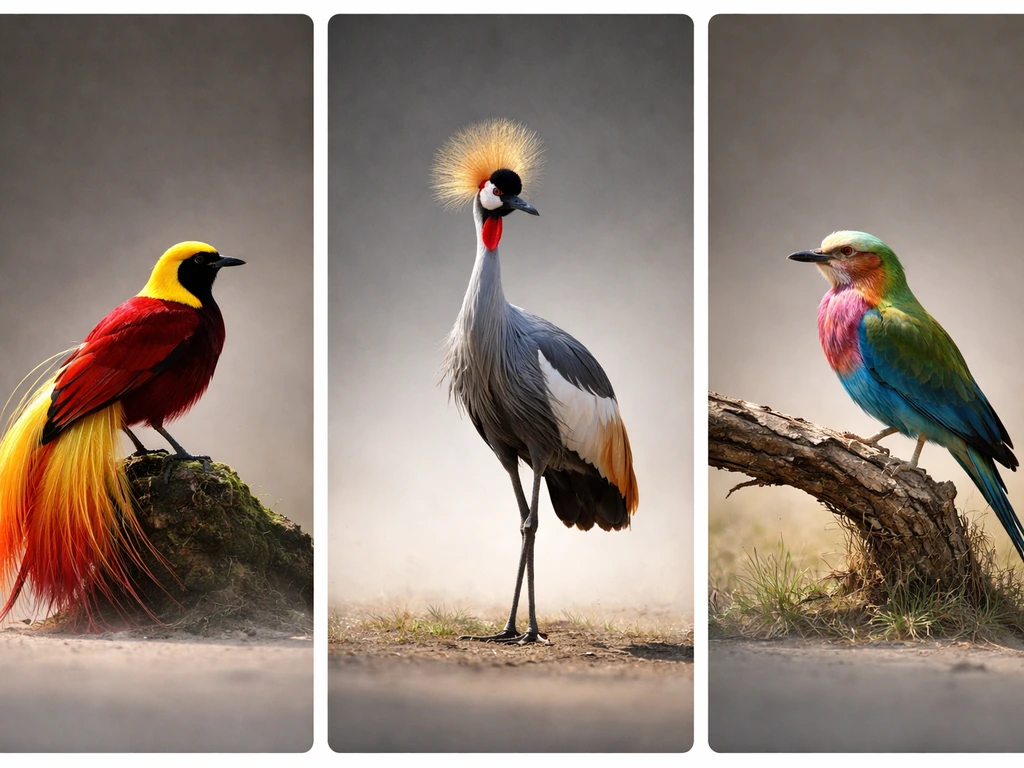
Papua New Guinea is in good company when it comes to featuring a distinctive national bird on its flag. Uganda, for example, features the grey crowned crane on its flag, and Zambia uses an eagle in its flag design. One central African country that features a national bird on its flag is Uganda, which shows the grey crowned crane. If you are also wondering what bird is on the Zambian flag, it is an eagle Zambia uses an eagle in its flag design. Uganda's flag bird is the grey crowned crane, which is shown in a different style and setting than Papua New Guinea's bird-of-paradise symbol. The PNG flag is distinctive in the Pacific region, though, because the bird-of-paradise is so uniquely associated with the island of New Guinea that there's no confusion about what country the symbol represents. That is part of what makes it such an effective national emblem: it is immediately and exclusively identifiable with Papua New Guinea.
If you are researching flag birds more broadly across the Pacific region, Australia's national bird and the question of what appears on Australian state flags (like South Australia's) are related topics that come up in the same kind of research. If you are asking specifically about Tasmania's bird emblem, it is the Tasmanian wedge-tailed eagle. The question of what bird is on the South Australian flag is closely connected to that broader research into Australian and state flag emblems what appears on Australian state flags (like South Australia's). Australia's national bird is different from Papua New Guinea's Bird of Paradise symbol.