
The bird on the Uganda flag is a grey crowned crane, also commonly called the crested crane (scientific name Balearica regulorum). It sits inside a white disc at the exact center of the flag, facing left toward the hoist side. That's the short answer. Papua New Guinea's national bird is the bird of paradise (specifically the Raggiana bird of paradise, in many official references) national bird of Papua New Guinea. If you want to understand why that specific bird was chosen, what it means to Uganda, and how to verify it yourself, keep reading.
What Bird Is on the Uganda Flag and Its Meaning

Marcus Chen
12 Apr 2026
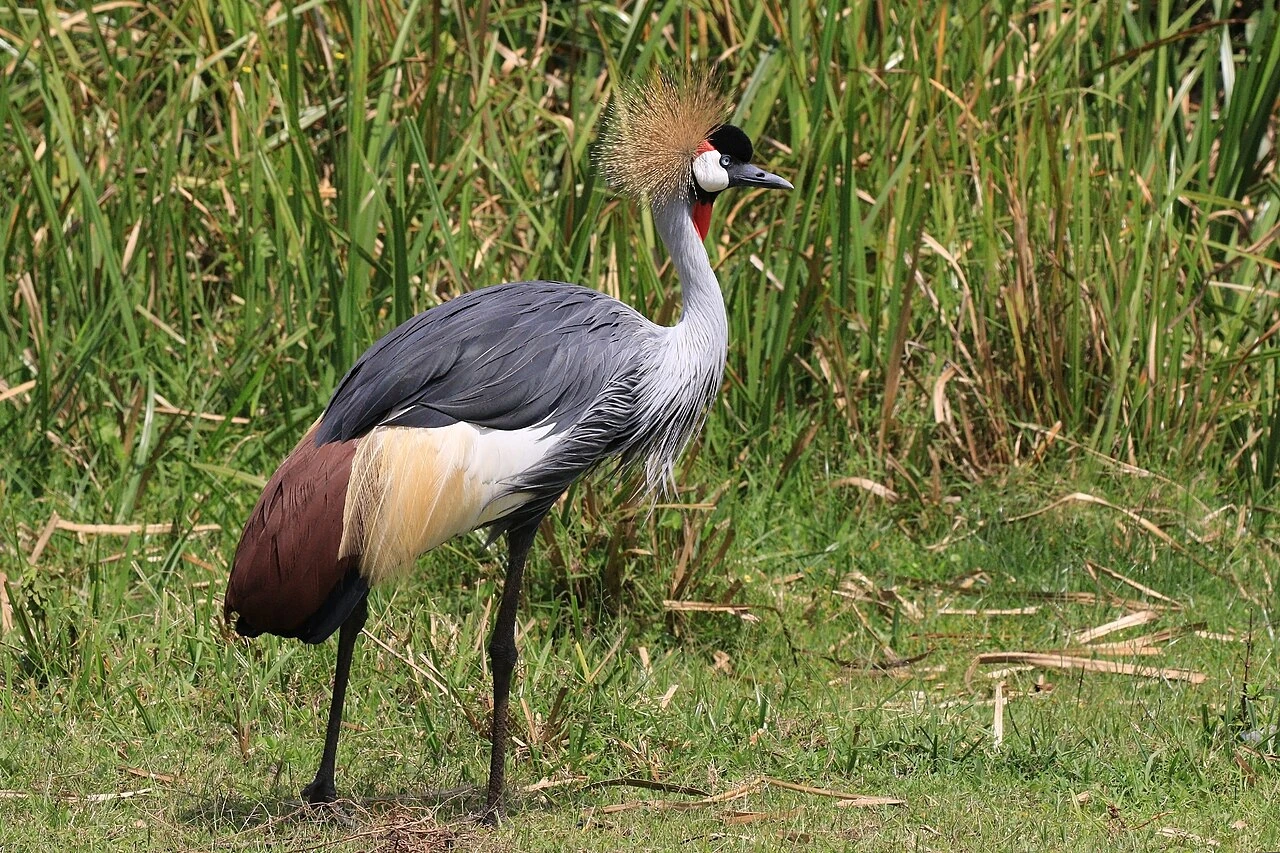
Identify the bird on the Uganda flag
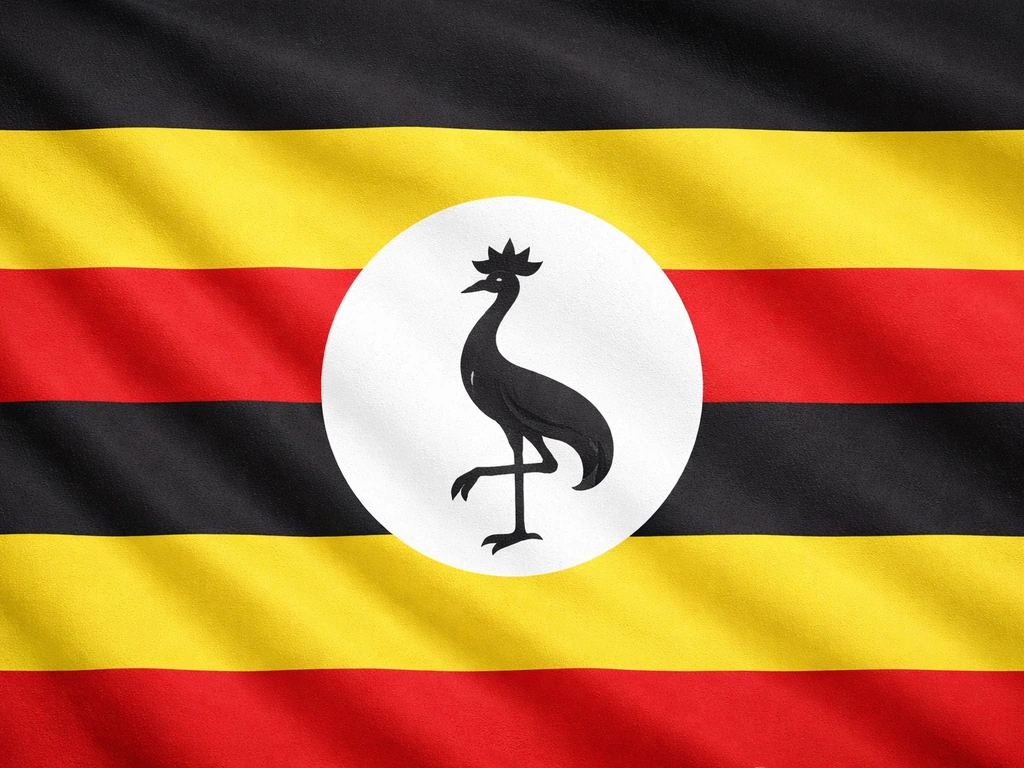
Uganda's flag uses six equal horizontal stripes of black, yellow, and red, repeating in that order from top to bottom. Right at the center of the whole design sits a white disc, and inside that disc is a painted depiction of the grey crowned crane. This isn't just a decorative choice: Uganda's National Flag and Armorial Ensigns Act (Chapter 254) spells it out explicitly in its schedule, describing the flag as having "six horizontal stripes… with a crested crane on a white circle in the centre."
The bird is referred to interchangeably as the "grey crowned crane" and the "crested crane" across official sources. Uganda's Embassy in Kinshasa, for example, uses the phrase "grey crowned crane" in its national symbols page. The Republic of Uganda's Protocol Handbook calls it the "Grey Crested Crane." Both names point to the same bird and the same emblem. Think of "crested crane" as the informal shorthand Ugandans commonly use.
Where the bird appears and how to recognize it
On the flag, the crane appears inside the white circle that sits dead center across the horizontal stripes. The bird faces the hoist side, meaning when you look at a standard-hung flag, the crane's head points to the left. That orientation detail is confirmed by multiple official sources, including Uganda's embassy descriptions.
If you want to match the emblem to the real bird in the wild, the grey crowned crane has four distinctive features that make it easy to identify:
- A stiff, bristle-like golden crown on top of the head (the feature that gives it the "crowned" name)
- Predominantly grey body plumage
- White cheek patches on either side of the face
- A red throat pouch or wattle under the beak
All of these features show up in the emblem artwork on the flag. If you're looking at a flag and wondering whether the bird matches the description, checking for that golden crown is the fastest confirmation.
Uganda flag bird meaning: what the crane symbolizes

The grey crowned crane isn't just a pretty bird someone picked at random. Uganda's government sources describe the crane as the country's national bird and national emblem symbol. It represents peace and a forward movement for the nation. If you're also curious about Tasmania, its bird emblem is different from Uganda's grey crowned crane bird emblem of Tasmania. The bird facing toward the hoist side on the flag is often interpreted as looking toward the future.
More broadly, the crane connects Uganda to its natural environment. The grey crowned crane is native to sub-Saharan Africa, and the East African population occurs across Uganda. Choosing a bird that actually lives in the country, rather than a mythological or foreign symbol, grounds the flag in Uganda's real landscape and wildlife. That connection between a nation and its natural heritage is something you see reflected in national bird choices worldwide. Much like the bird on the Zambian flag, Uganda's emblem is an African eagle or crane species directly tied to the country's own ecosystem.
Why Uganda chose this national bird emblem
The crested crane's role as Uganda's symbol goes back further than independence. The bird appeared on Uganda's colonial flag as early as 1914. According to the Historical Journal (Cambridge Core), the crane was proposed as a colonial flag badge in part through the influence of Governor Frederick Jackson, who had an interest in ornithology. The crane was essentially a neutral choice in the sense that it wasn't a totem or symbol strongly associated with one particular region or ethnic group inside Uganda.
Britannica explains it this way: the British selected the crested crane as the official badge for Uganda's official banners specifically to avoid using any symbol that might favor one region over another. Because colonial Uganda was made up of many kingdoms and ethnic groups, picking a widely recognized native bird was a way to represent the territory as a whole without political tension.
When Uganda moved toward independence, the crane carried over as the centerpiece of the new flag. The flag was established in May 1962, ahead of formal independence on October 9, 1962, and the official adoption date is recorded as 9 October 1962. By that point, the crested crane had already been associated with Ugandan identity for nearly five decades, making it a natural fit for the new nation's banner.
This kind of long-running evolution from colonial emblem to national symbol is common across Africa. If you're curious about how similar decisions played out in neighboring countries, which central African country has a bird on its flag is a question worth exploring, since the regional pattern of bird-on-flag choices shares some of the same historical roots.
Quick facts and common confusion points
The most common confusion around this topic is the naming. People encounter the bird described as "grey crowned crane," "crested crane," and occasionally "grey crested crane" across different sources. All of these refer to the same emblem species, Balearica regulorum. There is no meaningful difference between them for the purpose of understanding Uganda's flag.
A second confusion worth flagging: some people mix up the grey crowned crane with the black crowned crane (Balearica pavonina), which is a different bird found in West and Central Africa. The Uganda flag bird is specifically the grey crowned crane. The what bird is on the South Australian flag question is different because that flag features another native bird species. If you see sources pointing to a black crowned crane in connection with Uganda's flag, that's an error.
| Detail | Answer |
|---|---|
| Common name | Grey crowned crane / crested crane |
| Scientific name | Balearica regulorum |
| Position on flag | White disc at the center of the flag |
| Orientation | Facing the hoist side (left) |
| Flag adoption date | 9 October 1962 |
| Legal source | National Flag and Armorial Ensigns Act, Chapter 254 |
| Status in Uganda | National bird and national emblem |
How to verify and learn more today
If you want to verify this yourself rather than just taking anyone's word for it, there are three reliable approaches. First, look up the National Flag and Armorial Ensigns Act (Chapter 254) of Uganda. The schedule attached to the Act describes the flag design in legal language and explicitly names the crane on the white circle. Second, check the official national symbols page from Uganda's embassies, which clearly states the bird is a grey crowned crane facing the hoist side and names it as the country's national bird. Third, look at a neutral reference like Wikipedia's Flag of Uganda article, which confirms the same orientation and species.
To match the emblem to the real bird, look up photo references for the grey crowned crane. The golden crown, white cheeks, and red throat pouch are all visible in good photographs and should match what you see depicted on the flag. National Geographic identifies the gray crowned crane (Balearica regulorum) as Uganda's national bird and describes its distinctive stiff golden feather crown, white cheeks, and red throat pouch The golden crown, white cheeks, and red throat pouch.
For a broader look at how countries in the Pacific region made their own national bird choices, what is the national bird of Australia is a good comparison point, since Australia's selection process had its own political and cultural dimensions. The site also covers birds on flags specifically, including a deep dive into what bird is on the Papua New Guinea flag and what is the bird on the PNG flag, which is a striking example of a bird of paradise used as a national emblem. If you're interested in regional Australian symbols, what bird is on the South Australian flag and what is the bird emblem of Tasmania cover two more cases where specific birds were chosen to represent a place and its identity. And for more on Papua New Guinea's national bird beyond the flag, what is the national bird of Papua New Guinea walks through the full story.
The short version: Uganda's flag features a grey crowned crane, the country's national bird, sitting inside a white circle at the center of the flag. It was chosen because it was a neutral, widely recognized native species that could represent all of Uganda without favoring any one group. That same bird has been associated with Uganda since at least 1914 and remains one of the most recognized symbols of the country today.
FAQ
Is the bird on the Uganda flag always facing left, or does it change with how the flag is hung?
For a standard horizontally hung flag, the crane’s head should point toward the hoist side (left when you face the flag). If you see a version facing the opposite direction, it is likely a manufacturing variation or a graphic reversal, not a different bird.
How can I tell the grey crowned crane from the black crowned crane if I only have a flag image?
Focus on the golden crown and the overall light facial area (white cheeks) with a red throat pouch. The black crowned crane has a different crown look and overall facial pattern, so matching these specific color cues is the quickest check.
Do “grey crested crane,” “grey crowned crane,” and “crested crane” refer to the same emblem on the flag?
Yes, they are naming variations for the same species shown on the flag (Balearica regulorum). For accuracy, you can confirm by matching the emblem’s features rather than relying only on the exact wording used by a source.
Is the bird legally defined as a national bird, or is it only a flag symbol?
On Uganda’s official materials, the crane is presented both as the country’s national bird and as the national emblem symbol. If you are comparing sources, look for wording that explicitly links the crane to national bird status, not just flag imagery.
Why is the crane placed in the center of the flag inside a white circle?
The white disc functions as a high-contrast frame that isolates the crane from the stripe background, making the emblem readable and identifiable from a distance. It also ensures the bird sits at the exact geometric center regardless of how the stripes are reproduced.
Where does the crane appear on the flag if the flag is displayed vertically instead of horizontally?
In vertical display, the design is typically kept centered, but the viewer orientation can make the crane’s “left toward the hoist” cue look confusing. The reliable method is to locate the hoist side, then check that the crane’s head points toward it.
Are there approved alternative versions of the flag that show a different bird or different colors for the crane?
The legal description specifies the flag’s overall design and the emblem placement, so swapping to a different bird (or changing the species) would be nonstandard. Minor artistic differences can happen in printing, but the species cues, especially the crown and facial markings, should remain consistent.
What is the scientific name of the bird on the Uganda flag, and why does it matter?
The emblem corresponds to Balearica regulorum. Using the scientific name helps avoid the common confusion with similarly named cranes, especially when sources mix up crowned crane versus black crowned crane.
If I want to verify the bird myself, what’s the fastest, most reliable method?
Use the legal wording in Uganda’s flag legislation (the schedule describing the design), because it ties the emblem to the crane on the white circle. Then cross-check with an official national symbols description to confirm the facing direction toward the hoist.