
Papua New Guinea's national bird is the Raggiana bird-of-paradise, known scientifically as Paradisaea raggiana. It appears on the national flag and the national emblem, and it's one of the most visually striking national bird choices of any country in the world. Tasmania’s bird emblem is different from Papua New Guinea’s raggiana bird-of-paradise.
What Is the National Bird of Papua New Guinea?

Marcus Chen
4 May 2026
Papua New Guinea's National Bird: The Raggiana Bird-of-Paradise
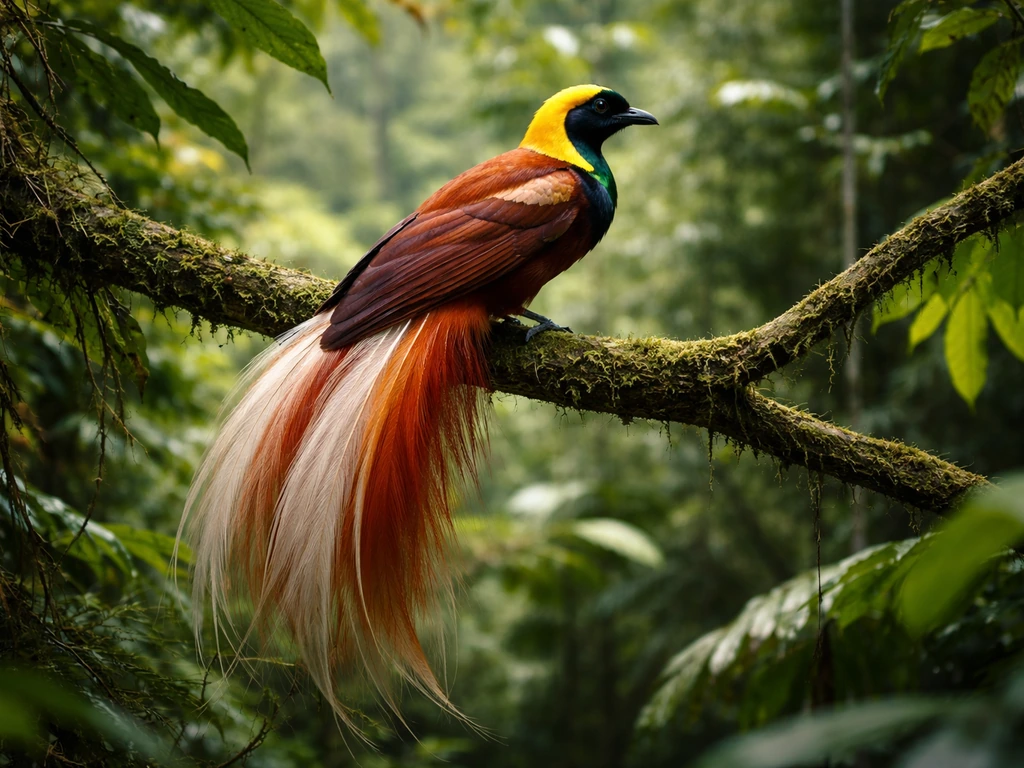
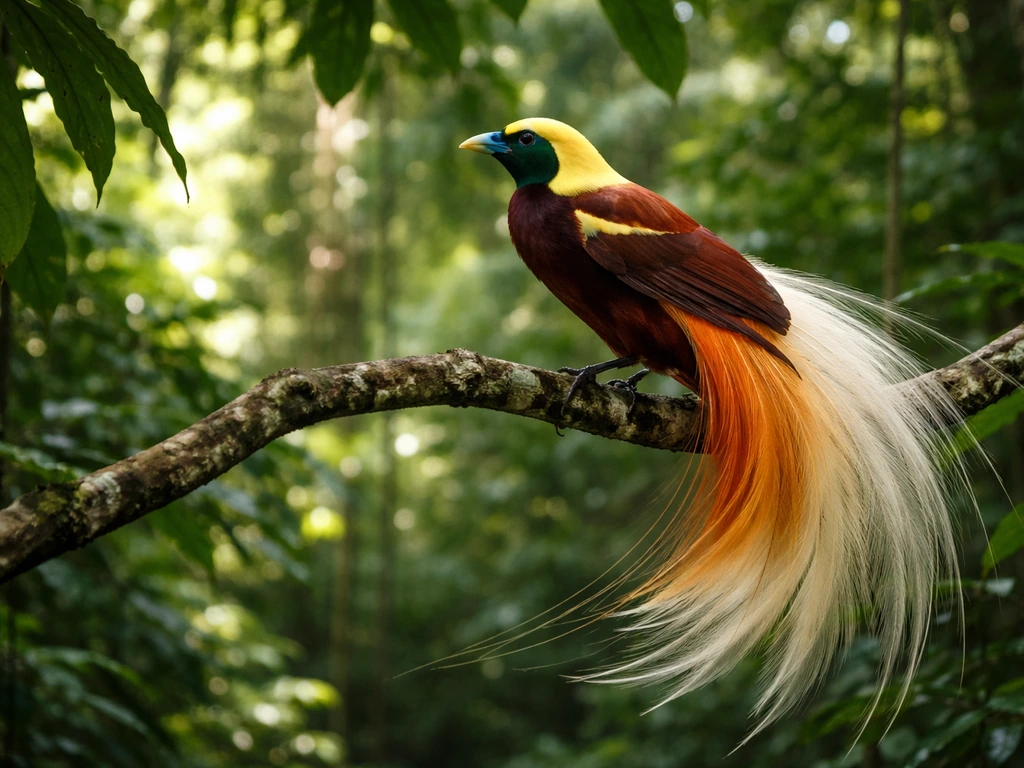
The Raggiana bird-of-paradise (Paradisaea raggiana) is the official national bird of Papua New Guinea. If you're looking to confirm this for a school project, a quiz, or just personal curiosity, that's your answer: Paradisaea raggiana, the Raggiana bird-of-paradise. No ambiguity, no debate. It's enshrined in national law and displayed on the country's flag.
How to Identify the Raggiana Bird-of-Paradise
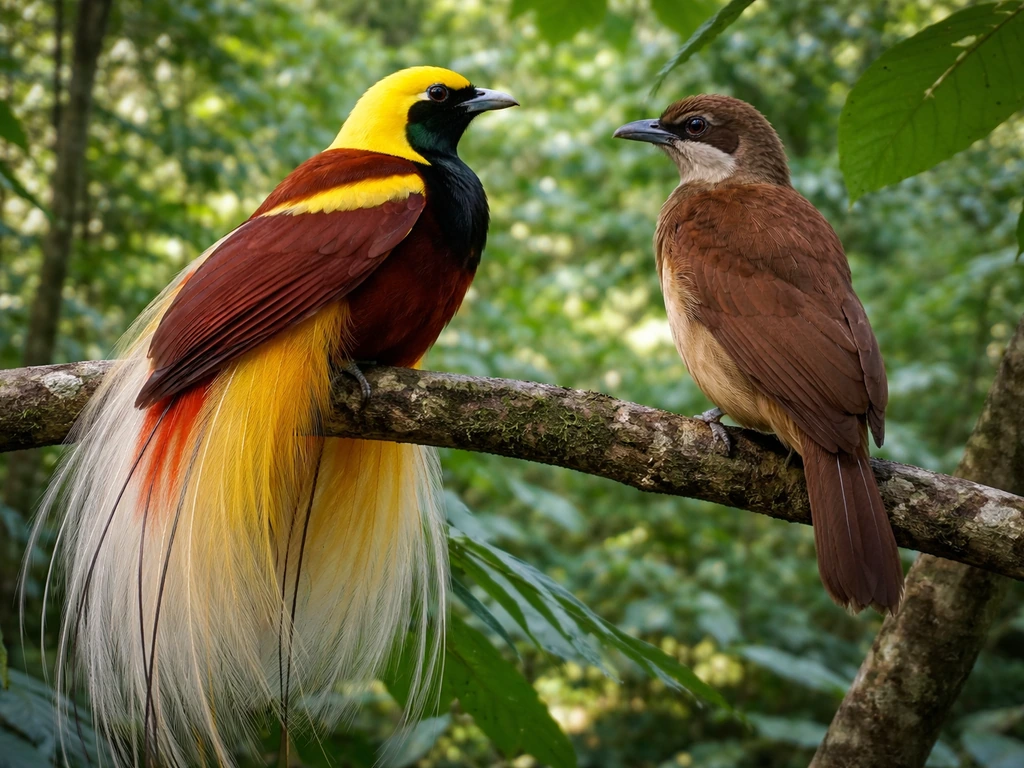
Once you know what you're looking for, the male Raggiana bird-of-paradise is hard to mistake. The key identification traits are the spectacular ornamental flank plumes, which are a deep red-orange color, combined with a bright yellow crown and long, wire-like tail feathers that extend well beyond the body during display. The overall effect is extravagant, which is exactly the point: male birds put on elaborate group displays (called leks) to attract females.
Females are far more subdued in coloring, as is common in birds-of-paradise. They're brownish overall with a pale underside, lacking the dramatic plumes of the male. If you're trying to confirm you're looking at Paradisaea raggiana specifically, focus on the male's red-orange flank plumes (not yellow, which would suggest a different species in the same genus) combined with the yellow crown.
In the wild, the Raggiana bird-of-paradise lives in lowland and hill rainforests, as well as forest edges and secondary growth. It's found in the southern and eastern regions of Papua New Guinea, ranging west to the Fly and Strickland Rivers and north to the upper Ramu River and the Gogol River near Madang. Its diet includes fruits, figs, and arthropods, so it's often spotted in fruit-bearing trees in forested areas.
Why Papua New Guinea Chose This Bird
The choice wasn't arbitrary. Birds-of-paradise hold deep cultural meaning throughout Papua New Guinea and have for centuries. Their feathers feature prominently in traditional ceremonial dress, headdresses, and cultural performances across many of PNG's diverse communities. The birds are woven into local identity in a way that few animals are for any nation.
The Raggiana bird-of-paradise specifically represents themes of beauty, freedom, and natural abundance. Its spectacular display plumage makes it a powerful visual symbol, the kind of image that works well on a flag or an emblem. It also happens to be the most widespread and commonly seen of PNG's birds-of-paradise species, making it a logical choice as a national representative rather than a rarer, less-known relative.
On the national emblem, the bird-of-paradise is depicted in full display posture, head turned to the left, perched above a kundu drum and a ceremonial spear. Together these elements represent PNG's cultural traditions. The flag carries a stylized yellow bird-of-paradise in flight against a red background, paired with the Southern Cross constellation on a black background.
When and How It Became the National Bird
The formal adoption of the bird-of-paradise as a national symbol was part of Papua New Guinea's process of establishing its national identity ahead of full independence. The National Identity Ordinance, signed on 24 June 1971 by Administrator Sir Leslie Johnson, established the national emblem and flag designs in law. This ordinance actually includes detailed specifications for the bird-of-paradise image on the flag, including a full table of design requirements labeled 'Table 1: BIRD OF PARADISE.'
Papua New Guinea gained full independence from Australia on 16 September 1975, but the national symbols including the bird-of-paradise emblem were legally established years earlier. The 1971 ordinance laid the groundwork, making the bird-of-paradise officially embedded in the country's legal and symbolic framework well before independence was declared.
Facts Worth Knowing About the Raggiana Bird-of-Paradise
- Scientific name: Paradisaea raggiana (genus Paradisaea, the same genus as several other birds-of-paradise species)
- The species is resident and breeding within New Guinea, classified as stable in population by BirdLife International
- Distribution within PNG covers southern and eastern regions, west to the Fly and Strickland Rivers, north to the upper Ramu and Gogol River near Madang
- Habitat: lowland and hill rainforest, forest edges, and secondary growth, generally at lower elevations
- Diet includes fruits, figs, and arthropods
- Males perform elaborate group display rituals (leks) where multiple males compete to attract females
- The species' feathers have been used in traditional PNG ceremonial dress for generations
- The flag's bird-of-paradise image is specified in national law with precise design requirements
Common Confusion: Getting the Right Bird
The most common source of confusion here is the sheer variety of birds-of-paradise. Papua New Guinea is home to dozens of bird-of-paradise species, many of which look broadly similar to a casual observer. The genus Paradisaea alone contains several species with overlapping ranges, including the Lesser bird-of-paradise (Paradisaea minor) and the Greater bird-of-paradise (Paradisaea apoda). Both have display plumes and look spectacular, so it's easy to assume you're looking at the national bird when you might not be.
The simplest way to confirm you have the right species: check the flank plume color. Raggiana bird-of-paradise males have red-orange plumes. Lesser bird-of-paradise males have yellow plumes. If the plumes are yellow, you're looking at a different species. Also check the range: the Raggiana is the species found across the southern and eastern parts of PNG, while other species have different distributions.
Another point of confusion comes from the flag and emblem. The bird on the PNG flag is sometimes described generically as 'a bird-of-paradise' in casual references, leading people to wonder which species exactly. You can use the same approach to look up what bird is on the zambian flag and confirm the specific species shown. The question of what bird is on the Papua New Guinea flag has a straightforward answer: the Raggiana bird-of-paradise, Paradisaea raggiana. The answer is that the flag depicts the Raggiana bird-of-paradise (Paradisaea raggiana), even if official documents use the broader term 'bird-of-paradise' in the emblem description. The same quick answer applies when you look up what is the bird on the Uganda flag. The genus cited in emblem descriptions is Paradisaea, and the national bird officially identified is the Raggiana. If you've seen a related article about what bird is on the PNG flag, the answer is the same bird.
It's also worth noting that Australia, PNG's close neighbor and former administering power, has its own national bird (the emu), and the two countries share a geographic region but chose completely different birds as national symbols. For the question of what bird is on the South Australian flag, the answer is the piping shrike Australia, PNG's close neighbor. Australia's national bird is the emu. The Raggiana bird-of-paradise is uniquely tied to PNG's tropical forest environment and cultural identity in a way that the emu, a flightless grassland bird, simply isn't.
How to Verify You Have the Right Answer

If you want to double-check this for any purpose, here's a straightforward three-step confirmation approach:
- Check the species name: Paradisaea raggiana. Any authoritative source on PNG's national bird should list this scientific name.
- Check the display traits: male birds have red-orange ornamental flank plumes, a yellow crown, and long tail wires. These are the defining visual markers.
- Check the range: the species is resident in the southern and eastern regions of Papua New Guinea, not just any part of New Guinea broadly.
Cross-referencing the scientific name Paradisaea raggiana against a field guide or a database like BirdLife International's DataZone will give you solid confirmation. The National Identity Ordinance of 1971 is the legal foundation if you need an official source. blank" rel="noopener noreferrer">The National Identity Ordinance of 1971 text is available on PacLII, including the legal basis for national symbols such as the bird-of-paradise depiction.
FAQ
If I just see a bird-of-paradise on the Papua New Guinea flag, how can I tell it is the Raggiana bird-of-paradise specifically?
Use the emblem context plus the Raggiana traits. The official national bird is Paradisaea raggiana, and the species is typically identified by the male’s red-orange flank plumes and yellow crown. The flag is a stylized illustration, so color cues in real life are most reliable for matching the exact species.
Can females of the Raggiana bird-of-paradise be mistaken for other birds-of-paradise?
Yes. Females have much plainer, brownish plumage, so they are harder to distinguish visually. If you need the exact species for a report, rely on male characteristics when possible, or use range and confirmed sighting notes rather than appearance alone.
Does the national bird appear only on the flag and emblem, or are there other official uses?
The article notes its legal and symbolic embedding (flag and emblem) under the National Identity Ordinance. In practice, you may see it referenced in educational materials, public branding, and ceremonies, but those uses are derivative, the core “official” status comes from the national legal framework.
What is the quickest way to avoid confusing the Raggiana with closely related species in the same genus?
Check the male flank plume color. Raggiana males have red-orange flank plumes, while the Lesser bird-of-paradise (Paradisaea minor) males have yellow plumes. Also verify you are looking within PNG regions where Raggiana is expected (southern and eastern areas).
Why do some sources describe the PNG emblem bird more generally as “a bird-of-paradise” instead of naming the species?
Casual descriptions often use the broader group name for simplicity. The key point for accuracy is that the official national bird identification is the Raggiana bird-of-paradise (Paradisaea raggiana), even if an emblem description uses a generic “bird-of-paradise” label.
If my school quiz asks for the national bird, should I answer with the English name only or the scientific name too?
Either can work, but for full credit provide both. The English name is Raggiana bird-of-paradise, and the scientific name is Paradisaea raggiana. The scientific name reduces ambiguity if the quiz expects the exact species.
Is the bird-of-paradise’s national symbol status tied to Papua New Guinea’s independence date?
The symbols were legally established before full independence. The 1971 National Identity Ordinance created the emblem and flag designs in law, so the national bird’s official status comes from that earlier legal foundation rather than the 1975 independence date.
Does the Raggiana bird-of-paradise live across all of Papua New Guinea?
No. It is found in the southern and eastern regions, with the article giving range limits such as west to the Fly and Strickland Rivers and north to the upper Ramu and Gogol River area near Madang. Other birds-of-paradise species can be expected in different areas.
Next Articles
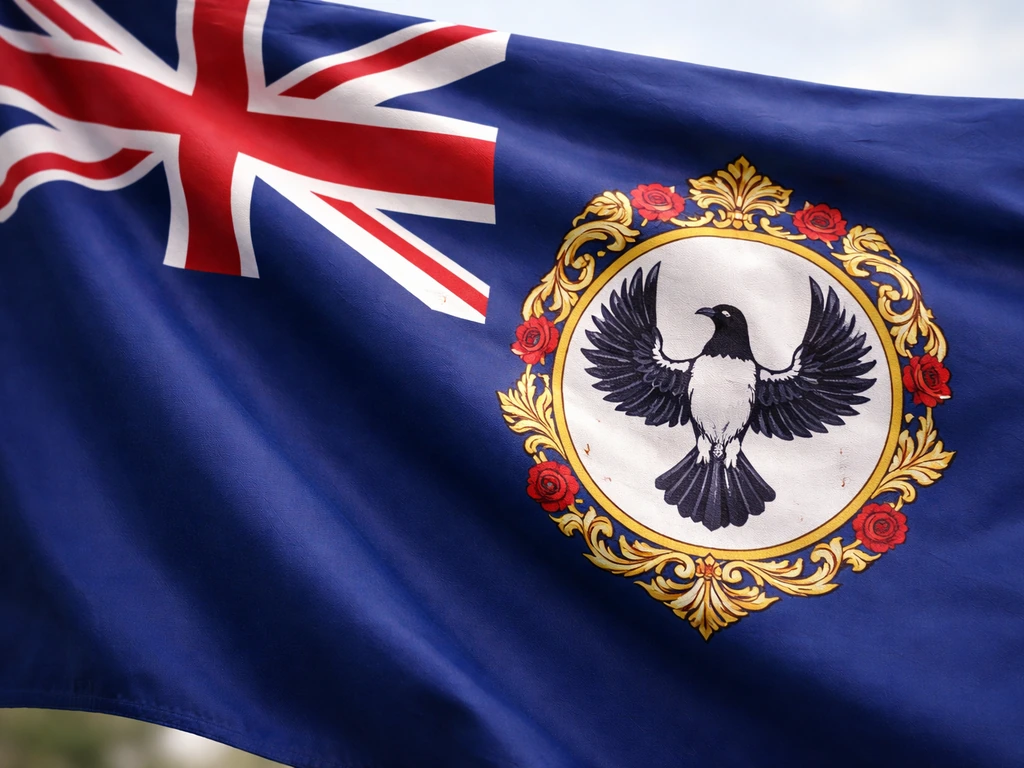
What Bird Is on the South Australian Flag? Identification & Meaning
Identify the black swan on the South Australian flag, with symbolism, heraldic features, and how to verify the emblem.
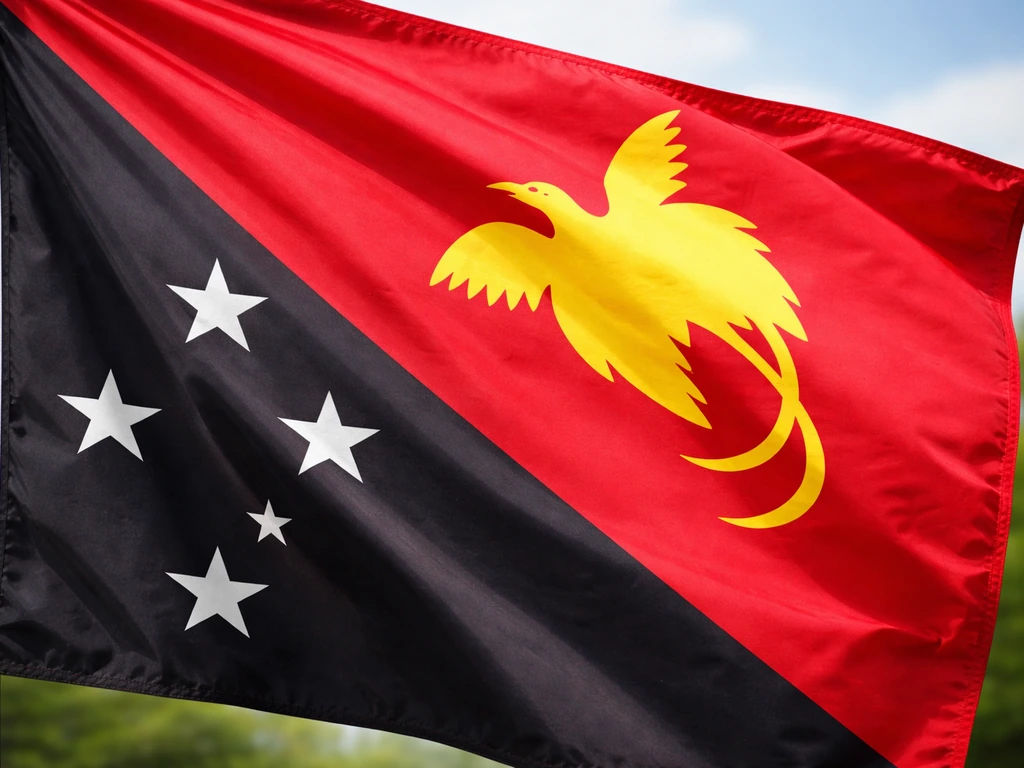
What Bird Is on the Papua New Guinea Flag? National Emblem
Identify the bird on Papua New Guinea’s flag: the Raggiana bird-of-paradise and its national emblem symbolism.
What Bird Is on the Uganda Flag and Its Meaning
Identifies the crowned crane on the Uganda flag and explains what the emblem means for Uganda’s identity.