Australia's national bird: the direct answer
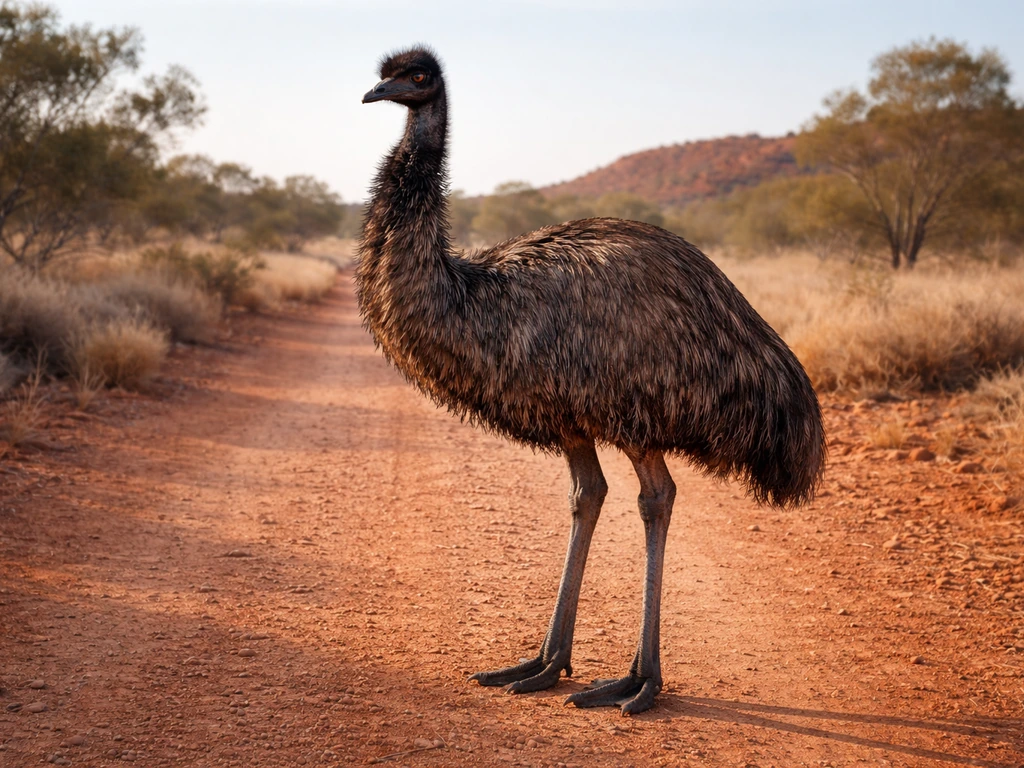
Australia's national bird is the emu (Dromaius novaehollandiae). It's a bird, not a person, and not a mammal. If you landed here after a quick search and just needed that confirmed, there it is. The emu is a large, flightless bird native to Australia, and it holds a place on the country's official Commonwealth Coat of Arms alongside the kangaroo. That coat of arms, granted in 1908, is the formal symbol of the Australian Commonwealth and remains the clearest official endorsement of the emu as a national bird emblem.
National bird vs state bird vs national animal: sorting out the confusion
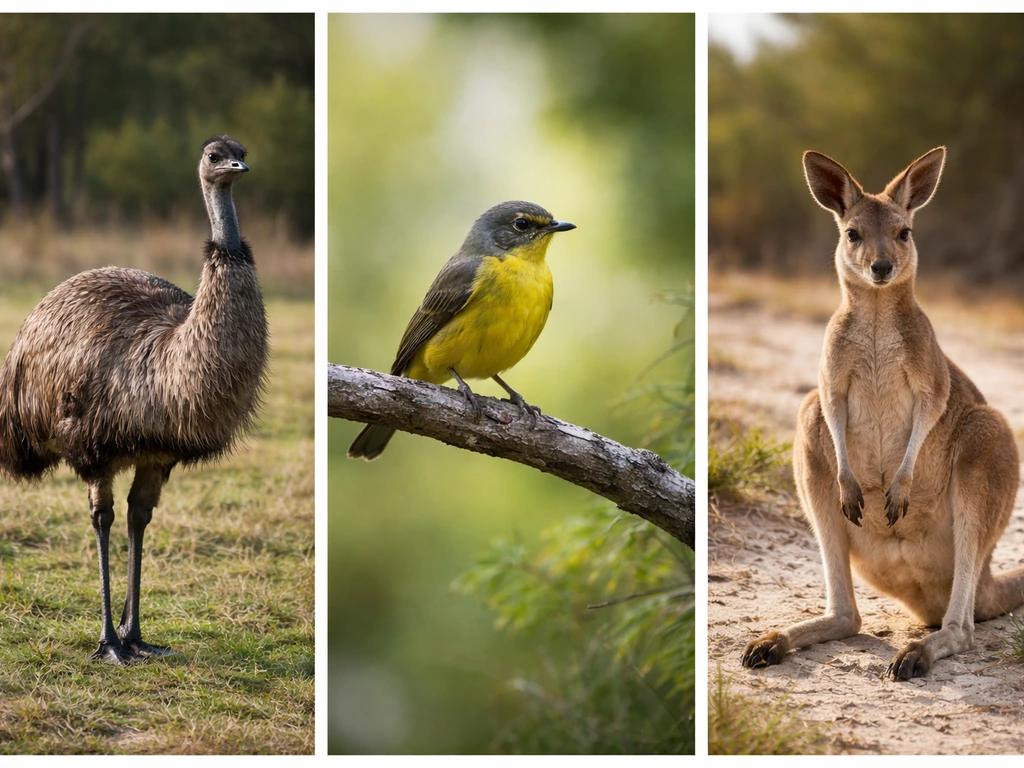
These three terms get mixed up constantly, and it's worth taking a minute to untangle them because Australia's situation is a little more layered than most countries.
The national bird refers to a bird species that represents the whole country. For Australia, that's the emu. The national animal, on the other hand, is the kangaroo. Both appear on the Commonwealth Coat of Arms, so people sometimes assume both are birds or both are animals in the generic sense. They aren't interchangeable. The emu is specifically recognised in the bird category.
State birds are a separate layer entirely. Each Australian state and territory has its own bird emblem, officially designated at the state level. These are different from the national bird and are chosen to reflect local wildlife. For example, if you're curious about a specific state, the bird on the South Australian flag tells a different story from the emu at the national level. The same applies to Tasmania, which has its own distinct bird emblem worth exploring if you're researching state-level symbols.
So to be clear: emu = national bird of Australia. Kangaroo = national animal. And each state has its own designated bird, separate from both of those.
Why the emu? The symbolism behind the choice
The emu wasn't chosen arbitrarily. There's a practical, almost poetic logic behind it that the Australian government has actually explained in official speeches and documents.
The key symbolic reason: emus can't easily walk backwards. Neither can kangaroos. The idea is that these two animals, placed on either side of the shield on the Coat of Arms, represent a nation that always moves forward. It's a simple concept, but it's a genuinely meaningful one for a country that was still shaping its national identity in the early 1900s.
Beyond that symbolism, the emu is simply one of the most distinctive animals on earth, and it's found nowhere else in the world in the wild. It's uniquely Australian. At up to 2 metres tall, it's also the largest bird in Australia and one of the largest in the world, which gives it an undeniable visual presence. When you're choosing a symbol to represent a nation, you want something unmistakable.
The history behind how the emu became an official emblem
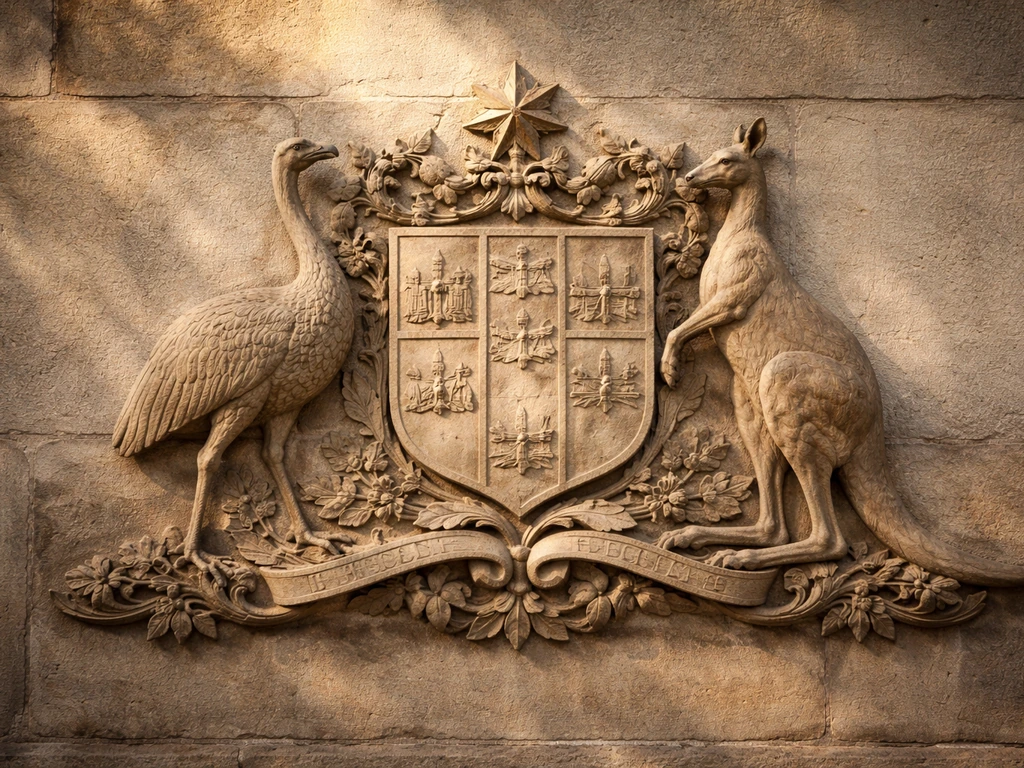
Australia's Commonwealth Coat of Arms was granted in 1908, just seven years after the federation of the Australian colonies in 1901. The kangaroo's official recognition as a national symbol is tied directly to that moment. The emu's place on the same coat of arms puts its official status at the same point in history, making both symbols part of Australia's foundational national identity.
The emu's symbolic role didn't stop at the coat of arms. During World War I, its significance grew in a different direction. In 1915, the Minister for Defence permitted all units of the Australian Light Horse to wear the emu plume as part of their uniform. After the war ended, the emu plume became more broadly recognised as a symbol of commemoration in Australia. That military connection deepened the emu's cultural footprint in a way that goes beyond just being on a government seal.
It's also worth noting that Australia's relationship with the emu took a strange turn in 1932, when the Australian military was deployed to cull emus that were damaging wheat crops in Western Australia. The episode became known informally as the "Emu War," and while the military did not come out of it looking particularly effective, the story has become part of Australian folklore and only adds to the emu's outsized cultural presence.
Fun facts worth knowing about the emu
- Emus are the second-largest living bird in the world by height, behind only the ostrich.
- They can reach up to 2 metres tall and weigh up to 60 kilograms.
- Despite having wings, emus are completely flightless. Their wings are tiny and serve no flying purpose.
- Emus are fast runners, capable of reaching speeds of around 50 km/h.
- Male emus incubate the eggs and raise the chicks, not the females.
- The emu plume worn by the Australian Light Horse became a recognised symbol of commemoration after World War I.
- The 1932 'Emu War' in Western Australia saw the military attempt to cull emus to protect wheat crops, with limited success.
- Emus appear on Australian coins, including the 50-cent piece.
Australia's emu has also made it into popular culture well beyond its borders. It appears in children's education, wildlife documentaries, and national tourism materials. The emu is practically synonymous with the idea of Australian wildlife abroad, which reinforces why it works so well as a national symbol.
How to verify the answer and what other bird symbols to explore
If you want to confirm the emu's status for yourself, the most direct place to look is the Australian Government's Department of the Prime Minister and Cabinet (PM&C) page on national symbols. The Commonwealth Coat of Arms is documented there, and it clearly identifies the emu and kangaroo as the native animals supporting the shield. Britannica's entry on Australian emblems also lists the emu as the nationally recognised bird.
If your search brought you to Australia because you were actually thinking about another country in the region, it's easy to get turned around. Papua New Guinea, for instance, is a near neighbour with its own striking bird symbol. The national bird of Papua New Guinea is the raggiana bird-of-paradise, which is a very different creature from the emu and worth knowing about if you're researching Pacific national symbols.
For state-level bird emblems within Australia, each state has an official bird that's recognised separately from the national emu. The bird emblem of Tasmania is one example worth looking into, especially if you're building out a full picture of Australian avian symbols at both the national and regional level.
If you're exploring national bird symbols more broadly across Africa and the Pacific, there are some fascinating parallels to Australia's coat-of-arms tradition. The bird on the Uganda flag is the grey crowned crane, another bird deeply tied to national identity and official heraldry. Similarly, the bird on the Zambian flag is an African fish eagle, chosen for equally deliberate symbolic reasons.
Other countries use birds directly on their flags rather than on a coat of arms. The bird on the Papua New Guinea flag is a great example of this, featuring the raggiana bird-of-paradise in flight, and if you want to keep exploring that part of the world, the bird on the PNG flag has its own detailed story behind the design. Central Africa has its own examples too: there's a central African country with a bird on its flag that most people haven't heard of, which is worth a look if you enjoy discovering lesser-known national bird symbols.
Quick reference: Australia's bird and animal symbols
| Symbol | Name | Official Status | Where It Appears |
|---|
| National bird | Emu (Dromaius novaehollandiae) | Recognised national emblem | Commonwealth Coat of Arms (1908) |
| National animal | Kangaroo | Recognised national emblem | Commonwealth Coat of Arms (1908) |
| State birds | Varies by state/territory | State-level official emblems | State flags, government materials |
| Military symbol | Emu plume | Commemorative symbol (post-WWI) | Australian Light Horse uniform tradition |
The short version: Australia's national bird is the emu. It earned that status through its place on the Commonwealth Coat of Arms in 1908, its role in military history, its unique status as a bird found nowhere else on earth, and the symbolism of forward movement that the Australian government itself has cited. The PM&C Australian Symbols Booklet notes that the kangaroo and emu stand on either side of the Commonwealth Coat of Arms’ central shield, and it explains the “moving forward” symbolism associated with their movement symbolism of forward movement. If you're looking for state birds or the national animal, those are separate categories with separate answers, but when it comes to the national bird specifically, the emu is definitive.