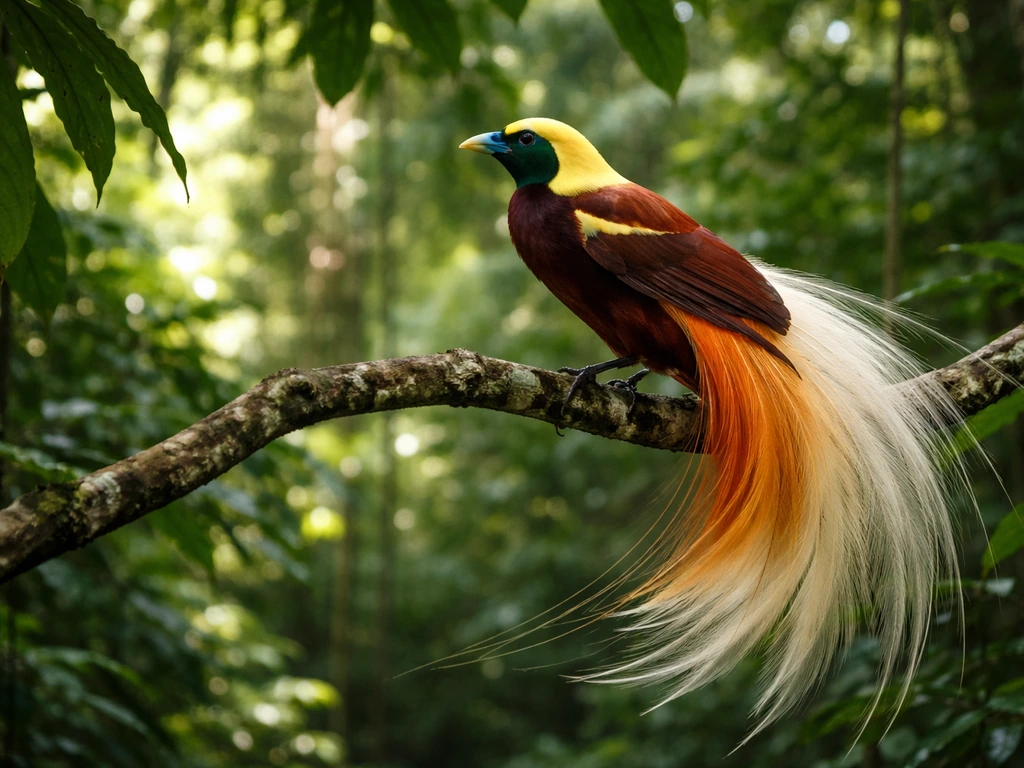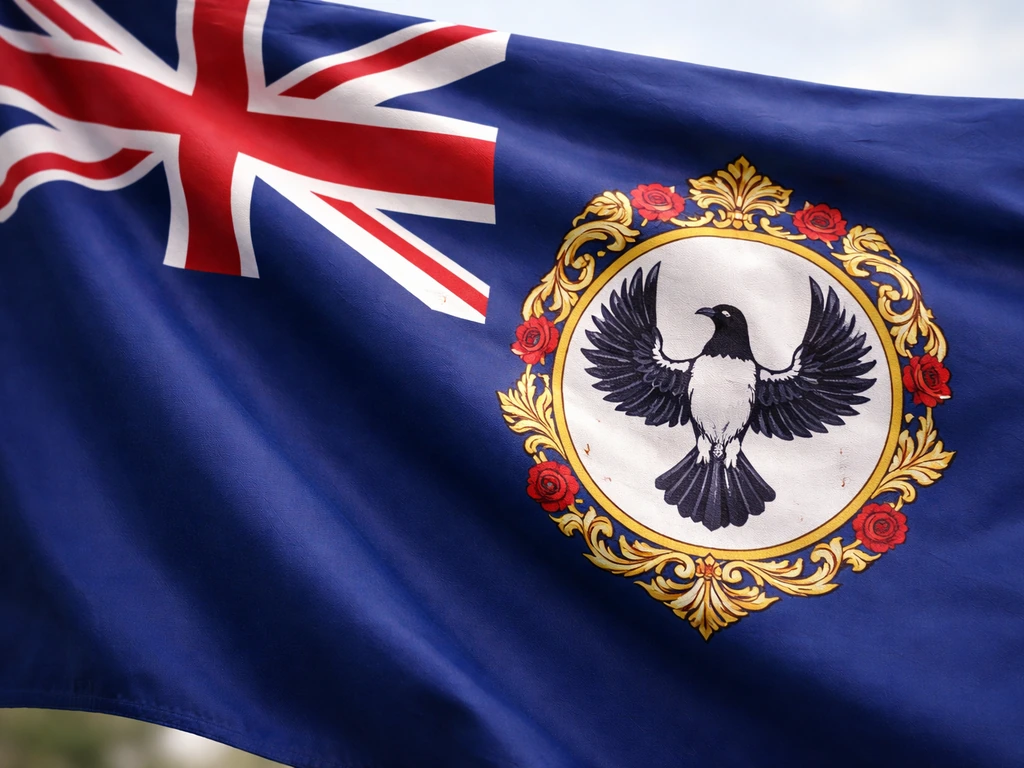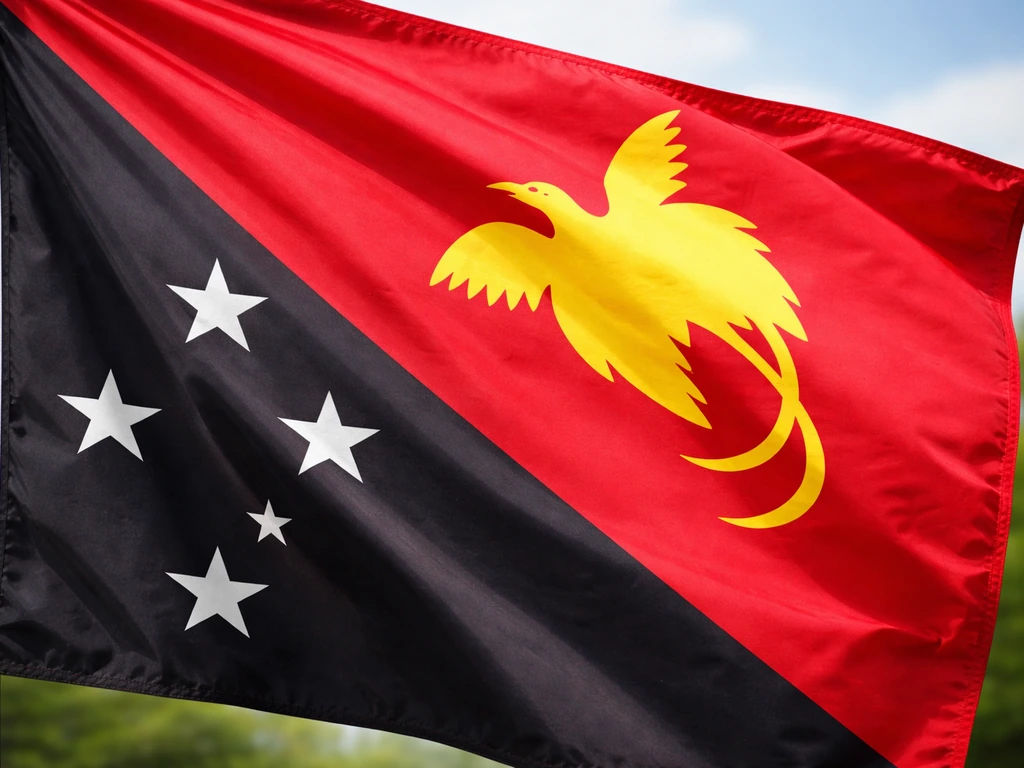
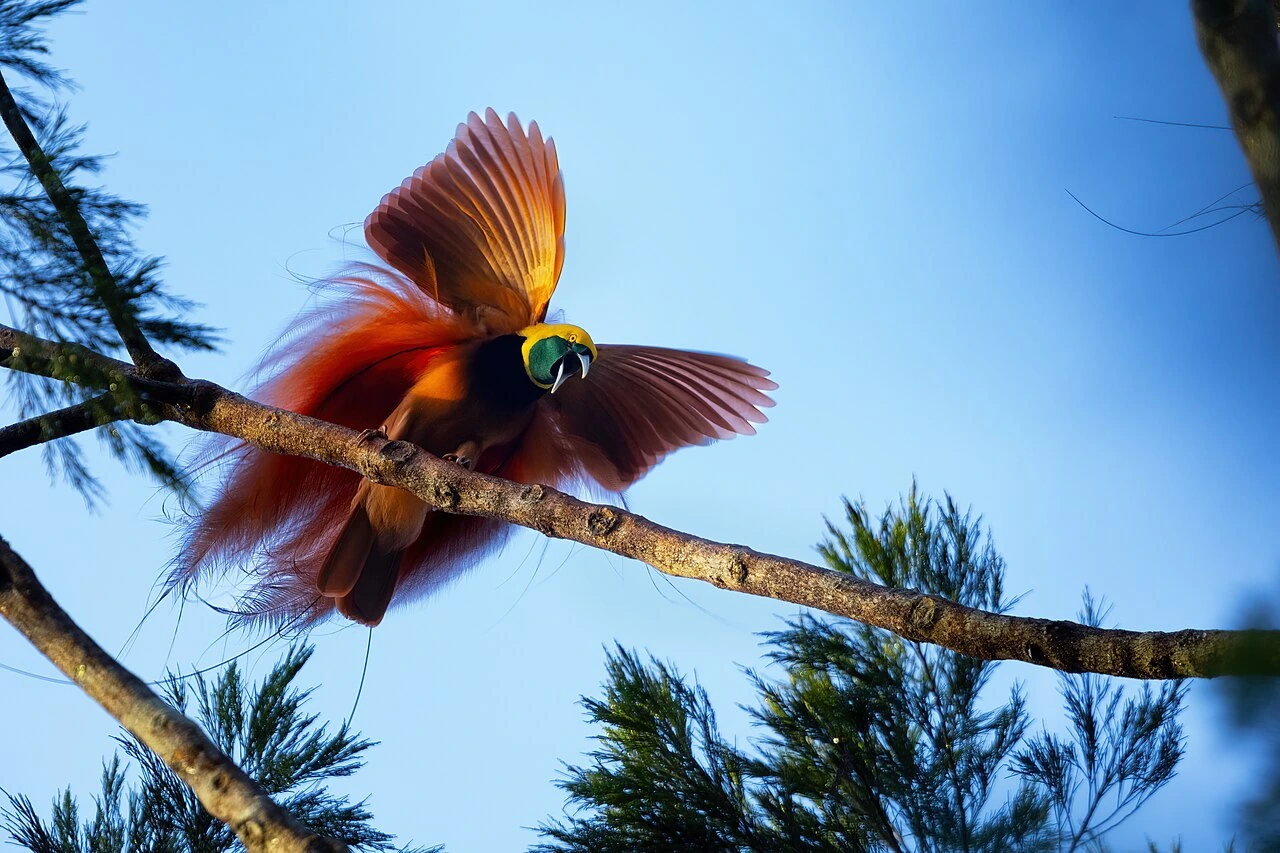
The bird on the PNG flag is the Raggiana bird-of-paradise (Paradisaea raggiana), shown as a yellow soaring silhouette on the upper red triangle of the flag. It is Papua New Guinea's national bird and has been the country's official emblem since 1971. If you are also curious about other countries' national bird symbols, you can compare this to what is the bird on the uganda flag. The same idea of a national bird on a flag also appears in other countries, including a central African nation with a bird flag emblem central African nation with a bird on its flag. Tasmania has a bird emblem too, commonly associated with the black currawong (Strepera gravinosa) bird emblem of Tasmania.
What Is the Bird on the PNG Flag? Identify the Symbol

Marcus Chen
17 May 2026
Which PNG flag are you looking at?
"PNG" almost always refers to Papua New Guinea in a flag context, but it is worth double-checking before you go further. The abbreviation can occasionally appear in other contexts, such as a state or regional flag saved as a .png image file, which has nothing to do with the country. If the flag you have shows a diagonal split with a red upper-left triangle and a black lower-right triangle, you are definitely looking at Papua New Guinea's national flag.
The standard Papua New Guinea flag has two easy landmarks: the Southern Cross constellation in white stars on the black triangle, and a bold yellow bird silhouette on the red triangle. If your image has both of those elements, you have the right flag and the right bird.
The bird on the flag: what it actually is
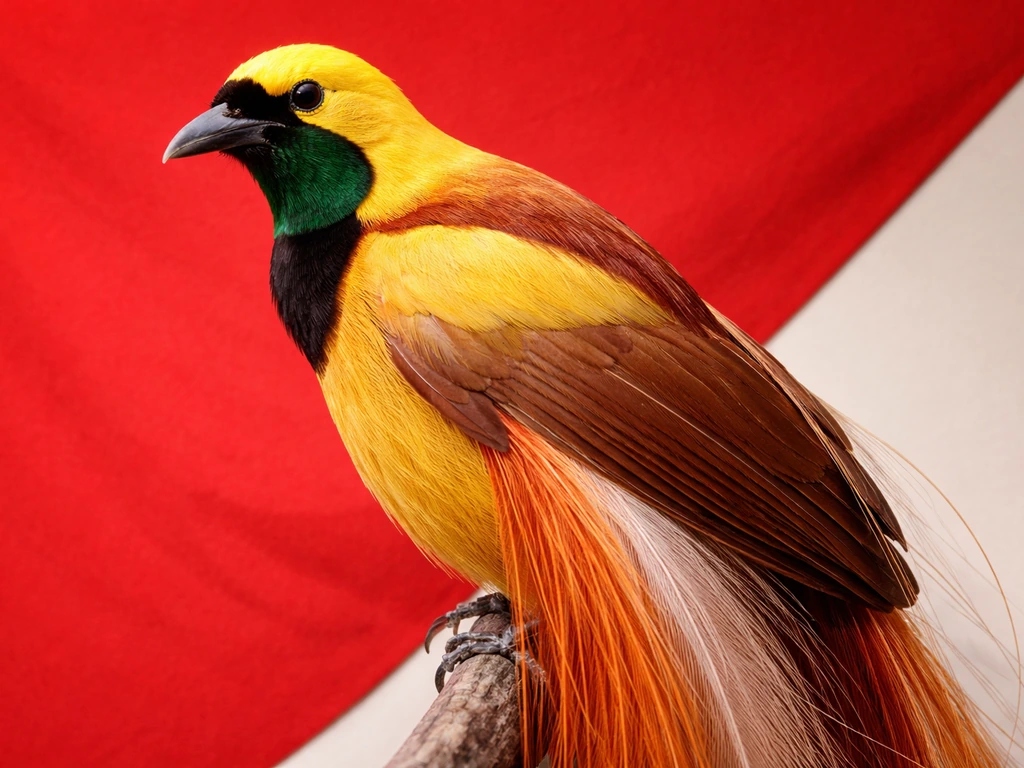
The yellow bird on the red triangle is the Raggiana bird-of-paradise, Papua New Guinea's national bird. It is depicted in a soaring, display posture with trailing plumes, which is characteristic of how male birds-of-paradise spread their feathers during courtship. On the flag, the bird faces right with its plumes fanning out behind it, giving it a distinctive shape that is unmistakable once you know what you are looking at.
The CIA World Factbook describes it plainly as a "soaring yellow bird of paradise centered" on the red triangle. The National Identity Act 1971, Papua New Guinea's own legislation, formally specifies a "mid-yellow representation of a soaring Bird of Paradise" on a 4:3 flag. So this is not a generic bird shape someone sketched freehand. It is a legally defined emblem with a specific species behind it.
How to confirm it's a Raggiana bird-of-paradise, not just any bird
Flag silhouettes are stylized, and people sometimes mistake the PNG bird for a generic eagle, hawk, or even a rooster because the proportions can look different depending on the print or digital version. Here is how to confirm you are looking at the right species and the right emblem.
- Check the posture: the bird should be soaring (wings spread, body horizontal or slightly angled), not perched or standing upright. A perched bird on the red field would be a reproduction error.
- Check the trailing plumes: the silhouette has a flowing, fan-like tail formed by the display plumes, a feature unique to birds-of-paradise and not present on raptors or generic bird icons.
- Check the color: on the official flag the bird is mid-yellow (sometimes rendered as gold), sitting clearly against the red triangle. If the bird is white, black, or a very different shade, you may have an unofficial or altered graphic.
- Cross-reference with the national emblem: if your PNG file includes a more detailed emblem image (bird perched on a kundu drum with a ceremonial spear), the legal description confirms the bird's head should be turned to its left, which is a useful orientation check.
- Match the Southern Cross: the lower black triangle must have four white five-pointed stars and one smaller star forming the Southern Cross. If those stars are missing or differently arranged, you likely have an unofficial version of the flag.
For a quick verification, compare your image against the official SVG hosted on Wikimedia Commons or the flag description in the CIA World Factbook. Both are free to access and show the exact stylized silhouette used on the official flag.
What the Raggiana bird-of-paradise means to Papua New Guinea

The Raggiana bird-of-paradise is endemic to Papua New Guinea, meaning you will not find it natively anywhere else in the world. That endemism alone makes it a powerful national symbol. The bird is known locally by the Motuan word "logohu," which is also used for one of Papua New Guinea's highest national honors. Logohu is a Motuan word and the Order of Logohu is Papua New Guinea's official national symbol since independence, linking the PNG emblem bird to the bird-of-paradise group in an institutional way the Motuan word "logohu".
The Embassy of Papua New Guinea to the Americas describes the soaring bird on the flag as representing the country's emergence into nationhood. The display plumes trailing behind the bird as it soars reinforce that image of rising, expanding, and moving forward. The bird is also deeply tied to regional tribal culture across the country, where birds-of-paradise feathers have been used in traditional dress and ceremonies for generations.
World Atlas frames it similarly: the bird of paradise on the flag is a symbol of both national identity and the indigenous cultural heritage that binds Papua New Guinea's hundreds of distinct tribal groups together under one emblem.
How the Raggiana ended up on the flag in 1971
Papua New Guinea's flag has an interesting origin story. In early 1971, the country held a nationwide competition to design a national flag ahead of full independence, which came on September 16, 1975. The winning design came from a young woman named Susan Karike. Her design used the diagonal split with the bird-of-paradise and the Southern Cross, and it was formally adopted on July 1, 1971.
Papua New Guinea's national parliament recognized the flag officially on March 11, 1971, and the National Identity Act 1971 codified the legal description of both the flag and the national emblem. When independence arrived in 1975, the flag's use was extended to ships registered in Papua New Guinea, cementing it as the country's primary national symbol on the world stage.
The Raggiana bird-of-paradise was made the official national bird and national emblem in 1971, the same year the flag was adopted. If you are also wondering what Australia’s national bird is, the answer is the emu official national bird and national emblem. So the bird's dual role on both the flag and the national emblem dates to the very beginning of the country's modern national identity. The colors on the flag, red, black, and yellow, are described as traditional PNG colors, tying the design further to the country's cultural roots.
Fun facts and common mix-ups
A few things trip people up regularly when they look at the PNG flag or try to identify the bird.
- The bird is often mistaken for an eagle or a phoenix in low-resolution images because the trailing plumes can look like stylized flames or a raptor's fanned tail feathers. The soaring pose adds to the confusion.
- Some unofficial merchandise and graphics use a more generic bird silhouette that does not match the official stylization. If the bird looks symmetrical or overly simple, it is probably not the official version.
- The national emblem (separate from the flag) shows the bird perched on a kundu drum with a ceremonial spear behind it. This is a different visual from the soaring silhouette on the flag, and people sometimes confuse the two.
- Papua New Guinea is one of several countries with a bird on its flag. Uganda famously features the grey crowned crane on its flag, and Zambia includes an eagle. The PNG bird-of-paradise is unique among these because of its flowing plume display posture, which no other country's flag bird replicates.
- The word "logohu" (Motuan for bird-of-paradise) lives on in the Order of Logohu, Papua New Guinea's national honors system, which shows just how deeply the bird is woven into the country's official identity beyond just the flag.
- Papua New Guinea shares the island of New Guinea with Indonesia's Papua provinces, but the bird-of-paradise emblem belongs specifically to the independent nation of Papua New Guinea. Some people searching for the Papua New Guinea flag stumble across Papua (the Indonesian region) instead.
If you are researching national bird emblems more broadly, Papua New Guinea's Raggiana bird-of-paradise is one of the most visually striking choices any country has made. If you are wondering about another country, Zambia’s flag uses a different kind of national bird emblem bird of paradise. Unlike the eagles and cranes chosen by many nations, the bird-of-paradise brings an almost theatrical flair to the flag, with its soaring posture and display plumes making it instantly distinctive among the world's national symbols.
FAQ
How can I tell if the bird I’m seeing is definitely the Raggiana bird-of-paradise and not a similar bird silhouette?
In the standard Papua New Guinea flag, the bird sits on the upper red triangle and is shown in a yellow silhouette. The Southern Cross stars on the black triangle are the second key landmark, so if your image has both the stars and the yellow bird-of-paradise shape, it is the correct national emblem.
Why does the bird on my PNG image look different from photos I’ve seen online?
Some PNG images or unofficial prints redraw the bird slightly, which can make it look like an eagle or hawk at first glance. Use the “soaring” pose and trailing display plumes as your check, and confirm the bird is on the red upper triangle of the diagonal split.
What should I double-check if the file name says “PNG” but I’m not sure it’s the country flag?
The abbreviation “PNG” usually means Papua New Guinea, but it can also refer to unrelated .png image files or to other region names. If you are working from a file name, search inside the image for the distinctive diagonal red and black triangles, then verify the bird and the Southern Cross.
Is the flag bird a generic bird-of-paradise, or is it a specific species?
The bird on the national flag is specifically the Raggiana bird-of-paradise (Paradisaea raggiana). Related birds-of-paradise may resemble it, but the emblem’s silhouette and placement are what identify the exact national choice.
Does resolution or low-quality printing affect how I identify the bird?
The flag emblem is stylized, so small differences in outline thickness or plume shape can appear across low-resolution graphics. The reliable confirmation method is to compare your exact layout (bird on red triangle plus Southern Cross on black triangle) rather than judging by fine details alone.
What does “endemic” mean here, and why is it relevant to identifying the flag bird?
The Raggiana bird-of-paradise is endemic to Papua New Guinea, meaning it naturally occurs only there. If you are matching the emblem to a real animal, that endemism can help confirm you are using the correct species context for the national symbol.
What if my image has a bird on it but the rest of the flag layout doesn’t match the PNG flag?
If your image shows a different flag layout, like different colors, swapped triangles, or missing Southern Cross stars, then it is likely an alternate design, a modified template, or a different country entirely. In that case, don’t rely on the bird alone, use both the bird and the Southern Cross placement.