Kenya's national bird is blank" rel="noopener noreferrer">the lilac-breasted roller (Coracias caudatus), a small, spectacularly colourful bird found across open savannah and woodland habitats throughout the country. Egypt's national bird is the Egyptian Vulture. It's worth noting that the designation is widely described as unofficial rather than formally enshrined in law, but the lilac-breasted roller is consistently recognised by Kenyan media, wildlife organisations, and international institutions like London Zoo as the country's national bird. Think of it the way many countries treat their national symbols: deeply embedded in public consciousness and cultural identity even if the paperwork is a little ambiguous.
What Is the National Bird of Kenya? Meaning and Facts

Marcus Chen
28 Apr 2026
Why the lilac-breasted roller was chosen
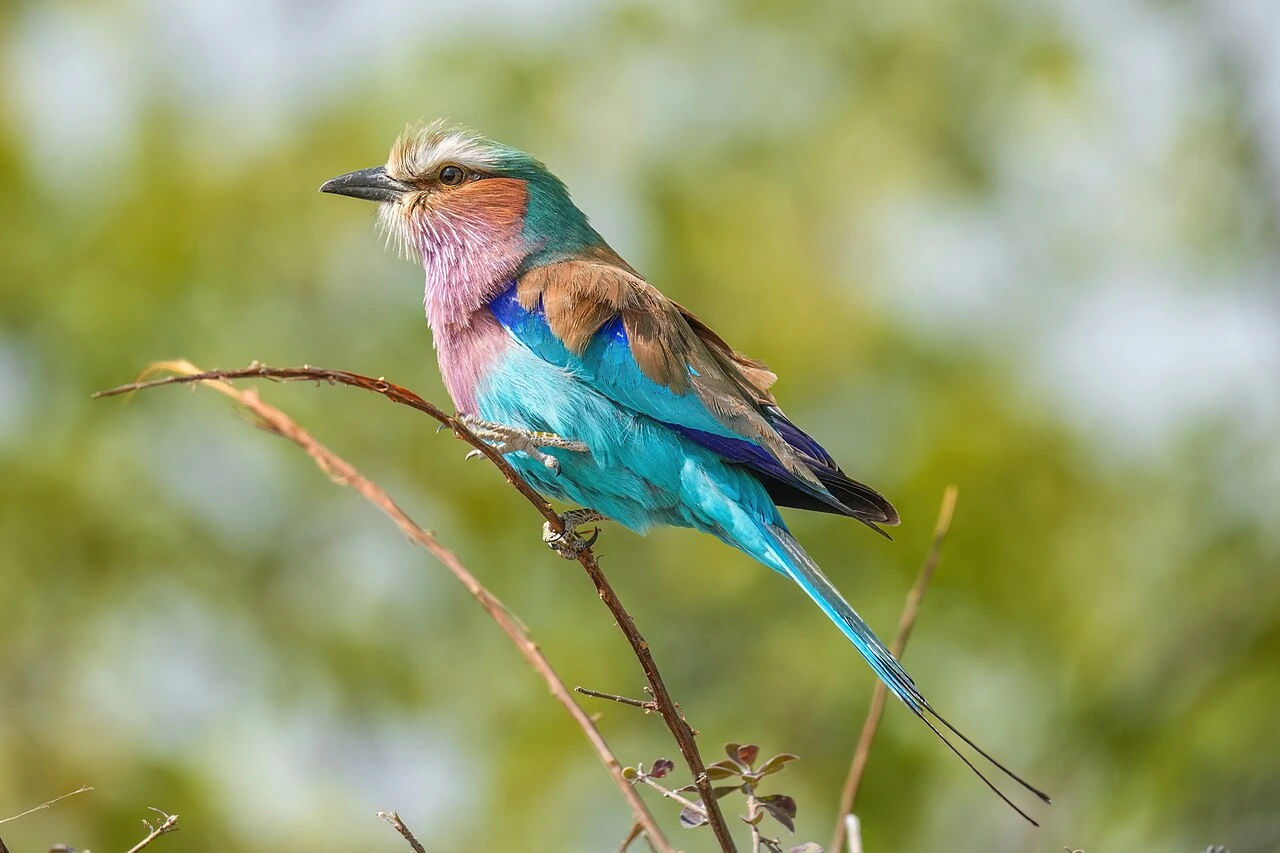
The choice comes down almost entirely to the bird's extraordinary appearance. The lilac-breasted roller is one of Africa's most visually striking birds, carrying up to eight distinct colours on a single small body: turquoise, lilac, cobalt blue, green, rufous, black, white, and buff. Kenya's Tsavo Trust directly ties the national bird association to that "wide array of colours" and "dazzling" plumage. In a country celebrated for its biodiversity and natural beauty, a bird this vivid is an obvious ambassador.
Beyond looks, the bird carries layered symbolism. It is associated with beauty, freedom, and the importance of bird conservation. In African folklore traditions it also carries a meaning of peace. Those themes align well with Kenya's conservation credentials and its identity as a country that takes wildlife seriously on the world stage.
The story behind the designation
Unlike some countries that have made formal legislative declarations about their national bird (the way Uganda officially designated the grey crowned crane, for instance), Kenya's recognition of the lilac-breasted roller developed organically through cultural association rather than a single formal government decree. There is no widely documented founding date or official proclamation on record. Instead, the bird's status grew over time through consistent recognition in wildlife literature, tourism promotion, and national media. The Standard, one of Kenya's major newspapers, describes it plainly as Kenya's national bird, and it appears in official-adjacent listings like Samburu National Reserve's bird records under that title.
This kind of informal but deeply held national identity is actually common globally. Wikipedia's list of national birds explicitly notes that many species hold only unofficial status, and the lilac-breasted roller sits in that category. That doesn't make the association any less real or meaningful, it just means the recognition lives in culture rather than a statute book.
What the bird means to Kenya culturally
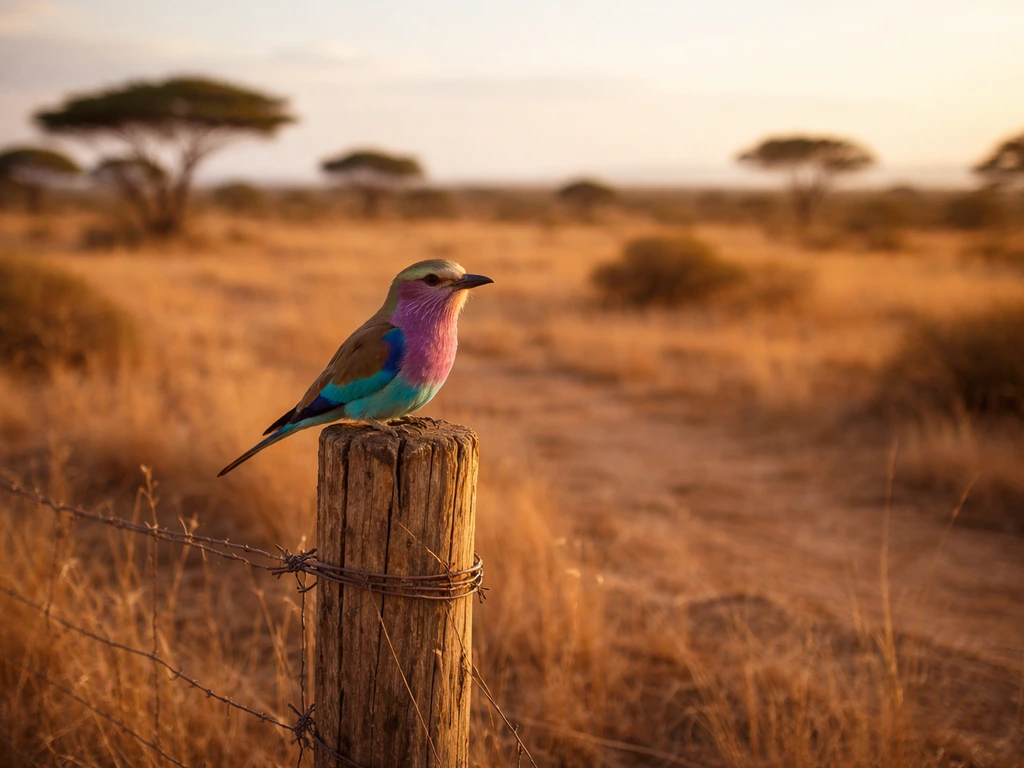
Kenya's identity is built around its wildlife, and the lilac-breasted roller fits that story perfectly. It's a bird you genuinely can see on a Kenyan safari, perched on a dead acacia branch scanning the grass below, and its colours are dramatic enough that even a first-time visitor stops and stares. That accessibility matters. Unlike some national symbols that are rare or difficult to encounter, this bird is a real part of the Kenyan landscape that residents and visitors alike can connect with.
The bird also features in Kenya's National Bird Day observances, where its symbolism around conservation is actively promoted. As pressure on African ecosystems grows, having a visually arresting, widely loved species as a national emblem gives conservationists a recognisable face for broader bird protection messages. It sits alongside Kenya's other internationally recognised wildlife symbols and reinforces the country's positioning as a global leader in conservation.
What the lilac-breasted roller looks like
If you want to recognise one in the field, here's what to look for. The bird is about 36 to 38 centimetres long, roughly the size of a large thrush or a small jay. Adults have distinctive long black tail streamers that extend beyond the main tail feathers; juveniles lack these, so a streamer-less bird is likely a young one. The head and nape are green, the throat and breast are a rich lilac-pink (the source of the name), and the wings and belly show brilliant shades of cobalt and turquoise blue that become most vivid in flight.
Perched birds can actually look a little less impressive because the blue wing feathers are folded away. In flight, though, the bird appears large and intensely blue, which is one of the most reliable field cues. It is described by experienced birders as "almost unmistakable" once you have seen it once. The combination of lilac chest plus turquoise and cobalt blue in flight doesn't match anything else in the African savannah.
| Feature | What to look for |
|---|---|
| Length | 36 to 38 cm (adults) |
| Tail streamers | Long black streamers on adults; absent on juveniles |
| Breast colour | Rich lilac-pink |
| Wings and belly in flight | Brilliant cobalt and turquoise blue |
| Head and nape | Green |
| Overall flight impression | Large, intensely blue bird with fast wingbeats |
Interesting facts and where to spot one in Kenya
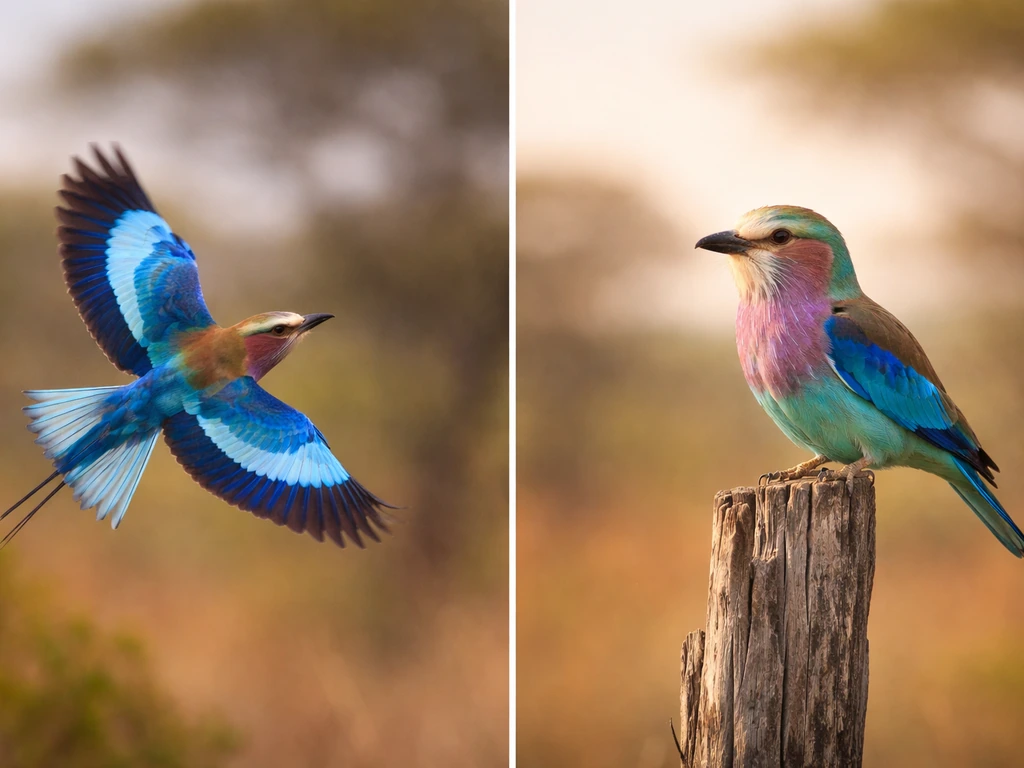
The name "roller" comes from the bird's spectacular aerial display. During courtship, it performs a side-to-side rolling flight, diving and twisting through the air in a way that shows off its colours from every angle. It's one of the more dramatic bird displays you'll see anywhere in Africa, and if you're in the right place during breeding season it's genuinely hard to miss.
The bird is a perch hunter. It sits on an exposed high point, like a fence post, power line, or dead tree branch, watching the ground below for large insects, small lizards, and scorpions. When it spots prey it drops down, grabs it, and returns to its perch. This hunting style makes it unusually easy to observe compared to forest birds that stay hidden in dense vegetation. One practical tip: when it does decide to leave a perch, it springs into flight very quickly, so have your binoculars or camera ready.
In terms of where to see it, the lilac-breasted roller is widespread across Kenya's open habitats. Samburu National Reserve in the north is one of the best-known spots and explicitly lists the bird in its wildlife records. The Masai Mara is another reliable location, especially along the edges of open grassland where trees and bush provide hunting perches. Tsavo East and Tsavo West, Amboseli, and Lake Nakuru are all consistent sighting locations. Tsavo Birds also lists the lilac-breasted roller among the species recorded in Tsavo East and Tsavo West. Basically, any Kenyan national park or reserve with open savannah and scattered trees is good habitat.
- Samburu National Reserve: one of the most reliable spots, listed as prime habitat
- Masai Mara: excellent year-round, especially along grassland-bush edges
- Tsavo East and Tsavo West: wide open terrain ideal for perch hunters
- Amboseli National Park: flat, open landscape with good visibility
- Lake Nakuru National Park: mixed habitat with plenty of acacia woodland perches
You don't need to be a birder to appreciate this one. The lilac-breasted roller is the kind of bird that makes non-birders stop the safari vehicle and reach for a camera. If you're visiting Kenya and want to see the national bird, the odds are genuinely in your favour on almost any savannah game drive. By contrast, Morocco’s national bird is the magnificent Barbary partridge Kenya's national bird. Keep an eye on exposed perches along roadsides and bush edges, and the colours will do the rest of the work for you.
How Kenya's national bird compares to its African neighbours
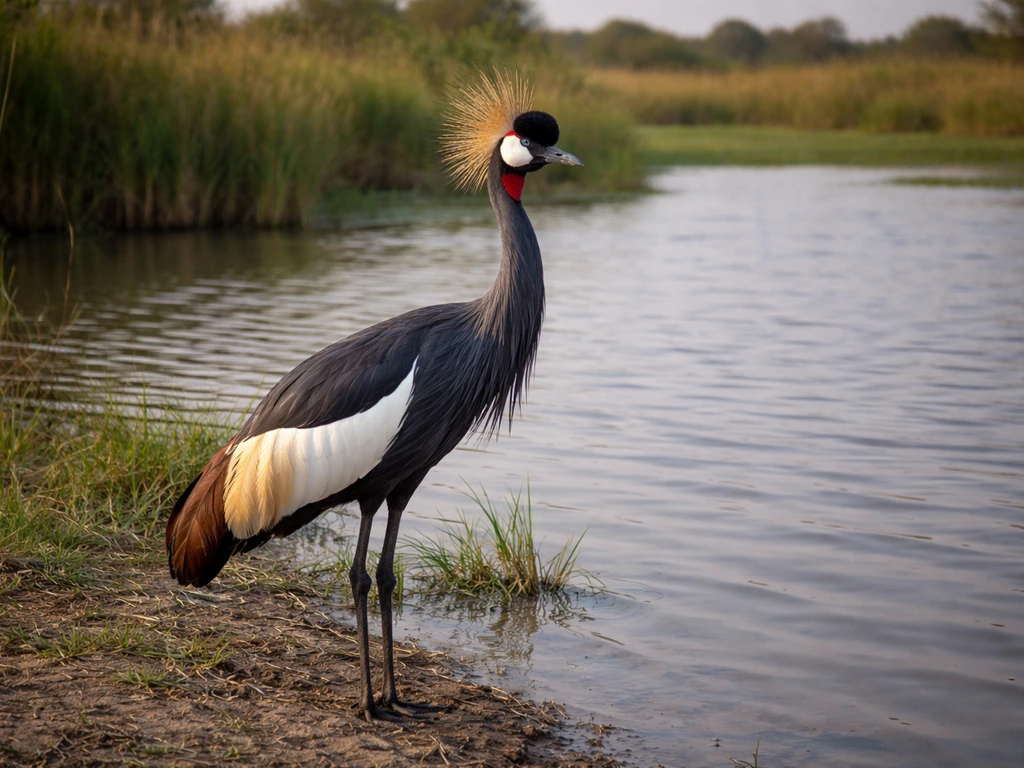
Kenya sits in a region with some very well-known national birds. Uganda's grey crowned crane is formally designated and even appears on the country's flag, giving it a different level of official recognition than Kenya's lilac-breasted roller. Uganda’s national bird is the grey crowned crane. Nigeria and Egypt each have their own distinct choices rooted in very different cultural and historical contexts. Nigeria's national bird is the bronze mannikin. Egypt's national bird is the Egyptian vulture. What makes Kenya's selection stand out is that it's driven almost entirely by natural beauty and wildlife identity rather than historical heraldry or political symbolism, which says a lot about how Kenyans see their country's place in the natural world.
FAQ
Is Kenya’s national bird officially recognized by the government, or is it just a commonly used symbol?
It is widely described as unofficial rather than formally written into law. In practice, you can treat it like the national bird for tourism, media, and wildlife branding, but you should not expect a single public founding date or a clear government proclamation.
Are there any other birds that people sometimes claim are Kenya’s national bird?
Occasionally, people mix up national symbols with popular “national” or “featured” species mentioned in tourism materials. If you see a different bird name online, cross-check against major Kenyan media or well-known wildlife organizations, because Kenya’s lilac-breasted roller is the consistent one.
What is the easiest way to spot the lilac-breasted roller on safari?
Look for exposed perches in open habitats, like dead acacia branches, fence posts, or power lines. Because it hunts from a lookout and launches quickly when prey is spotted, keeping binoculars trained on likely perches is more effective than scanning only for birds in flight.
Does it look different in flight compared to when it is sitting?
Yes. When perched, the folded wing feathers can make the bird look less intensely blue, while in flight the cobalt and turquoise show strongly. If you are struggling to confirm an ID, wait for a takeoff or short flight segment.
How can I tell a juvenile from an adult?
A key clue is the long black tail streamers. Adults have these extended streamers beyond the main tail feathers, while juveniles usually lack them, so a streamer-less bird is more likely young.
When is the best time of year to see the bird’s spectacular courtship display?
The roller’s dramatic side-to-side rolling flight is tied to courtship and breeding conditions. If you are planning a trip specifically for behavior, ask your guide about current breeding season timing in your target reserve, since it can vary by region and year.
What kinds of habitats should I prioritize for higher odds of seeing it?
Focus on open savannah and woodland edges with scattered trees, since it needs elevated lookout points to hunt. Dense forest and heavy wetlands are generally less reliable because the bird is less likely to be visible from exposed perches.
Do I need a specific safari reserve to see it, or is it possible anywhere in Kenya?
It is widespread across Kenya’s open habitats, but some reserves are especially dependable, such as Samburu and multiple parks in the Tsavo region. If you want maximum probability, plan at least one game drive or birding-focused stop in a reserve known for open-country sightings.
What should I do if I cannot confirm the sighting with binoculars or a photo?
If you cannot clearly see the lilac-pink breast and the distinctive blue pattern in flight, avoid locking onto an ID. Ask your guide to reposition for a takeoff view, because that combination of lilac chest plus intense blue in flight is one of the most reliable confirmation cues.
Is “national bird day” an official Kenyan public holiday, and should I plan travel around it?
The bird is used in National Bird Day style observances that promote conservation messaging, but that does not necessarily mean it is a nationwide, government-level holiday that changes park operations. If you want to plan around events, confirm locally with your lodge or guide whether there are organized birding activities in your specific reserve.
Next Article
What Is the National Bird of Nigeria? Meaning and Facts
Find Nigeria’s national bird, plus the symbolism and cultural meaning behind choosing that species.