
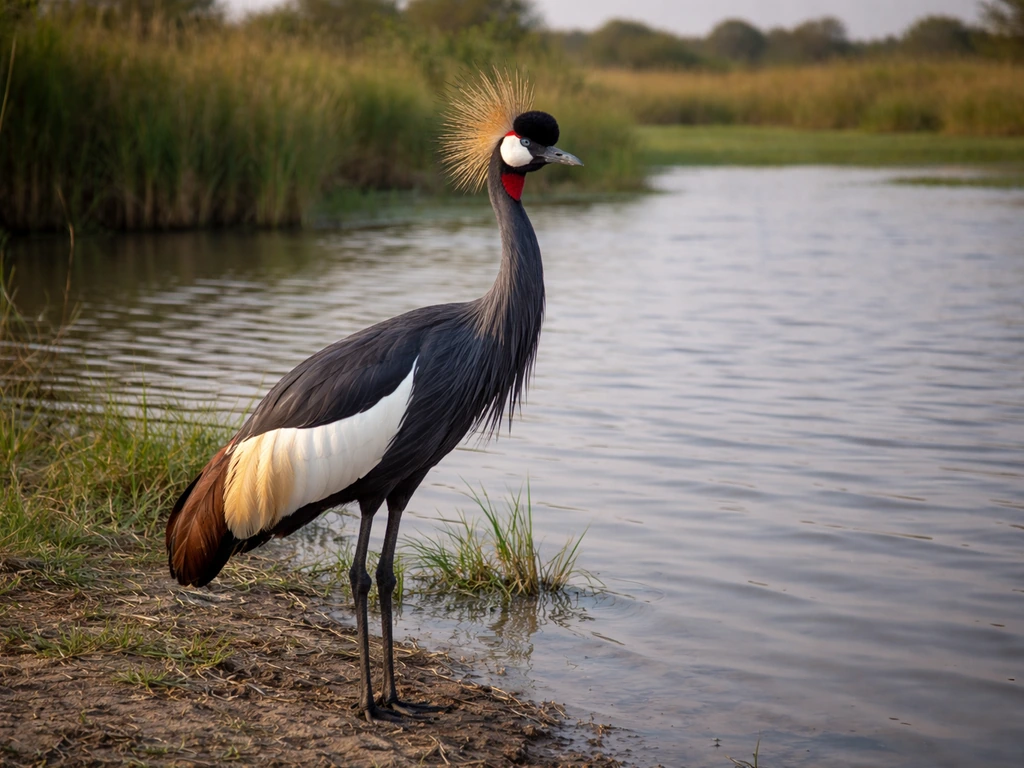
Nigeria's national bird is the black crowned crane, scientific name Balearica pavonina. It's an elegant, distinctive bird with dark slate-grey to black plumage and a striking crown of stiff golden feathers on top of its head. The species is officially recognized as Nigeria's national bird, and its image has even been engraved on Nigerian coins.
What Is the National Bird of Nigeria? Meaning and Facts

Marcus Chen
23 Apr 2026
Confirming the national symbol bird of Nigeria
There's a genuine point of confusion worth addressing upfront. If you search around, you'll find some sources (including a Wikipedia page on Nigerian national symbols) listing the eagle as Nigeria's national bird, pointing to its prominent place on the Nigerian coat of arms. The eagle on that coat of arms does symbolize strength, pride, and dignity, and it's undeniably an important national symbol.
However, the specifically designated national bird, the species that holds that official title, is the black crowned crane (Balearica pavonina). This is confirmed by WorldAtlas, which uses the phrase 'officially recognized national bird,' by Wikipedia's species entry for the black crowned crane, and by academic and conservation documents including a 1996 African Crane and Wetland Workshop paper that explicitly names it as Nigeria's national bird and notes its image on coins. A CITES document (AC24 Inf. 4) also addresses the black crowned crane specifically within a Nigeria national-bird context. The eagle is a coat-of-arms symbol; the crowned crane is the designated national bird.
The history and cultural meaning behind the choice
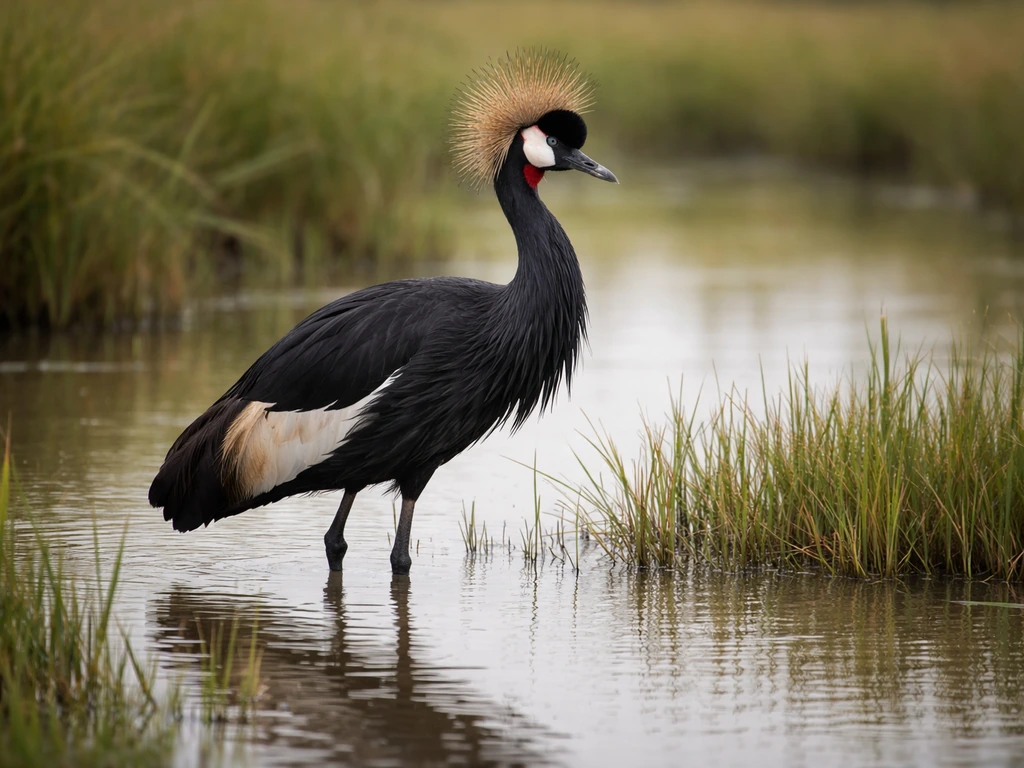
The black crowned crane is native to the wetlands and savannas of sub-Saharan West Africa, and Nigeria sits squarely within its natural range. The Maryland Zoo describes its distribution as running 'from Senegal east to Lake Chad, and south to Sierra Leone, Nigeria, and Northern Cameroon,' so this isn't an imported or symbolic choice disconnected from the landscape. The bird genuinely belongs to Nigeria's ecosystems, particularly the sudano-sahelian wetlands of northern Nigeria.
Across sub-Saharan Africa, crowned cranes have carried cultural weight for centuries. Their graceful appearance, distinctive crown, and relatively calm demeanor made them stand out in local traditions and folklore. The decision to mint the bird's image onto coins reflects how deeply embedded the species was in the national consciousness, not just a modern branding exercise but a recognition of a bird that was already meaningful to Nigerian communities.
What the black crowned crane symbolizes for Nigeria
The black crowned crane is widely regarded as a symbol of peace. That symbolism carries real weight for a country as large and diverse as Nigeria, where peace and unity across many ethnic and regional groups is a central aspiration. A bird known for its composed bearing and elegant presence is a fitting choice for that message.
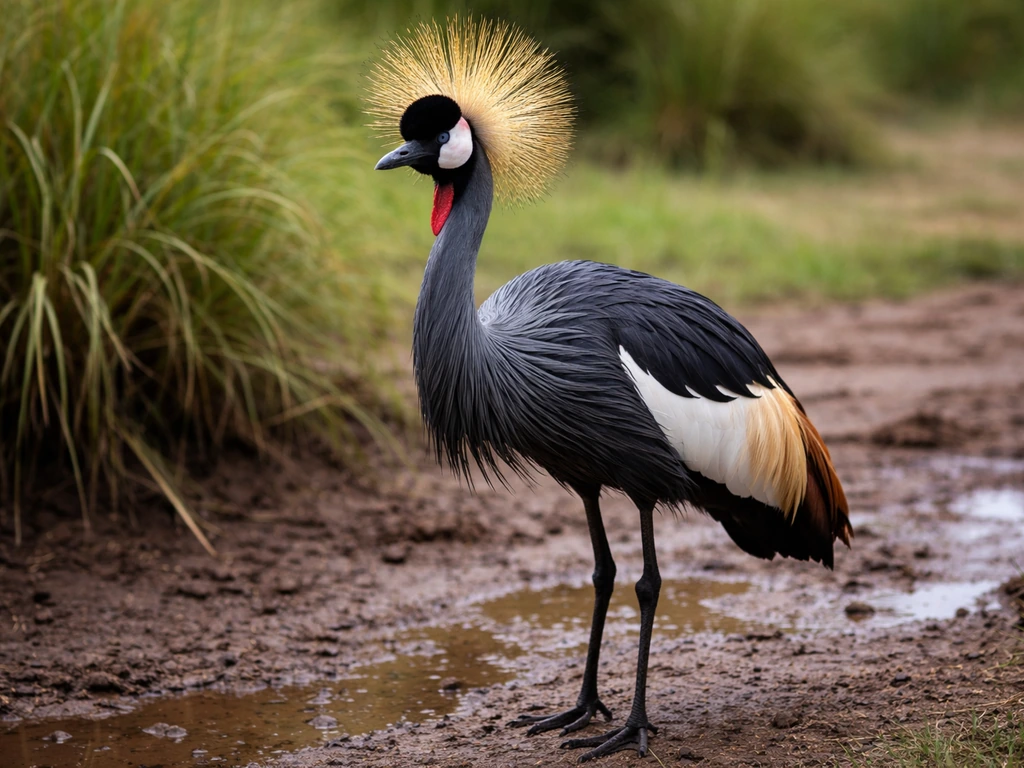
The physical traits of the bird also lend themselves naturally to symbolism. Its golden crown suggests royalty and dignity. The contrast between its dark body and bright golden headpiece is visually arresting and unmistakable, qualities that tend to make for strong national symbols. The International Crane Foundation describes adults as having a black body, white wings with gold and brown variation, and a small red gular sac, making the species one of the most visually distinctive cranes in Africa.
There's also an ecological dimension. The crane's dependence on shallow wetlands and its presence in savanna and grassland environments connects it to the landscapes that define much of Nigeria's geography. Choosing a bird that lives in and depends on the country's own land creates a more authentic symbol than one that's purely abstract.
Quick facts about Nigeria's national bird
| Detail | Information |
|---|---|
| Common name | Black crowned crane |
| Scientific name | Balearica pavonina |
| Subspecies (relevant to Nigeria) | B. p. pavonina (West African Crowned Crane) |
| Key physical trait | Stiff golden feathers forming a crown on the head |
| Body plumage | Dark slate-grey to black, with white and gold wing variation |
| Symbolic meaning | Peace, dignity, and grace |
| Natural habitat in Nigeria | Sudano-sahelian wetlands of northern Nigeria; savanna and grassland |
| Broader range | Senegal east to Lake Chad; south to Sierra Leone, Nigeria, and Northern Cameroon |
| Conservation status | Endangered (IUCN) |
| Notable cultural marker | Image engraved on Nigerian coins |
Where to verify this and what to look at next
If you want to cross-check this answer yourself, three sources are worth bookmarking. WorldAtlas uses the phrase 'officially recognized national bird' and spells out the full scientific name. The Wikipedia entry for the black crowned crane includes the direct sentence 'The black crowned crane is the national bird of Nigeria.' And if you want something from a scientific or conservation angle, the CITES documentation on Balearica pavonina discusses the species specifically in a Nigeria context.
For deeper reading on the bird's biology and identification, the International Crane Foundation's species page covers traits, ecology, and subspecies distinctions in detail. The subspecies to focus on for Nigeria is B. p. pavonina, the West African Crowned Crane, as opposed to B. p. ceciliae, the Sudan Crowned Crane.
If you're exploring national birds across the African continent more broadly, Nigeria's crowned crane makes for an interesting comparison with other choices in the region. Uganda, for example, has its own crane connection, and countries like Kenya, Egypt, and Morocco each tell a different story through their chosen national birds. Uganda's national bird is often asked about, and it has a distinctive species that represents the country Uganda, for example, has its own crane connection. If you are also looking at Morocco, its national bird is the …. Kenya’s national bird is the kori bustard. Egypt's national bird is a separate question, and the correct answer depends on the official symbol used in Egypt. Each choice reflects local ecology, cultural history, and national identity in its own way, and the patterns across Africa are genuinely fascinating to trace.
FAQ
Why do some people say Nigeria’s national bird is an eagle?
The eagle appears on Nigeria’s coat of arms, where it functions as a national emblem, but it is not the same thing as the officially designated national bird species. A common mix-up happens when people treat any major symbol as the national bird, but the crane is the specific species named as the national bird.
What if I see different crowned crane subspecies mentioned for Nigeria?
For Nigeria, the relevant subspecies to focus on is Balearica pavonina pavonina (West African crowned crane). The species has other subspecies (for example, B. p. ceciliae), and confusing them can lead to incorrect claims about “Nigeria’s” specific bird population.
Is Nigeria’s national bird the same as its national animal or coat-of-arms bird?
No. The national bird is a designated animal species, while the coat of arms uses figures that symbolize values like pride and strength. They are related ideas, but they come from different official symbolism categories.
Is the black crowned crane native to Nigeria, or was it chosen only for symbolism?
It is native to Nigeria within its natural range, particularly wetlands and savanna regions, including northern Nigeria’s sudano-sahelian wetlands. That ecological match is one reason the crowned crane can be considered an authentic national symbol, not an imported or purely abstract choice.
Does Nigeria have a separate national bird for different states or regions?
Typically no. National birds are national-level designations, not state-level symbols, so you should expect the same species to be referenced for the entire country rather than different birds per region.
What should I check if I want to verify the answer reliably online?
Look for pages that explicitly say “national bird of Nigeria” in the context of Balearica pavonina, and confirm they use the scientific name. If a source only discusses the eagle on the coat of arms, it likely relates to an emblem, not the designated national bird species.
Is the bird’s coin image exactly the same species as the black crowned crane?
In the Nigeria context, the coin imagery is associated with the black crowned crane designation. However, for strict accuracy, compare the features shown (especially the crown) and confirm the source states Balearica pavonina rather than only describing a generic crane.
What’s the quickest way to distinguish the black crowned crane from other cranes?
The standout feature is the stiff golden crown on the head, paired with a dark body and contrasting wing coloration. If an image or description lacks the golden crown, it may not be the black crowned crane being referenced.
Why is the peace symbolism often repeated for this bird?
The crowned crane’s composed, calm appearance supports the peace association in cultural interpretations. As a practical check, note whether a claim ties the symbolism to the bird’s national symbolism context (peace and unity messaging), not just general crane behavior.