The Philippines' national bird: a direct answer
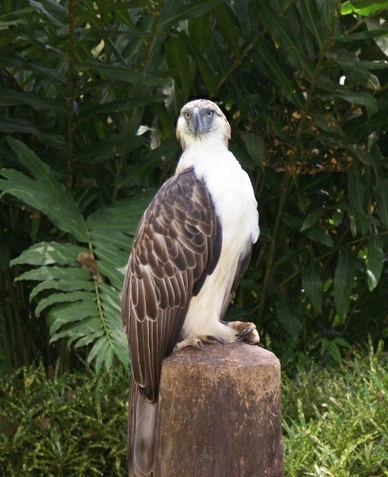
The national bird of the Philippines is the Philippine Eagle (Pithecophaga jefferyi). It was officially designated by Proclamation No. 615, signed by President Fidel V. Ramos on July 4, 1995. That proclamation explicitly declares the Philippine Eagle as the National Bird of the Philippines and directs government offices and agencies to support its conservation, protection, preservation, and management. If you need a single authoritative source to cite, that proclamation is it. The PDF of Proclamation No. 615 (1995) on Lawphil, titled “Declaring the Philippine Eagle as the National Bird of the Philippines,” provides the official legal basis for the designation.
What makes the designation official
Proclamation No. 615 is the legal foundation for the Philippine Eagle's status as a national symbol. The text lays out the rationale clearly: the bird offers ecological, aesthetic, educational, historical, recreational, and scientific value to the Philippines and its people. That multi-value framing was deliberate. It wasn't just about having a cool-looking bird on a flag or seal; it was about anchoring conservation work to national identity.
The proclamation is available through the Supreme Court E-Library and mirrored on Lawphil, both of which are standard references for Philippine legal texts. The National Commission for Culture and the Arts (NCCA) also recognizes the Philippine Eagle as the national bird under the scientific name Pithecophaga jefferyi, framing it as an endangered species unique to the Philippines. Independent academic and ornithology sources, from Britannica to the Cornell Lab's eBird and the University of Michigan's Animal Diversity Web, all confirm the same designation.
How the bird got its name, then its national status
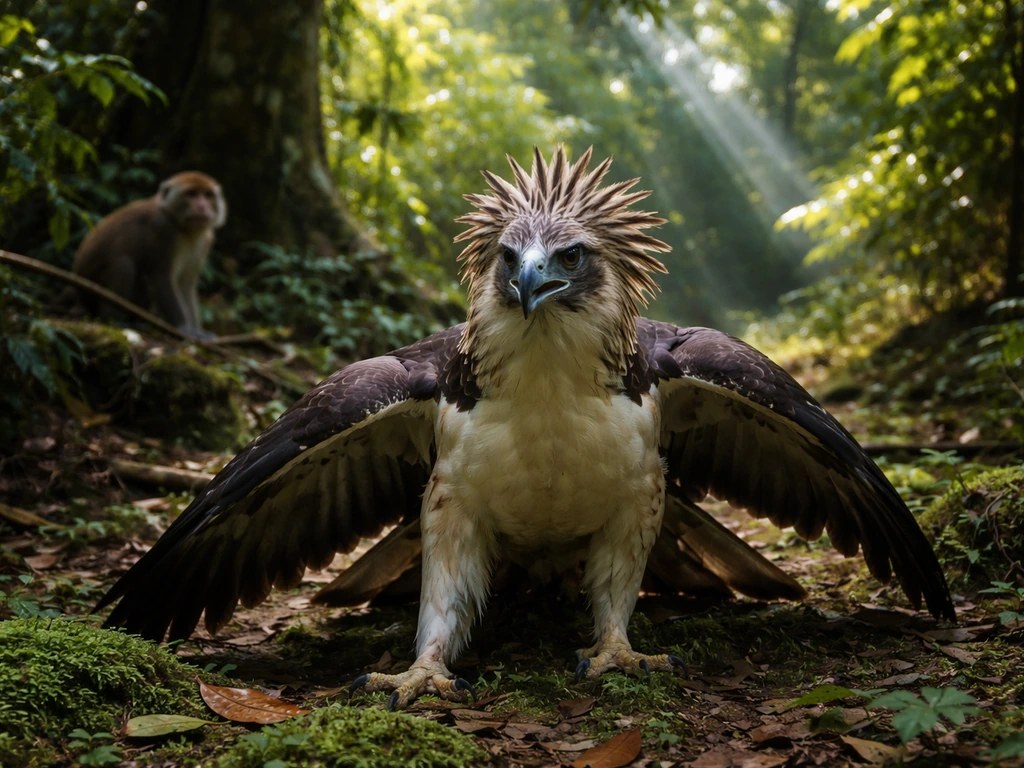
The 1995 proclamation didn't come out of nowhere. There's an earlier chapter worth knowing. For most of the 20th century, this bird was widely called the "monkey-eating eagle," a name based on early observations of it preying on primates. That name stuck internationally even as it became less accurate (the eagle actually has a broad diet and doesn't exclusively eat monkeys).
On May 8, 1978, President Ferdinand Marcos signed Proclamation No. 1732, which officially renamed the bird from the "monkey-eating eagle" to the "Philippine eagle." The proclamation states that henceforth the bird shall be referred to by that name. It was a practical and symbolic move: the new name tied the species directly to national identity and set the stage for the full national bird designation that would follow 17 years later.
Then in 1995, Ramos took the next step with Proclamation No. 615, formalizing the Philippine Eagle as the country's official national bird. Together, the two proclamations trace a clear arc: rename the bird to reflect national pride, then elevate it to the country's highest avian symbol.
What the Philippine Eagle means to Filipino culture
The Philippine Eagle isn't just a conservation mascot. It carries genuine symbolic weight in Filipino culture. The bird is seen as a symbol of strength, freedom, and the uniqueness of the Philippine natural world. Because it is endemic, found nowhere else on Earth, it functions as a stand-in for the islands themselves: irreplaceable, geographically distinct, and worth protecting.
That symbolism shows up in everyday life. The Philippine Eagle has appeared on Philippine currency and commemorative coins and banknotes over the years. It features in school curricula, and conservation campaigns around the bird regularly draw on national pride as a motivator. The Philippine Eagle Foundation, which manages conservation and captive breeding programs, runs a dedicated Conservation Education effort specifically to connect the public, including students and communities, to the bird's mission.
There's also a regional dimension. The eagle is especially prominent in Mindanao, where most of the remaining population lives. In Davao City, the Philippine Eagle Center is the primary place where the public can see the bird up close, and it has become a landmark tied to local and national identity alike. For context on how other Southeast Asian nations have approached their own national bird choices, it's worth looking at what the national bird of Malaysia represents, as that region shares many of the same conservation pressures and symbolic traditions.
Identifying the Philippine Eagle and where to find it
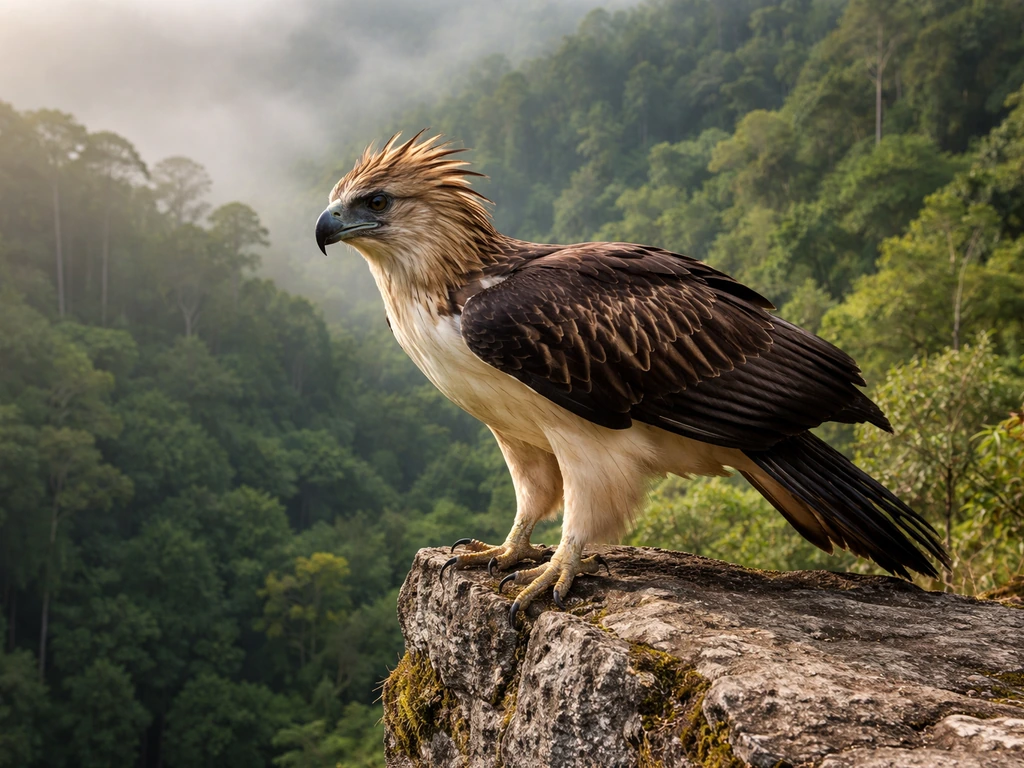
The Philippine Eagle is one of the largest eagles in the world, and it's unmistakable once you know what to look for. Here are the key identification traits and habitat facts:
- Scientific name: Pithecophaga jefferyi
- Size: Among the largest and heaviest eagles on Earth, with a wingspan that can exceed 2 meters
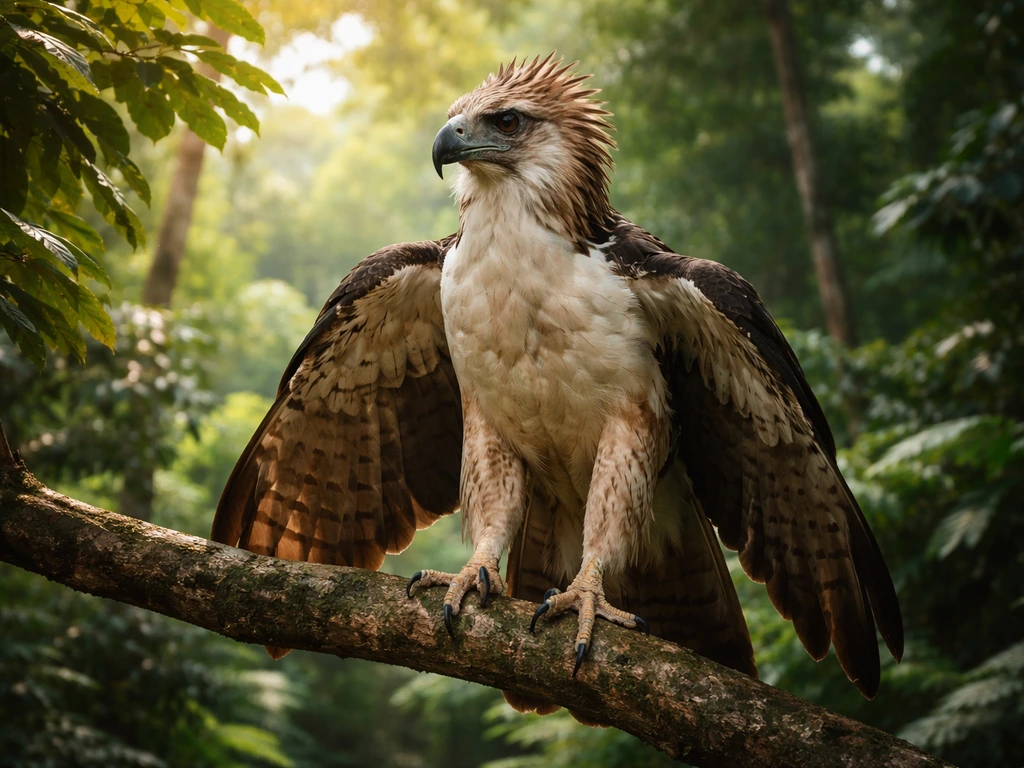
- Plumage: Brown and white coloring with a distinctive shaggy crest of long brown feathers around the face, giving it a lion-like or mane-like appearance
- Eyes: Striking blue-gray eyes that contribute to its intense, almost human-like facial expression
- Habitat: Primary montane rainforest, strongly associated with old-growth forest; does not thrive in degraded or secondary forest
- Range: Endemic to four Philippine islands: Luzon, Samar, Leyte, and Mindanao; the largest population is on Mindanao
- Diet: Broad, including flying lemurs (colugos), large bats, monitor lizards, and occasionally monkeys, despite the old name
- Conservation status: Critically Endangered, with habitat loss from deforestation being the primary threat
If you want to observe the species in a real habitat context, the Mount Apo area in Mindanao is a known stronghold, and a Philippine Eagle Cam has been set up in that region, letting remote viewers watch nesting and behavior in near-real time. For in-person visits, the Philippine Eagle Center in Davao is the most accessible option, combining education with conservation.
How it compares to other Southeast Asian national birds
The Philippine Eagle's designation reflects a broader pattern across Southeast Asia, where countries often choose birds that are either endemic, ecologically significant, or culturally embedded. Here's a quick look at how the Philippines' choice stacks up against its neighbors:
| Country | National Bird | Basis for Choice | Conservation Status |
|---|
| Philippines | Philippine Eagle (Pithecophaga jefferyi) | Endemic apex predator, proclaimed 1995 | Critically Endangered |
| Malaysia | Rhinoceros Hornbill (Buceros rhinoceros) | Cultural and ecological prominence | Vulnerable |
| Indonesia | Javan Hawk-Eagle / Garuda (mythical) | National mythology and sovereignty symbol | Varies |
| Singapore | Crimson Sunbird (Aethopyga siparaja) | Common native species, vibrant coloring | Least Concern |
| China | Red-crowned Crane (Grus japonensis) | Symbol of longevity and good fortune | Vulnerable |
The Philippine Eagle stands out in this group for being Critically Endangered, which makes it unusual as a national symbol. Britannica also describes the Philippine eagle as blank" rel="noopener noreferrer">critically endangered and inhabiting mountainous rainforests on Luzon, Samar, Leyte, and Mindanao. Most countries opt for birds that are relatively common or stable. The Philippines' choice reflects a deliberate decision to spotlight a species under threat and use national status as a conservation tool. You can explore a similar tension in Indonesia's national bird selection, where mythology and ecology intersect in an equally interesting way.
If you're curious how island nations in the region handle national bird choices more broadly, Singapore's national bird makes for an interesting contrast: a small, vibrant, common bird chosen to reflect everyday natural life rather than grand symbolism.
Stories and details that help it stick
A few facts about the Philippine Eagle tend to genuinely surprise people. First, the "monkey-eating" name wasn't totally made up. Early Western naturalists did observe the bird taking primates, but it turned out flying lemurs (colugos) make up the bulk of its diet. The old name latched on internationally and took a presidential proclamation to officially dislodge.
Second, captive breeding has been part of the conservation strategy for decades. The Philippine Eagle Foundation has worked on a Wildlife Loan Agreement and coordinated movement of captive-bred eagles to facilities abroad as part of international conservation management. It's a reminder that protecting an endemic species often requires international cooperation even when the bird is a point of national pride.
Third, the eagle mates for life and raises only one chick every two years, which makes population recovery painfully slow. That biological reality is part of why conservation urgency around the species is so high, and why the 1995 national bird proclamation explicitly called on government agencies to get involved rather than leaving it to NGOs alone.
For readers who want to trace how neighboring countries with shared geography and overlapping avifauna made their own national bird decisions, Taiwan's national bird offers an interesting parallel case of island-specific symbolism, and China's national bird shows how continental-scale countries approach the same question with very different cultural priorities.
Where to go from here
If you're verifying this for school, research, or just personal knowledge: the authoritative source is Proclamation No. 615 (July 4, 1995), signed by President Fidel V. Ramos. It is publicly available through the Philippine Supreme Court E-Library and Lawphil. The NCCA also documents the designation on its official cultural heritage pages. Those three sources together are more than sufficient for any citation.
If you want to go deeper into the bird itself, the Philippine Eagle Foundation's website is the most current source on population estimates, conservation programs, and how to support or visit the Philippine Eagle Center in Davao. For birding and range data, eBird's species account for Pithecophaga jefferyi includes distribution maps and sighting records that give a real-time picture of where the bird has been documented across its four-island range.