
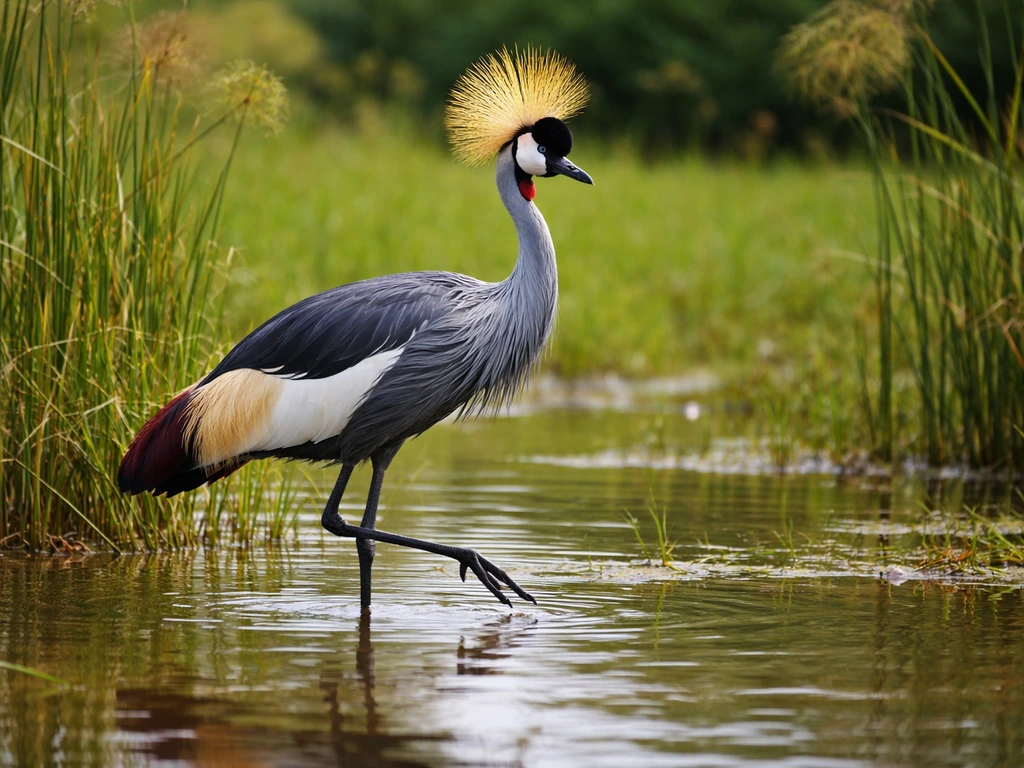
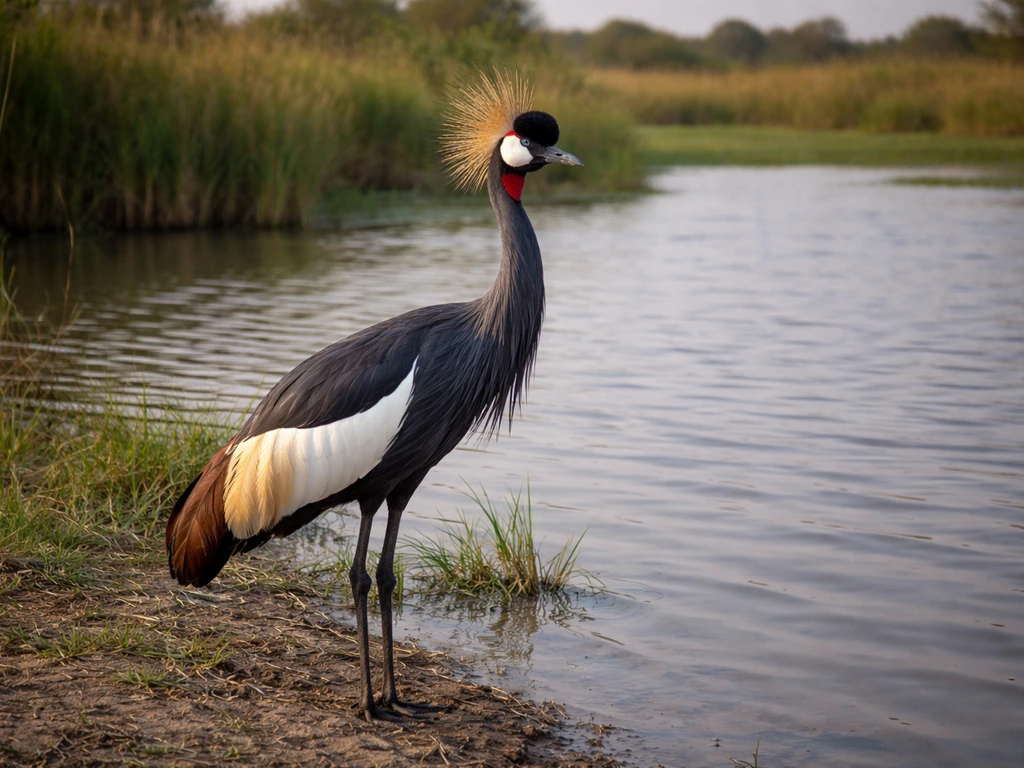
Uganda's national bird is the Grey Crowned Crane, most commonly called the Crested Crane inside Uganda. It's the same bird, just two names for one species: Balearica regulorum gibbericeps is the scientific name for the East African subspecies that Uganda officially recognizes.
What Is the National Bird of Uganda? Meaning and Facts

Marcus Chen
3 May 2026
Uganda's National Bird: The Crested Crane
If you search 'crested crane Uganda' and 'grey crowned crane Uganda,' you'll find both names pointing to the same bird. The Ugandan government's official materials, including the national-symbol pages from Uganda's High Commission, use 'Crested Crane' as the preferred common name. International ornithological sources tend to use 'Grey Crowned Crane' or 'Gray Crowned Crane' (with the American spelling). Either way, you're looking at the same species: a tall, elegant wading bird with one of the most recognizable heads in the bird world.
What the Crested Crane Looks Like and Where to Find It
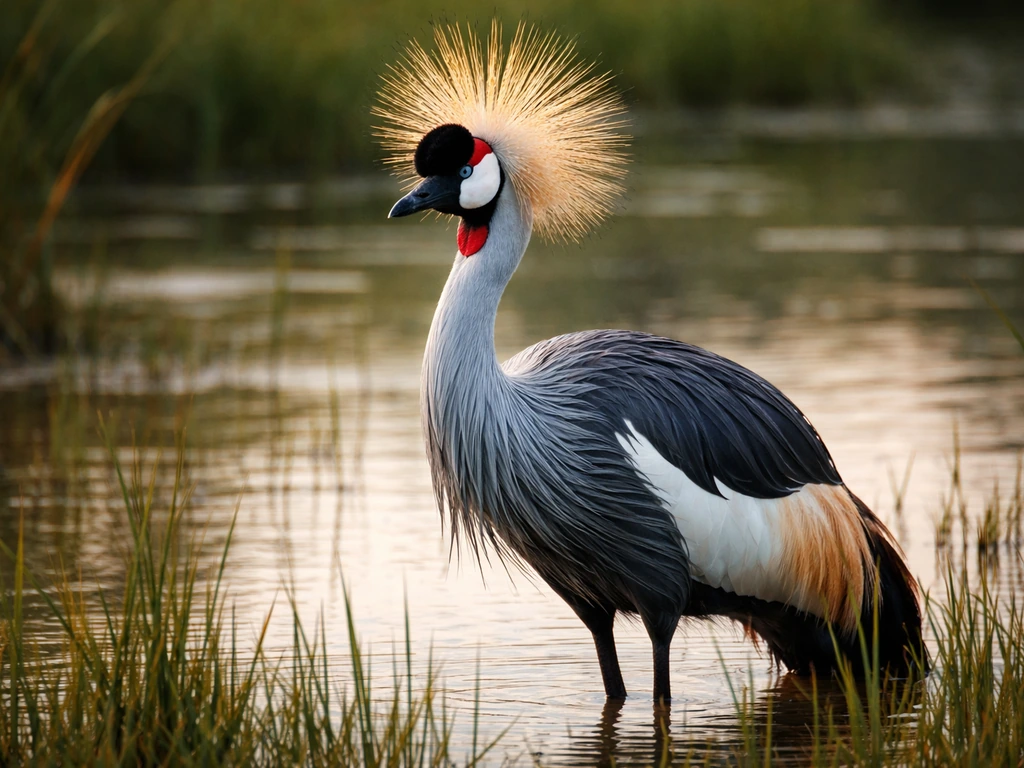
The Crested Crane stands roughly 3.3 feet (about 1 metre) tall with a wingspan that can reach over 6 feet. Its most striking feature is the stiff golden crown of feathers radiating from the top of its head, which gives it both its common names. The face is a patchwork of red, white, and red patches of bare skin, and the body plumage blends grey, white, and chestnut tones. When you see one in person, the golden crown catches the light in a way that makes the bird look almost ceremonial.
In Uganda, you'll find them in wetlands, marshes, open grasslands, and the edges of cultivated land. Lake Victoria's shoreline, the Kazinga Channel in Queen Elizabeth National Park, and Murchison Falls National Park are reliable places to spot them. They're not shy birds and are often seen in pairs or small groups, sometimes near farming areas where they forage for seeds, insects, and small vertebrates.
What the Crested Crane Symbolizes for Uganda
The Crested Crane carries a lot of symbolic weight in Uganda. It represents peace, longevity, and grace, qualities that Ugandans have long associated with the bird's calm, deliberate movement and its tendency to mate for life. The crane is not a bird of prey; it doesn't project power through aggression. Instead, it embodies a kind of dignified, grounded strength, which made it an appealing symbol for a newly independent nation wanting to project stability and harmony.
In traditional Ugandan culture, the crane has been admired for generations across multiple ethnic groups. Its dancing display, where pairs bow, jump, and spread their wings in coordinated movements, has inspired traditional dance forms. That cultural familiarity made the Crested Crane a natural choice for a national symbol that could resonate across Uganda's diverse communities.
How and When the Crested Crane Became Uganda's National Bird
The Crested Crane's status as Uganda's national bird is directly tied to independence. Uganda gained independence from British rule on 9 October 1962, and the new national flag adopted that same day featured the bird prominently. Under the National Flag and Armorial Ensigns Act of 1962, the flag's design was formally codified: a white disc at the centre of the flag depicts the Crested Crane facing the hoist side. Britannica notes that a crested crane was used as a badge in official British-era banners and became the chief national symbol featured in the flag established in May 1962 ahead of independence on 9 October 1962 a white disc at the centre of the flag depicts the Crested Crane facing the hoist side. That legal specification locked in the bird's national status from day one of Uganda's independence.
The Crested Crane also appears as one of the supporters on Uganda's coat of arms, the official state emblem used on government documents and seals. Having the bird appear on both the flag and the coat of arms simultaneously gave it an unusually prominent double role as a national symbol, reinforcing its importance in the visual identity of the state.
The Crested Crane wasn't a completely new choice in 1962. It had already appeared on the flag of the British Protectorate of Uganda before independence. When Uganda chose its own symbols, keeping and elevating the crane was a deliberate decision that connected the new nation's identity to a bird already embedded in the landscape and culture.
Interesting Facts Worth Remembering
- The Crested Crane is the only crane species that can roost and nest in trees, thanks to a partially developed hind toe that allows it to grip branches. This sets it apart from every other crane on Earth.
- Uganda's subspecies (Balearica regulorum gibbericeps) is sometimes called the East African Crowned Crane. It's one of two subspecies of Grey Crowned Crane, the other being the South African Crowned Crane (Balearica regulorum regulorum).
- The Grey Crowned Crane is listed as Endangered on the IUCN Red List. Population declines from habitat loss and capture for the pet trade make Uganda's role in protecting the species particularly significant.
- Uganda is sometimes nicknamed 'The Pearl of Africa,' a phrase popularized by Winston Churchill after his 1907 visit. The Crested Crane, appearing on the flag, is a key part of that natural heritage identity.
- The crane's golden crown of feathers is not soft like typical bird plumage. The feathers are stiff and bristle-like, radiating outward in a halo pattern that makes the bird instantly recognizable even at a distance.
- Other African nations have chosen birds that project raw power, like Egypt's Eagle or Nigeria's Eagle. Uganda's choice of a crane reflects a different symbolic priority: elegance, peace, and cultural rootedness rather than dominance.
How This Compares to Other African National Birds
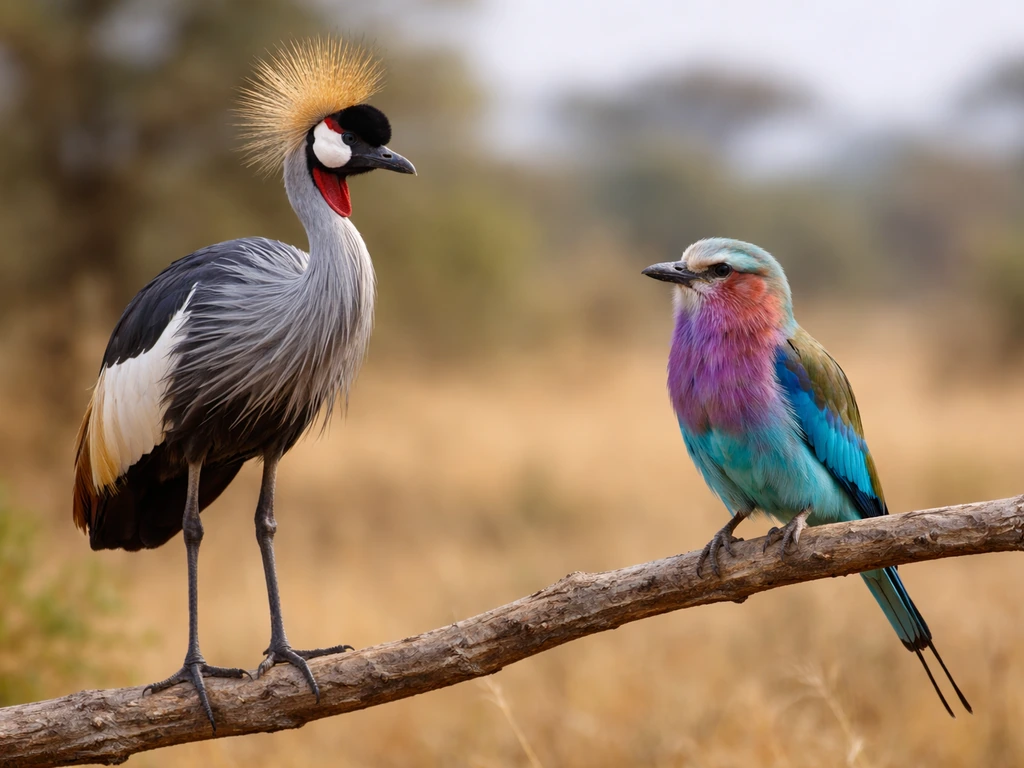
It's worth noting how Uganda's choice stands out in the region. Kenya's national bird is the Lilac-breasted Roller, chosen partly for its vivid colors representing the country's diversity. Uganda's neighbors and other African nations have often chosen raptors or eagles. Uganda's selection of a crane, a bird associated with grace and longevity rather than strength, gives its national symbol a distinctly different character. If you're interested in how other African nations made their choices, looking at the national birds of Kenya, Egypt, Nigeria, and Morocco side by side reveals just how different the reasoning and symbolism can be from country to country. You can also compare it with the national bird of Morocco to see how different countries choose their symbols. For example, the national bird of Nigeria is the Red-winged Pytilia. Egypt's national bird is also featured in many “national bird” comparisons, but Uganda's symbol is the Crested Crane national birds of Kenya, Egypt, Nigeria, and Morocco.
Where to Learn More About the Crested Crane
If you want to go deeper, here are the most reliable places to start:
- The Uganda Wildlife Authority (UWA) website covers the Crested Crane's conservation status in Uganda and lists the national parks where sightings are most reliable. It's the best starting point if you're planning to visit.
- The International Crane Foundation (savingcranes.org) has detailed species profiles on the Grey Crowned Crane, including population data, range maps, and conservation efforts. Their information is well-sourced and regularly updated.
- The IUCN Red List page for Balearica regulorum gives the full conservation assessment, including population trends, threats, and what's being done to protect the bird.
- Uganda's High Commission official website includes a section on national symbols where the Crested Crane is described in the context of the flag and coat of arms, useful if you want the government's own framing.
- The Cornell Lab of Ornithology's Birds of the World platform has an in-depth species account covering behavior, habitat, and identification, worth checking if you want ornithological detail rather than symbolic context.
- For a visual experience, searching 'Grey Crowned Crane Uganda' on the Macaulay Library (part of Cornell Lab) brings up verified photographs and recordings of the bird in the wild.
The Crested Crane is one of those national birds where the symbolism and the natural history reinforce each other in a satisfying way. It's genuinely common in Uganda's landscapes, deeply rooted in cultural tradition, and given formal legal status from the very first day of the country's independence. The IUCN library PDF snippet places Balearica regulorum in the Endangered category. That combination makes it one of the more meaningful national bird stories on the continent.
FAQ
Is Uganda’s national bird also called the Grey Crowned Crane and Crested Crane?
Yes. “Crested Crane” is the common name used in Ugandan official contexts, while “Grey Crowned Crane” is a name more often seen in international ornithology. They refer to the same species and, in Uganda, the same recognized subspecies form.
Are “Grey” and “Gray Crowned Crane” two different birds?
No. “Gray” is the American spelling, while “Grey” is the British spelling. The bird being named stays the same.
Is the national bird of Uganda the same as the crowned cranes found in other East African countries?
It’s related, but Uganda’s designation is specifically tied to the Crested or Grey crowned crane subspecies it recognizes. Neighboring countries can list different crowned crane species or subspecies, so it helps to check the exact scientific name when comparing.
Where is the best place to see the national bird in Uganda if I’m short on time?
If you only have a few stops, focus on wetland-rich areas mentioned in common wildlife itineraries, such as Lake Victoria shorelines, the Kazinga Channel (Queen Elizabeth National Park), and Murchison Falls National Park. These areas combine reliable habitat with frequent sightings.
What habitat should I look for, and what time of day is most promising?
Look for marshes, wetlands, and grassland edges near water or cultivated land, since they forage and often appear in small groups or pairs. Early morning and late afternoon are typically the easiest times for spotting cranes because they are more active around feeding periods.
How can I tell a Crested Crane from similar cranes or wading birds?
The golden, radiating crown is the key field mark, along with the distinctive bare-skin facial patches (red and white) and the overall tall, elegant profile of a wading crane. If you do not see the crown clearly, use the combination of facial pattern and the bird’s upright height and feeding behavior to confirm.
Do Crested Cranes behave like birds of prey or hunt aggressively?
No. They are not raptors, they forage rather than chase prey, and they tend to show calm, deliberate movement. Their courtship displays can be dramatic, but that is different from predatory aggression.
Why was the crane chosen for national symbols at independence?
Beyond being present in Uganda, the crane’s symbolism was aligned with values Uganda wanted to project at independence, and it had already appeared on the earlier protectorate flag. Keeping it created continuity, while formalizing it in new law locked in its national status.
Is the crane shown the same way on Uganda’s flag every time?
The flag design is legally specified to depict a white disc with the Crested Crane facing the hoist side. If you see variations in photos or merchandise, check whether the direction and facing pose match the official depiction.
Next Articles
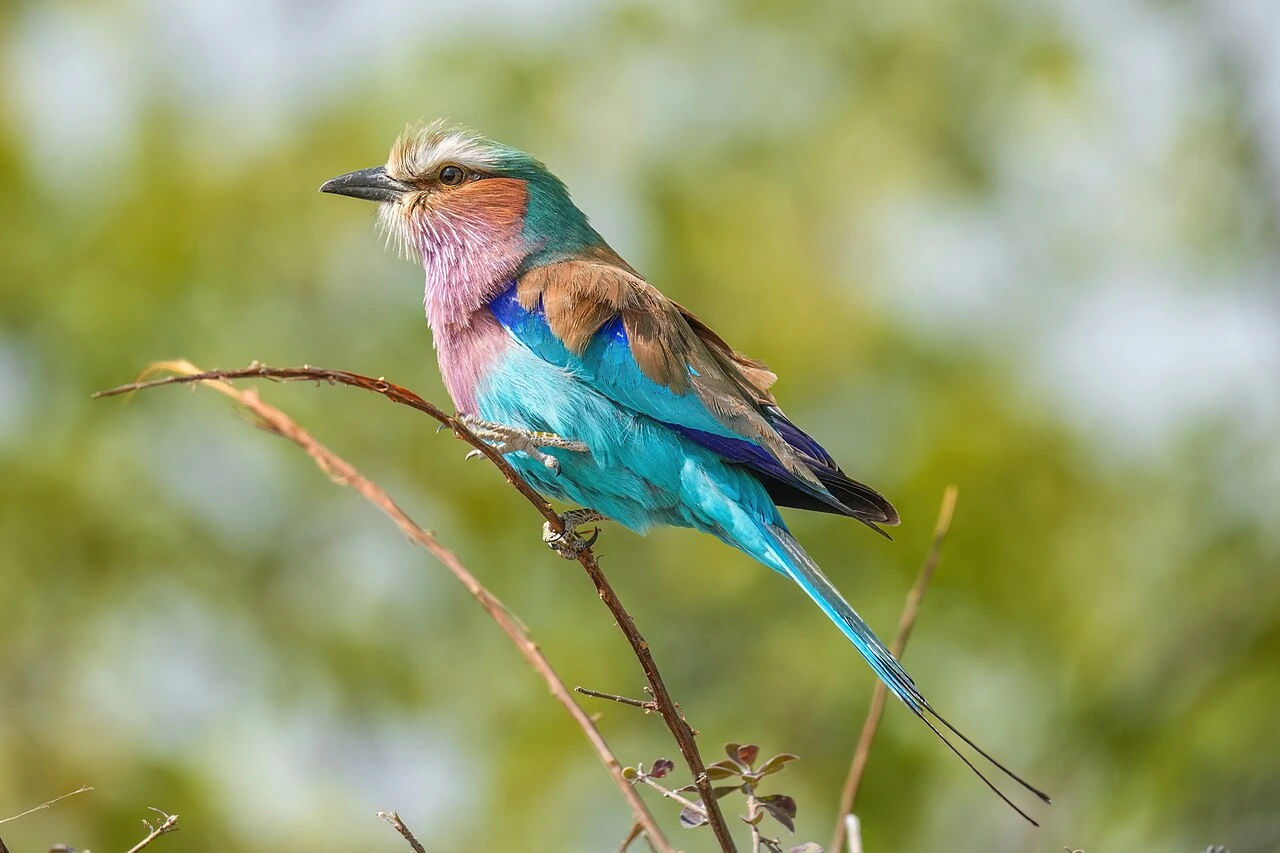
What Is the National Bird of Kenya? Meaning and Facts
Learn Kenya’s national bird, its meaning and history, plus easy ID tips and where to spot it.
What Is the National Bird of Nigeria? Meaning and Facts
Find Nigeria’s national bird, plus the symbolism and cultural meaning behind choosing that species.
What Is the National Bird of Egypt? Meaning and History
Learn Egypt’s national bird, why it was chosen, and the cultural and historical meaning behind the symbol.