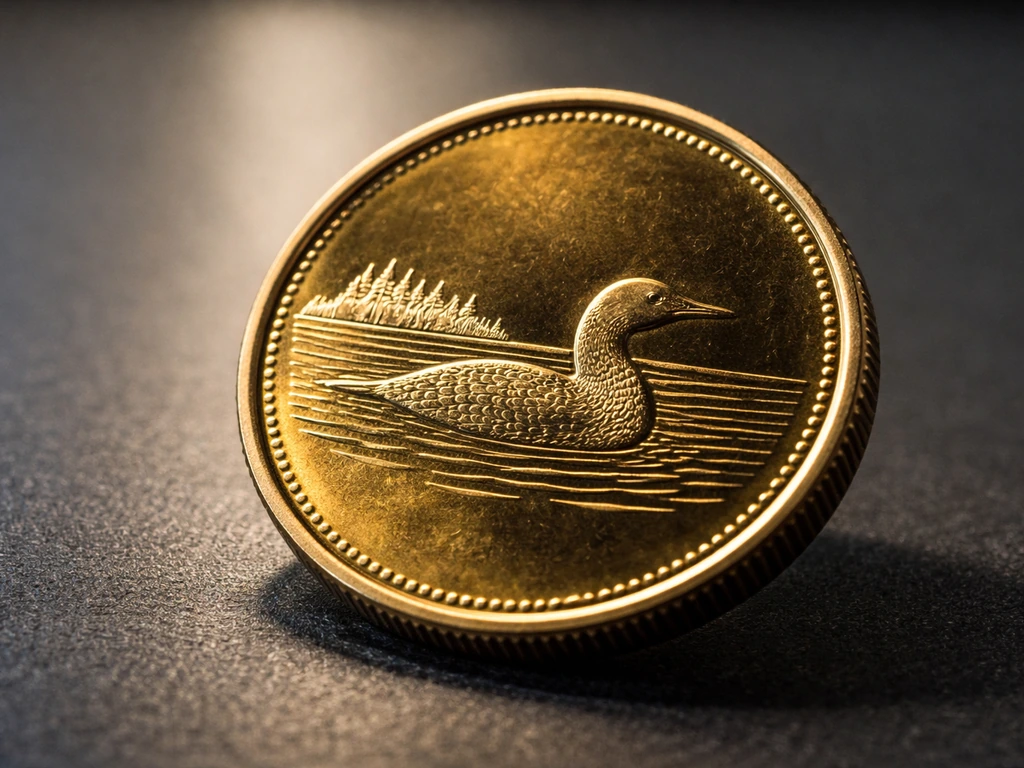
The bird on the Canadian dollar coin is the common loon (Gavia immer). Specifically, it sits on the reverse side of the one-dollar circulation coin, which is why Canadians have called that coin the "loonie" ever since it was introduced in 1987. If you have a Canadian dollar coin in your hand right now, flip it over and you will see a single loon floating on calm water, with a small island and conifers in the background.
What Bird Is on the Canadian Dollar? The National Symbol Explained

Marcus Chen
13 Apr 2026
The bird on the Canadian dollar: your direct answer
The common loon, scientific name Gavia immer, is the bird featured on the Canadian one-dollar coin. The design was created by Canadian artist Robert-Ralph Carmichael and is officially described in Royal Canadian Mint legislation as "a common loon at rest." The coin replaced the one-dollar banknote in 1987, and the loon design was so recognizable that the coin was instantly nicknamed the loonie. That nickname has stuck for nearly 40 years.
If you want to go deeper on Canada's relationship with this bird beyond just the coin, the broader question of what is the national bird of Canada covers the full story of how the loon fits into Canadian identity at a national level.
Where you'll see it: coins vs banknotes
The loon appears most prominently on the one-dollar coin, but it also shows up on Canadian banknotes, depending on which series you are looking at. The Bank of Canada's "Birds of Canada" series (issued from 1986) placed different bird species on the back of each denomination. The Bank of Canada Museum explains that the loon image was originally intended for the $1 banknote, but after the $1 notes were replaced by a coin, the image was later used on the Birds of Canada series $20 note placed different bird species on the back of each denomination. Within that series, the loon appears on the $20 note. So if you are holding a Birds of Canada $20 bill, you are looking at the same species as the one on the loonie.
For people wondering about bird imagery on currency beyond Canada, it is worth knowing that other countries do the same thing. For example, what bird is on the $2 coin is a common question about Australian currency, where a completely different bird appears. The pattern of celebrating native wildlife on coins and notes is a global one.
The key distinction for Canadian currency is this: on coins, the loon has been the standard reverse design of the one-dollar coin since 1987. On banknotes, the loon is specific to the Birds of Canada series and appears on the $20 denomination within that series, not on every Canadian note ever printed.
What exactly is a common loon
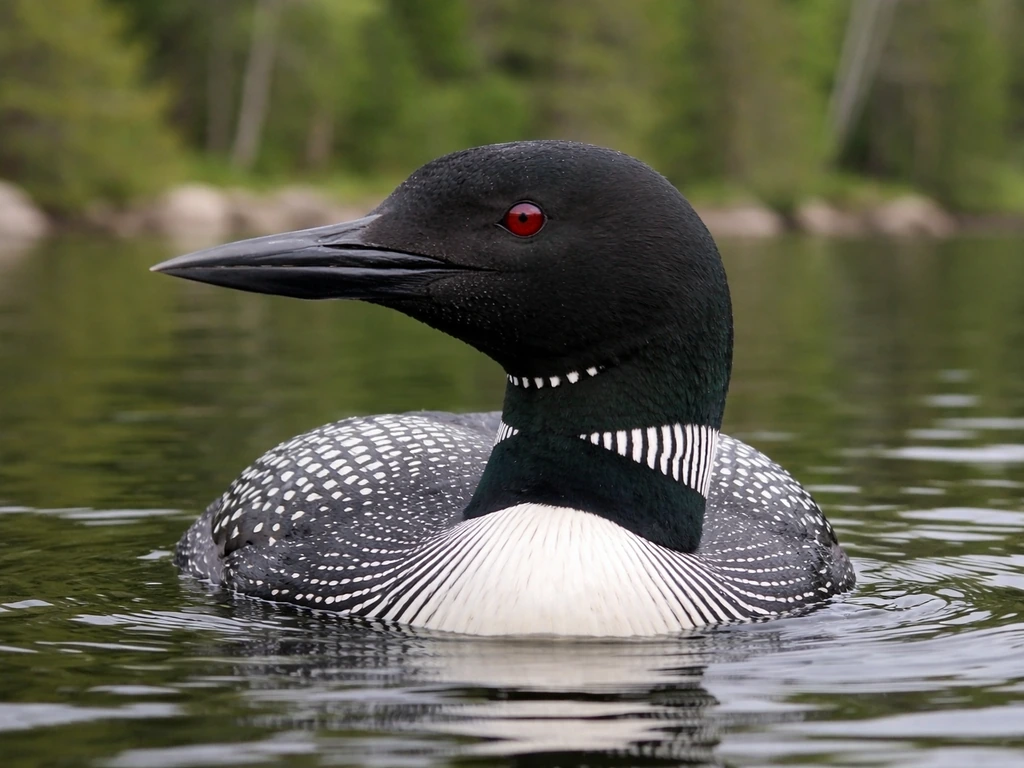
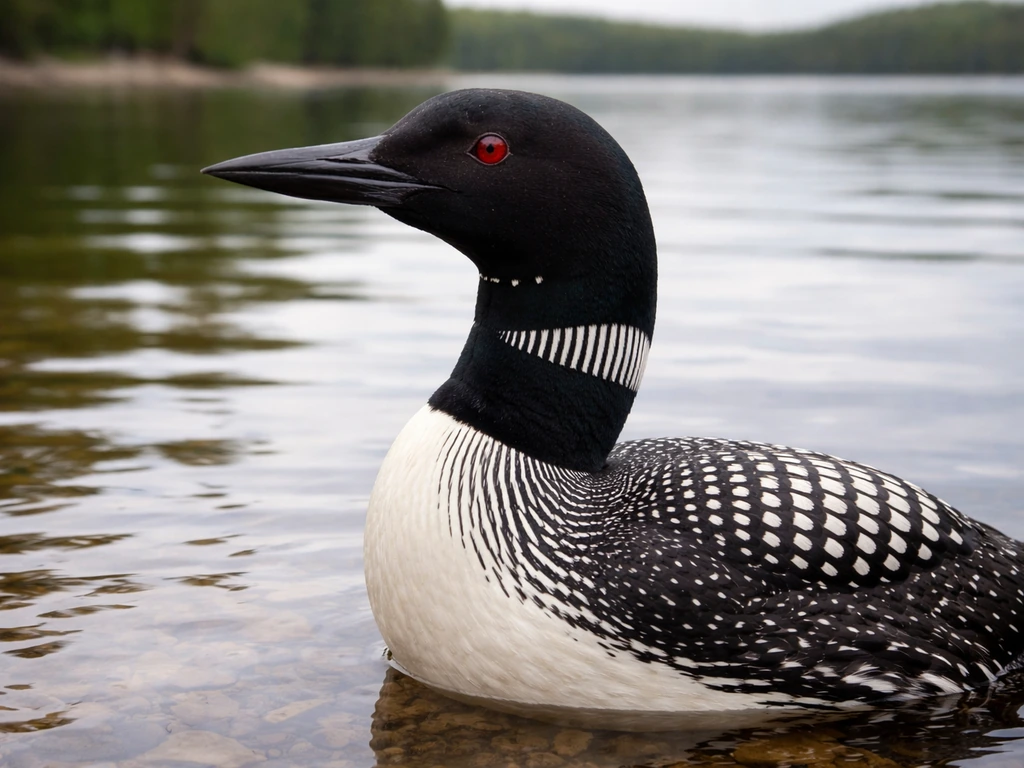
The common loon (Gavia immer) is a large diving bird that breeds across Canada and the northern United States, then winters along the coasts. Adults in breeding plumage have a striking black-and-white checkered back, a glossy black head, and a distinctive red eye. They are built for diving, not walking on land, which is why you almost always see them on water.
The loon's call is one of the most recognizable sounds in the Canadian wilderness: a haunting, echoing wail that carries across lakes. That call is part of why the bird carries so much emotional weight in Canadian culture. The Royal Canadian Mint describes the loon as "widely considered a symbol of the tranquility and serenity of the northern wilderness," which captures exactly why it ended up on the country's most-handled coin.
There has been some public debate over the years about which bird best represents Canada. If you have ever heard the argument that another species should hold that title, the article on whether the loon is the national bird of Canada breaks down the distinction between an official national designation and the loon's cultural status.
Why Canada chose the loon: symbolism and selection history
The loon was not chosen for the dollar coin through a formal national-bird competition. The Royal Canadian Mint selected it as part of a redesign when the one-dollar banknote was being retired. The coin needed a distinctly Canadian image, and the loon fit perfectly: it is found from coast to coast across Canada, it is immediately recognizable, and it carries strong associations with the country's vast lake-filled wilderness.
The 1987 introduction of the loonie actually happened under slightly chaotic circumstances. The original intended design for the new coin was a voyageur design, but the dies were lost in transit, so the Royal Canadian Mint quickly moved forward with the loon design instead. That last-minute decision turned out to be one of the most beloved choices in Canadian numismatic history.
The loon's place in Canadian culture is deep, but it is worth noting that the Canada goose and the blue jay are both birds that Canadians feel strongly about too. The debate around whether the blue jay is Canada's national bird gives a good sense of how passionate Canadians are about their avian symbols. Despite the competition, the loon consistently comes out as the bird most associated with Canadian identity in everyday life.
Design details: what the bird looks like on the coin and note
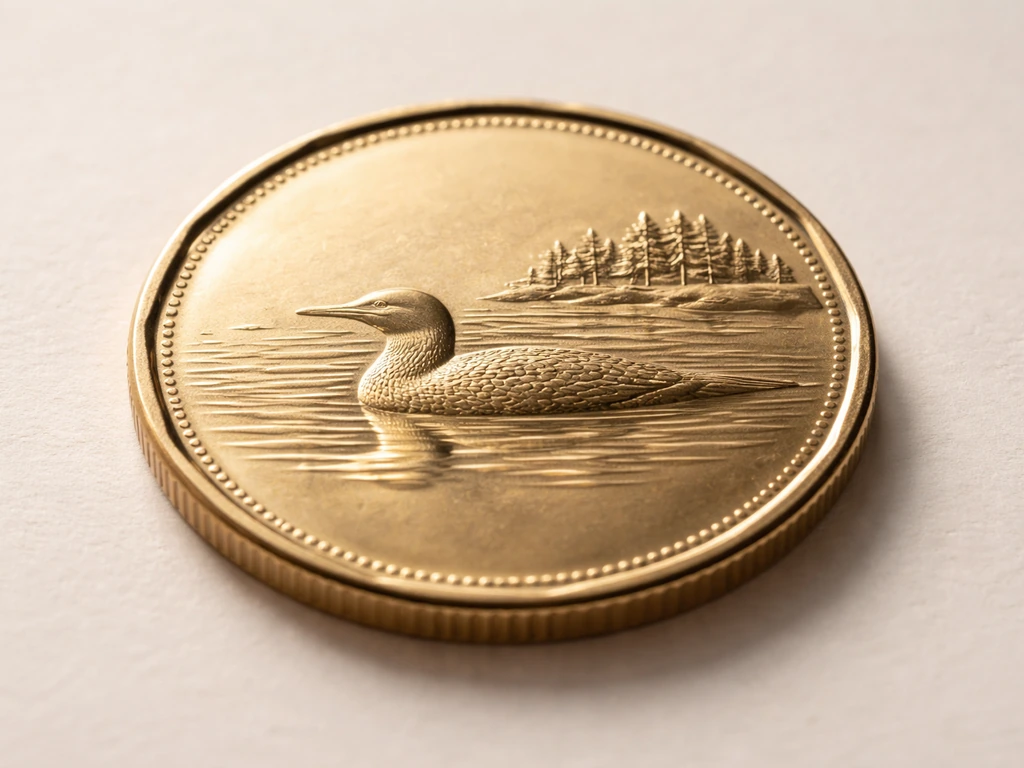
On the standard circulation loonie, the loon is shown floating on a still lake. Behind it, there is a small island with conifer trees. The bird is at rest, not in flight, which emphasizes calm and stillness. This is the design by Robert-Ralph Carmichael that has appeared on every standard one-dollar coin since 1987.
Collector editions sometimes depict the loon differently. The Royal Canadian Mint's 2026 Lucky Loonie, for example, shows the loon with wings raised in a "V" shape, splashing into water below. This is a more dynamic pose, meant to evoke energy and luck rather than the serene resting position of the everyday coin. So if you see a loon coin that looks more dramatic than usual, it is likely a special edition.
On the Birds of Canada $20 banknote, the loon appears on the back of the note in a similar naturalistic style. The Bank of Canada's Birds of Canada series placed the artwork on the reverse of each denomination, so the loon image on the $20 is on the back, not the front. Other denominations in that same series feature different Canadian bird species entirely.
If you are curious how other countries handle bird imagery on banknotes, the question of what bird is on the $5 note is an interesting comparison point, showing how New Zealand takes a similar pride-in-native-wildlife approach to its currency design. New Zealand goes even further with bird-themed notes, as you can see from questions like what bird is on the NZ 5 dollar note or what bird is on the $50 note NZ and what bird is on the $100 note NZ, where native species appear across every denomination.
How to confirm what you are looking at today
If you want to verify the bird on a Canadian coin or note you have in front of you, here are the practical steps to follow.
- For a one-dollar coin: flip it to the reverse (the side without the portrait of the monarch or current head of state). You should see a bird on water with a small island and trees in the background. That is the common loon. The word "DOLLAR" and the year of issue appear on the same side.
- For a banknote: check the series first. Look for small text identifying the series name. If it says "Birds of Canada," check the denomination. The $20 note in that series features the loon on the back.
- To verify the species: look for the distinctive black head, the checkered or patterned back, and the low profile on the water. Common loons ride very low, with most of their body submerged. That profile is hard to mistake.
- For official confirmation of the coin design: search "1 dollar coin" on the Royal Canadian Mint website (mint.ca). The product listing will confirm the reverse design and credit Robert-Ralph Carmichael as the artist.
- For official confirmation of the banknote: search "Birds of Canada series" on the Bank of Canada website (bankofcanada.ca). The series page lists each denomination and its corresponding bird, along with security features to check on the note.
One thing that trips people up is the variety of special edition loonies that the Royal Canadian Mint releases each year for collectors and sporting events. These coins are still one-dollar coins and still feature the loon, but the pose or background may look different from the standard circulation coin. If the bird on your coin looks like a loon but the image seems unusual, check the mint's collector coin listings to find the specific edition.
The loon on coins vs banknotes at a glance
| Currency item | Bird shown | Where on the item | Series or edition |
|---|---|---|---|
| $1 circulation coin (loonie) | Common loon (Gavia immer) | Reverse side | Standard circulation, all years from 1987 |
| $20 banknote (Birds of Canada series) | Common loon (Gavia immer) | Back of the note | Birds of Canada series (1986 issue) |
| Special edition loonies (e.g., Lucky Loonie 2026) | Common loon (Gavia immer) | Reverse side | Collector/commemorative editions, various years |
The bottom line is straightforward: the bird on the Canadian dollar is the common loon, Gavia immer. It has been on the one-dollar coin since 1987, it appears on the $20 bill in the Birds of Canada banknote series, and it is deeply tied to Canada's national identity even without holding the formal title of official national bird. If you are holding a Canadian dollar coin, you are holding a loon.
FAQ
Is the common loon on the front or back of the Canadian one-dollar coin?
On the one-dollar coin, the loon is on the reverse (the “tails” side). If your coin looks like it has no loon, you may be holding the wrong denomination, or you may be viewing a modern collector design where the layout differs from the standard resting-loon image.
Does the loon appear on every Canadian $20 banknote?
No. The loon is the standard reverse design on the circulation one-dollar coin since 1987, but Canadian banknotes depend on the specific series and denomination. The loon is on the back of the Birds of Canada $20 note, not on every $20 bill or every Canadian banknote.
How can I tell which Canadian banknote series shows the loon?
Look at the denomination and series. If the note is part of the Birds of Canada series and it is the $20, it features the loon on the back; if it is a different series (or a different denomination), it can feature other imagery or different birds.
Why does my loon coin look different from the one shown in typical pictures?
It can vary by coin type. Standard circulation loonies show a loon at rest on calm water, while some collector issues show different poses (for example, a more dynamic “splash” look). The species should still be a common loon, but the action and background elements can change.
Does “loonie” only mean the regular one-dollar coin, or do collector versions count too?
The nickname “loonie” refers to the Canadian one-dollar circulation coin. Collector coins and special editions may also include “loonie” in their names, but they are still one-dollar coins with the loon featured.
If the loon is on the money, does that automatically make it Canada’s official national bird?
The loon is the bird featured on the Canadian one-dollar coin, but Canada does not have a single universally accepted “national bird” in the way some countries do. The loon is widely treated as a national symbol culturally, even when formal national-bird status is debated.
What should I check if I think I have a loon coin but the bird doesn’t look exactly like a common loon?
If the image resembles a loon but looks wrong, check whether it is a different denomination or a non-Canadian coin. Also, some commemorative or unofficial novelty pieces may use loon-like artwork without matching Canadian Mint designs.
How can I tell whether I’m looking at the standard loonie design versus a special edition?
On the standard circulation loonie, the bird is depicted floating on still water and shown at rest, not in flight. If you see a loon with wings raised or splashing water, it is a stronger hint you are looking at a special edition rather than the everyday design.
Where else besides the one-dollar coin can I find the common loon in Canadian currency?
If you want the same species connection across currency, focus on the Canadian one-dollar coin and the Birds of Canada $20 note. Other denominations in the Birds of Canada series feature different native bird species, so a loon might not appear on every note in that set.
Next Article
What Is the National Bird of Canada? Official Answer
Clear official answer: does Canada have a national bird, which one it is, and why it symbolizes Canada today.