If you have an Australian $2 coin, there is no bird on it. You may be thinking of the bird pictured on New Zealand's $50 note, which is a different kind of currency design what bird is on the $50 note NZ. The reverse shows an Aboriginal elder's portrait, the Southern Cross, and native grass trees, designed by Horst Hahne. If you have a Canadian $2 coin (the Toonie), the standard design features a polar bear, not a bird. So if you are genuinely seeing a bird on a $2 coin, you either have a commemorative issue or a coin from a different country entirely.
What Bird Is on the $2 Coin? How to Identify It

Marcus Chen
27 May 2026
Why "$2 coin" is ambiguous
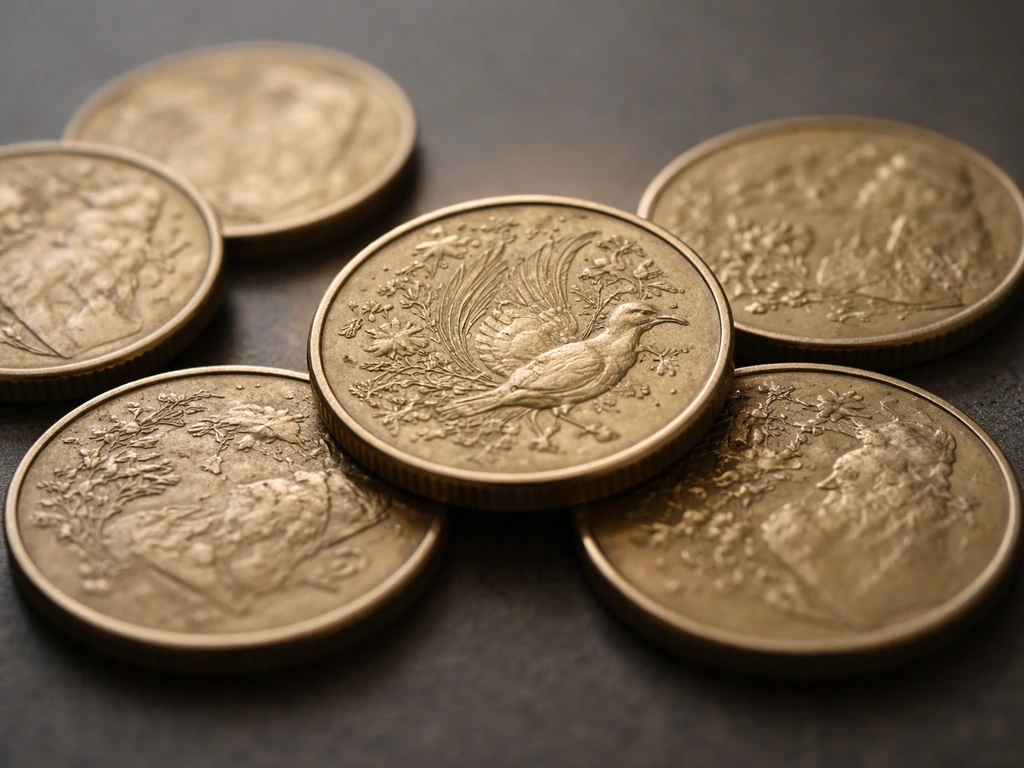
The phrase "$2 coin" covers a surprising number of different coins from different countries. Australia, Canada, New Zealand, and several Caribbean and Pacific island nations all produce $2 denomination coins, and each has its own reverse design. On top of that, individual mints release commemorative $2 coins with completely different imagery every year. So the answer to "what bird is on the $2 coin" depends entirely on which country made your coin and which year or series it belongs to.
There is also a common source of confusion with £2 coins (British pounds, not dollars). Travelers and online searchers sometimes mix up "$2" and "£2" when looking up coins they found abroad. Some £2 coins from British territories do feature birds, including a red-footed booby on a coin from the British Indian Ocean Territory. That is a pound coin, not a dollar coin, but it is easy to confuse the two when you are just trying to identify a coin you picked up on a trip.
Quick coin-check: identify the country, year, and mint mark
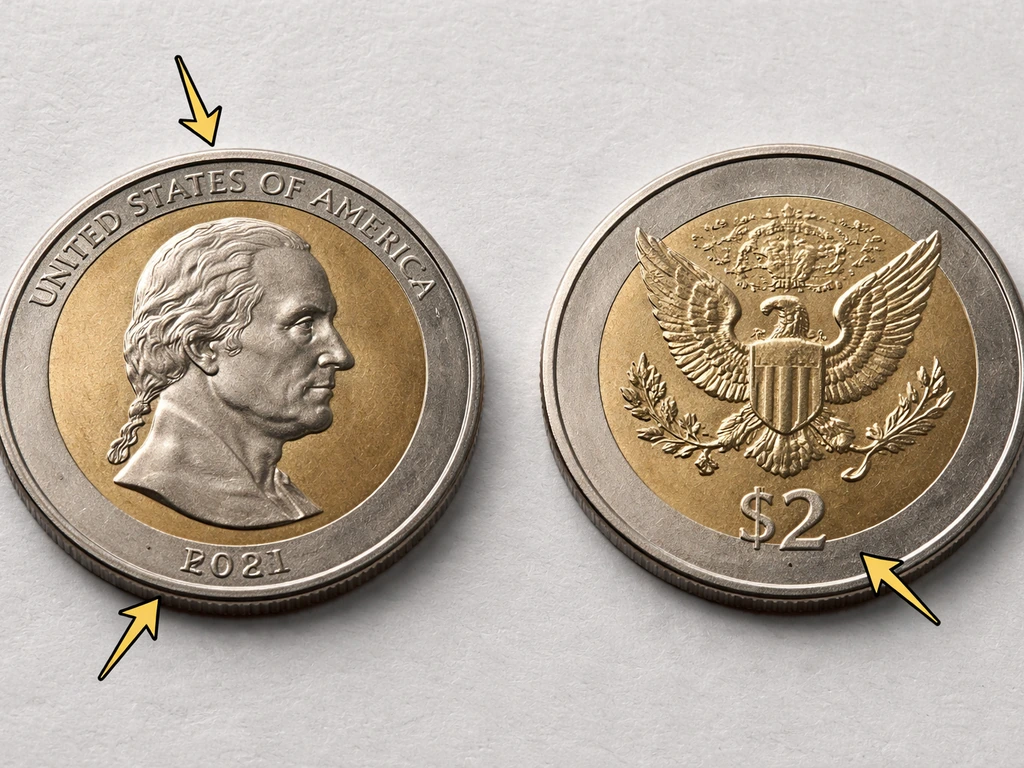
Before anything else, flip the coin over and look at the obverse (the "heads" side). Royal Australian Mint FAQs provide official context for [coin collecting](https://www. ramint. gov.
au/faqs/faqs-coin-collecting/faqs-general-about-coins), including guidance relevant to handling or using mint imagery. Most coins show the name of the issuing country and a portrait, usually a head of state. That single step tells you which country's $2 coin you have. Once you know the country, look for a year stamped on either face and any small mint mark, which is often a letter tucked into the design.
On Australian commemorative $2 coins, for example, a small "C" indicates the Canberra mint. On early Australian $2 coins from 1988 and 1989, the designer's initials "HH" (for Horst Hahne) appear on the reverse, and these were removed from 1990 onward. Those small details help you pin down the exact issue and match it to the correct design.
- Look at the obverse for the country name and portrait.
- Find the year, usually on the obverse near the portrait.
- Check for a mint mark, often a small letter near the design edge on the reverse.
- Search the issuing country's official mint website using the year and any initials you find.
The Australian $2 coin: what is actually on it
The Australian $2 coin is the most common answer people expect when they search this question, but it does not show a bird. The Royal Australian Mint is explicit about this. The standard reverse design, introduced in 1988, features an archetype of an Aboriginal tribal elder. Surrounding the portrait is the Southern Cross constellation and native grass trees (commonly called grass trees or blackboys). The design was created by artist Horst Hahne and his initials appear on coins from 1988 and 1989.
The Royal Australian Mint has specifically noted in its "Currency creatures" material that the $2 coin does not carry an animal or bird on its reverse, distinguishing it from coins like the 50-cent piece or the $1 coin. So if someone told you there was a bird on the Australian $2, they were likely thinking of a different coin or a different denomination entirely.
The Canadian $2 coin (Toonie): also not a bird
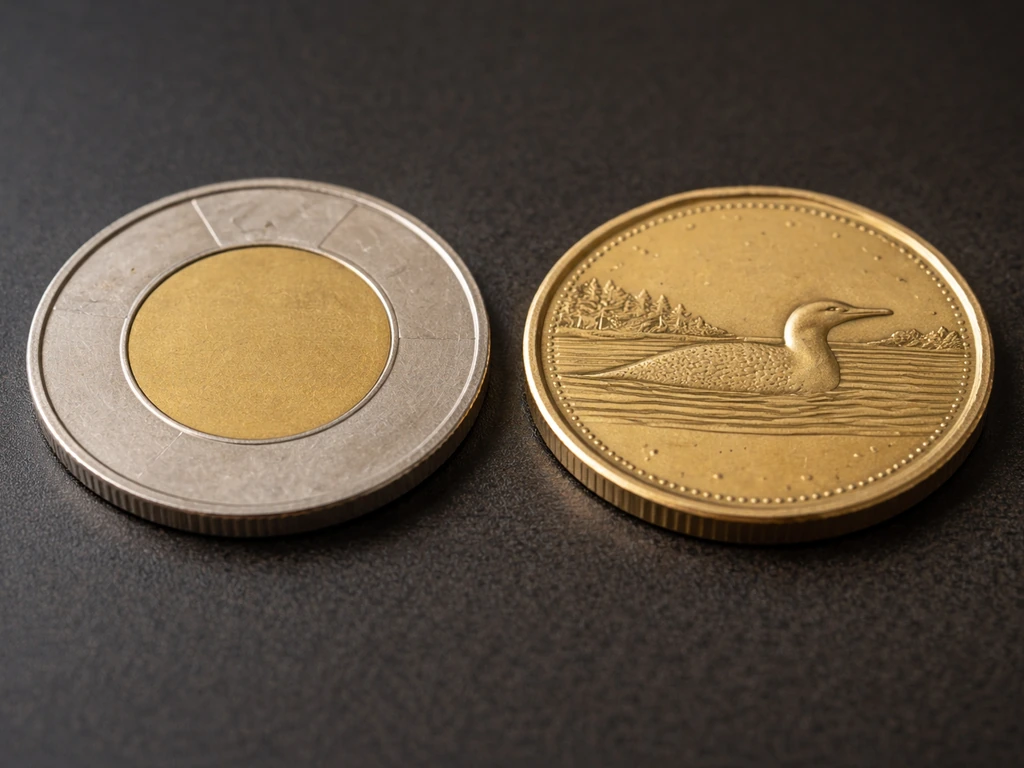
Canada's $2 coin, introduced on February 19, 1996, is universally known as the Toonie. No, the blue jay is not Canada’s national bird; Canada’s well-known national bird is the common loon. Its standard reverse design features a polar bear standing on ice, not a bird. Over one billion Toonies have circulated since 1996, making it one of the most recognizable $2 coins in the world. The Royal Canadian Mint has also released many commemorative Toonie designs over the years, some featuring other wildlife, landscapes, or cultural imagery.
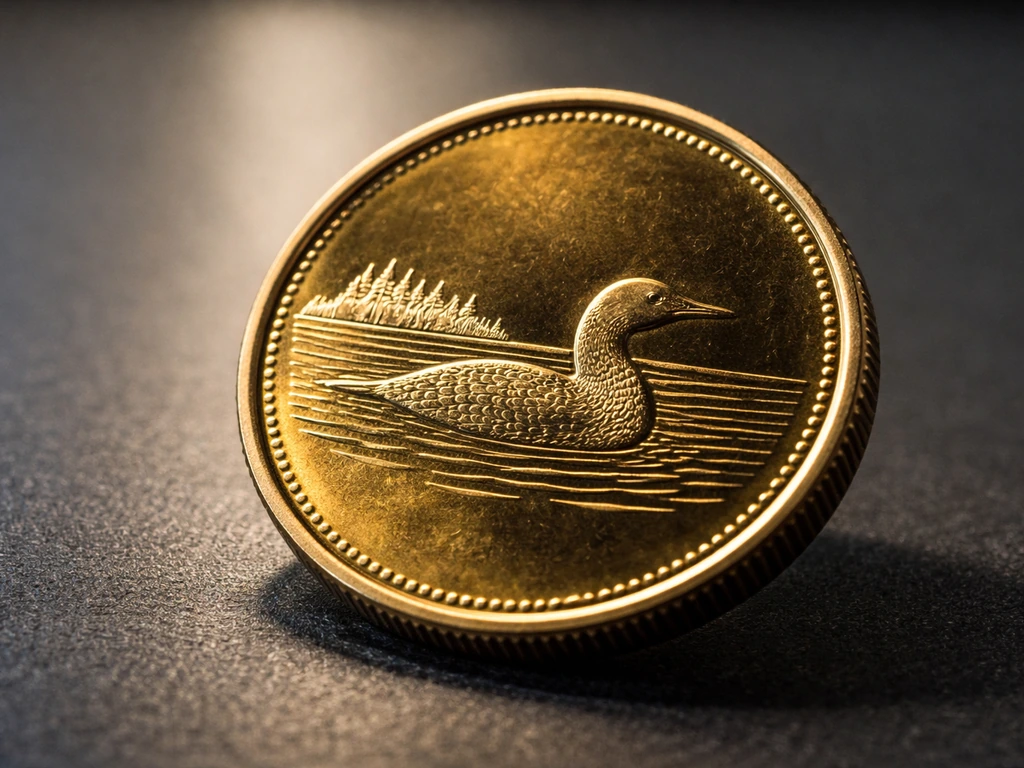
It is worth knowing that Canada does have a bird-themed dollar coin: the Loonie, the $1 coin, which famously features a common loon at rest on a lake. Official Canadian government descriptions confirm the loon design as the standard reverse for the $1 denomination. If you found a Canadian coin with a bird, you almost certainly have a Loonie, not a Toonie. The two are easy to mix up by size and colour if you are not familiar with them.
Other $2 coin designs around the world: where birds do appear
Some countries do feature birds on $2 or equivalent denomination coins, and commemorative issues are where you are most likely to find them. New Zealand, for instance, produces collectible coins that celebrate native birds like the kiwi. If you are asking specifically about what bird is on the $100 note in New Zealand, it helps to start with the native bird imagery used on that banknote native birds like the kiwi.
If you are specifically asking about a bird on the New Zealand 5 dollar note, the kiwi is the one to look for New Zealand's kiwi. Pacific island nations sometimes feature local bird species on their coinage. If you have a $2 coin from a smaller nation and it shows a bird, checking the issuing authority's website or a coin catalog site like Numista will quickly identify the species.
| Country | Standard $2 Coin Reverse | Bird Featured? |
|---|---|---|
| Australia | Aboriginal elder portrait, Southern Cross, grass trees | No |
| Canada (Toonie) | Polar bear on ice | No (the $1 Loonie features a loon) |
| New Zealand | Various; collectible issues include native birds | Sometimes, on commemorative issues |
| British Indian Ocean Territory (£2, not $2) | Red-footed booby (titanium coin) | Yes, but this is a pound coin, not a dollar coin |
If you have a coin from a country not listed here, the fastest approach is to search the country name plus "$2 coin reverse design" on the issuing mint's official website. Most national mints publish complete design archives by year.
Why the birds on national coins matter
When a country does choose a bird for its coinage, it is almost always a deliberate statement about national identity. Canada's choice of the common loon for the $1 coin is a perfect example. Many people also ask whether the loon is the national bird of Canada, which highlights how strongly it is tied to Canadian identity is the loon the national bird of Canada. The loon is deeply embedded in Canadian cultural identity, associated with northern lakes, wilderness, and the sounds of summer in the backcountry. Its call is recognized by almost every Canadian, and placing it on the most-used coin in the country was a way of anchoring everyday commerce to that sense of place.
Australia's approach with the $2 coin took a different direction. Rather than using a bird or animal, the designers chose to honour Indigenous culture through the elder's portrait, making a statement about heritage and belonging that no single wildlife species could represent in the same way. The Southern Cross on the same coin connects to the Australian flag and to navigation, exploration, and the southern sky shared across the continent.
For countries that do place birds on coins, the choice usually reflects either an official national bird designation or a species with strong symbolic weight. New Zealand's kiwi, for example, appears across a wide range of New Zealand currency and collectibles because it has become the defining animal symbol of New Zealand identity, even representing New Zealanders themselves in informal usage (Kiwis). This same pattern of using a nationally significant bird on currency connects coin design to the broader world of national bird symbolism that defines so much of a country's visual identity.
Fun facts and how to get more from your coin's details
The "HH" you might spot on an early Australian $2 coin (1988 or 1989) stands for Horst Hahne, the coin's designer. Finding a coin with those initials makes it one of the earlier production runs, since the Royal Australian Mint removed them from 1990 onward. It is a small but satisfying detail for anyone who likes to know the story behind what they are holding.
If you have a Canadian Toonie with an unusual reverse design, it is likely a commemorative issue. The Royal Canadian Mint has produced hundreds of special-edition Toonies since 1996, marking everything from Olympic Games to wildlife conservation. These often turn up in regular change, so it is worth checking the year on any Toonie that looks different from the standard polar bear design.
For anyone who got here because they are curious about birds on currency more broadly, New Zealand's banknotes are a rich area to explore. Several NZ notes feature iconic native birds prominently. The connection between national bird choices and currency design runs deep in many countries, and understanding why a particular bird ended up on a coin or note often leads back to fascinating stories about conservation, colonial history, and national identity.
- To identify any unfamiliar coin, start with the country name on the obverse, then search the issuing mint's official website by year.
- The Royal Australian Mint (ram.gov.au) and the Royal Canadian Mint (mint.ca) both maintain complete design archives.
- Coin identification sites like Numista let you search by country, denomination, and year to find the exact reverse design.
- If your coin looks like it has a bird but says "Australia" on the obverse, double-check the denomination. It may be a $1 coin rather than a $2 coin.
FAQ
I’m sure I saw a bird on my $2 coin, how can that be if some countries’ standard $2 designs have no birds?
First confirm the coin is actually a $2 denomination, then check the country name on the obverse. Australia’s standard $2 reverse does not include a bird, and Canada’s Toonie standard reverse shows a polar bear. If you see bird imagery, it is usually a commemorative $2, a different denomination, or a different country’s coin being misread as “$2.”
What small details should I look for besides the bird (or animal) itself to identify the exact coin?
On many coins, the “mint mark” is easy to miss because it is small or tucked into the design. Look closely for a single letter or symbol and also note the year. For example, Australian commemorative $2 coins may include a “C” for Canberra, while early Australian $2 coins (1988 and 1989) may show designer initials “HH.”
Could I have mixed up $2 and £2 when I tried to identify the bird?
Be careful with the currency symbol. A “£2” coin (pound sterling) is not a “$2” coin (dollar), and British territories sometimes have bird designs on £2 releases. If you are traveling, the quickest check is the country name and the obverse text, not the symbol you assume you saw.
If it’s not the standard design, how do I figure out whether my $2 coin is commemorative and what year it is?
Most “mystery bird on $2” cases come from commemorative issues or older special editions. Once you identify the country and year, search for “country name” plus “$2 commemorative reverse” (or check the issuing mint’s design archive). That narrows it down faster than searching by the bird’s species alone.
How can I tell whether the image I’m seeing is truly a bird species versus a scene, symbol, or artwork detail?
Yes, some bird-looking designs are actually part of a larger scene or emblem, not a bird portrait. To avoid misidentification, compare your coin’s reverse image with the coin’s known reverse template for that country and year, and verify the coin’s denomination, not just the picture that seems bird-like.
If the coin isn’t Australia’s or Canada’s standard design, what common mix-ups should I watch for?
Australia and Canada are easy to confuse because both have a $2 denomination commonly called the same thing in conversation. However, Canada’s $1 coin (the loon-shaped “Loonie”) and Australia’s standard $2 reverse (elder portrait, Southern Cross, grass trees) are consistent. If a coin has a bird but is clearly labeled as the other denomination, it may be the wrong $2 coin for what you think you have.
What’s the fastest, most reliable method if I want to use a coin catalog site to identify the bird species?
If you can find an issuing authority name on the obverse (often “Royal Australian Mint,” “Royal Canadian Mint,” or the country name), that is the best starting point. Then verify the reverse year and mint mark before using a catalog site. Catalogs can help match species, but mis-matching the year is a common source of wrong IDs.
Are bird images on $2 coins more likely to be commemorative rather than the regular annual design?
If your coin has a bird on it, it is much more likely to be a bird-themed commemorative issue than the standard $2 for countries like Australia or Canada. After identification, check whether the year aligns with known special-edition runs by the issuing mint, since wildlife and conservation themes are frequently used for commemoratives.
Next Article
What Bird Is on the Canadian Dollar? The National Symbol Explained
Find the bird on Canadian money, where it appears, how to verify across years, and why it became a national symbol.