Does Canada actually have a national bird?
The short answer: not officially, at least not yet. Canada does not currently have a federally recognized national bird enshrined in law. The bird most commonly cited for the role is the Canada jay (also called the gray jay), but despite years of campaigning, the federal government has never formally adopted it. If you've seen it listed somewhere as Canada's national bird, that reflects a well-known recommendation, not a government decree.
Canada's "national bird" and what that actually means
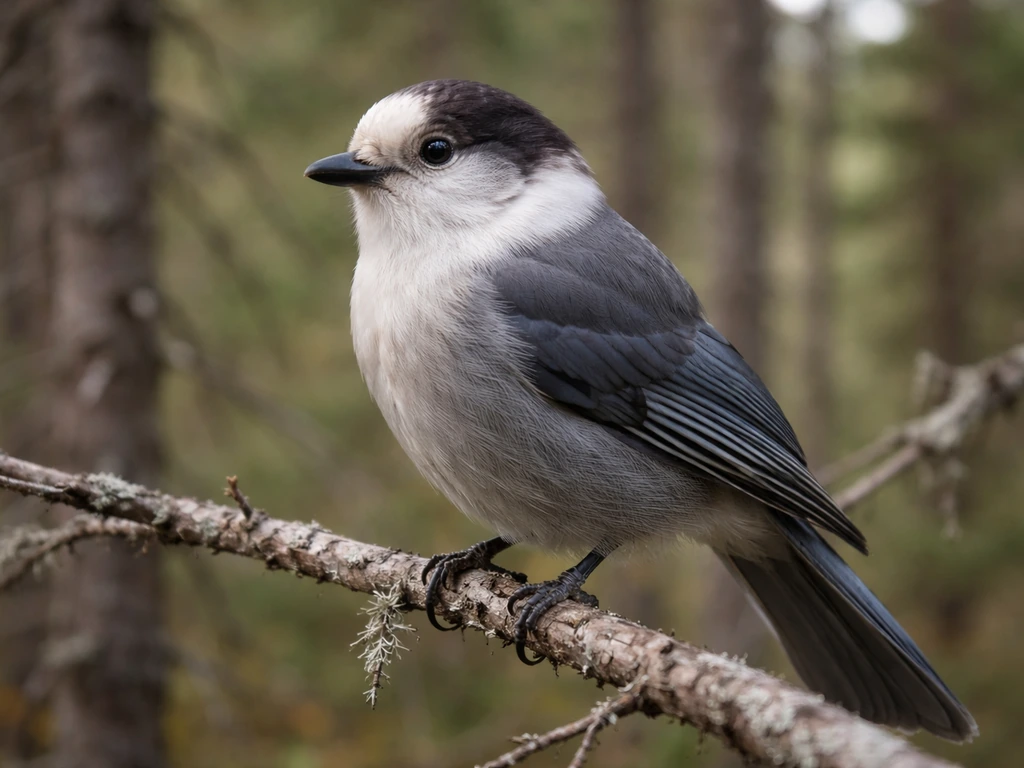
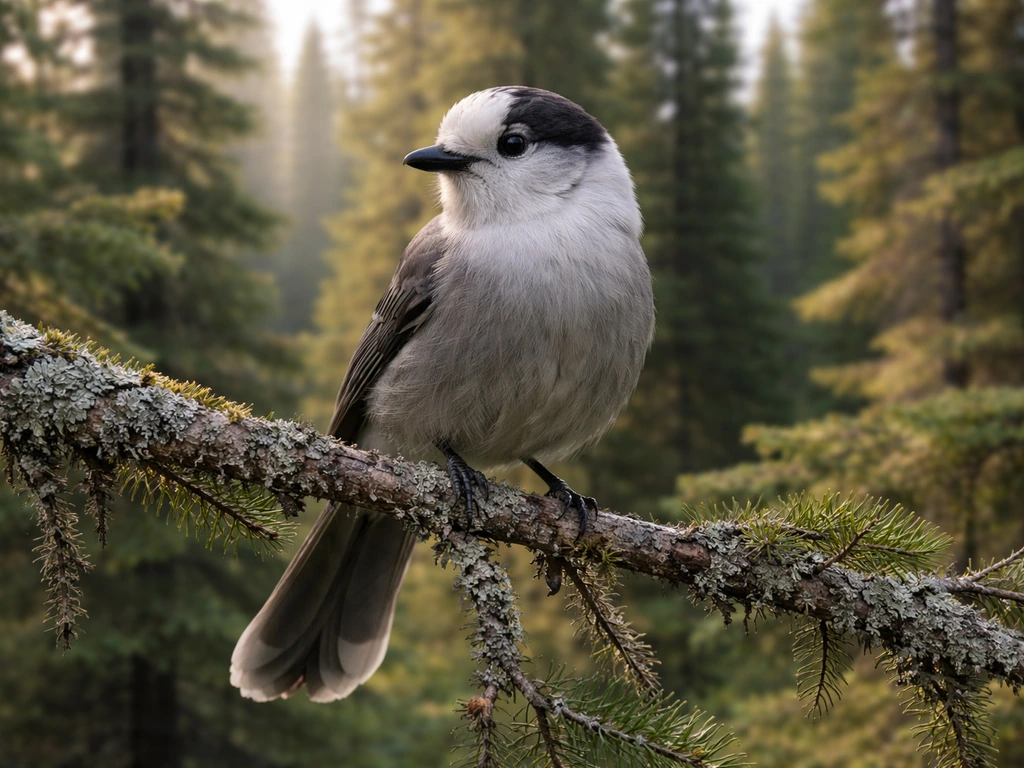
The Canada jay became the leading candidate through Canadian Geographic's National Bird Project, a multi-year effort that invited the Canadian public and subject-matter experts, including Indigenous cultural advisors, to nominate and vote on a suitable national bird. Canadian Geographic officially recommended the gray jay as Canada's national bird, but they were explicit about one important caveat: the federal government had not yet officially recognized it as such.
That distinction matters. A recommendation from a respected geographic society is not the same as an act of Parliament. Compare it to the beaver, which is the loon the national bird of Canada debate often gets tangled up with: the beaver became a legally official symbol of Canada on March 24, 1975, when the National Symbol of Canada Act received royal assent. No equivalent legislation exists for any bird.
There is, however, active legislative movement. Bill S-221, titled the National Bird of Canada Act, is a Senate bill that would formally recognize the Canada jay as the national bird. As of the most recent parliamentary snapshot, it is still at the committee stage in the Senate, meaning it has not yet passed into law.
Official symbols vs. commonly cited birds
Canada has a well-established framework for official national symbols, maintained by Canadian Heritage. That list includes the coat of arms, the national flag, the national anthem, and the beaver as the official national animal. What it does not include is a national bird. The Government of Canada's official symbols page makes no mention of one.
That gap has led to a lot of popular confusion. Several birds get floated in casual conversation as Canada's national bird, and it's worth knowing what the actual shortlist looked like during the National Bird Project.
- Canada jay (gray jay): Canadian Geographic's official recommendation and the subject of Senate Bill S-221
- Common loon: Widely associated with Canada due to its appearance on the dollar coin, often mistaken for an official designation
- Canada goose: A strong cultural association, especially internationally, but never formally proposed as a national bird
- Black-capped chickadee: A popular contender during the National Bird Project voting process
The loon is probably the most commonly confused case. It's deeply embedded in Canadian imagery, and if you're curious about what bird is on the Canadian dollar, the answer is indeed the loon, which is why Canadians call the one-dollar coin the "loonie." But appearing on currency is not the same as being a national bird, and the loon has no official national designation.
It's also worth noting that Canada does a much better job of official bird symbolism at the provincial and territorial level. Every province has a recognized bird emblem, just as they have official flowers and trees. The federal government simply hasn't done the same thing at the national level, at least not yet.
Why the Canada jay was chosen
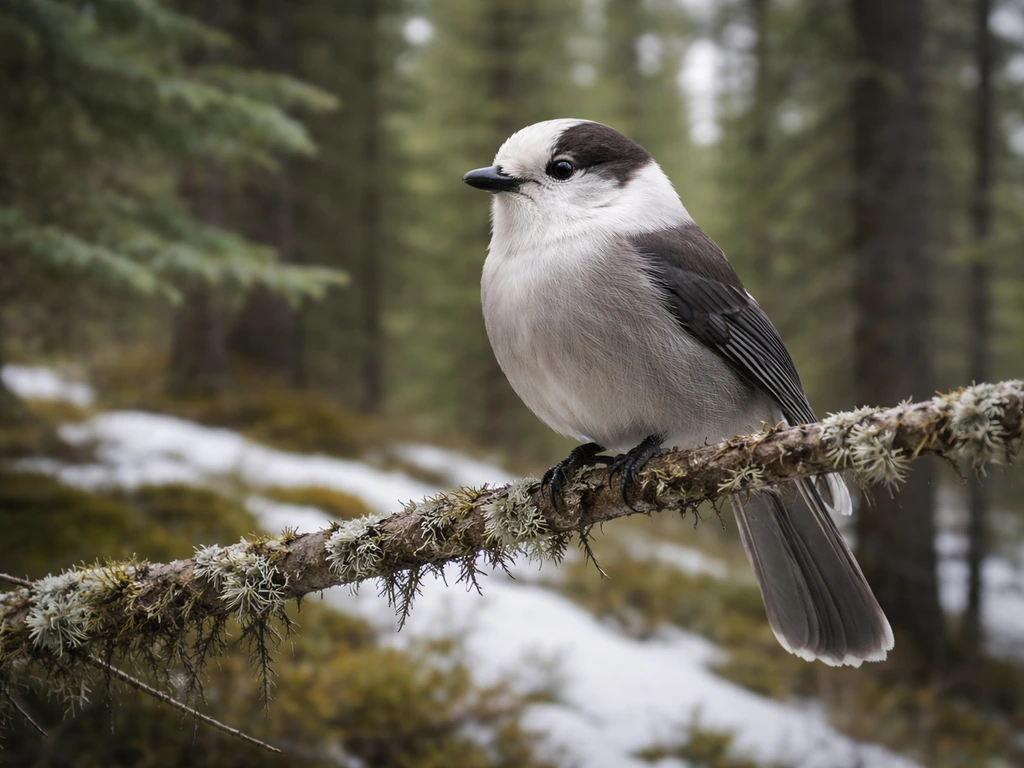
Canadian Geographic ran the National Bird Project over several years, ultimately crowning the Canada jay from a shortlist that was narrowed down using public nominations, expert panels, and input from Indigenous Peoples. The project had a goal of lobbying for official adoption in time for Canada's 150th anniversary in 2017. That deadline passed without government action, but the campaign continued.
The Canada jay won on several compelling criteria. It lives year-round across Canada, including in the boreal forest and subarctic regions, making it a genuinely national presence rather than a seasonal visitor. It doesn't migrate south in winter, which resonated as a symbol of Canadian resilience. It also has deep roots in Indigenous culture and oral traditions across many communities.
McGill University researchers who examined the selection framed it this way: the Canada jay soared to victory because it checked boxes that other candidates didn't, combining wide geographic range, cultural history, and a character that felt distinctly Canadian rather than shared with other nations. The common loon, beautiful as it is, is also found throughout the northern United States. The Canada jay, by contrast, is about as Canadian as it gets in range and temperament.
Interestingly, you might wonder how Canada's choice compares to other nations that have made it official. New Zealand, for example, has the kiwi as its recognized national bird, and bird imagery appears throughout its currency, including what bird is on the $50 note in NZ. Canada hasn't reached that level of formalized bird symbolism nationally, though the intent behind Bill S-221 is clearly to get there.
What makes the Canada jay worth knowing about
Whether or not Bill S-221 eventually passes, the Canada jay is a genuinely fascinating bird. Here are some of the facts that make it stand out, especially for anyone who wants to understand why it resonated with Canadians and naturalists alike.
- The Canada jay is a year-round resident of the boreal and subalpine forests, staying through harsh Canadian winters instead of flying south
- It is known for bold, curious behavior around campsites and trails, earning it nicknames like "camp robber" and "whiskey jack" (the latter from an Indigenous word, Wisakedjak)
- The species caches food obsessively throughout its territory to survive winter, storing items like berries, insects, and even meat in the bark of trees using sticky saliva
- Research published in the Canadian Field-Naturalist documents Canada jays harvesting and caching fruits, including thin-leaved snowberry, demonstrating the sophistication of their food-storage behavior
- They breed in late winter, sometimes as early as March, even in temperatures well below freezing, which is unusual among songbirds and adds to their reputation for hardiness
- The species (Perisoreus canadensis) is in the same family as ravens and crows, known for their intelligence and adaptability
The "whiskey jack" nickname has particular cultural weight. The name comes from the Algonquian trickster spirit Wisakedjak, connecting the bird directly to Indigenous storytelling traditions. That cultural thread was one reason Indigenous voices during the National Bird Project supported the Canada jay as a meaningful national symbol rather than just an ornithological choice.
For a broader sense of how Canada compares to other countries in the way birds are used as national symbols, consider that some nations embed their national bird on currency and banknotes as a matter of cultural pride. What bird is on the $5 note is the kind of question that highlights how deeply some countries integrate bird symbolism into everyday objects. Canada hasn't taken that step for a nationally designated bird, but the loonie shows the cultural instinct is already there.
The national animal question

A lot of people searching for Canada's national bird are actually asking a broader question: what are Canada's national animals and symbols? That's a fair thing to clarify.
| Symbol type | Animal/Bird | Official status |
|---|
| National animal | Beaver | Official, enacted by Parliament in 1975 |
| National bird (recommended) | Canada jay (gray jay) | Unofficial; recommended by Canadian Geographic, subject of Senate Bill S-221 |
| Commonly associated bird | Common loon | No national designation; appears on the $1 coin |
| National horse | Canadian horse | Official, recognized by Parliament in 2002 |
Parks Canada uses the phrase "national animal" specifically to refer to the beaver, describing it as a long-standing symbol of Canadian industry and ingenuity. There is no federal equivalent statement for a national bird. The absence is notable, and it's exactly the gap that Bill S-221 is trying to fill.
You might also be curious about how bird symbolism works on currency more broadly. For instance, what bird is on the $2 coin is a question that connects currency design to national identity in interesting ways, and it's the kind of comparison that helps put Canada's situation in perspective.
How to verify this and where to dig deeper
If you want to confirm the current status yourself, the most reliable sources are:
- Canada.ca (Canadian Heritage section): Search for "official symbols of Canada" to see the government's current list. If a national bird has been added, it will appear there.
- LEGISinfo (Parliament of Canada): Search for Bill S-221 or "National Bird of Canada Act" to check its current legislative status. This is where you'll see whether the bill has passed, stalled, or been amended.
- Canadian Geographic: Their National Bird Project page gives the full history of the gray jay recommendation, including the methodology and expert input behind it.
- Cornell Lab of Ornithology (All About Birds): For natural history and life-history detail on the Canada jay itself, this is one of the most thorough resources available.
The situation as of today is straightforward: Canada has no legally enacted national bird. The Canada jay is the strongly recommended candidate, backed by Canadian Geographic's formal process and a Senate bill that is working its way through Parliament. If the bill passes, the Canada jay will become official. Until then, it occupies a kind of cultural shorthand status, widely understood as Canada's de facto national bird without the legal backing to make it truly official.
If you're also curious about how other countries in Canada's orbit handle this, is the blue jay Canada's national bird is a question worth exploring, since the blue jay's popularity and visibility in Canadian cities often leads people to assume a connection that doesn't actually exist. And for a comparison with New Zealand, another Commonwealth country with strong bird identity, what bird is on the NZ $5 note shows how a country can embed its bird symbolism across everyday life. Canada is closer to that kind of recognition than it's ever been, with the Canada jay waiting in the wings.
For those curious about how New Zealand handles its national bird imagery at the highest denominations, what bird is on the $100 note in NZ is a useful contrast, showing a country that has fully woven its bird heritage into national identity at every level, something Canada has yet to formalize but may soon accomplish.