
It depends on which country's $5 note you're holding. The most common answers: the U.S. $5 bill features the bald eagle (via the Great Seal on the reverse), the Australian $5 note shows the Eastern Spinebill, and the classic Canadian $5 from the 1986 Birds of Canada series shows the belted kingfisher. Read on to confirm exactly which bird is on your note and what it means.
What Bird Is on the $5 Note? Quick Identification Guide

Marcus Chen
2 Jun 2026
Which country's $5 note are you looking at?
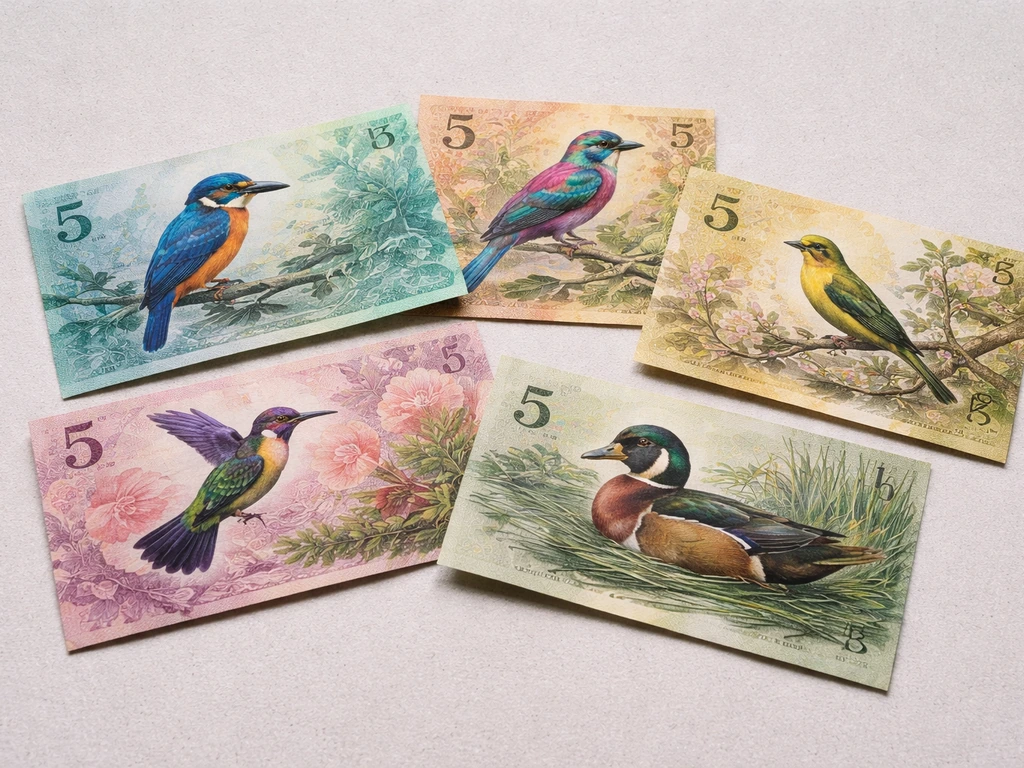
The phrase "$5 note" gets used by people in the United States, Australia, Canada, New Zealand, and several other countries. Each one has a completely different bird on it, so the first step is pinning down the country. The most common search is for the U.S. five-dollar bill, so that's covered in the most detail below. But if you're holding an Australian or Canadian note, those sections have you covered too. (If you're after the New Zealand $5, that denomination's bird is covered separately alongside the NZ $50 and $100 notes in the same polymer banknote series.)
The bird on the U.S. $5 bill
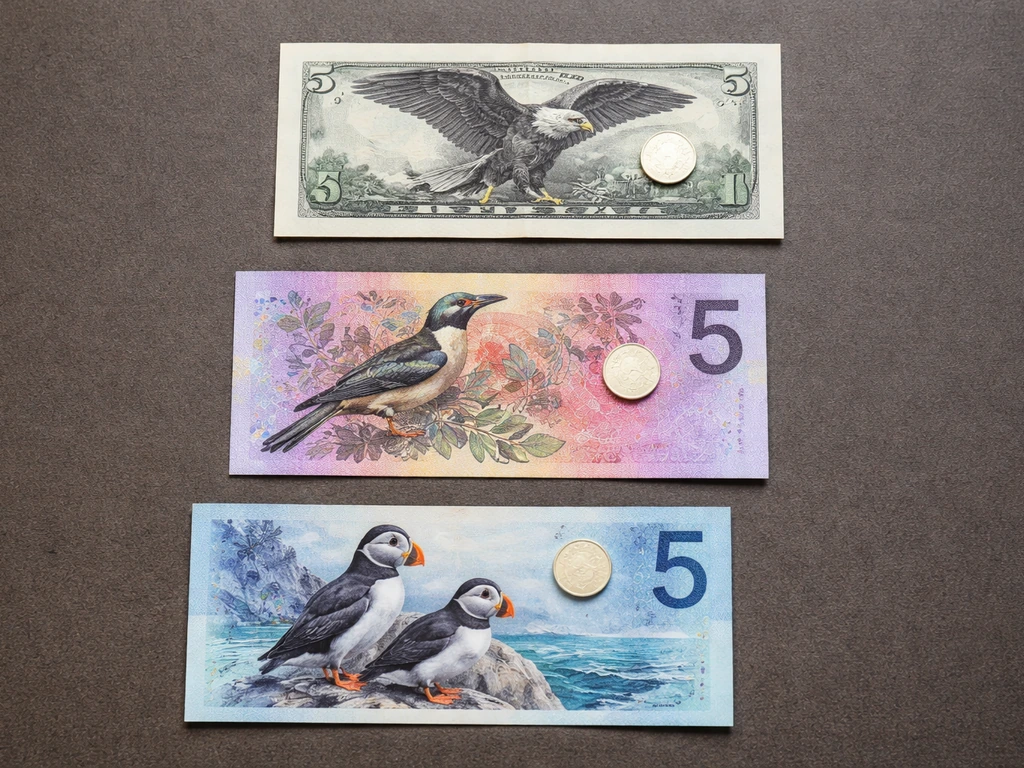
The bird on the U.S. $5 note is the bald eagle. You'll find it on the reverse (back) of the bill as part of the Great Seal of the United States, which is printed in the center-right area. The eagle is depicted in the classic heraldic pose: wings spread wide, holding a bundle of arrows in its left talon and an olive branch in its right, with a shield across its chest. It's a smaller detail compared to the Lincoln Memorial that dominates the back, but it's clearly there once you know where to look.
How to confirm the eagle on your specific U.S. $5 bill
U.S. $5 notes have been issued in several design series, most commonly the 1996 style and the 2004/2008 redesign. To confirm which version you have, check the series year printed on the front of the note, just below and to the right of Lincoln's portrait. Regardless of series, the Great Seal eagle appears on the back. On the 2004 and later redesigns, look toward the lower-right portion of the reverse where the Great Seal sits alongside updated security features. The U.S. Currency Education Program at uscurrency.gov has a banknote identifier tool that lets you input your series year and see exactly which design elements apply to your note.
The bird on the Australian $5 note
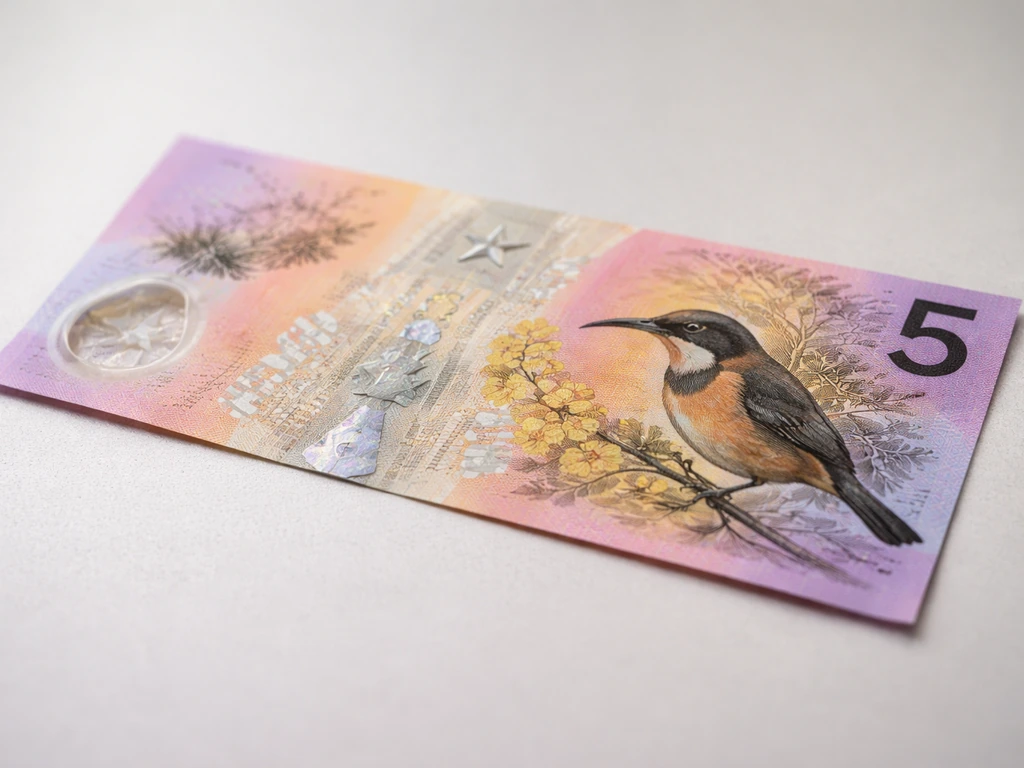
Australia's current $5 banknote, introduced on 1 September 2016 as the first note in the Reserve Bank of Australia's "next generation" polymer series, features the Eastern Spinebill (Acanthorhynchus tenuirostris). It appears on the reverse alongside a sprig of Prickly Moses wattle. The Eastern Spinebill is a small honeyeater with a distinctive long curved bill, black-and-white head, and chestnut-coloured breast. It's quite detailed in the engraving, so it's worth using a magnifying glass if you want to appreciate the artwork properly.
How to confirm the Eastern Spinebill on your Australian $5
The RBA built the Eastern Spinebill directly into the note's security features. Tilt the banknote under a light and you'll see the bird's wings appear to move in a color-shift effect embedded in the transparent window on the note. This tilt-and-shift test is one of the easiest ways to confirm both the bird's identity and the note's authenticity at the same time. If your $5 note is an older paper series (pre-2016), it won't have this feature and will show a different design altogether.
The bird on the Canadian $5 note
If you have a Canadian $5 bill from the 1986 Birds of Canada series, the bird on the reverse is the belted kingfisher. The Bank of Canada Museum confirms this specifically: the belted kingfisher was chosen for the $5 denomination in that series, which featured a different native Canadian bird on the back of each note value. The Bank of Canada describes the 1986 “Birds of Canada” series as using different Canadian birds on the back of each denomination, including the $5 note featuring the belted kingfisher blank" rel="noopener noreferrer">the belted kingfisher was chosen for the $5 denomination. The belted kingfisher is a compact, stocky bird with a large crested head, blue-grey back, and a rusty-orange band across the chest (on females). The blue jay is also commonly cited as Canada's national bird. The national bird of Canada is the common loon, a symbol often associated with Canadian wildlife. It's rendered in fine engraved detail on the reverse of that note.
It's worth noting that Canada has issued multiple $5 banknote series since then, including polymer notes from 2013 onward (the Frontiers series). The polymer-era Canadian $5 notes shifted to a different design theme, so if your Canadian bill doesn't have the kingfisher, you likely have a later series. The bird-on-currency theme connects interestingly to the broader Canadian question of national bird symbolism, which is explored in detail alongside discussions of the loon on the Canadian dollar coin. Many people also ask whether the loon is the national bird of Canada, so it's worth looking at what official sources say is the loon the national bird of canada.
Quick comparison: birds on $5 notes by country
| Country | Bird on $5 Note | Where on the Note | Series/Era |
|---|---|---|---|
| United States | Bald eagle | Reverse, Great Seal (center-right) | All modern series (1996, 2004, 2008+) |
| Australia | Eastern Spinebill | Reverse, with Prickly Moses wattle | Next Generation polymer series, from Sept 2016 |
| Canada | Belted kingfisher | Reverse | Birds of Canada series, 1986 |
Why the bald eagle ended up on U.S. currency
The bald eagle was officially adopted as part of the Great Seal of the United States in 1782, making it one of the earliest formally designated national bird symbols in the world. The choice was deliberate: the bald eagle was native to North America, was seen as a powerful and independent bird, and had no equivalent in European heraldry, which made it a useful symbol of the new republic's distinct identity. The U.S. Government Publishing Office notes it was chosen specifically for these qualities. Once embedded in the Great Seal, it naturally made its way onto paper money, coins, and official documents across American history. If you meant the U.S. $2 coin, the bird design is different from the $2 banknote or other denominations, so check the specific coin details for the exact species.
The Eastern Spinebill as a national symbol
Australia doesn't have a single officially declared national bird in the same formal sense as some countries, but the RBA's decision to feature the Eastern Spinebill on the $5 note was part of a broader commitment to celebrating native Australian wildlife on currency. The next-generation banknote series was designed to showcase Australia's natural heritage, with each denomination pairing a native bird with a native wattle species. The Eastern Spinebill was chosen for the $5 in part because of its wide distribution across southeastern Australia and its recognizable, photogenic appearance. It's a bird that many Australians encounter in suburban gardens, which gives it an accessible, everyday familiarity that suits the lowest-denomination note in the series.
Fun facts about the $5 note birds
- The bald eagle on the U.S. Great Seal holds 13 arrows and 13 olive-branch leaves, representing the original 13 colonies.
- Benjamin Franklin famously expressed a preference for the wild turkey over the bald eagle as a national symbol, though this was in a private letter and was never a formal proposal.
- The Eastern Spinebill on Australia's $5 note is a honeyeater, a family of birds particularly associated with Australian native flora. It uses its curved bill to feed on nectar from tubular flowers.
- Canada's 1986 Birds of Canada series was a deliberate celebration of native wildlife, with the $1 showing the western grebe, $2 the robin, $5 the belted kingfisher, $10 the osprey, $20 the common loon, $50 the snowy owl, and $100 the Canada goose.
- The belted kingfisher is one of the few bird species in North America where the female is more colorful than the male, which is the reverse of the usual pattern.
- Australia's $5 note was the first in the next-generation series to be released, setting the design template that the higher denominations ($10, $20, $50, $100) would follow.
How to identify the bird on other countries' $5 notes
If none of the three above match your note, here's a practical process for identifying the bird on any $5 note. Start by confirming the issuing country and series year, both of which are usually printed on the front of the note. Then go directly to that country's central bank website (for example, the Reserve Bank of Australia at rba.gov.au, the Bank of Canada at bankofcanada.ca, or the U.S. Bureau of Engraving and Printing at moneyfactory.gov) and find the denomination page for your specific series. Central bank websites almost always include high-resolution images and written descriptions of every design element, including any bird imagery.
For New Zealand specifically, the $5 note is part of the same polymer banknote tradition as the Australian series, and NZ denominations each feature a different native bird. The same question comes up a lot for the New Zealand $100 note, too. For New Zealand $5 notes, the bird is covered in the NZ-specific polymer series alongside the $50 and $100 notes. The NZ $5, $50, and $100 notes are each covered in detail alongside discussions of New Zealand's national bird symbolism. If you're working through an entire set of banknotes from one country, checking the full series at once is the most efficient approach since central banks typically document all denominations together.
- Identify the country of issue and series year from the front of the note.
- Visit that country's central bank website and navigate to the banknote section.
- Find your specific denomination and series to access the official design description.
- Look for the reverse (back) design details, as birds are almost always placed on the reverse.
- Use any tilt, color-shift, or security features described to confirm the bird visually on your physical note.
- Cross-reference with national bird databases or wildlife field guides if you want to learn more about the species itself.
FAQ
What if my $5 note has the right country but the bird design looks different than the one described?
Many countries reissue banknotes in new series, so the bird can change. Check the series year (printed on the front) and then match it to the exact denomination page for that series on the issuing central bank site, since older and newer designs are often mixed across collections.
For the U.S. $5, where exactly should I look for the bald eagle if it seems hard to spot?
Look at the back, near the Great Seal area, which sits in the center-right portion of the reverse, then scan for the eagle holding arrows and an olive branch. It is smaller than the Lincoln Memorial details, so zooming in or using a magnifying glass helps.
How can I tell whether my Australian $5 spinebill note is authentic without relying on the “tilt” effect?
The spinebill is also embedded in the polymer window and should align with the surrounding security features. If you cannot see any color-shift or movement in the transparent window when tilting, compare the overall printing and security layout to the issuing bank’s images for your exact series.
Does the Eastern Spinebill on the Australian $5 look the same on paper notes from before the 2016 polymer change?
No. Before the next-generation polymer series began in 2016, the $5 note was a different design type, and you should not expect the same spinebill engraving or the same security-window tilt-and-shift feature.
For Canadian $5 notes, how do I know if my bill is from the 1986 Birds of Canada series or a later series?
Use the series markings printed on the front and compare the reverse imagery to the series documentation. If the reverse bird is not the belted kingfisher, it is likely a later Canadian $5 design, such as the polymer Frontiers-era notes.
Is the belted kingfisher definitely the bird on every Canadian $5 banknote?
No. The belted kingfisher is tied to the 1986 Birds of Canada series. Later Canadian $5 series use different reverse designs and can feature entirely different birds.
Does Canada have the same $5 bird on polymer notes issued after 2013?
Usually not. Polymer-era Canadian banknotes changed the design theme, so if your note does not match the 1986 kingfisher reverse, assume it belongs to a later series and verify using the series year on the front.
My $5 note is from a country not mentioned in the article, what bird should I look for?
Do not guess based on the U.S., Australia, or Canada versions. Identify the issuing country and the series year, then use the central bank’s denomination page for your exact series to get the correct bird species and placement.
Where do I find the series year on the note, and can it be confusing?
It is typically printed on the front of the banknote, but its location and format vary by country and series. If you cannot find it quickly, search for “series year location” along with the country and denomination, or rely on the central bank’s denomination-page images to match your note.
Does the U.S. $5 bird ever appear in a different format, like a seal, coin, or different denomination reference?
Yes, confusing it with other American designs is common. The bald eagle in the article is specifically the $5 banknote Great Seal imagery, and it may not match bird artwork used on other denominations or on U.S. coins.
Is the bird on the $5 note related to a country’s “national bird” status?
Sometimes, but not always. For example, featuring a species on currency is a design and heritage choice and does not necessarily mean the species is the official national bird. If the national-bird question matters for your country, look for official statements rather than assuming the currency choice is definitive.
Next Articles
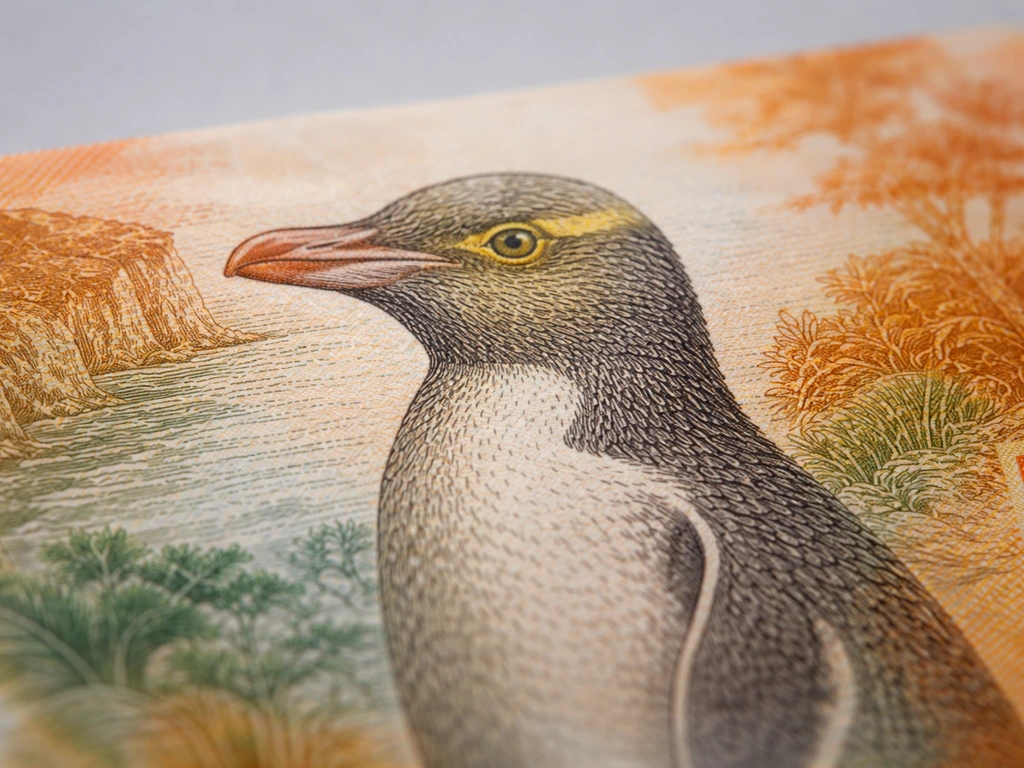
What Bird Is on the NZ 5 Dollar Note? Identify It
Identify the bird on New Zealand’s 5 dollar note and learn why it represents the national bird emblem.
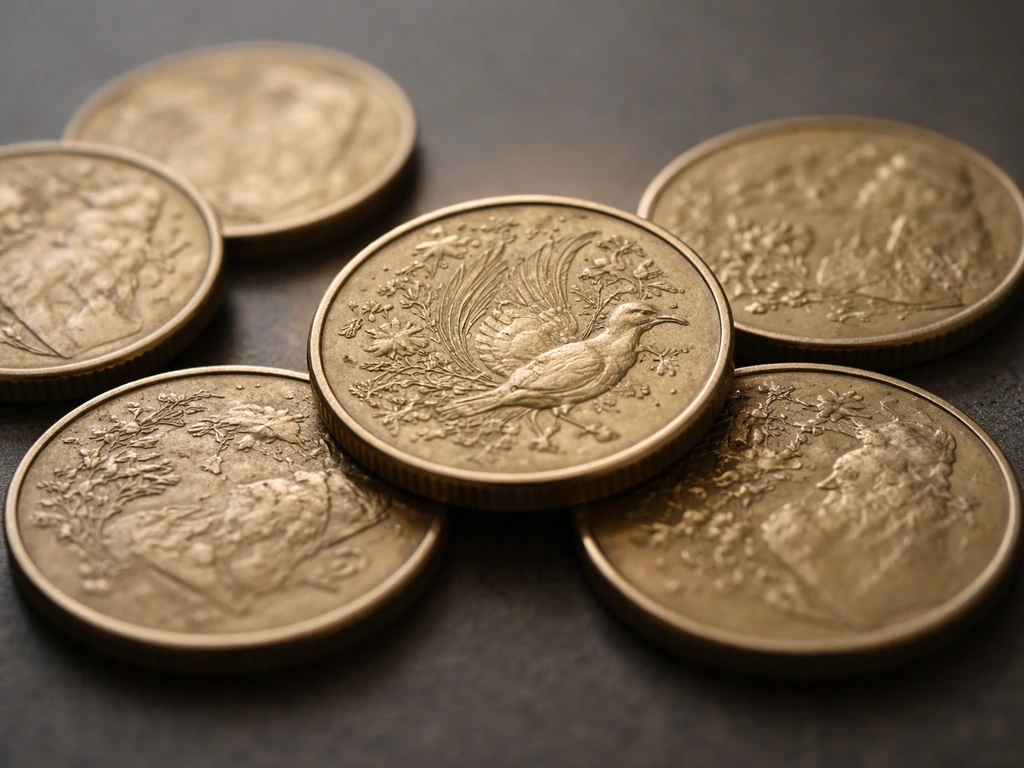
What Bird Is on the $2 Coin? How to Identify It
Identify the bird on the $2 coin by matching the country and year, then learn the national-bird meaning behind it.
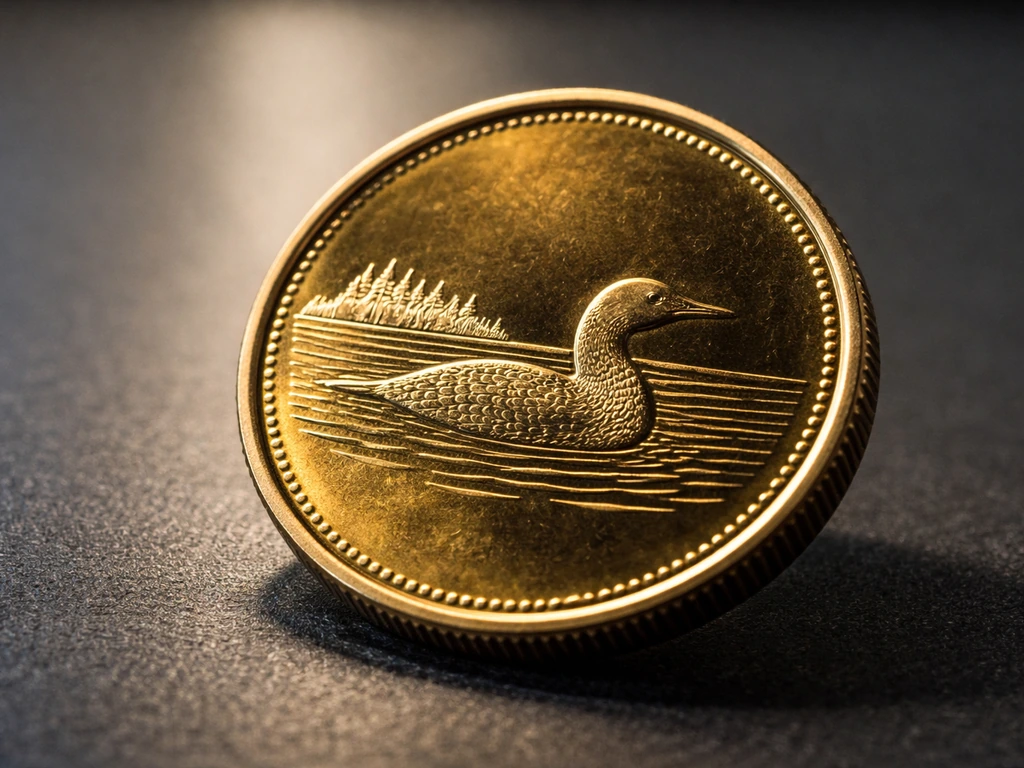
What Bird Is on the Canadian Dollar? The National Symbol Explained
Find the bird on Canadian money, where it appears, how to verify across years, and why it became a national symbol.