El Salvador's national bird: the Turquoise-browed Motmot
El Salvador's national bird is the Turquoise-browed Motmot, scientific name Eumomota superciliosa. Locally, Salvadorans know it almost exclusively by its traditional name: the Torogoz. That name appears in the actual legislative decree that made it official, and it's the word you'll see in Salvadoran textbooks, news articles, and everyday conversation. If you've been searching for either name, you're looking at exactly the same bird.
The official name and what people call it
The formal English common name is Turquoise-browed Motmot, and the scientific name is Eumomota superciliosa. Both are used by international ornithological authorities, including the U.S. Fish and Wildlife Service. In El Salvador, however, nearly everyone uses "Torogoz" (also sometimes written Toh-ro-gos, based on the sound of its call). The legislative decree itself is titled "DECLÁRASE AL TOROGOZ, AVE NACIONAL DE EL SALVADOR," which translates directly to "The Torogoz is declared the national bird of El Salvador." So whether you're reading a scientific field guide or a Salvadoran school workbook, you'll run into both names for the same species.
What the Torogoz actually looks like
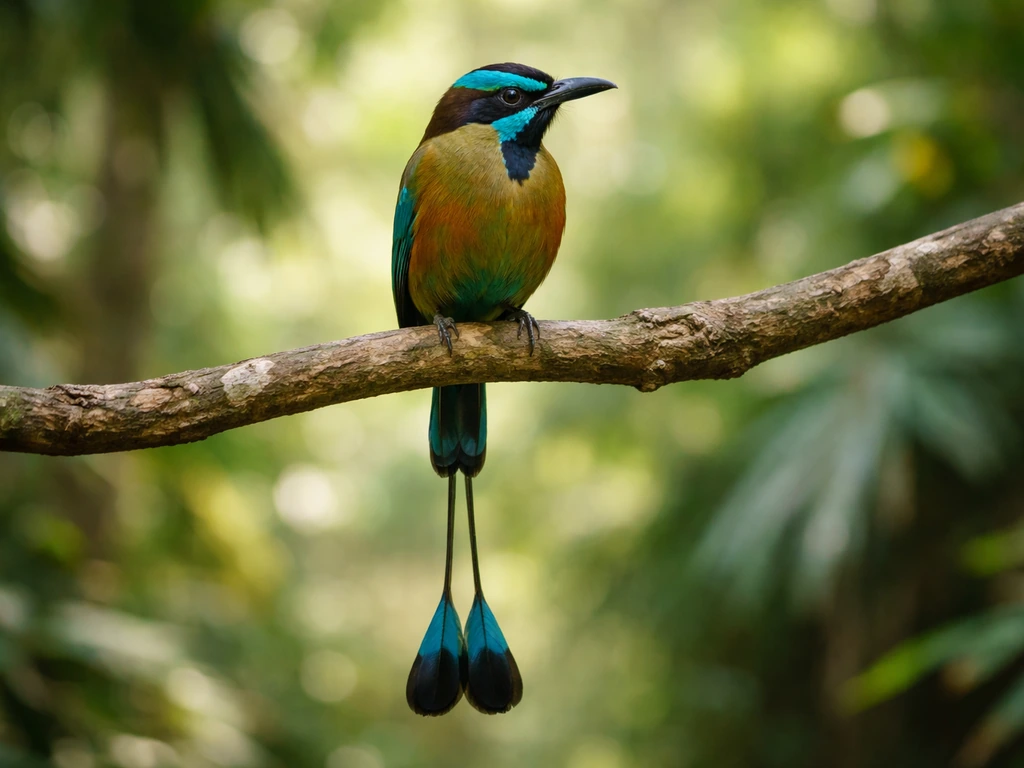
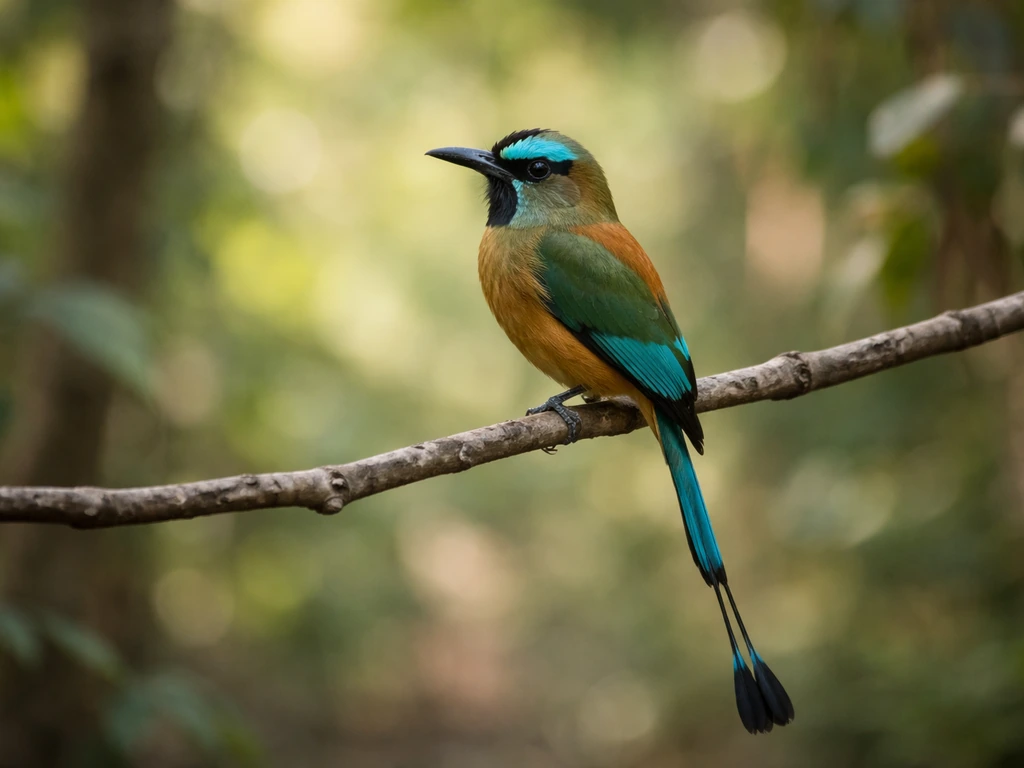
The Turquoise-browed Motmot is a striking, medium-sized bird and genuinely hard to mistake once you know what to look for. Its most iconic feature is its tail: long, elongated central feathers that end in widened, paddle-shaped tips called rackets, colored in blue and black. Both males and females have this tail, which makes it unusual among birds where elaborate ornamentation is typically limited to one sex.
Beyond the tail, the bird has a vivid turquoise stripe above the eye (that's the "turquoise-browed" part of its name), a rufous-orange body, and patches of blue-green on the wings and face. It's a sit-and-wait predator, perching in the open on branches, fence posts, or wires before darting out to catch insects. Its diet keeps it closely tied to healthy, insect-rich environments.
Why El Salvador chose this bird
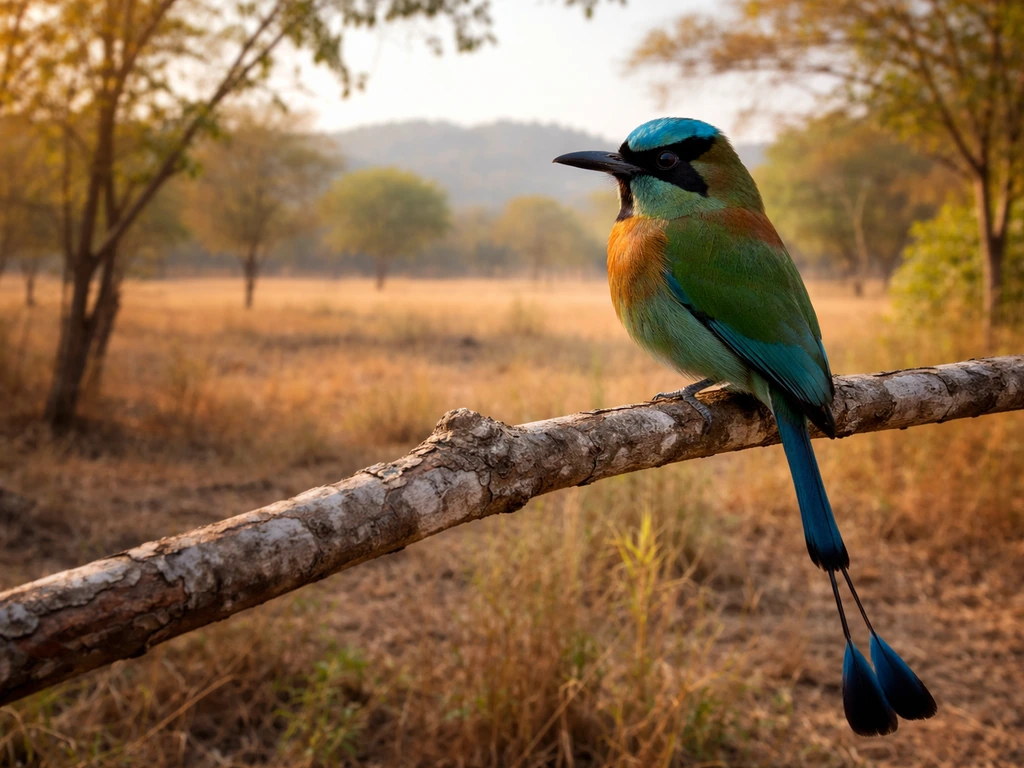
The Torogoz is genuinely Salvadoran in feel. It's a resident bird, meaning it doesn't migrate away, and it's widely distributed across the country's open woodlands and farmland edges. That year-round presence makes it a familiar sight to people across different regions, not just birdwatchers, and gives it a connection to daily rural life that migratory or rare species simply wouldn't have.
Its symbolism deepened further during El Salvador's Bicentennial of Independence celebrations in 2021. Coverage at the time framed the Torogoz as a living emblem of the country's environmental health and national identity, pointing to the fact that a thriving Torogoz population signals a thriving ecosystem. A bird that eats insects and lives in working landscapes became a way for Salvadorans to connect national pride to environmental responsibility.
There's also something poetic about a bird that is equally striking in both sexes. The matching racket tails shared by males and females have been read as a symbol of equality and shared identity, a detail that resonates in a country where the bird features in civic education from early schooling onward. El Salvador's Ministry of Education includes the Torogoz in official grade-level science and civics materials, which means generations of Salvadoran children grow up knowing exactly which bird represents their country.
How and when it became official
The Torogoz became El Salvador's national bird through Legislative Decree No. 735, issued by the Asamblea Legislativa de El Salvador on October 21, 1999. The decree was subsequently published in the Diario Oficial No. 216, Tomo 345, on November 19, 1999, which is when it entered into formal legal effect. So the bird has held official national status for over 25 years.
The late 1990s were a period when many Latin American countries were formalizing national symbols that had previously existed only informally or through cultural tradition. El Salvador's move to codify the Torogoz in law put it in good company regionally. Neighboring nations were doing the same for their own emblematic birds around the same era, a trend that reflected a broader interest in grounding national identity in natural heritage.
Quick facts worth knowing
- Scientific name: Eumomota superciliosa
- English common name: Turquoise-browed Motmot
- Local name: Torogoz (named for its call)
- Declared by: Legislative Decree No. 735, October 21, 1999
- Published in official record: Diario Oficial No. 216, Tomo 345, November 19, 1999
- Both sexes share the distinctive racketed tail, which is unusual among colorful birds
- Diet: primarily insects, making it an indicator of ecosystem health
- Habitat: open woodlands, forest edges, and agricultural land across El Salvador
- Conservation status: currently listed as Least Concern on the IUCN Red List
How the Torogoz compares to its Central American neighbors
The Turquoise-browed Motmot is also found across much of Central America, so it's worth knowing which countries have chosen it versus others. Nicaragua actually shares this species as its national bird too, making it one of the rare cases where two neighboring countries have officially adopted the same bird. Wikipedia’s entry notes that the turquoise-browed motmot (Eumomota superciliosa) is the national bird of both El Salvador and Nicaragua (known locally as torogoz and guardabarranco respectively) blank" rel="noopener noreferrer">the Turquoise-browed Motmot is the national bird of both El Salvador and Nicaragua. If you want to read about Nicaragua's national bird and how that country's relationship with the Torogoz compares, the symbolism angle differs in some interesting ways.
Other Central American countries went in different directions. Costa Rica's national bird is the Clay-colored Thrush, a far more understated choice that was picked partly because of its beautiful song and its association with the rainy season. To the north, Honduras chose the Scarlet Macaw as its national bird, a dramatically different species that speaks to that country's tropical forest heritage.
| Country | National Bird | Scientific Name | Key Symbolism |
|---|
| El Salvador | Turquoise-browed Motmot (Torogoz) | Eumomota superciliosa | Resident presence, environmental health, national identity |
| Nicaragua | Turquoise-browed Motmot (Guardabarranco) | Eumomota superciliosa | Shared species, different cultural framing |
| Honduras | Scarlet Macaw | Ara macao | Tropical forest heritage, vivid color |
| Costa Rica | Clay-colored Thrush | Turdus grayi | Song, connection to rainy season |
| Panama | Harpy Eagle | Harpia harpyja | Power, wilderness, apex predator status |
Panama's choice is especially striking by comparison. If you're curious why one country picks a modest motmot while another picks a raptor powerful enough to catch monkeys, the story behind Panama's national bird gets into exactly that kind of national identity question.
Where to go from here
If you want to dig deeper into the Torogoz specifically, a few directions are worth your time. eBird's range map for the Turquoise-browed Motmot shows exactly where the species occurs week by week, which is useful if you're thinking about where to spot one. The Animal Diversity Web has solid natural history notes on Eumomota superciliosa, including breeding behavior details like clutch size and fledging rates drawn from peer-reviewed research. And if you want the legislative source itself, the Asamblea Legislativa de El Salvador lists Decree No. 735 in its 1999 decree directory, which is as official as it gets.
The short answer is this: El Salvador's national bird is the Turquoise-browed Motmot, or Torogoz, officially adopted in October 1999. It's a resident, visually stunning bird with a racketed tail, a turquoise brow, and a firm place in Salvadoran civic and environmental identity. That's the complete picture.