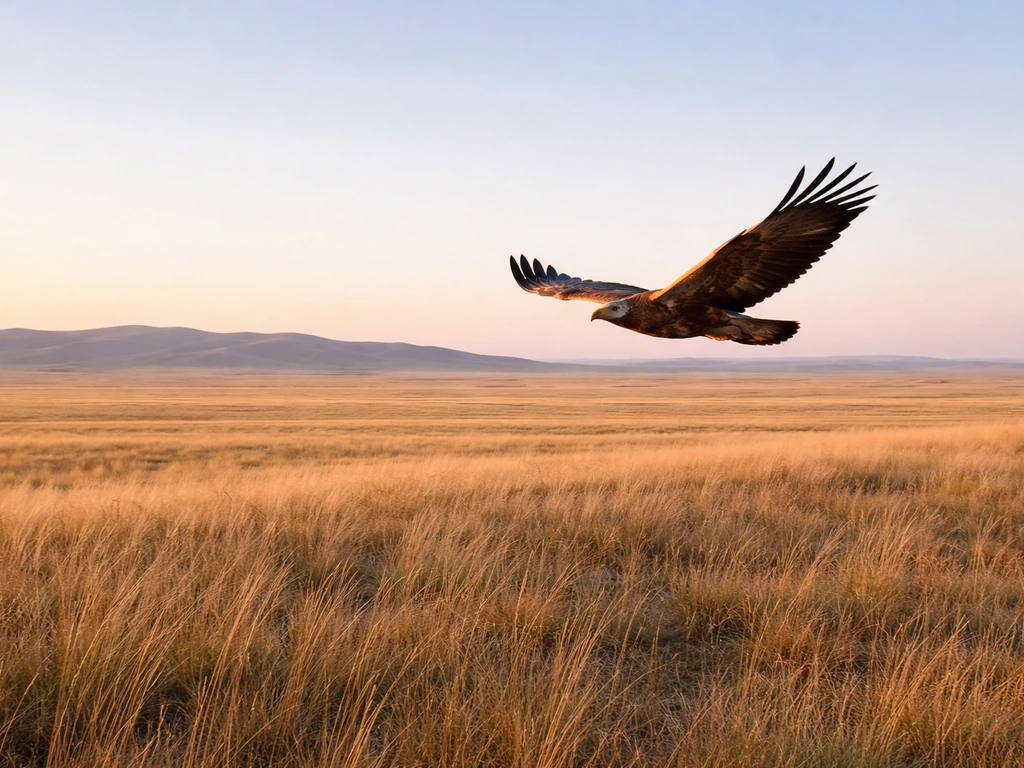
Quick answer: the country is Kazakhstan
The country whose national bird is the endangered steppe eagle is Kazakhstan. The steppe eagle (Aquila nipalensis) is officially recognized as Kazakhstan's national bird, and it appears as a soaring eagle on the country's national flag. This is confirmed by Kazakhstan's own Constitutional Law on State Symbols (dated June 4, 2007, No. 258), which describes the flag design as including "a soaring steppe eagle" beneath the sun's 32 rays. If you landed here to fill in a crossword answer, you're looking for KAZAKHSTAN, which is 10 letters.
Why the steppe eagle is tied to Kazakhstan
The connection isn't arbitrary. Kazakhstan is home to a remarkable share of the world's steppe eagle population: more than 85 percent of the bird's global population nests within the country's vast grasslands. When a nation holds that kind of ecological responsibility for a species, choosing it as a national symbol makes a lot of sense. The eagle is described by wildlife organizations as a "national icon in Kazakhstan," designated as the national bird and embedded directly into the country's flag imagery.
It's also worth noting a common source of confusion: Egypt is sometimes listed in reference tables as having the steppe eagle as its national bird, framed as the "Steppe ('Saladin') eagle." That framing blurs two different things. Egypt's national emblem is the Eagle of Saladin, a heraldic symbol tied to Arab nationalism that became associated with republican Egypt after the 1952 revolution. The Eagle of Saladin is not formally the same as the steppe eagle (Aquila nipalensis) in the way Kazakhstan uses it. So if a clue specifically says "steppe eagle," Kazakhstan is the right answer.
If you enjoy exploring which raptors serve as national emblems, it's worth knowing that eagles serve as the national bird of quite a few countries, making it especially important to pin down the exact species when solving clues.
What the steppe eagle means as a national symbol
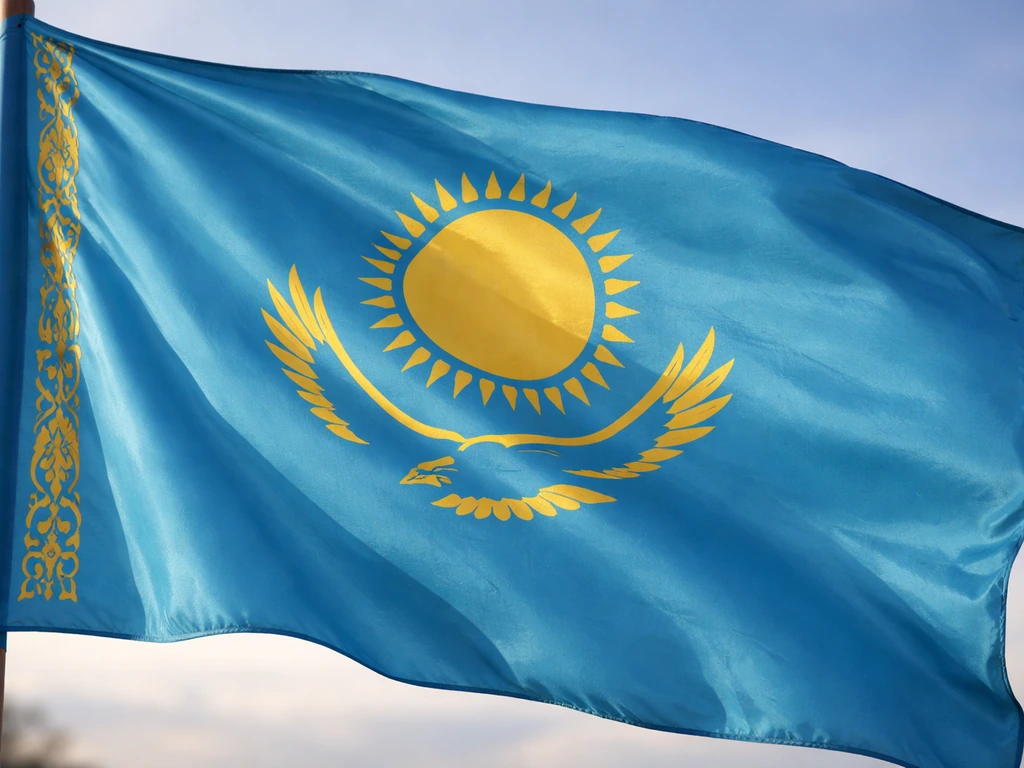
National birds are rarely chosen at random. They tend to reflect something deep about a country's identity, landscape, or historical values. For Kazakhstan, the steppe eagle hits all three. The bird is native to the vast Central Asian steppe that defines the country's geography. Nomadic Kazakh culture has a centuries-long tradition of falconry and reverence for birds of prey, so an eagle as a national emblem feels genuinely earned rather than just symbolic.
The eagle on the flag is depicted in flight, wings spread, which traditionally represents freedom, power, and the spirit of a people with deep roots in open landscapes. When Kazakhstan enshrined the steppe eagle in its Constitutional Law on State Symbols in 2007, it formalized what was already a cultural truth: this bird belongs to this land.
Eagles carry enormous symbolic weight across many cultures. For context, the golden eagle is the national bird of several countries, used to project authority and strength. The steppe eagle occupies a similar symbolic space for Kazakhstan, but with the added dimension of ecological identity: this is a bird that actually lives there in massive numbers.
Other Central Asian nations have chosen their own raptors as emblems. The saker falcon is the national bird of a neighboring country in the same region, reflecting how deeply birds of prey are woven into the cultural fabric of this part of the world.
The endangered status: what it actually means
The steppe eagle was uplisted to Endangered (EN) on the IUCN Red List in 2015. "Endangered" is the second-most-severe category on the IUCN scale, sitting just below Critically Endangered. It means the species faces a very high risk of extinction in the wild. The IUCN applies this designation when specific quantitative thresholds are met, including population decline rates, restricted range, or small total population size.
The U.S. Fish and Wildlife Service describes the steppe eagle as "globally endangered," and BirdLife International's red-list accounts flag threats like collision with infrastructure and direct persecution. For a bird that still nests across Kazakhstan's grasslands in significant numbers, this status is a warning: current trends, if unchecked, put the species at serious risk.
From a national-bird perspective, an endangered national emblem puts a country in an interesting position. Kazakhstan's identity is partly tied to a bird that is in decline globally, which adds urgency to conservation efforts there. It's a very different situation from countries whose national birds are common or thriving. For comparison, consider that some nations have even chosen vultures as their national bird, species that are also under significant global pressure.
For crossword purposes, the endangered status is often the specific detail used in clue-writing to narrow the field. Not every eagle is endangered, and not every endangered bird is a national bird, so when a clue combines both facts, the answer almost certainly points to Kazakhstan.
How to verify this for yourself

If you want to confirm the Kazakhstan-steppe eagle link independently, here are the most reliable paths:
- Kazakhstan's Constitutional Law on State Symbols (No. 258, June 4, 2007): This is the primary government source. The official translation explicitly describes the national flag as featuring "a soaring steppe eagle." It's the most authoritative document you can point to.
- Eurasian Wildlife and Peoples (conservation organization): Their steppe eagle profile directly states it is Kazakhstan's national bird and notes that more than 85 percent of the global population nests there. Cross-referencing a government legal text with a wildlife organization gives you two independent confirmations.
- BirdLife International's IUCN Red List account for Aquila nipalensis: This confirms the Endangered classification (uplisted 2015) and gives you the conservation data behind the status.
- U.S. Fish and Wildlife Service species page for the steppe eagle: A U.S. government wildlife authority that independently confirms the "globally endangered" status.
One thing to watch: some general reference sites list Egypt as having the steppe eagle as a national bird based on the "Eagle of Saladin" framing. Cross-checking against Kazakhstan's actual constitutional law text clears up any ambiguity. The law says steppe eagle; Egypt's symbol is a heraldic eagle with a different historical lineage.
Crossword tips and traps to avoid
Use the letter count as your first filter
KAZAKHSTAN is 10 letters. If your grid gives you a 10-letter slot for the answer, that's a strong confirming signal. If the slot is shorter or longer, double-check the clue: it may be asking for an abbreviation, a different phrasing, or a related but distinct answer.
Don't confuse the steppe eagle with other eagles
The steppe eagle (Aquila nipalensis) has historically been confused with other Aquila species, including the imperial eagle (Aquila heliaca). In crosswords, clues about eagle-themed national birds can point in several directions. The golden eagle, the bald eagle, the harpy eagle, and the steppe eagle all belong to different countries. The specific combination of "steppe" plus "endangered" is your clearest signal that the answer is Kazakhstan. No other country's national bird currently fits both descriptors together.
Watch for the Egypt misdirection
This is the most common pitfall. If you've seen Egypt listed in reference tables with "steppe eagle" as its national bird, you might be tempted to write in EGYPT (5 letters). But clue writers who use "steppe eagle" typically mean the Aquila nipalensis species tied to Kazakhstan. If a clue says "Eagle of Saladin" or "heraldic eagle" or references Arab nationalism, then Egypt is the right answer. The phrasing in the clue is everything here.
Handling spelling variants
KAZAKHSTAN is the standard English spelling used in crosswords. Some older sources use KAZAKSTAN (9 letters, dropping the second H), so if your grid has 9 squares, that variant is worth trying. The scientific name (Aquila nipalensis) won't appear in a standard crossword grid, but if it shows up in clue flavor text, it's another confirmation that the answer is Kazakhstan's steppe eagle rather than a similarly named species.
Cross-referencing with other raptor national birds
If you're working through a themed puzzle focused on national birds, knowing the surrounding answers helps. Ravens, falcons, and vultures all appear as national birds in various countries. For example, the raven is the national bird of certain countries, which could fill adjacent clues in a birds-of-the-world themed puzzle. Keeping a mental map of which bird belongs to which country saves time and prevents cross-contamination between answers.
The short version if you need it fast
| Detail | Answer |
|---|
| Country | Kazakhstan |
| Bird | Steppe eagle (Aquila nipalensis) |
| Letter count | 10 (KAZAKHSTAN) |
| Conservation status | Endangered (EN), uplisted 2015 |
| Official source | Constitutional Law No. 258, June 4, 2007 |
| Common wrong answer | Egypt (Eagle of Saladin, different concept) |
Kazakhstan is your answer. The steppe eagle is legally enshrined in the country's state symbols law, it nests there in the largest concentration of any country on earth, and it has carried the cultural weight of a national emblem for generations before it was ever written into law. The endangered status adds an extra layer of urgency to what is already one of the more meaningful national bird designations in the world.