
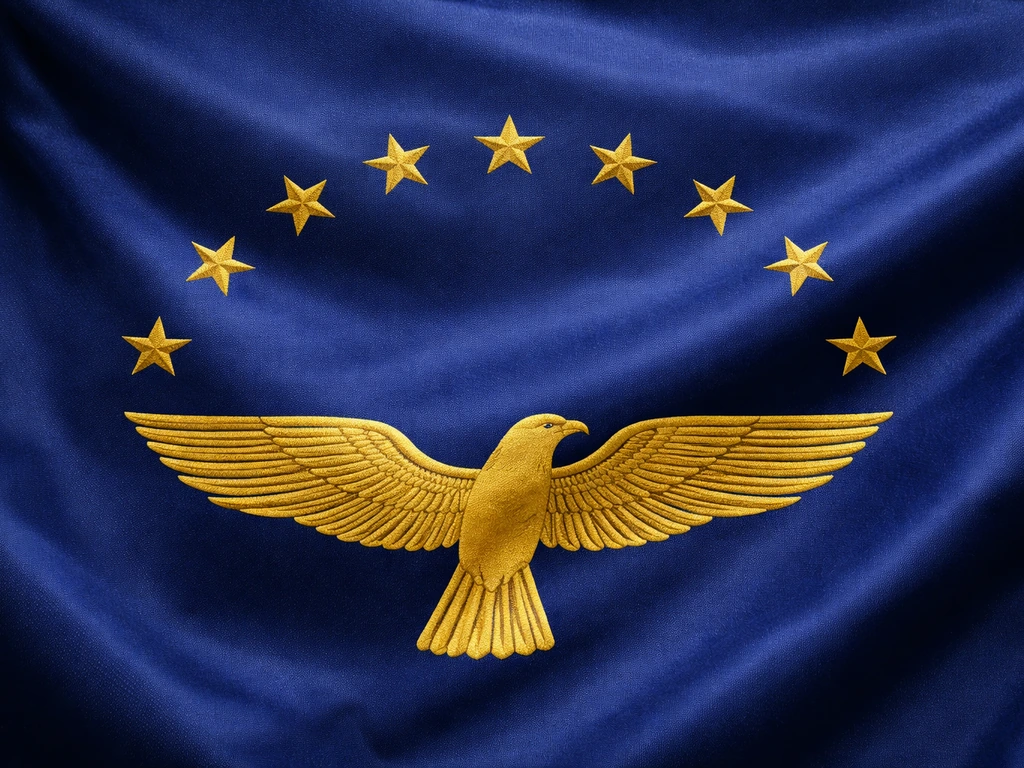
The bird on the Azores flag is the açor, a goshawk. If you want a similar bird look in your own sketch for the Mexican flag, use the same basic flying-raptor proportions and gold-like silhouette styling bird on the Azores flag. The official regional decree (Decreto Regional no. 4/79/A, dated 10 April 1979) describes it specifically as an "açor voante, de forma naturalista estilizada, de oiro", a flying goshawk, stylized-naturalistic, in gold, shown against a flag split between dark blue and white, with nine gold five-pointed stars arcing above it. That goshawk silhouette is also the source of the archipelago's name: "Azores" comes straight from the Portuguese word "açor."
What Bird Is on the Azores Flag? Identification Guide

Marcus Chen
14 Jun 2026
How to confirm the bird identification yourself
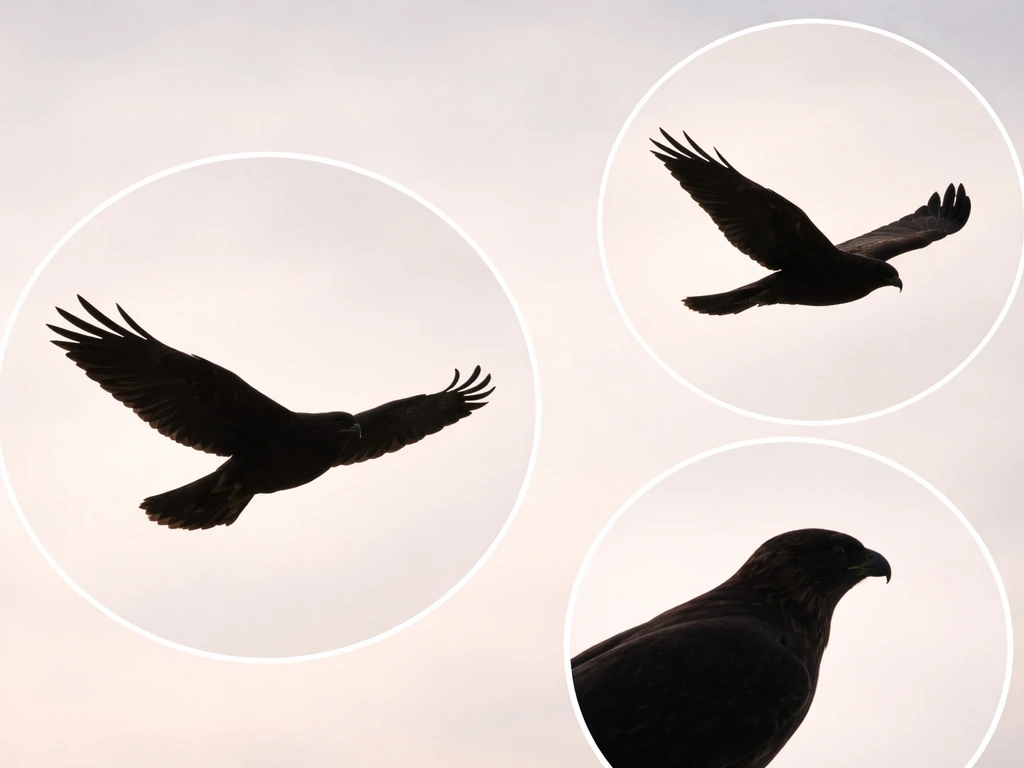
If you are looking at the flag and want to verify what you are seeing, here are the key visual details to check. The bird is shown in flight, wings spread, facing toward the hoist side. It is rendered in gold (yellow) against the flag's background. The style is naturalistic but simplified, not a highly detailed illustration, but clearly a bird of prey with broad wings and a rounded tail.
- Broad, rounded wings spread wide — characteristic of a goshawk or large hawk silhouette
- Short, slightly rounded tail (not the long, forked tail of a kite, and not the deeply notched tail of a falcon)
- Gold color throughout — this is a heraldic rendering, not a realistic plumage depiction
- Nine gold five-pointed stars arranged in a semi-circle above the bird, representing the nine islands of the archipelago
- A Portuguese national shield in the upper-left corner near the hoist
- The flag itself is split horizontally: dark blue on top, white on the bottom
If all those details line up, you are looking at the correct flag. The combination of the flying hawk silhouette plus nine stars is definitive, no other Azores regional symbol uses that exact arrangement.
What the bird actually means on the flag
The goshawk on the Azores flag is not just decorative, it is the entire reason the islands have the name they do. When Portuguese explorers arrived in the archipelago in the 15th century, they encountered large raptors and called them "açores" (goshawks), which led to the islands being named "Ilhas dos Açores" (Islands of the Goshawks). That name stuck for over five centuries, and when the Regional Government created the modern flag and coat of arms in 1979, the goshawk was the obvious choice to anchor both emblems.
The nine stars circling above the bird are equally meaningful. Each star represents one of the nine islands in the archipelago: São Miguel, Terceira, Faial, Pico, São Jorge, Graciosa, Santa Maria, Flores, and Corvo. Together, the goshawk and the nine stars make the Azores flag one of the more semantically rich regional flags in Europe, every element earns its place.
The gold color of the bird is a heraldic choice, carrying traditional associations with nobility, prestige, and enduring value. In the context of the Azores, it also ties the emblem visually to the coat of arms, which uses the same gold açor and star arrangement on a blue-and-white field.
The history behind the flag and its goshawk emblem
The Azores gained autonomous region status within Portugal in 1976, following the Carnation Revolution of 1974 that ended decades of authoritarian rule. With autonomy came the need for regional symbols. The Regional Government moved quickly: Regional Decree no. 4/79/A, signed on 10 April 1979, formally defined the flag, coat of arms, seal, and anthem. The Azores Regional Government states that these regional heraldic symbols are defined by Regional Decree no. 4/79/A (10 April) flag (bandeira), coat of arms (brasão de armas), seal (selo), and anthem (hino). About five weeks later, Decree no. 13/79/A (18 May 1979) tasked the government with producing an official, authenticated drawing of those symbols to prevent ambiguity in how they were reproduced.
The choice of the goshawk was deliberate and rooted in historical identity. The name "Azores" had defined the islands for centuries, so anchoring the new autonomous region's flag to that name was a way of claiming and celebrating that identity rather than distancing from it. The heraldic tradition of using birds as emblems, especially raptors, which symbolize strength and freedom, made the goshawk a natural fit for the moment.
The real bird behind the name: what species actually lives there
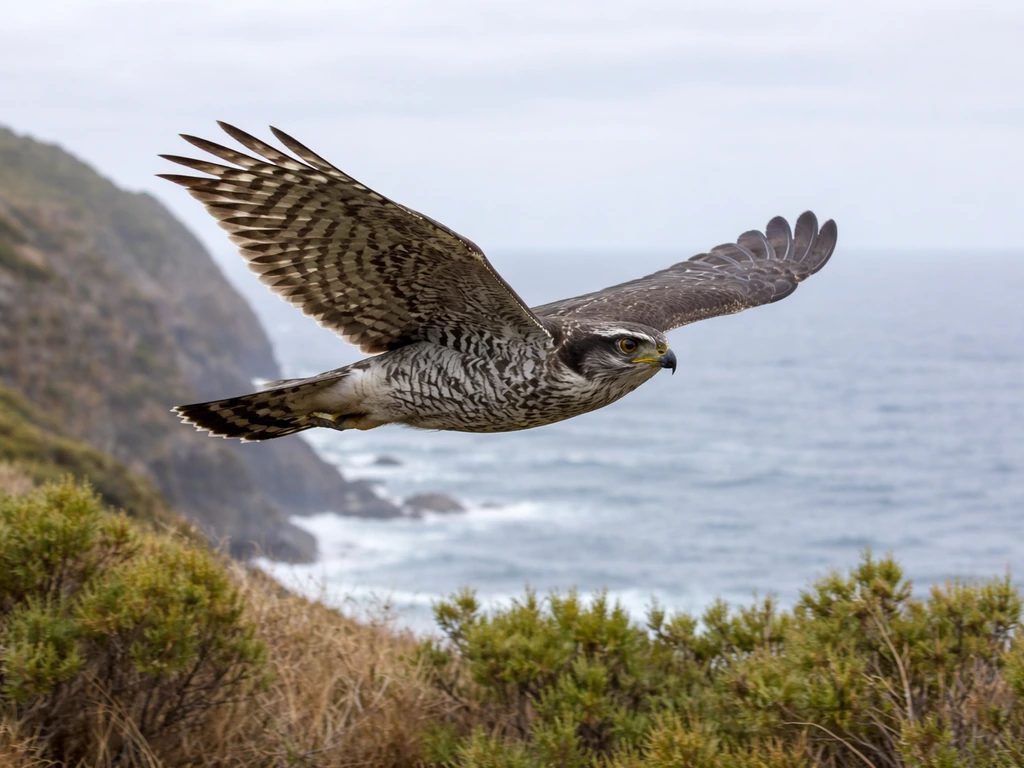
Here is where the story gets genuinely interesting. The birds those early Portuguese explorers saw were almost certainly not true goshawks at all. The resident diurnal raptor of the Azores is Buteo buteo rothschildi, an endemic subspecies of the common buzzard known locally as "milhafre" or "queimado." It is the only resident hawk-like bird in the archipelago. The true northern goshawk (Accipiter gentilis, called "açor-nortenho" in Portuguese) is a different, larger bird that is not native to the Azores.
So the founding name was essentially a misidentification: the explorers saw large buzzards, called them goshawks, and the name became permanent. The flag's emblem honors that historical name, not the specific taxonomy. Buteo buteo rothschildi is still a striking bird in its own right, a medium-to-large raptor with broad, rounded wings, a compact body, and variable brown-and-buff plumage. It soars frequently on thermal currents and is common enough in the Azores that birdwatchers visiting the islands will encounter it readily.
| Feature | Buteo buteo rothschildi (Azores buzzard) | Accipiter gentilis (True goshawk) |
|---|---|---|
| Local name | Milhafre / Queimado | Açor-nortenho / Açor-comum |
| Size | Medium-large (51–57 cm) | Large (48–62 cm, females larger) |
| Wing shape | Broad and rounded | Broad but more pointed at tip |
| Tail | Short and rounded | Long and rounded |
| Flight style | Soaring, gliding on thermals | Fast, agile forest flier |
| Habitat | Open fields, coastal cliffs, forests edges | Dense forests, woodlands |
| Azores presence | Endemic resident — found only here | Not native to the Azores |
| Plumage | Variable brown above, buff/barred below | Grey above, white finely barred below |
Buteo buteo rothschildi is classified as endemic to the Azores, meaning this subspecies occurs nowhere else in the world. That makes it genuinely special, even if the history behind its name involves a centuries-old case of mistaken identity.
Common mix-ups to avoid
The stylized gold silhouette on the flag is simplified enough that people sometimes second-guess the identification. A few mix-ups come up regularly.
Confusing the açor with a seabird
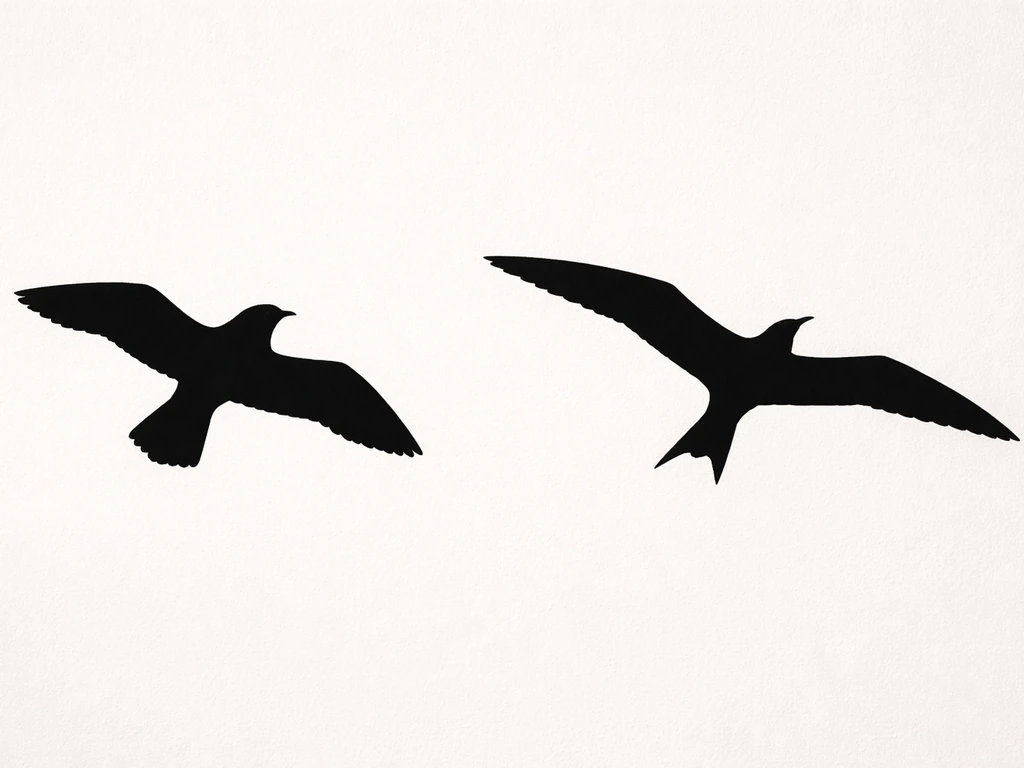
Because the Azores are an Atlantic archipelago, some people assume the flag must show a seabird, a gull, tern, or even a shearwater. It does not. The broad wings, compact body, and soaring posture of the silhouette are raptor features, not seabird features. Seabirds tend to have narrower, more swept-back wings on flags and heraldic artwork.
Confusing the açor with an eagle
Eagles appear on many national and regional flags, Mexico's flag features a golden eagle, and Egypt's flag uses the Eagle of Saladin. Mexico’s flag is the only one with the well-known eagle perched on a cactus, not the Azores goshawk silhouette. The Azores bird is smaller in heraldic scale and does not have the eagle's characteristic massive hooked beak or the muscular, heavy-shouldered build you see in eagle emblems. If you are familiar with those other flags, the Azores bird will look noticeably lighter and more agile in posture.
Confusing the açor with a falcon
Falcons have pointed, swept-back wings, that tapered wingtip is the giveaway on any heraldic depiction. The açor on the Azores flag has distinctly broad, rounded wings, which is the opposite of a falcon silhouette. If the wingtips look pointed, you are looking at the wrong bird.
The Ecuador flag comparison
The Ecuadorian flag features a condor, a massive New World vulture perched atop a coat of arms. The Azores flag has a bird in active flight, not perched, and the overall heraldic style is completely different. If you have been comparing island and South American flag birds, these two are easy to keep straight once you know what to look for.
Where to verify the flag and bird identification
If you want to go to primary sources rather than take anyone's word for it, here is where to look.
- The official Azores Regional Government portal (Governo dos Açores, governo.azores.gov.pt) has a section on heraldic symbols ("Símbolos heráldicos") that references the founding decrees directly.
- The Jornal Oficial do Governo Regional dos Açores (the official regional gazette) is where Decreto Regional no. 4/79/A was published on 12 April 1979 — this is the legal primary source for the flag description including the word "açor voante."
- The Diário da República (diariodarepublica.pt), Portugal's official state gazette, holds Decreto Regulamentar Regional no. 13/79/A (18 May 1979), which authorized the official authenticated version of the flag imagery.
- Wikimedia Commons hosts a precise SVG rendering of the Azores flag with a description confirming the goshawk identification — useful for visual reference alongside the legal text.
- The Parques Naturais dos Açores website (parquesnaturais.azores.gov.pt) provides species information on Buteo buteo rothschildi for anyone wanting to connect the flag emblem to the actual bird in the wild.
- The Museu Carlos Machado (Azores) natural history catalog lists Buteo buteo rothschildi under its local names "milhafre" and "queimado" — a good reference for the ornithological side of the story.
The single most important source is Decreto Regional no. 4/79/A. It uses the word "açor" explicitly and describes the bird as flying and gold. Everything else, the Wikipedia entries, the heraldry guides, the birdwatching resources, flows from that founding legal text. Start there if you ever need to cite the identification definitively.
FAQ
How can I tell the Azores bird isn’t a seabird just by looking at the flag?
Focus on the wing shape and body proportions in the silhouette. The Azores emblem shows broader, more rounded wings with a compact, raptor-like profile, and it is drawn as an active soaring predator rather than a bird with long, narrow, swept-back wings typical of many seabird flag depictions.
Does the flag show the real Azores “milhafre” (buzzard subspecies), or a true goshawk?
The flag honors the historical name “açor” (goshawk), but the article explains that the resident hawk-like bird in the Azores is an endemic buzzard subspecies, Buteo buteo rothschildi. So the design is tied to the naming tradition, not a modern taxonomic match to a true northern goshawk.
Why does the flag have nine stars if there are nine islands?
The nine gold stars correspond to the nine inhabited islands in the archipelago. If any version of the design shows a different star count, it may be an unofficial reproduction or a different coat-of-arms variant rather than the standard Azores flag.
Which direction should the bird face on the official design?
On the described flag artwork, the bird faces toward the hoist side (toward the left when viewing the hoist as the anchor point). If the bird is reversed, it is likely a reproduction or a simplified graphic rather than the standard orientation.
What’s the fastest “cheat check” if I only have a blurry image of the flag?
Look for the combination, not the details alone: a flying golden raptor silhouette with a set of nine gold five-pointed stars arcing above. The arched nine-star arrangement plus the hawk-like silhouette is the key identifier.
Are there common versions of the flag that still use the right bird but change color or proportions?
Yes. The article notes a later decree requiring an authenticated drawing to prevent ambiguity in reproduction. In practice, you may see differences in gold shade (yellow vs. metallic gold) or minor scaling of the bird and stars, but the bird type (flying raptor silhouette) and the nine-star layout should remain consistent.
How can I distinguish the Azores bird from an eagle if both are golden silhouettes?
Check the build and beak impression in the stylization. The Azores emblem reads as a lighter, more agile raptor in flight, without the heavy, hooked-beak look and the bulky, shoulder-heavy eagle profile seen in many eagle flag designs.
What about falcons, they also have broad wings sometimes. Is there a reliable rule?
Use the wing tips. The article describes the Azores bird as having distinctly broad, rounded wings, whereas falcon silhouettes usually show pointed, tapered wingtips. Rounded wingtips are a strong indicator you are looking at the açor design.
If I want to verify the identification from an official source, what should I look for?
The key is the specific decree text that uses the word “açor” and describes the bird as flying and gold. If your copy of the flag is for research or publication, tie your description to that legal wording rather than relying on secondary summaries.
Does the flag interpretation depend on whether someone is a birdwatcher versus a heraldry fan?
The visual identifier comes from the heraldic artwork, while the natural history discussion is separate. Birdwatchers may expect a modern species match, but the article clarifies the emblem corresponds to the historical “açor” naming, even though the island’s resident hawk-like bird is an endemic buzzard subspecies.
Next Article
What Bird Is on the Egyptian Flag? Answer and Meaning
Identifies the bird on Egypt’s flag or emblem, explains its symbolism, and shows how to verify the exact version.