Peru's national bird is the Andean Cock-of-the-Rock
Peru's national bird is the Andean Cock-of-the-Rock, known locally as the "Gallito de las Rocas" blank" rel="noopener noreferrer">(scientific name: Rupicola peruvianus). It was officially declared the national bird in 1941 and has held that status ever since. American Bird Conservancy lists Rupicola peruvianus, the Andean cock-of-the-rock, as Peru’s national bird. If you've seen the bird in a photo and are trying to confirm what it is, you're in the right place. It's one of the most visually striking birds in South America, and once you know what to look for, there's really no mistaking it.
What it looks like: key features to spot
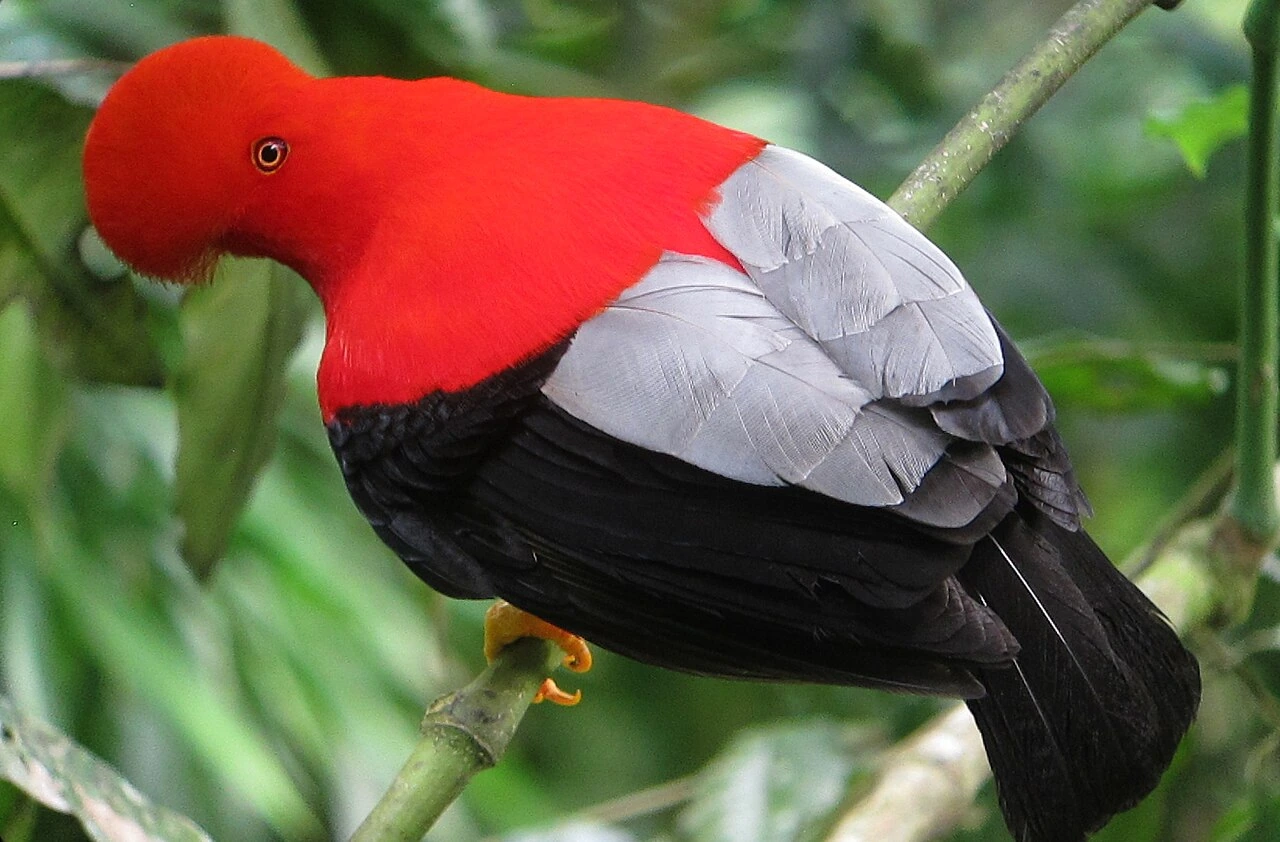
The male is the showstopper. He's roughly 31 to 33 cm long (about 12 to 13 inches) and covered in brilliant red-orange plumage that almost seems to glow in the dim light of the cloud forest. His wings and tail are black, and there's a distinctive light grey patch on his lower back (the tertial feathers). But the feature that grabs your attention first is the crest: a large, fan-shaped disc of feathers that fans forward over his face and almost completely covers his bill. It's circular, dense, and impossible to miss.
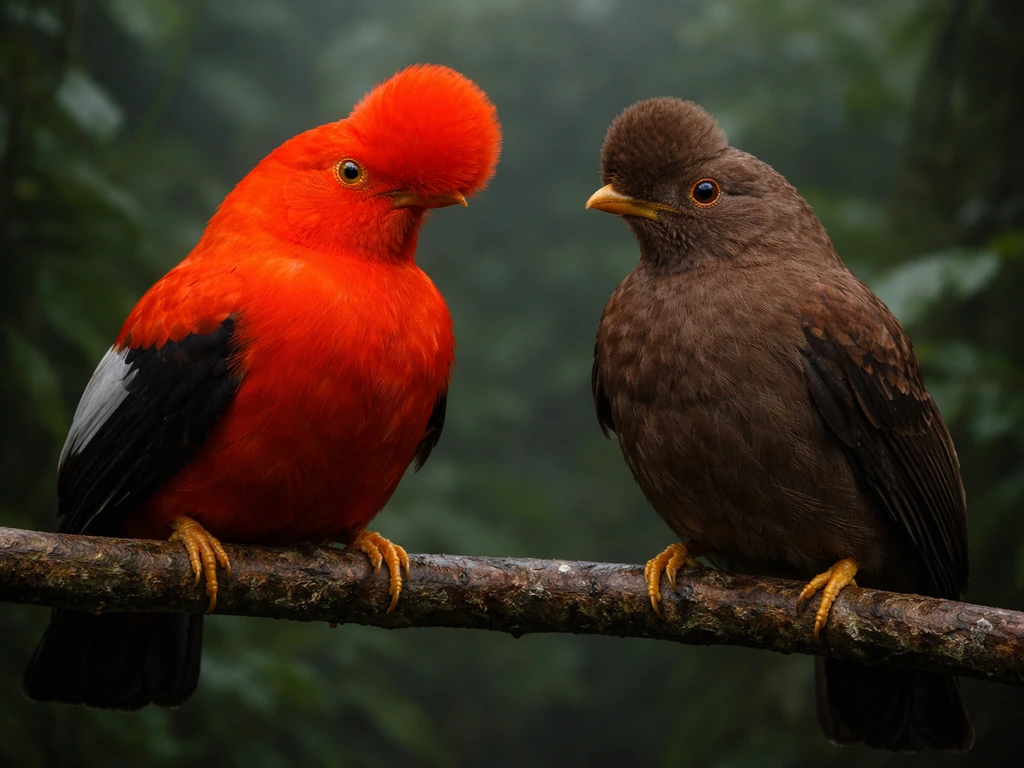
The female is a completely different bird in appearance. She's much darker and browner overall, with a smaller crest. This strong sexual dimorphism is typical in species where males compete intensely for mates. If you're looking at a brownish bird with a modest crest and wonder if it's the same species, it probably is the female Gallito de las Rocas.
Here's a quick summary of the male's key visual traits, which are the most-referenced for identification:
- Overall color: brilliant red-orange (sometimes described as scarlet-orange depending on light conditions)
- Wings and tail: black, contrasting sharply with the orange body
- Crest: large, fan-shaped disc that nearly hides the bill entirely
- Lower back: a noticeable pale grey patch among the tertial feathers
- Size: roughly 31–33 cm (12–13 in), stocky and compact build
The closest lookalike is the Guianan Cock-of-the-Rock (Rupicola rupicola), which has similar body shape and coloration. But there's no range overlap between the two species, so if you're looking at a bird in Peru's Andes or eastern slopes, it can only be the Andean species. You don't need to worry about confusing them in the field.
Where to find it in Peru
The Andean Cock-of-the-Rock lives in humid montane forests along the eastern slopes of the Andes, the cloud-forest zone, typically up to about 2,400 meters (7,870 feet) in elevation. It's closely tied to areas with rocky outcrops and dense vegetation, which is where the "rock" in its name comes from. It nests on cliff faces and rocky ledges, often near streams.
In Peru specifically, several protected areas are well-known spots for seeing this bird. Peru.info points to a solid list of reliable locations:
- Manu National Park (Cusco and Madre de Dios regions): one of the most famous locations, with known lek sites in the cloud forest
- Abiseo River National Park (San Martín): another reliable eastern-slope location
- Yanachaga-Chemillén National Park (Pasco): good cloud-forest habitat
- Tingo María National Park (Huánuco): easily accessible from the city of Tingo María
- Cutervo National Park (Cajamarca/San Ignacio area): northern Peru option
- Historic Sanctuary of Machu Picchu: yes, you can sometimes spot them here too
The best time to look for them is early morning at lek sites, which are communal display arenas where males gather to compete for females. Males make loud, distinctive calls during these displays, often described as a "youii" sound, which carries well through dense forest and can help you locate them before you see them. If you hear something like a loud, slightly nasal squawk in cloud-forest habitat, it's worth investigating.
Why this bird represents Peru
The connection between the Gallito de las Rocas and Peru runs deeper than just a government declaration. The bird's vivid orange-red coloring is widely seen as echoing the red and white of Peru's national flag, a symbolic link that locals and experts both recognize. The bird is also native specifically to the Andean region, making it a genuinely local emblem rather than a generic South American species.
The male's dramatic courtship display at leks has also contributed to its cultural standing. The spectacle of males gathering to perform, fanning out their extraordinary crests and calling loudly, is the kind of natural theater that captures people's imagination. Peru.info highlights the crest as central to this courtship "performance," and it's easy to see why the image of this bird became embedded in Peruvian national identity.
The national status is reflected in everyday life too. The Gallito de las Rocas appears on Peru's 200 soles banknote, making it one of those national symbols that people encounter regularly rather than just in textbooks.
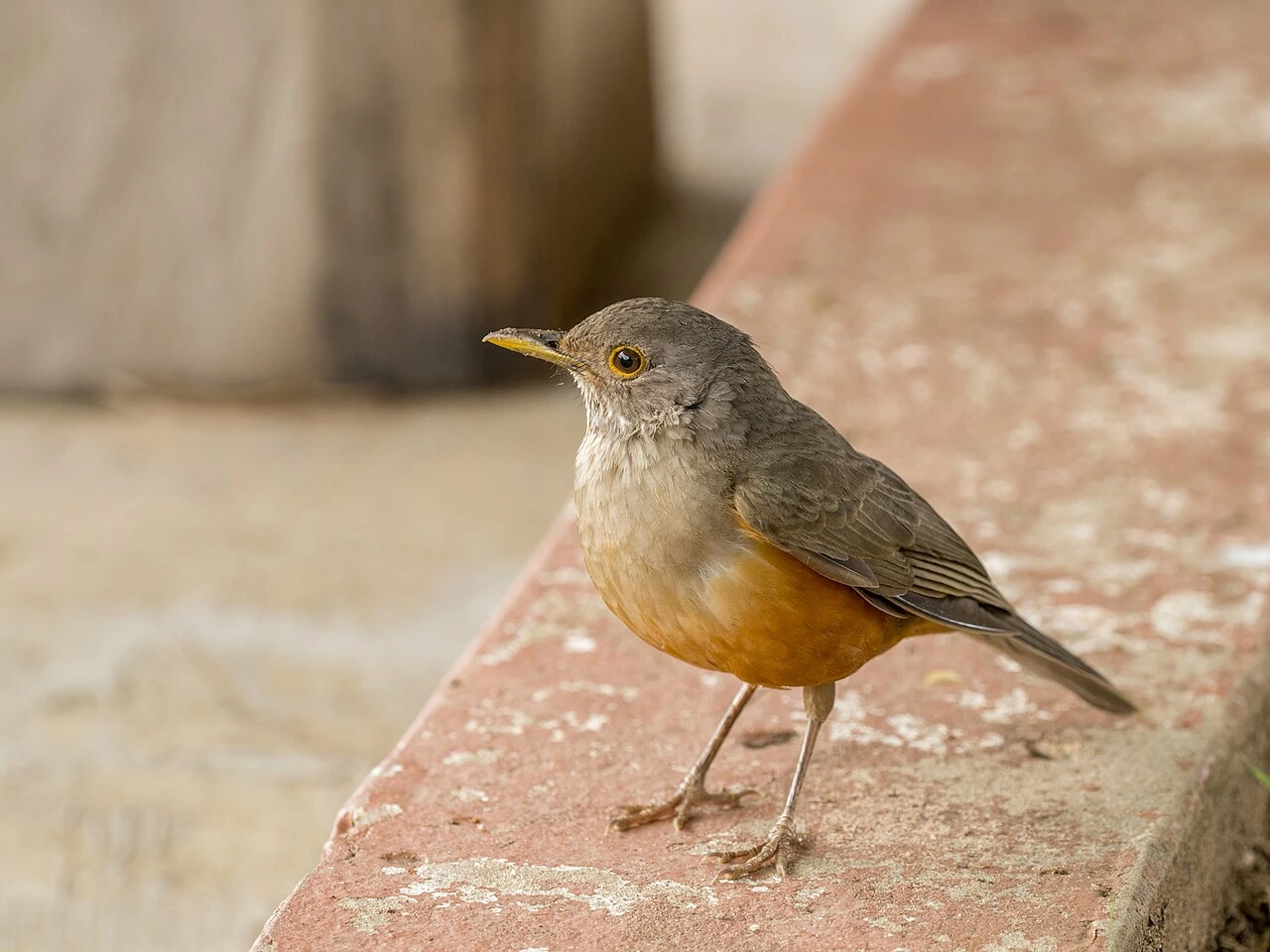
Peru's biodiversity makes it a remarkable country for this kind of national emblem. For context, neighboring countries have made equally distinctive choices: Colombia's national bird is the Andean Condor, another Andean giant with deep cultural roots. And if you're exploring the broader region, it's worth knowing that Brazil's national bird is the Rufous-bellied Thrush, a very different choice that reflects a different kind of cultural connection to wildlife.
How to confirm you're looking at the right bird
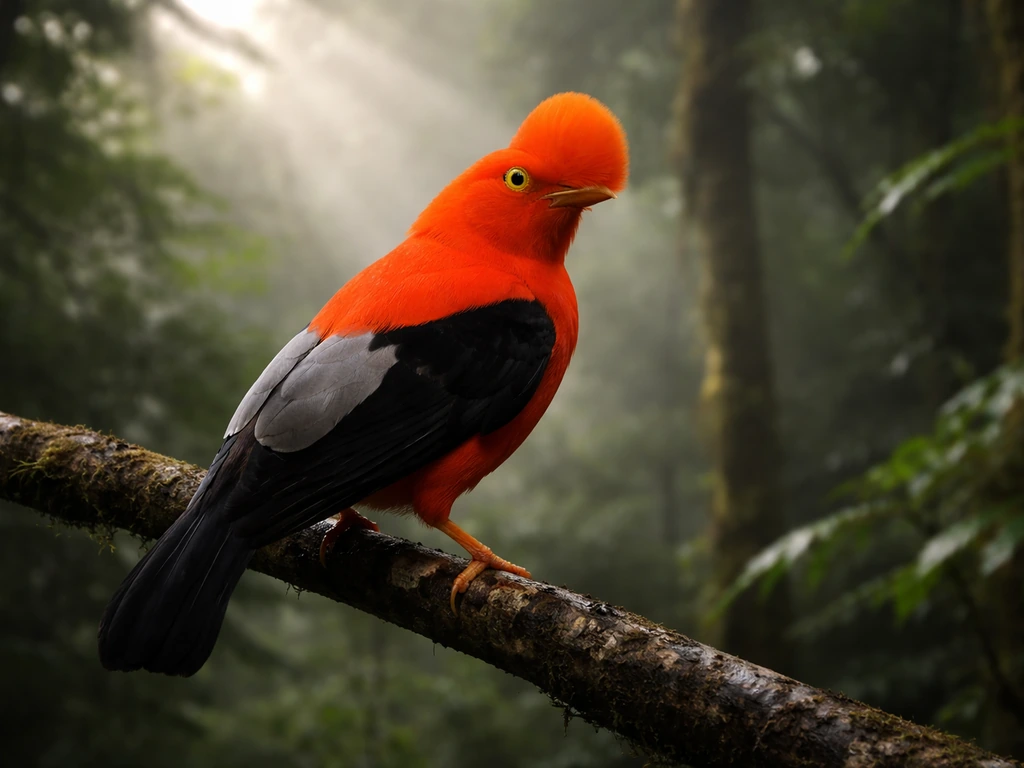
If you've found a photo or a sighting and want to be sure you're looking at an Andean Cock-of-the-Rock, the checklist is short. For a male: brilliant orange-red body, black wings and tail, fan-shaped crest obscuring the bill, grey lower back patch. For a female: dull brownish overall with a smaller crest, in the same cloud-forest habitat. If you're in Peru's Andean cloud forests and both of these descriptions fit, there's really only one bird it can be.
For photo confirmation, eBird's species page for Rupicola peruvianus is one of the most useful free resources out there. It aggregates thousands of community-submitted photos and audio recordings from birders across South America, organized by region and date. You can filter by location to see records from Peru specifically, which helps you cross-reference your sighting against verified observations.
iNaturalist is another solid option for photo-based confirmation. Search for "Rupicola peruvianus" or "gallito de las rocas" and you'll find annotated photos uploaded by naturalists, many of them from Peru. The platform allows expert community members to verify identifications, so photos marked as "research grade" are especially trustworthy.
How Peru's choice compares to its neighbors
South American countries have taken very different approaches to choosing national birds, which makes for an interesting comparison. Peru went with a bird that's visually explosive and regionally specific. Here's a quick look at how the choices stack up across the continent's southern cone and nearby countries:
| Country | National Bird | Key Visual Trait | Habitat |
|---|
| Peru | Andean Cock-of-the-Rock (Rupicola peruvianus) | Brilliant orange-red, fan crest | Andean cloud forest |
| Colombia | Andean Condor (Vultur gryphus) | Massive wingspan, white neck ruff | High Andes and open grasslands |
| Brazil | Rufous-bellied Thrush (Turdus rufiventris) | Orange-rufous underparts, plain brown back | Forest edges, gardens, open woodland |
| Argentina | Rufous Hornero (Furnarius rufus) | Rufous-brown, mud-oven nest builder | Open grassland and urban areas |
| Chile | Andean Condor (Vultur gryphus) | Massive wingspan, white collar | Andean peaks and coastal cliffs |
Chile and Colombia both chose the Andean Condor, reflecting a shared Andean heritage. If you want to dig into those choices, the article on Chile's national bird covers the condor's significance there in detail. And the story behind Argentina's national bird, the Rufous Hornero, is a completely different kind of symbolism: less about spectacle and more about industriousness and everyday life.
Peru's choice stands out precisely because the Gallito de las Rocas is so unmistakably Andean, so visually dramatic, and so deeply tied to a specific landscape. It's the kind of national symbol that earns its status every time a male fans out that extraordinary crest at a lek in the cloud forest.