
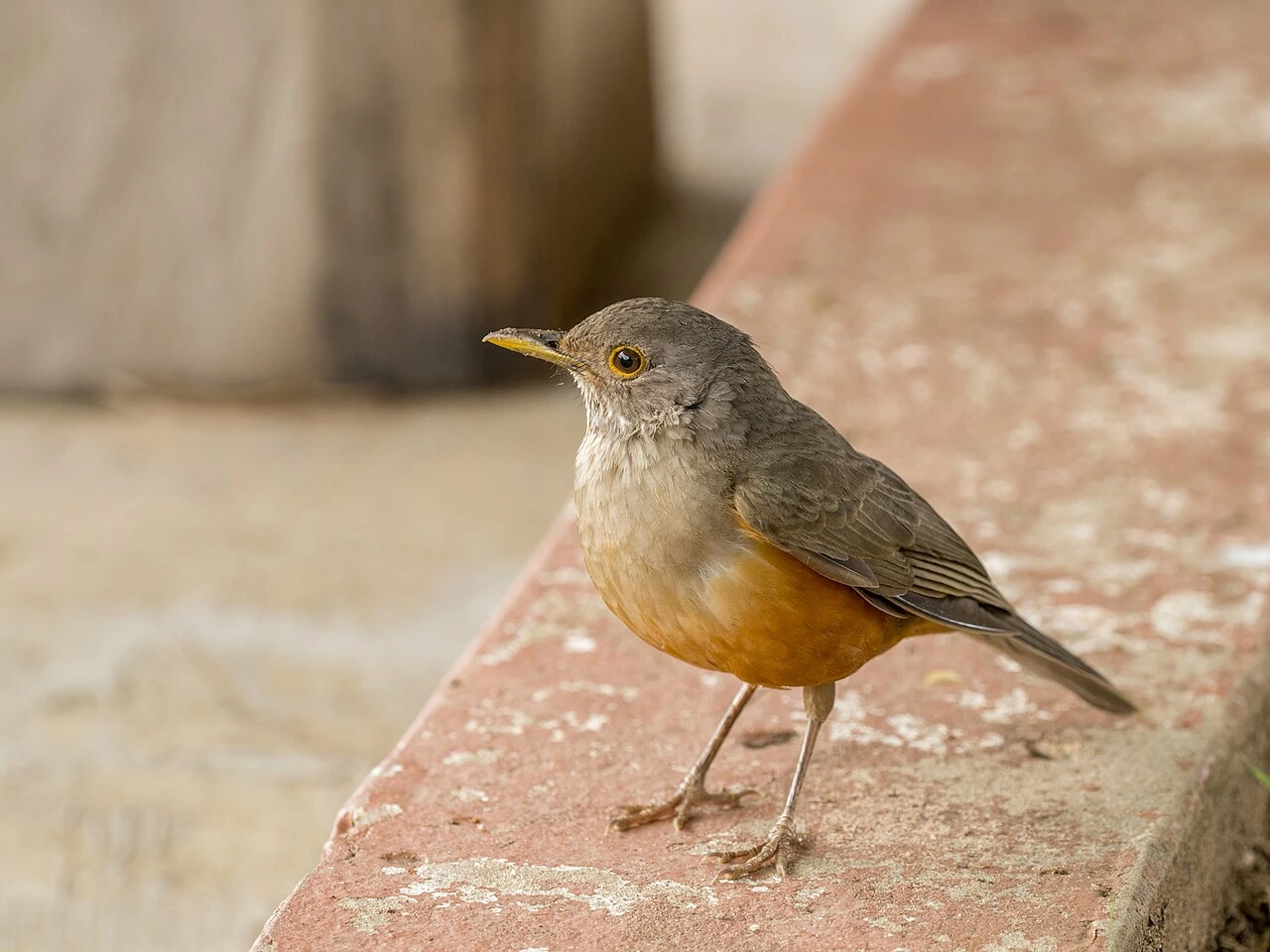
Brazil's national bird is the rufous-bellied thrush, known in Portuguese as the <em>sabiá-laranjeira</em> and scientifically as <em>Turdus rufiventris</em>. Museu Nacional da UFRJ (Horto Botânico) describes Turdus rufiventris (sabiá-laranjeira) with common names and explains the meaning and context of the name “sabiá,” tying it to its role as a Brazilian bird symbol name “sabiá”. That is the direct answer. If you just needed the name, there it is. But if you want to understand where that designation comes from, why this particular bird was chosen, and what makes it worth knowing about, read on.
What Is Brazil’s National Bird? Meaning and Facts

Marcus Chen
8 Apr 2026
Where the national bird designation comes from

The official basis for calling the <em>sabiá-laranjeira</em> Brazil's national bird is a federal decree signed on October 3, 2002. That presidential instrument established "Dia da Ave" (Bird Day) on October 5 each year and explicitly described <em>Turdus rufiventris</em> as a "símbolo representativo da fauna ornitológica brasileira", a representative symbol of Brazilian ornithological fauna, and noted that it is "considerada popularmente Ave Nacional do Brasil" (popularly regarded as Brazil's national bird). The city of Belo Horizonte's official government site references the same decree (Decreto nº 9.675) and states directly that it defined the <em>sabiá</em> as the national bird. UFRJ's institutional page makes the same connection, as does WikiAves, Brazil's leading bird encyclopedia.
One thing worth noting: the decree's language frames the bird as a popular national symbol rather than assigning it a strictly legislative title in the way some countries codify their national emblems. But in practice, the 2002 federal decree is the definitive official anchor. Belo Horizonte's page also notes that a later decree revoked an earlier instrument, so the 2002 text is the one that stands. If you want to verify this yourself, search for "Decreto de 3 de outubro de 2002" along with "sabiá-laranjeira" and you will find the decree reflected in Brazilian government and academic sources consistently.
Why the sabiá-laranjeira? The symbolism behind the choice
The rufous-bellied thrush is not Brazil's national bird because it is rare or exotic. It was chosen precisely because it is familiar, beloved, and deeply woven into Brazilian cultural identity. This is a bird that Brazilians grow up hearing in backyards, parks, and forest edges. Its song is considered one of the most beautiful in Brazil, and that melodic quality has long made it a cultural touchstone.
The most famous cultural connection is to the poem "Canção do Exílio" (Song of Exile), written by Gonçalves Dias in 1843. In it, the poet longs for the singing of the <em>sabiá</em> while in exile in Portugal. That image of the bird's song representing the beauty and longing associated with Brazil stuck deeply in the national consciousness. By the time the 2002 decree was signed, the <em>sabiá-laranjeira</em> had been a cultural shorthand for Brazilian identity for over 150 years.
It also helps that this bird lives across much of the country. It is not a regional specialty that only people in one state would recognize. It inhabits eastern and southeastern Brazil broadly, making it genuinely representative of the nation rather than just one corner of it.
The timeline: how Brazil arrived at this designation
The push to give the <em>sabiá-laranjeira</em> formal national recognition did not happen overnight. The groundwork was laid decades before the 2002 decree. In 1966, the state of São Paulo issued its own decree (Decreto 46.797, signed September 22, 1966) naming the <em>sabiá-laranjeira</em> as São Paulo's state bird, describing it as a "centro de interêsse" (center of interest) for Bird Day. That state-level recognition helped build the case for elevating the bird to national status.
A formal proposal to designate a national bird emerged as early as 1968, reflecting broad public support for giving the <em>sabiá</em> an official role. The momentum built over subsequent decades. By September 2002, just weeks before the decree was signed, the Brazilian Senate was actively discussing the move, a news item from the Senate dated September 23, 2002, shows the proposal being debated publicly. The federal decree followed on October 3, 2002, anchoring the designation to "Dia da Ave" on October 5.
What makes the rufous-bellied thrush worth knowing
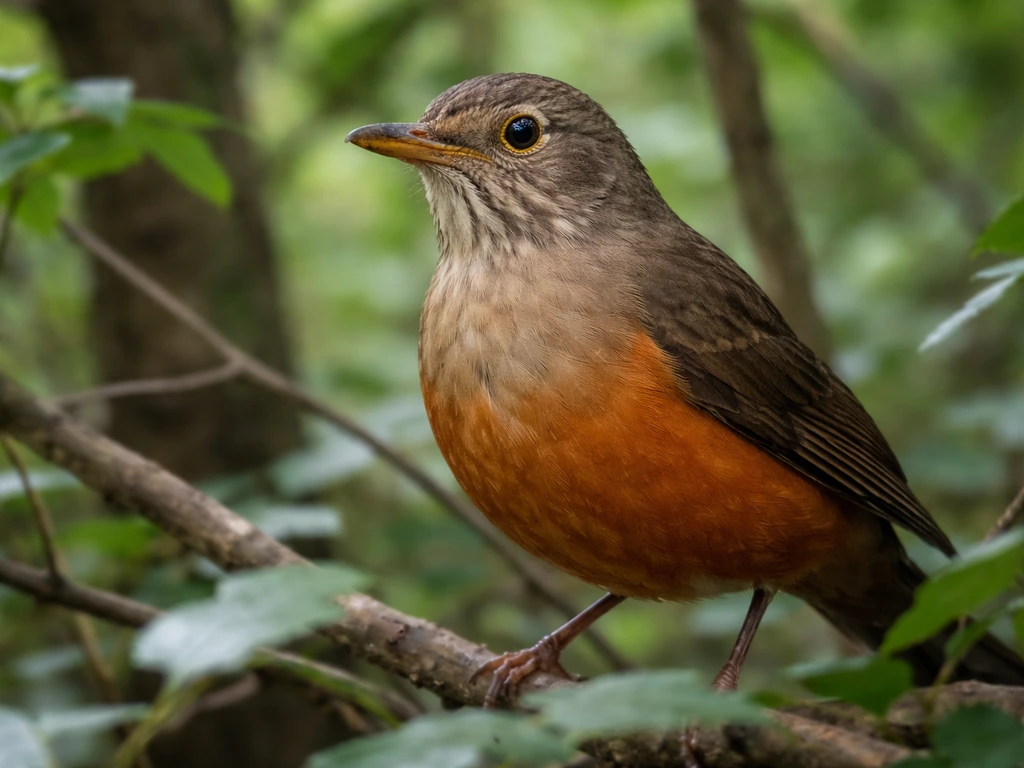
Beyond the symbolism, this is a genuinely interesting bird. Here are the facts that help paint a picture of the actual animal behind the national emblem.
- Size and weight: adults reach about 25 cm in length. Males typically weigh up to around 68 g and females up to around 78 g, making females slightly heavier on average.
- Coloring: the bird gets its English name from the warm rufous (reddish-orange) wash on its underparts, which contrasts with its brownish-olive upperparts. The bill is yellow-orange.
- Song: the <em>sabiá-laranjeira</em>'s melodious, flute-like song is considered one of the finest among Brazilian birds and was the quality most celebrated in poetry and song.
- Range: the species is widespread across eastern and southeastern Brazil, and its range extends into parts of neighboring South American countries including Bolivia, Paraguay, Uruguay, and northern Argentina.
- Nesting behavior: research published on nesting in montane forest environments shows the rufous-bellied thrush is adaptable in its nest-site choices, a flexibility that likely contributes to its success across varied habitats.
- Family: it belongs to the thrush family Turdidae, which includes many well-known songbirds worldwide. Britannica recognizes the rufous-bellied thrush as a notable example species within this family.
One thing that makes this bird's status particularly meaningful is that it is not just symbolic on paper. The Rainforest Alliance has noted that the national bird designation could support conservation awareness for the species in Brazil. The Rainforest Alliance species page identifies Turdus rufiventris as the rufous-bellied thrush and places it in the Turdidae (thrush) family, which can be useful for understanding the species behind Brazil’s national-bird designation The Rainforest Alliance species page identifies Turdus rufiventris as the rufous-bellied thrush and places it in the Turdidae family. A bird that people already love and identify with culturally is easier to protect.
How Brazil's choice compares to its neighbors
South America is home to some of the world's most striking national bird choices, and it is worth putting Brazil's selection in regional context. Brazil chose a common, culturally resonant songbird. Other countries in the region took very different approaches.
| Country | National Bird | Selection Logic |
|---|---|---|
| Brazil | Rufous-bellied thrush (sabiá-laranjeira) | Cultural familiarity, beloved song, literary heritage |
| Colombia | Andean condor | Majestic size, Andean identity, symbol of freedom |
| Argentina | Rufous hornero (hornero) | Industrious nesting behavior, widespread across the pampas |
| Peru | Andean cock-of-the-rock | Striking plumage, Andean biodiversity, tourism appeal |
| Chile | Andean condor | Shared Andean heritage, power and freedom symbolism |
Brazil's choice stands out because it prioritized emotional and literary connection over visual drama. The <em>sabiá-laranjeira</em> is not the biggest or most colorful bird in Brazil, but it is the one that feels most like home to most Brazilians. If you are curious about how Colombia selected its national bird, you will find a very different story centered on the iconic Andean condor and its association with independence and altitude.
Where to go next to verify and learn more
If you want to confirm the national bird designation directly, the clearest path is to search for the "Decreto de 3 de outubro de 2002" in Brazilian government databases or cross-reference it through WikiAves, which is the authoritative Brazilian bird encyclopedia and mirrors the decree's language. IBAMA, Brazil's environmental agency, recognizes <em>Turdus rufiventris</em> in official environmental regulation materials, which gives additional institutional weight to the species' recognized status.
For identification and distribution data, eBird maintains a species page for <em>Turdus rufiventris</em> with occurrence maps built from real birder observations across Brazil and the wider range. That is the most practical tool for understanding where and when the bird is actually recorded. If you want to dig into the bird's biology beyond what the decree describes, Britannica's coverage of the thrush family provides solid taxonomic context.
One caution: "national bird" lists compiled on general aggregator sites sometimes lack sourcing. For Brazil specifically, always check that any claim traces back to the 2002 decree rather than just repeating a Wikipedia summary. The decree language is specific and publicly documented, so verification is straightforward.
If Brazil's national bird has you curious about the broader region, there is a lot to explore nearby. You can read about which bird serves as a national symbol of Argentina, or look into Peru's national bird, the spectacularly colorful Andean cock-of-the-rock. And if you are working your way through South America's national birds, Chile's national bird offers another angle on how Andean nations approach this kind of symbolism. Each country's choice tells you something real about how its people see themselves and their land.
FAQ
What is the rufous-bellied thrush called in Portuguese, and is it the same species as Turdus rufiventris?
In English it is commonly called the rufous-bellied thrush. In Portuguese, the official common name is sabiá-laranjeira, and the scientific name used in the 2002 decree is Turdus rufiventris.
Is the designation in Brazil a strict legal “national emblem,” or more of a ceremonial national symbol?
No. The 2002 instrument is tied to the Bird Day framework and describes the species as a popular national symbol, not as a visually depicted emblem like a flag or coat of arms. If you need strict “legal” language, rely on the decree text rather than summaries.
Why do some sources mention different dates or instruments for Brazil’s national bird?
The article notes institutional references from Belo Horizonte and that a later decree revoked an earlier instrument, which is why the 2002 text is treated as the definitive one. If you are checking older web pages, you may see conflicting references to earlier versions.
Will searching only for “sabiá” be enough to confirm the national bird?
Yes, because the same species can be recognized under multiple Portuguese forms in different contexts. For example, searches using only sabiá (thrush) can be ambiguous, so include sabiá-laranjeira or Turdus rufiventris in your query to avoid mix-ups with other sabiá species.
Where in Brazil can I actually spot the sabiá-laranjeira?
You will typically see the bird in eastern and southeastern Brazil, including urban parks and forest edges, but exact sightings vary by season and habitat. For “where to look,” occurrence maps from eBird are usually more practical than the symbolic description in the decree.
Does Brazil celebrate Bird Day on the same date every year, and does it affect the national bird designation?
The Bird Day celebration is set for October 5, anchored by the 2002 decree establishing Dia da Ave. The national bird identity remains the same, but local events may differ by city or state.
Was the national bird chosen because it is endangered or rare?
Generally, the designation should not be mistaken for a “rare” or “endangered” bird. Its value as a national symbol comes from cultural familiarity, and conservation support is discussed as a potential benefit rather than the main reason for the choice.
How can I tell whether a website’s claim about Brazil’s national bird is properly sourced?
If you are evaluating a “national bird” claim from an aggregator list, the article recommends verifying that it traces back to the 2002 decree. A quick decision aid is to confirm the presence of Turdus rufiventris and the decree date, then treat other lists as secondary.
Next Articles
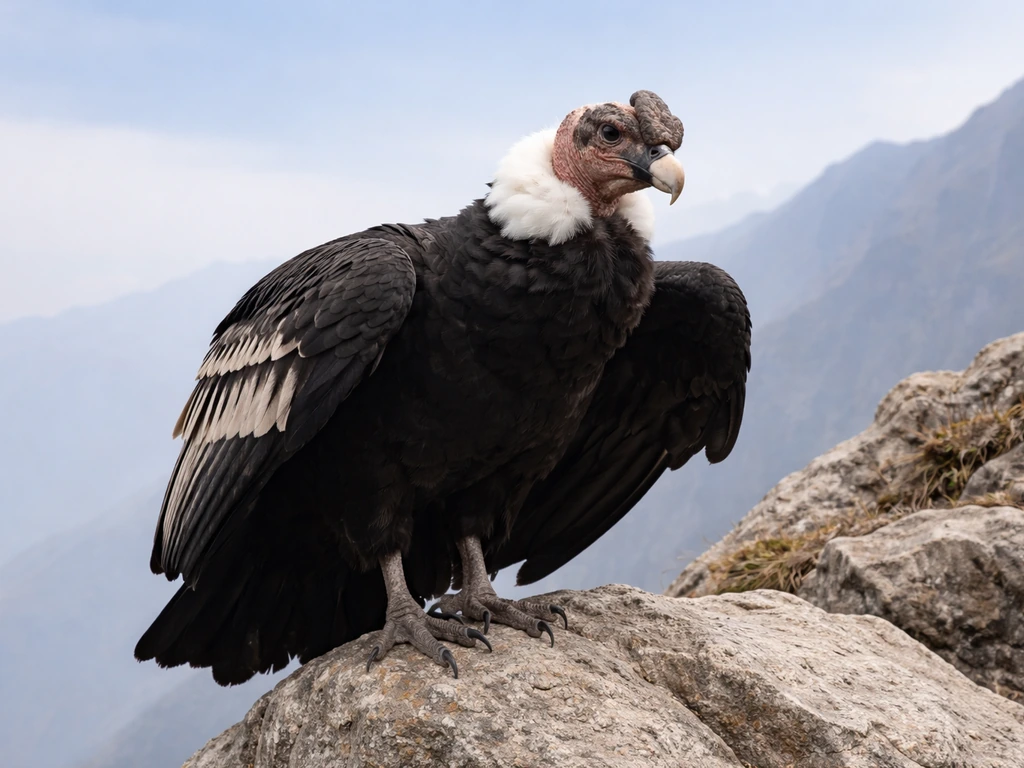
What Is the National Bird of Colombia? Meaning and Facts
Learn what Colombia’s national bird is, why it was chosen, and its cultural symbolism and key traits.
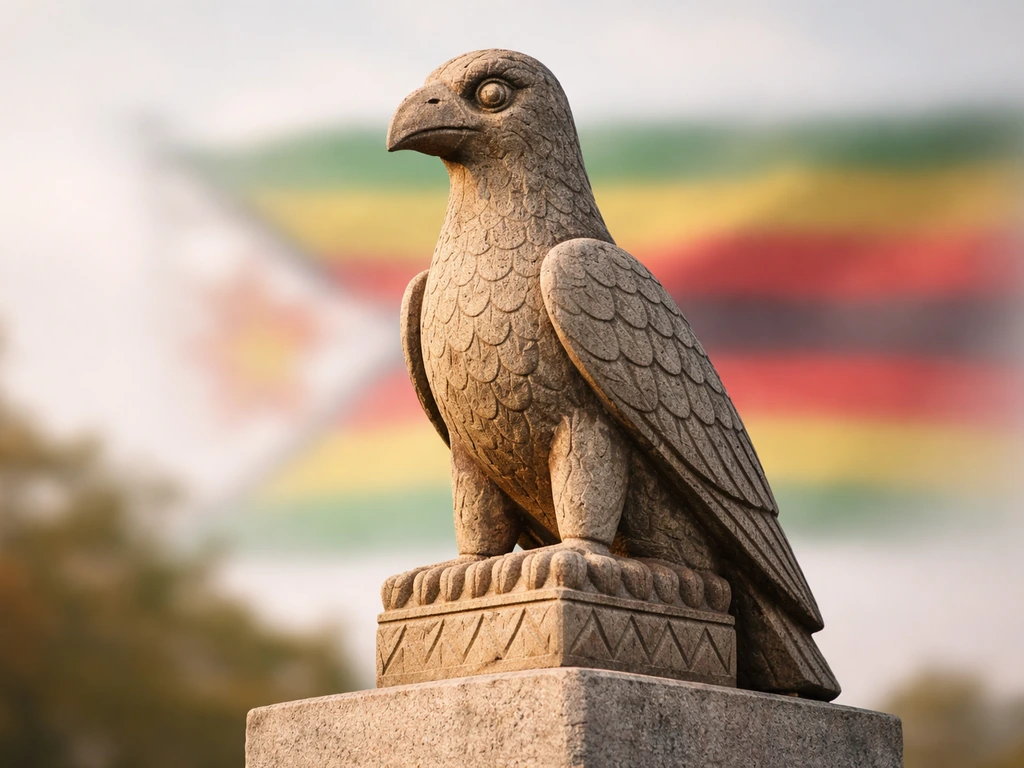
What Is the National Bird of Zimbabwe? Symbolism and Facts
Discover Zimbabwe’s national bird, its distinctive traits, and the history and symbolism behind the emblematic choice.
What Is the National Bird of Botswana? Bird ID, Meaning
Answers Botswana national bird name with species ID, how to recognize it, where to spot it, and its cultural meaning