Quick facts about the hornero
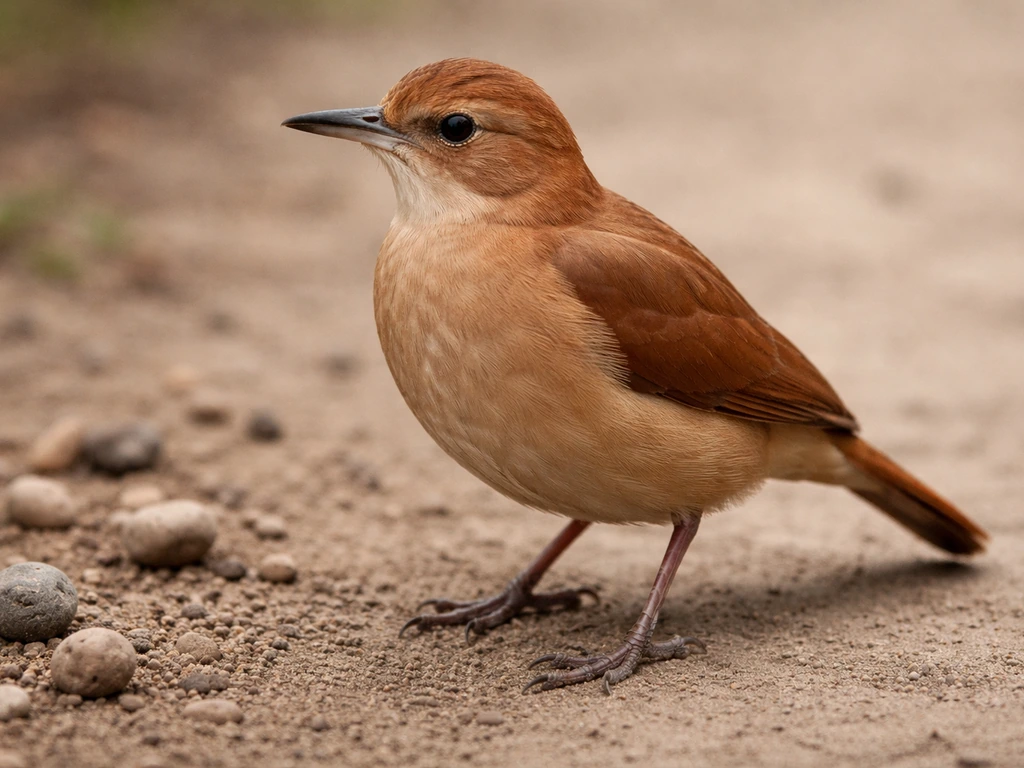
The rufous hornero is a compact, ground-foraging bird. Here's what you need to know to identify it and understand what you're looking at:
| Trait | Detail |
|---|
| Scientific name | Furnarius rufus |
| Common names (Argentina) | Hornero, Casero, Caserito, Alonsito |
| Length | 18–20 cm |
| Weight | 31–58 g |
| Plumage | Rufous-brown back, pale buffy underparts, whitish throat |
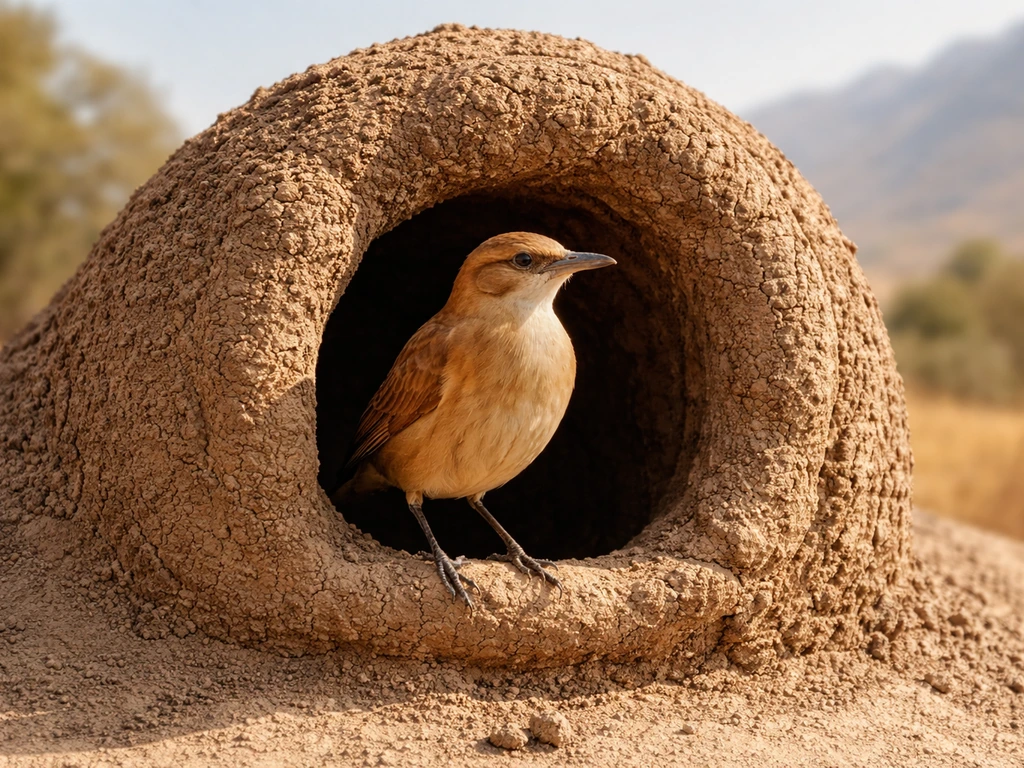
| Nest | Dome-shaped clay oven structure, about the size of a football |
| Diet | Insects and invertebrates, foraged from the ground |
| Call | Loud, rattling territorial song, often performed in pairs |
The name "hornero" comes from the Spanish word "horno," meaning oven. That's a direct reference to the bird's remarkable nest: a domed structure built from mud and grass that hardens in the sun and looks strikingly like a traditional clay oven. You'll spot these nests sitting on fence posts, tree branches, and telephone poles across the country. The bird is rufous above and buff below with a contrasting white throat, which makes identification fairly straightforward once you know what you're looking for.
Where you'll find the hornero in Argentina
The hornero is widespread across Argentina, which is a big part of why it resonates so strongly as a national symbol. It thrives in a range of habitats including woods, grasslands, and embankments. It's equally comfortable in rural farmland and urban parks, and in cities like Buenos Aires it's practically a backyard bird. You don't need to go on a wildlife expedition to see one; step outside in most populated areas of the country and you'll likely hear its rattling call within minutes.
Its range extends well beyond Argentina into southern Brazil, Uruguay, Bolivia, and Paraguay, but within Argentina it is ubiquitous. That everyday presence, from the Pampas to city parks, is central to why Argentines feel such a personal connection to it. It's not a rare or distant creature reserved for conservation zones. It's the bird your average Argentine child grows up seeing on the walk to school.
What the hornero represents
The symbolism attached to the hornero is built on hard work, family, and humility. The bird is celebrated not for power or rarity, but for its industriousness. It constructs its elaborate mud nest entirely by itself, brick by brick in the most literal sense, carrying mud and straw in repeated trips until the dome is solid enough to raise chicks in. That image of steady, humble labor resonated deeply with Argentine values, particularly the working-class and rural traditions that defined much of the country's identity in the early 20th century.
The hornero is also a paired bird. Both the male and female work on the nest together, and they're famously territorial and vocal about defending it. That combination of family loyalty and hard work made it a natural cultural fit for a national emblem. Compare that to neighboring countries: Brazil's national bird is the Rufous-bellied thrush, chosen partly for its song, while Colombia's national bird is the Andean condor, chosen for grandeur and power. Argentina went a different direction entirely.
How the hornero became Argentina's national bird in 1928
The selection happened in 1928 through a children's survey organized by the Buenos Aires newspaper La Razón. The campaign ran from approximately April to June of that year and was aimed at primary schoolchildren across Argentina. Kids voted for their preferred national bird, and when the votes were counted, the hornero came out on top with 39,818 votes. Its competitors included the Andean condor and the tero (more on that bird below), both of which had strong popular appeal but ultimately lost to the humble mud builder.
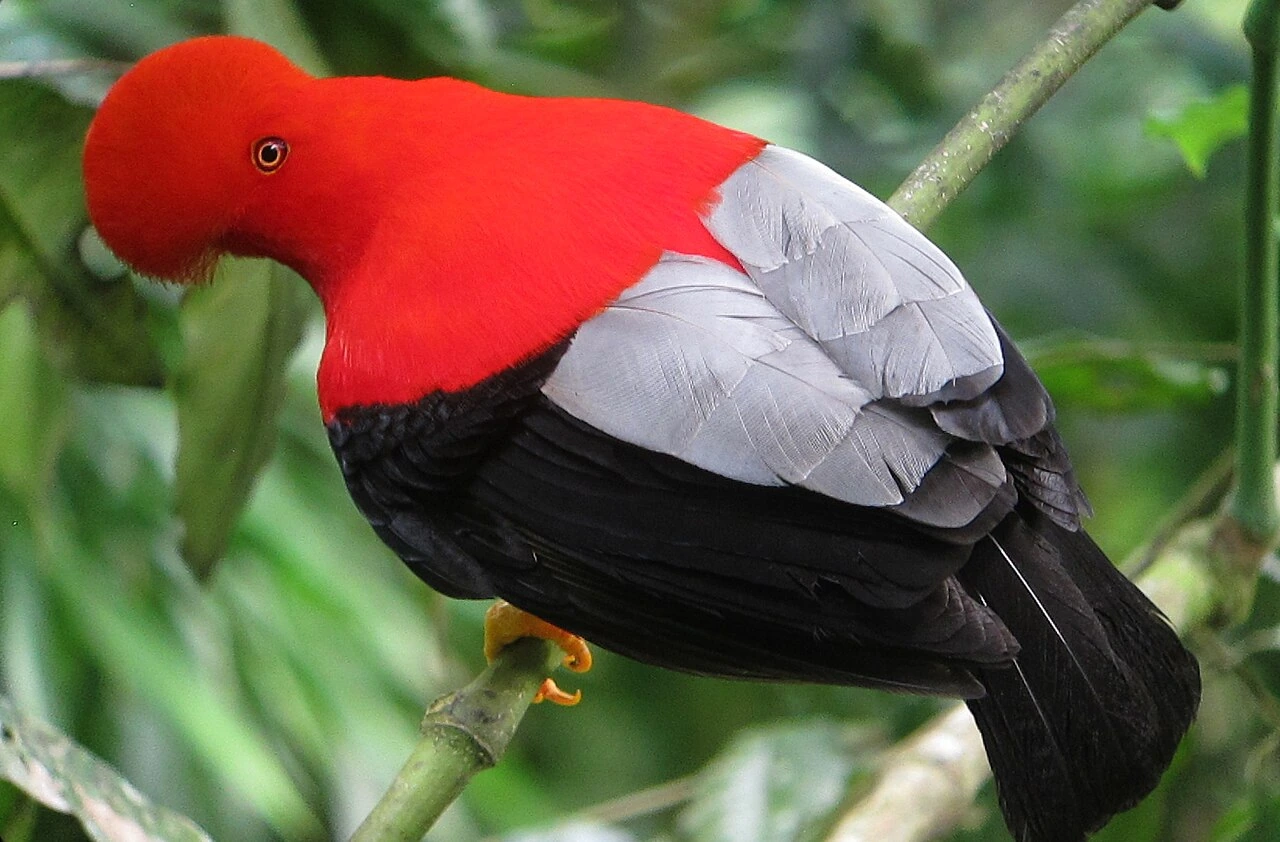
The result was officially recognized, and the hornero was designated "blank" rel="noopener noreferrer">Ave de la Patria." It's worth noting that this wasn't a formal legislative decree in the same way some countries establish national symbols. It was a public cultural moment that became canonized over time. Argentina's government now recognizes the hornero as the national bird on official study materials and biodiversity portals, giving it full institutional standing. For context, if you're curious about how similar decisions played out nearby, Peru's national bird is the Andean cock-of-the-rock, chosen through a very different, more formal process.
Common confusion: the tero and the condor

Two birds regularly get mixed up with Argentina's national symbol, and it's worth clearing both up.
The tero (Southern lapwing)
The tero, scientifically known as Vanellus chilensis, is a noisy, bold grassland bird that is absolutely iconic in Argentina. Its repeated "teru... teru" call is immediately recognizable to anyone who's spent time in the Argentine countryside. People love it, it appears in folk culture and sport references, and it's genuinely emblematic of the Pampas.
But it is not the national bird. The tero is actually the national bird of Uruguay, which adds another layer to the confusion. Argentina and Uruguay share a lot of fauna and culture, so this mix-up happens constantly. The tero lost to the hornero in the 1928 vote, and that's where the distinction lies.
The national bird of Chile is the Andean condor, which shows just how differently each South American country landed on its avian symbol.
The Andean condor
The Andean condor (Vultur gryphus) is majestic, enormous, and deeply tied to Argentine (and broader Andean) identity. It appears on Argentine imagery and is associated with the Andes. Many people assume it must be the national bird for the same reason Colombia's or Chile's condor-linked imagery comes to mind. But Argentina specifically chose the hornero over the condor, leaning into the symbolism of everyday labor rather than imperial grandeur. The condor is a beloved part of Argentine natural heritage, but the hornero holds the official "Ave de la Patria" title.
How to verify this yourself
If you want to confirm Argentina's national bird through official channels, you have a few reliable options. Argentina's official government site (argentina.gob.ar) includes study materials that explicitly name the hornero (Furnarius rufus) as the "Ave de la Patria." The Sistema de Información de Biodiversidad (SIB Argentina) lists the species with its full taxonomy and multiple recognized common names in Argentine Spanish, including hornero, casero, caserito, and alonsito. Buenos Aires city's annual environmental reports also reference the hornero as the "ave nacional argentina" directly.
For visual and audio identification, eBird has comprehensive occurrence records for Furnarius rufus in Argentina, along with photos and sound recordings contributed by local birders. The bird is abundant enough that if you're in Argentina, a short walk in any green space will likely confirm the identification for you in person. The nest alone, that hard mud dome sitting on top of a fence post, is unmistakable once you know what it is.
One bird, one clear answer
Argentina's national bird is the hornero, Furnarius rufus, officially designated "Ave de la Patria" in 1928 after winning a national children's vote organized by the newspaper La Razón. It's a small, rufous-brown, ground-foraging bird best known for building a remarkable domed mud nest. It beat the condor and the tero in that vote, and it represents the values of hard work and humble dedication rather than power or rarity. It's found all over Argentina, from the Pampas to Buenos Aires city parks, which makes it not just an official symbol but a genuinely everyday part of Argentine life.