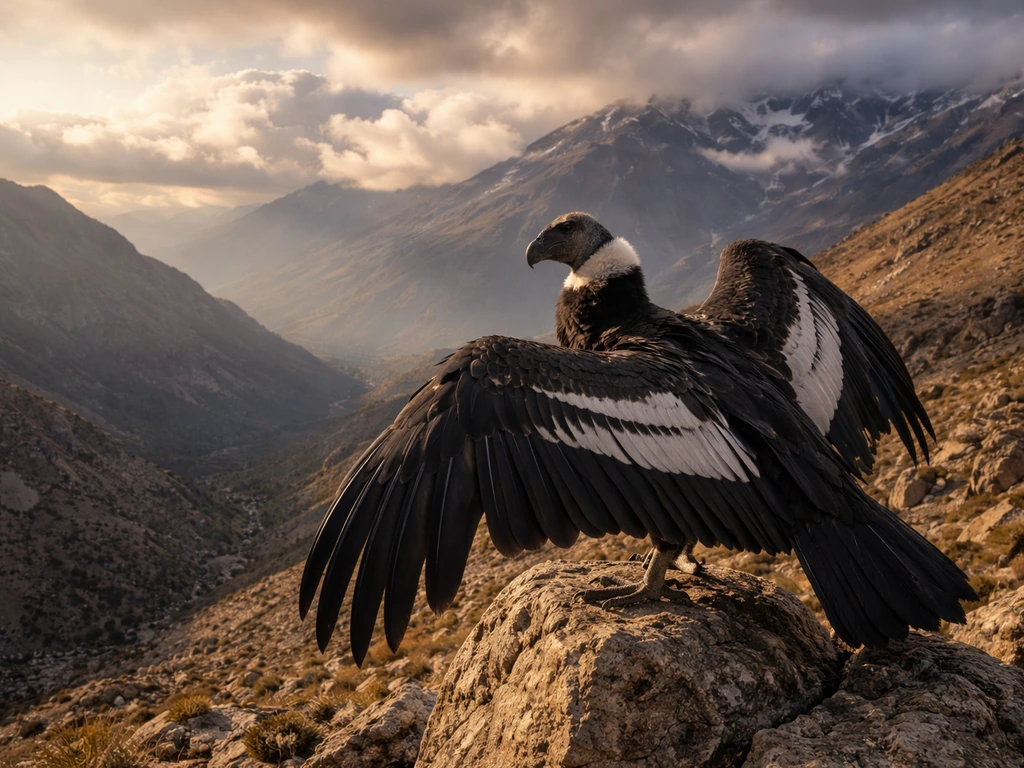
Chile's national bird: the Andean condor
Chile's national bird is the Andean condor (Vultur gryphus). It has been officially embedded in Chilean national symbolism since June 26, 1834, when Congress formalized the country's coat of arms (Escudo de Armas), which places a condor as one of its two heraldic supporters. That's not a recent designation or a popular vote result, it's a founding-era legal decision that has never been reversed.
What the bird is called in English and Spanish
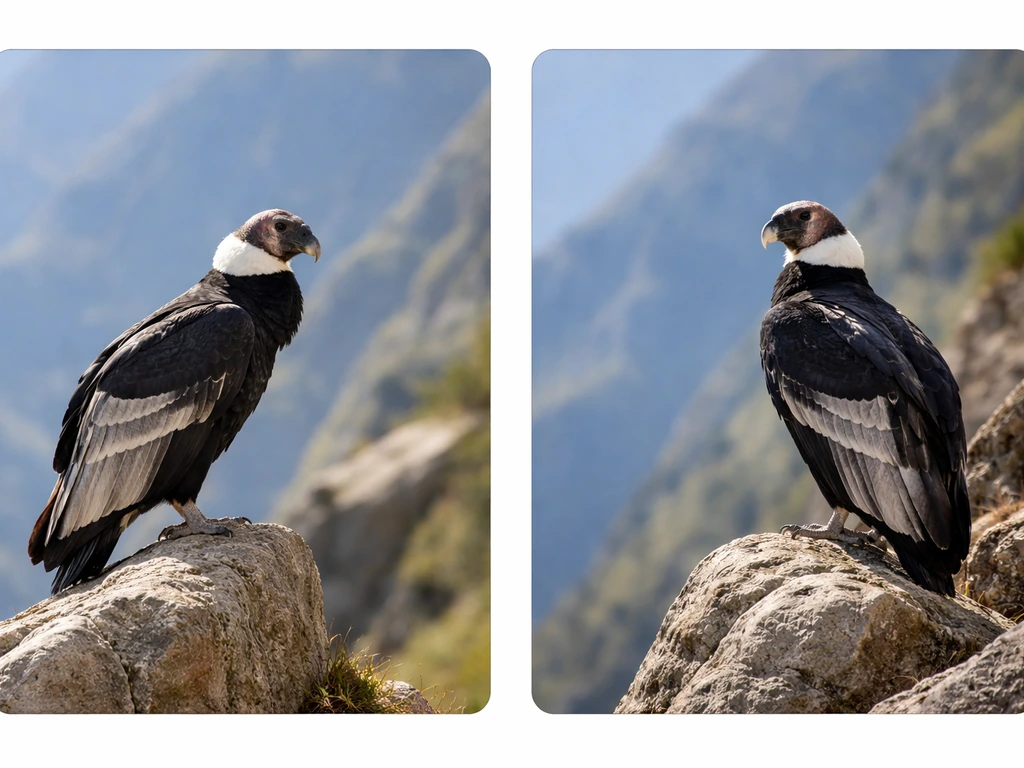
In Spanish, the bird is called the "cóndor" or, more specifically, the "cóndor andino." In English it goes by "Andean condor." You'll also see it referred to simply as "el cóndor" in Chilean government documents, school curricula, and cultural references. The scientific name is Vultur gryphus. If you're cross-checking sources in Spanish, look for "cóndor andino" or just "cóndor" paired with the Chilean coat of arms context.
Why the condor was chosen: symbolism and meaning
The condor's place on Chile's coat of arms is not accidental. According to Chilean cultural heritage sources describing the national shield, the condor specifically represents "la fuerza" (strength). The escudo pairs the condor with a huemul (a native deer) on the other side, and the whole design carries the national motto "por la razón o la fuerza" (by reason or by force). The condor covers the "force" side of that equation.
Beyond formal heraldry, the condor resonates deeply across Andean cultures. It is one of the largest flying birds on earth, commands vast mountain skies, and has been associated with power and freedom throughout the Andes for centuries. For Chile, a country defined by its long spine of Andean mountains, picking a bird that literally soars above those peaks carries obvious geographic and cultural logic.
It is worth noting that the condor also appears as a national or emblematic bird for several other Andean nations. If you're curious how neighboring countries frame similar choices, the national bird of Colombia is also the Andean condor, making for an interesting comparison of how the same species carries different cultural narratives across borders.
How the designation became official
The formal legal moment was the law dated June 26, 1834 (Ley S/N, 26-JUN-1834), which codified the design of Chile's Escudo de Armas as proposed by Wood. The Ministry of Foreign Affairs description of Chilean national emblems explicitly states the design features "un huemul… y un cóndor" with a naval gold crown. That law has been the anchor for the condor's status as a national symbol ever since.
Chile's government has reinforced this connection continuously. The country's agricultural and livestock service (SAG) actively monitors, rehabilitates, and releases condors, treating the species as a protected native resource. In a r/Ornithology discussion, commenters also raise legal protection and ownership considerations around raptors, which can help provide reader context even though it is not a legal authority protected native resource. Government communications regularly describe condors as being "bajo nuestra protección" (under our protection). The bird is not just a historical emblem on a crest, it is actively managed as a living national symbol.
Key facts about the Andean condor worth knowing
If you want to understand why this bird commands such respect, a few concrete facts help. The Andean condor is described by ornithological sources as a "huge, wide-ranging vulture of the Andes" that ranges across the full Andean chain from Venezuela all the way south to Cabo de Hornos (Cape Horn). In Chile specifically, it is found not just in high mountain zones but also descends into lowlands and Tierra del Fuego.
- Scientific name: Vultur gryphus
- Diet: Almost exclusively a scavenger ("casi exclusivamente carroñera"), feeding on carcasses of large and medium-sized mammals; on the Chilean coast it also scavenges marine mammals
- Range: The full Andean range from Venezuela to Cape Horn, including lowland deserts in Chile and Peru
- Conservation status: Near Threatened (Raptor TAG); Chilean sources describe the species as "al borde de la amenaza" (on the edge of threat)
- Threats in Chile: Habitat loss, hunting, and reduced food resources, particularly in central Chile populations
- Government protection: Actively protected and monitored by SAG (Chile's agricultural and livestock service) as a native species
One thing people often find surprising is that despite its fearsome reputation, the condor almost never attacks healthy live prey. Chilean government environmental sources clarify it only approaches live animals when they are extremely weak or ill. It is built for soaring on mountain updrafts and finding carrion, not hunting. The Peregrine Fund describes the Andean condor as a large scavenger that feeds on carrion, including remains of deer, cow, and sheep, and notes it can be seen soaring over Andes peaks and along the coast in the southern part of its range feeds on carrion (including deer, cow, and sheep). That combination of immense size, high-altitude mastery, and ecological role as a cleaner of the landscape feeds its symbolic weight.
How Chile compares to its neighbors on this topic

It is genuinely interesting to stack Chile's choice against the rest of South America's Andean nations. The condor appears on multiple national emblems across the region, but each country frames the bird's significance differently.
| Country | National Bird | Primary Symbolism |
|---|
| Chile | Andean condor (cóndor andino) | Strength ("la fuerza") on the coat of arms |
| Colombia | Andean condor (cóndor andino) | Freedom and national identity |
| Peru | Andean cock-of-the-rock (tunki) | Cultural heritage of the Andes |
| Argentina | Rufous hornero (hornero) | Hard work and ingenuity |
| Brazil | Rufous-bellied thrush (sabiá-laranjeira) | National poetry and cultural identity |
Argentina's choice is a sharp contrast: while Chile went with the soaring condor, Argentina's national bird symbol is a small, mud-nest-building songbird celebrated for its industriousness. Peru took yet another direction, and Peru's national bird is the vivid Andean cock-of-the-rock rather than the condor. And Brazil's national bird leans into cultural poetry rather than power imagery. Each choice tells you something real about how a country sees itself.
Where to verify this and go deeper
If you want to confirm the condor's official status, the most reliable starting points are Chilean government sources. The Ministry of Foreign Affairs (Ministerio de Relaciones Exteriores de Chile) publishes a section on national emblems ("Emblemas nacionales") that describes the coat of arms and its supporters explicitly. The legal text (Ley S/N, 26-JUN-1834) is available through Leychile.cl, the official Chilean legal database, if you want the original statutory language.
For the bird's ecology and conservation status, the IUCN and eBird both carry detailed species accounts for Vultur gryphus. eBird’s Science range map for the Andean condor uses eBird data from 2009, 2023 uses eBird data from 2009–2023. Chile's SAG (Servicio Agrícola y Ganadero) website has news and updates on active condor conservation programs, which is a good way to see how the government treats the species today, not just historically.
For cultural context about what the coat of arms symbolism means, the Consejo de Monumentos Nacionales has published materials connecting the condor to the national motto and explaining the "fuerza" symbolism in plain language. That framing helps a lot when you want to explain not just what the national bird is, but why it matters to Chilean identity.