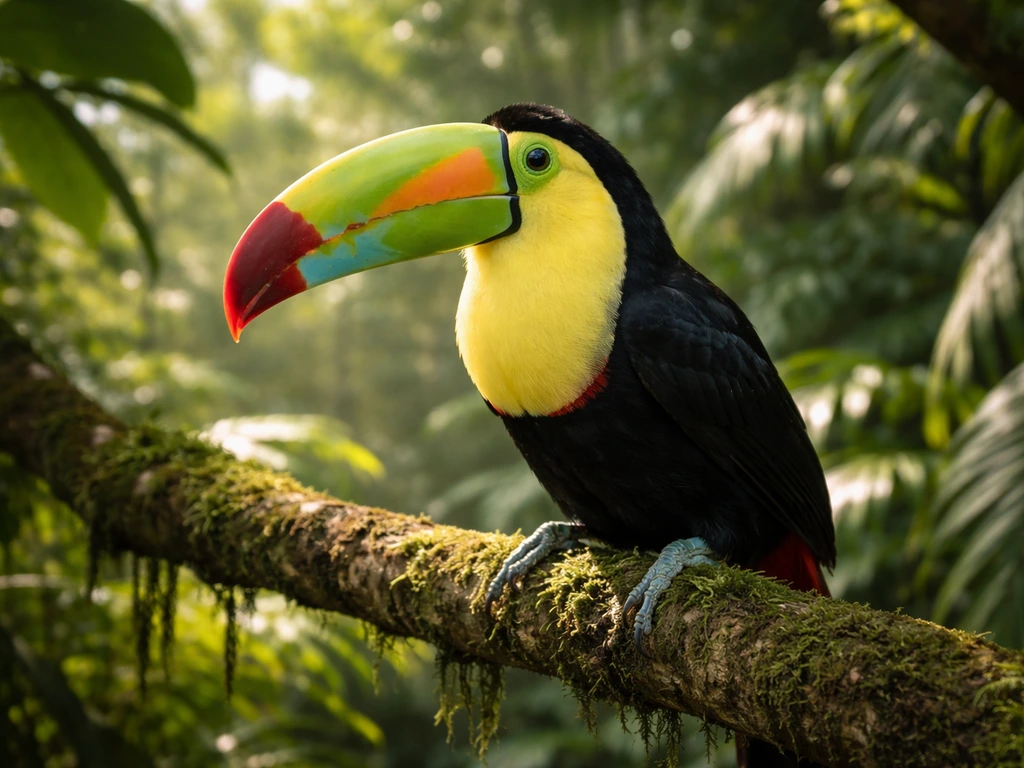
The toucan is Belize's national bird because the keel-billed toucan (Ramphastos sulfuratus) is one of the most visually striking, ecologically significant, and widely recognized birds in Belizean forests. It was adopted as a national symbol when Belize gained independence on September 21, 1981, and it has since been formally codified in the National Symbols Act 2025. The choice reflects the bird's deep presence in Belize's tropical landscapes, its connections to Indigenous Mayan communities, and its role as a vivid, unmistakable emblem of the country's natural identity.
Why Is the Toucan the National Bird of Belize?

Marcus Chen
12 Jun 2026
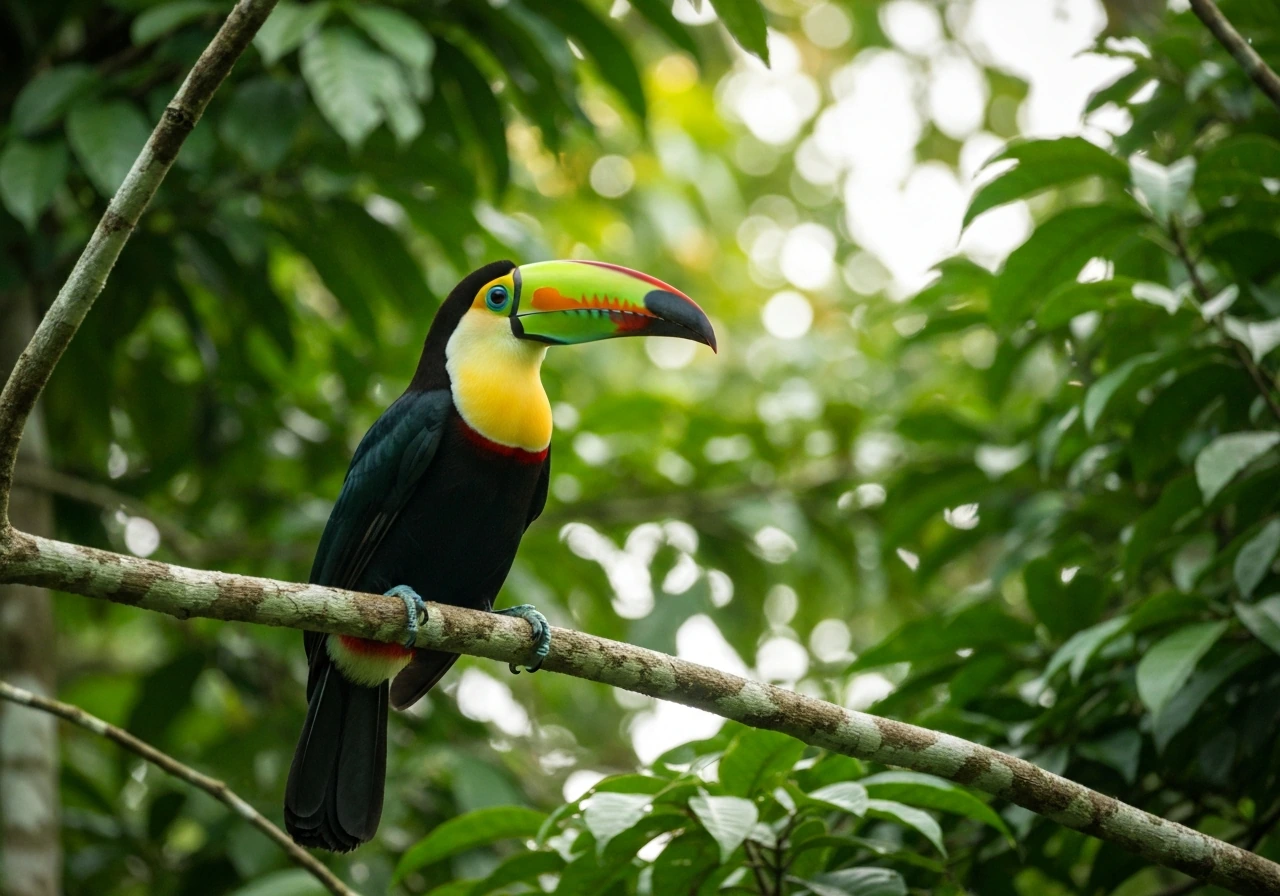
Which toucan, exactly? Getting the species right
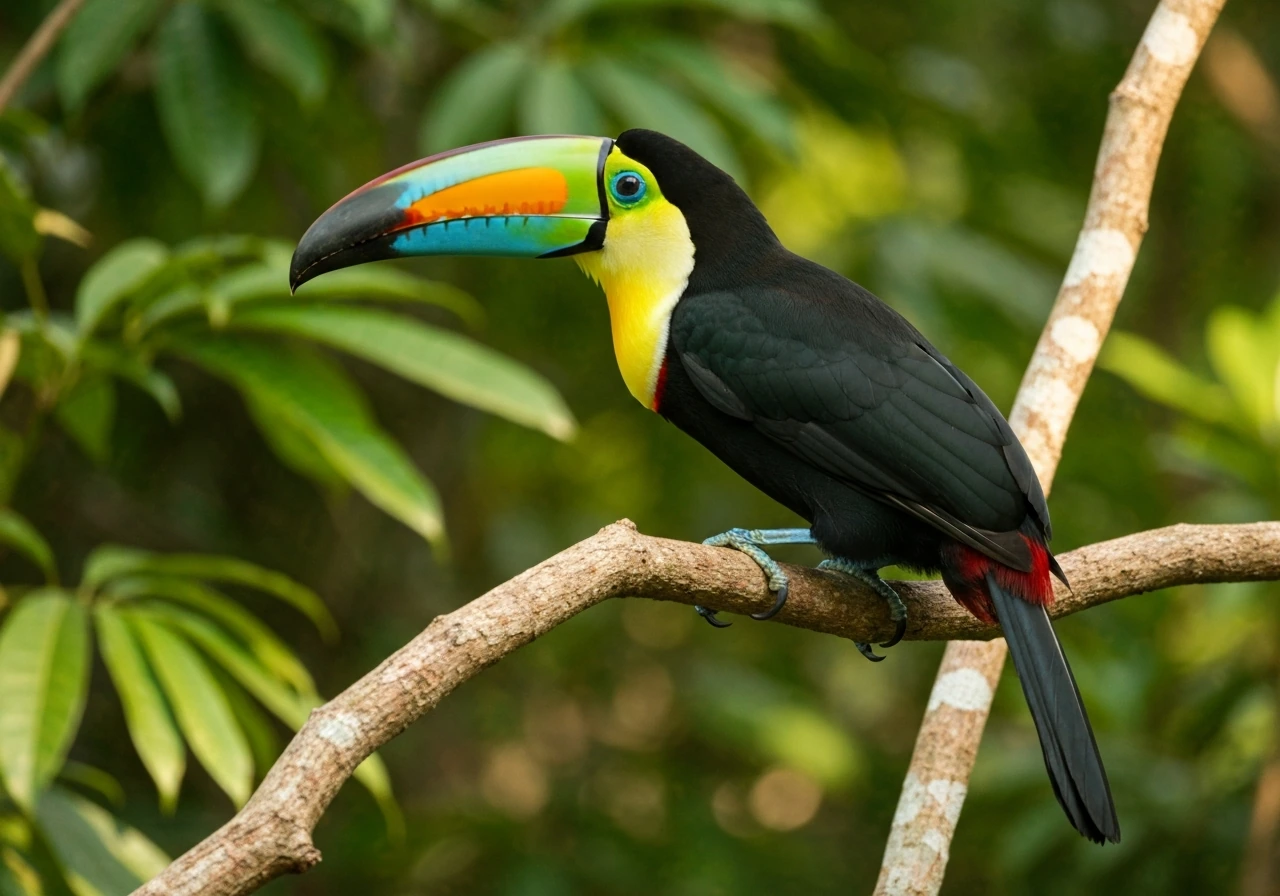
This is worth clarifying upfront because different sources use different names. Belize's official national bird is the keel-billed toucan, scientific name Ramphastos sulfuratus. The Government of Belize Press Office uses this name and scientific designation, and the National Symbols Act 2025 (Act No. 9 of 2025) puts it directly into law. So when you see 'keel-billed toucan' or 'Ramphastos sulfuratus,' you're looking at the right bird.
The confusion comes from the fact that this same species goes by several English common names. You might see it called the 'rainbow-billed toucan' or the 'sulphur-breasted toucan' in older or informal sources, and locally in Belize it's often called the 'bill bird.' Indigenous communities add more names: the Q'eqchi' Maya call it 'Selepan,' while the Mopan Maya call it 'Pun.' These are all the same species. If you ever want to cut through the noise, just check the scientific name: Ramphastos sulfuratus is the one you want.
The official story vs. what gets passed around
The most widely cited story is that Belize's first Prime Minister, the Right Honourable George Price, selected the keel-billed toucan as the national bird on September 21, 1981, the same day Belize gained independence from Britain. This date gives the choice a powerful symbolic anchor: a new country choosing a bird to represent itself at the exact moment it stepped onto the world stage. Multiple Belize media sources repeat this story consistently.
What you won't find, however, is a lot of official government documentation spelling out the detailed reasoning behind that specific choice in 1981. The Government Press Office national symbols page presents the keel-billed toucan as the national bird and references sources like the National Heritage Library and the Belize Zoo, but it doesn't offer a long historical narrative about why George Price personally picked it. The 'why' has largely been preserved through cultural storytelling rather than a formal government explanation.
What is now formally documented is the 2025 codification. The National Symbols Act 2025 enshrines the keel-billed toucan in Belizean law by name and scientific designation, giving it legal protection status and removing any ambiguity about which bird holds the title officially.
What the toucan symbolizes for Belize
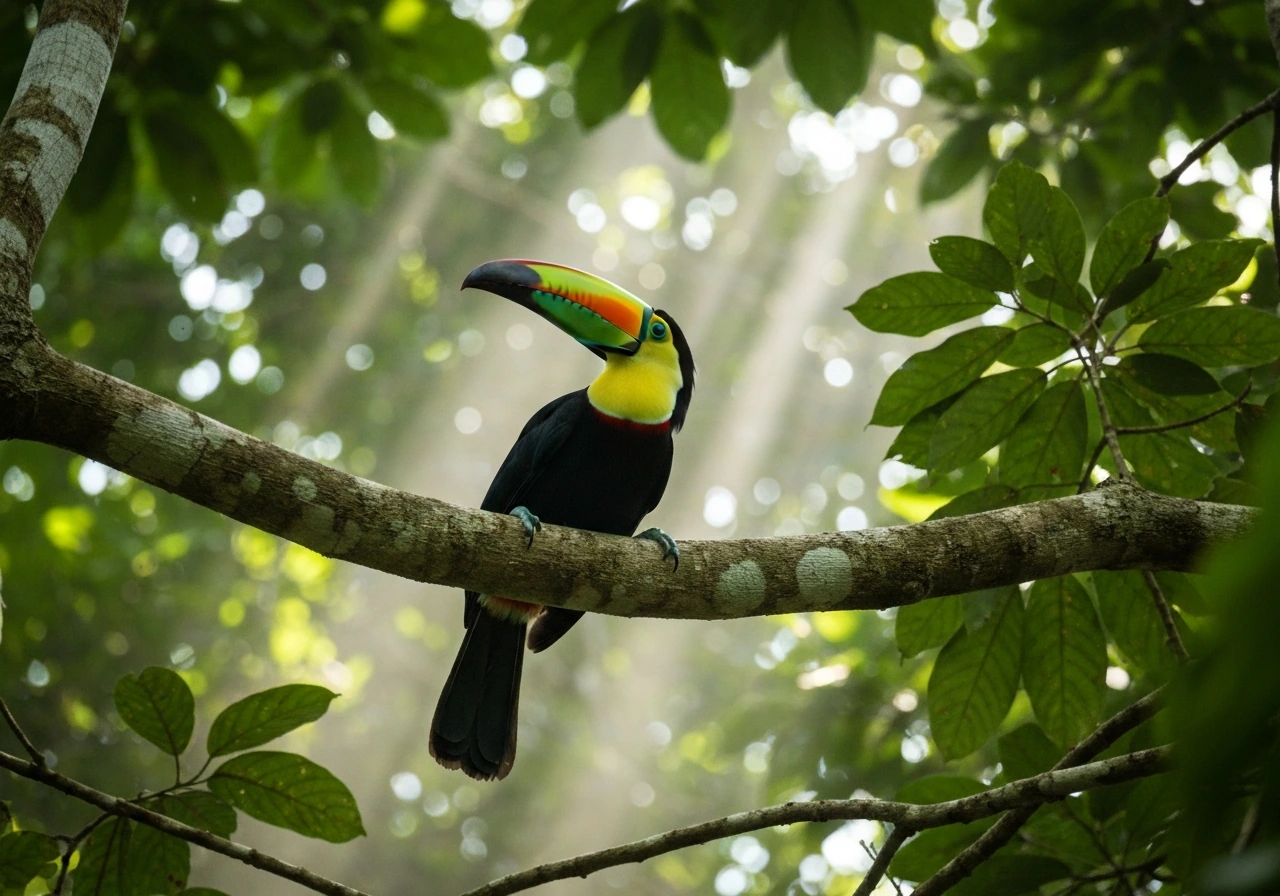
The keel-billed toucan carries a lot of symbolic weight for a relatively small country. Its enormous, multi-colored bill is impossible to miss, which makes it a natural metaphor for standing out and being distinct, qualities a newly independent nation might want to project. The bill's colors alone, combining green, red, orange, and blue, mirror the biodiversity and vibrancy of Belize's natural environment.
Beyond appearance, the toucan is seen as a symbol of Belize's commitment to its forests and wildlife. Belize has invested heavily in protected areas, and the keel-billed toucan appears in official protected-areas documentation as the nationally designated species. Choosing a forest-dwelling bird as your national emblem signals that forests matter to your national identity, which aligns with Belize's reputation as a conservation-forward country in Central America.
There's also a quieter cultural role the toucan plays. Belize's National Tour Guide Training Program explicitly instructs guides to present the keel-billed toucan as 'our national bird,' making it a central part of the story guides tell visitors. Belize Tourism Board’s National Tour Guide Training Program provides interpretive notes for the keel-billed toucan and calls it “Our national bird.”. That framing, repeated thousands of times to tourists, has cemented the toucan's identity as a living representative of Belize itself.
Why the toucan fits Belize ecologically
The keel-billed toucan is genuinely at home in Belize. Its natural range spans from southern Mexico through Central America into northwest South America, which puts Belize right in the heart of its territory. The bird thrives in tropical and subtropical rainforests, exactly the kind of habitat Belize has in abundance, particularly in the south and west of the country.
You can find keel-billed toucans documented at some of Belize's most iconic locations, including the ancient Maya site of Lamanai, where biodiversity observation records confirm the species' presence. The Wildlife Conservation Society includes the keel-billed toucan as part of the Selva Maya (the broader Maya forest region spanning Belize, Mexico, and Guatemala), describing it within the area's biodiversity narrative. The Toucan Ridge Ecology and Education Society, a Belize-based organization, treats the keel-billed toucan as a standard, recognizable part of Belize's ecological landscape.
In practical terms, the bird isn't rare or hard to find in Belize. Birders and ecotourists regularly encounter it, which is part of why it works so well as a national symbol. A national bird that nobody ever sees doesn't do much for national pride or ecotourism, and the keel-billed toucan delivers on both counts.
Historical context: from independence emblem to legal symbol
Belize's path to nationhood was long, and when independence finally came in 1981, the country needed to build a complete set of national symbols quickly. The coat of arms, flag, anthem, and national bird all took on heightened importance as markers of a distinct Belizean identity separate from British colonial rule. George Price's selection of the keel-billed toucan fits this context: it was a choice that looked inward at Belize's own natural heritage rather than drawing on European symbolism.
The toucan's Indigenous naming history adds depth to this choice. The Q'eqchi' and Mopan Maya names for the bird, 'Selepan' and 'Pun' respectively, show that this wasn't a bird imported into Belizean consciousness by colonizers. It had been named and recognized by the people who lived in those forests long before independence. Adopting it as a national symbol acknowledged that Indigenous ecological knowledge was part of what made Belize, Belize.
The formalization in 2025 through the National Symbols Act represents the next chapter. What began as a declaration at independence has now been placed into the country's legal framework, giving the keel-billed toucan a level of official permanence it didn't have under an informal designation alone.
Toucan facts that make the symbolism stick
A few things about the keel-billed toucan make it feel like an almost inevitable national symbol once you know them.
- The keel-billed toucan is the largest toucan species in Belize, which gives it a presence in the forest canopy that's hard to ignore.
- Its bill, which can measure up to 20 cm (roughly a third of its total body length), looks impractical but is actually lightweight, made of a hollow bone structure with a keratin shell.
- The bill's color combination, green with orange and red markings and a blue tip, is unusual enough that it was described by early European naturalists as almost unbelievable.
- Keel-billed toucans are highly vocal. Their calls carry through dense forest, making them easy to locate even when they're hidden in the canopy.
- They are social birds, often found in small groups, which fits the cultural storytelling around community and shared identity.
- Toucans play a key ecological role as seed dispersers, eating fruit and depositing seeds across wide areas, which directly supports the health of the forests Belize is committed to protecting.
- The species has been documented at Lamanai, one of Belize's most significant Maya archaeological sites, connecting the living bird to the country's ancient cultural landscape.
How to verify the details and check official sources
If you're researching this for a school project, writing about national birds, or just want to make sure you're citing something accurate, here's how to confirm the details.
- Start with the Government of Belize Press Office national symbols page. It's a government-run source that lists the keel-billed toucan (Ramphastos sulfuratus) as the national bird and references the National Heritage Library and the Belize Zoo as institutional sources.
- For the most authoritative legal confirmation, look up the National Symbols Act 2025 (Act No. 9 of 2025) through the Belize National Assembly. This is a legislative document, so it's the highest-authority source you can cite.
- If you find a source using a different English common name (like 'rainbow-billed toucan' or 'sulphur-breasted toucan'), check whether the scientific name Ramphastos sulfuratus is attached. If it is, you're looking at the same bird under a different common name.
- If a source lists a different species entirely or a different scientific name, treat it with skepticism and cross-reference against the National Symbols Act 2025, which is the controlling legal document.
- For ecological and biodiversity context, the Rainforest Alliance, Wildlife Conservation Society, and World Land Trust all publish material on keel-billed toucan range and habitat that you can use to support the ecological rationale for the choice.
One thing worth knowing: the adoption date of September 21, 1981 comes from Belize media sources rather than a government document that spells out the history in detail. It's widely repeated and plausible given that date's significance as Belize Independence Day, but if you need to cite it formally, note that it originates from media reporting rather than the National Symbols Act itself, which doesn't include a historical adoption timeline.
How this compares to neighboring national birds
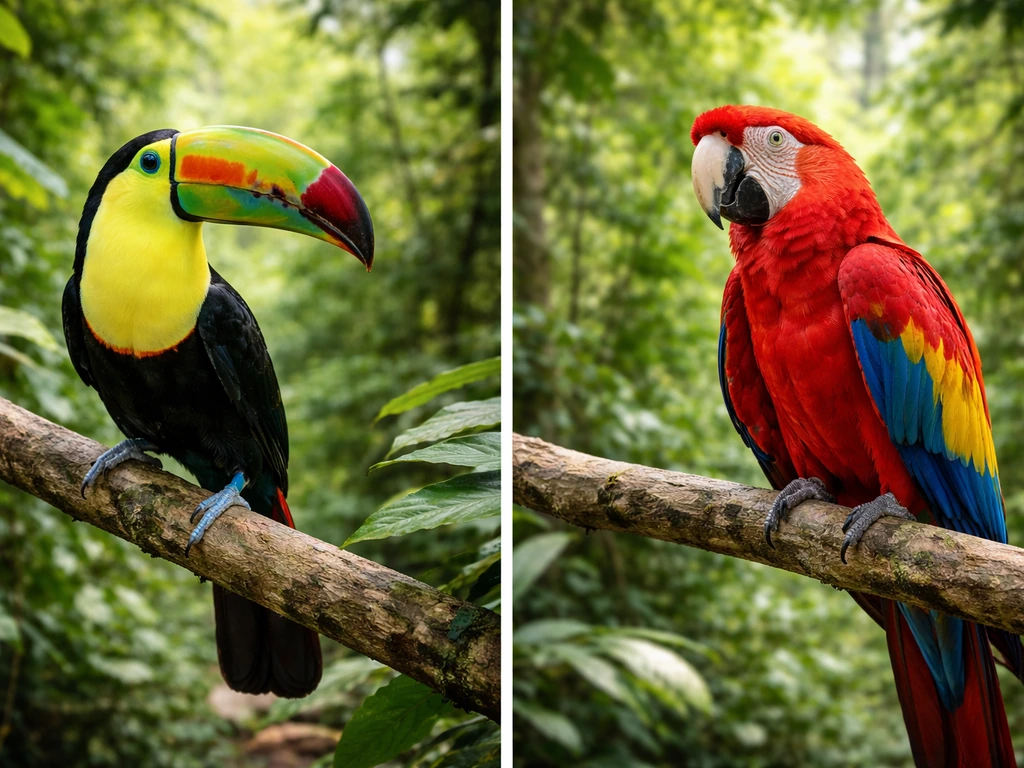
Belize sits between Mexico and Guatemala, and all three countries have chosen birds that reflect their forest ecosystems and Indigenous heritage. Guatemala's national bird is the resplendent quetzal, a bird so deeply tied to Maya civilization and Guatemalan identity that it appears on the country's currency and flag. The reasons Guatemala chose the quetzal follow a similar logic to why Belize chose the toucan: both are striking, forest-dependent birds with roots in the region's ancient cultures. The reasons Guatemala chose the quetzal as its national bird connect to its deep cultural roots and its role as a forest-dependent symbol. Mexico's national bird, the golden eagle, takes a different approach, rooted more in Aztec mythology than ecological presence. Belize's choice of the keel-billed toucan lands squarely in the ecological and Indigenous heritage tradition rather than the mythological one. Mexico's national bird is the golden eagle, which is widely recognized in Mexico for its strong symbolism.
The bottom line is straightforward: the keel-billed toucan became Belize's national bird because it was genuinely there, genuinely remarkable, genuinely part of the cultural memory of the people who lived in those forests, and visually distinctive enough to represent a young country announcing itself to the world. The 2025 National Symbols Act made that choice permanent in law. If you need one sentence to take away from all of this: Belize's national bird is the keel-billed toucan (Ramphastos sulfuratus), adopted at independence in 1981 and now legally enshrined, chosen for its ecological presence, cultural history, and unmistakable visual identity.
FAQ
Is the toucan species in Belize ever confused with a different national bird, or is it always the keel-billed toucan?
Belize’s official national bird is the keel-billed toucan, Ramphastos sulfuratus. If you see “rainbow-billed” or “sulphur-breasted” toucan in older or casual writing, treat those as common-name variants and confirm the scientific name before concluding it is the national bird.
Why do some people say the national bird was chosen by George Price, but official sources are not very detailed?
The detailed “personal choice” story is mostly preserved through media and cultural retelling rather than a long historical memo. What you can rely on for certainty is the later legal codification (National Symbols Act 2025), which locks in the official bird identity even if the 1981 narrative is less documented in government text.
When did it become official, is it independence day in 1981 or the 2025 law?
For symbolism, many accounts anchor it to Belize’s independence on September 21, 1981. For legal clarity, the National Symbols Act 2025 is the definitive step that enshrines the keel-billed toucan in law, so “official” can mean two different milestones depending on whether you mean cultural adoption or legal codification.
What should I write if my teacher asks for a single “reason” the toucan was selected?
A good one-sentence framing is that Belize chose the keel-billed toucan because it is a distinctive, forest-dependent bird that is deeply recognized locally, including through Indigenous naming and long-standing cultural memory, and it visually represents Belize’s biodiversity. You can then add a second sentence noting the 2025 act made it formal in law.
How can I verify I’m citing the correct date and avoid repeating an unverifiable claim?
Use the 2025 National Symbols Act for the official species identity. For the 1981 adoption date, be careful because the detailed timeline is not presented as an extensive government history in the article, so if you need strict sourcing, label the date as commonly reported in Belize media rather than as fully spelled out by the Act.
Does Belize have other toucan-like species that could be mistaken for the national bird in the field?
Yes, birdwatchers may encounter other toucans or toucan relatives that share similar size and habits. That is why confirmation by field marks is important, but for research and writing you should match by scientific name, Ramphastos sulfuratus, rather than relying only on looks or a general “toucan” reference.
Is the toucan’s Indigenous naming part of the “why,” or is it just extra cultural context?
It is part of the deeper rationale for adopting a national emblem that is rooted in local lived knowledge. Indigenous names for the same species show it was already recognized and integrated into regional ecological understanding before independence, which strengthens the argument that the symbol reflects people and forests together.
Where do tourists and school materials typically get their wording, and does it match the official designation?
Tour guide training and visitor-facing materials commonly use the phrase “our national bird” and may rely on the keel-billed toucan name as the standard. If you are producing a school assignment, still align your final wording with the official scientific name, Ramphastos sulfuratus, to avoid drift caused by informal common names.
Next Article
What Is the National Bird of Belize? Meaning and Facts
Learn Belize’s national bird, its symbolism, where it lives in Belize, and how to verify the official choice.