No country currently recognizes a duck as its official national bird. This is one of those questions that sounds straightforward but turns out to be a gap in the national-bird record: ducks, despite being among the most recognized waterfowl on the planet, have not been formally designated as the national bird of any sovereign nation. If you came here expecting a specific country, the honest answer is that none exists, and that is worth understanding clearly before moving on. The kingfisher is the national bird of which country, and it is a well-known example people often bring up when comparing national-bird designations.
Duck Is the National Bird of Which Country? Answer and Proof

Marcus Chen
9 Jun 2026
Quick verification: why no country claims the duck
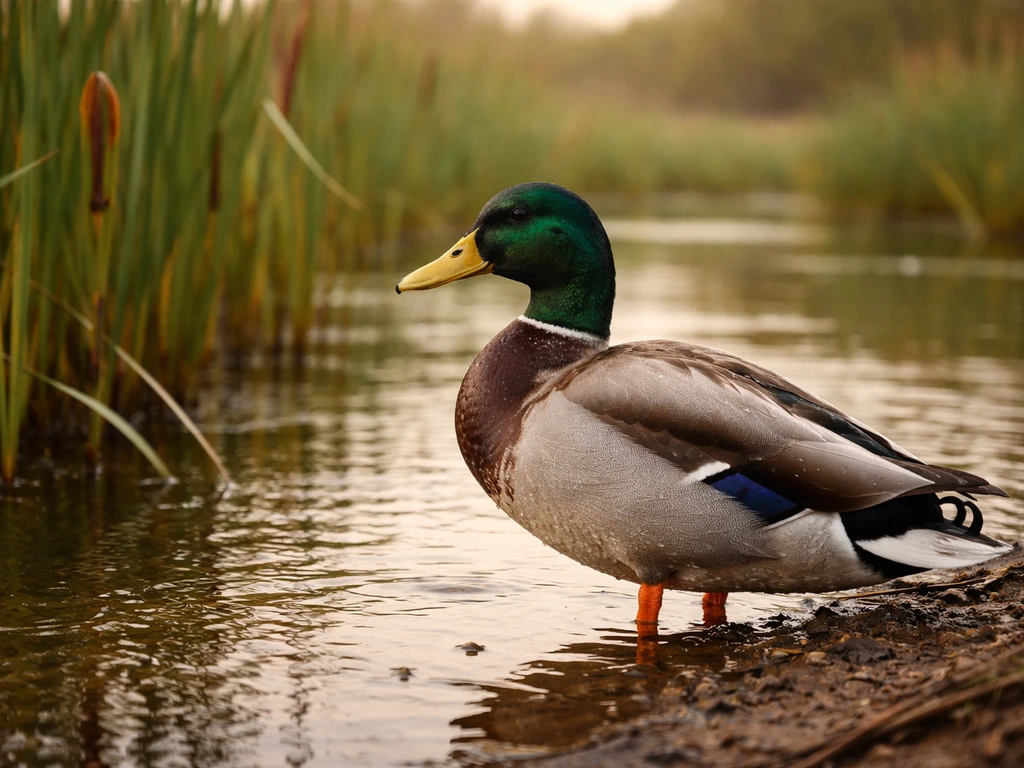
National bird designations are usually backed by a formal government proclamation, legislative act, or long-standing cultural tradition recognized by official bodies. For example, the Philippines blank" rel="noopener noreferrer">declared the Philippine Eagle its national bird through Proclamation No. 615, signed by President Fidel V. Ramos in 1995, and that designation is documented in the Philippine Supreme Court E-Library and confirmed by the National Commission for Culture and the Arts. The United States codified the bald eagle in 36 U.S. Code § 306. These are the kinds of verifiable, government-issued records that confirm a national bird. The United States Code specifies the bald eagle (Haliaeetus leucocephalus) as the national bird under blank" rel="noopener noreferrer">36 U.S. Code § 306. No equivalent proclamation or official record exists for a duck anywhere in the world.
That does not mean ducks are culturally unimportant in various countries, they appear in folklore, coinage, and regional identity across many nations. But appearing in culture is very different from being formally designated as a national bird emblem.
Why this question keeps getting asked
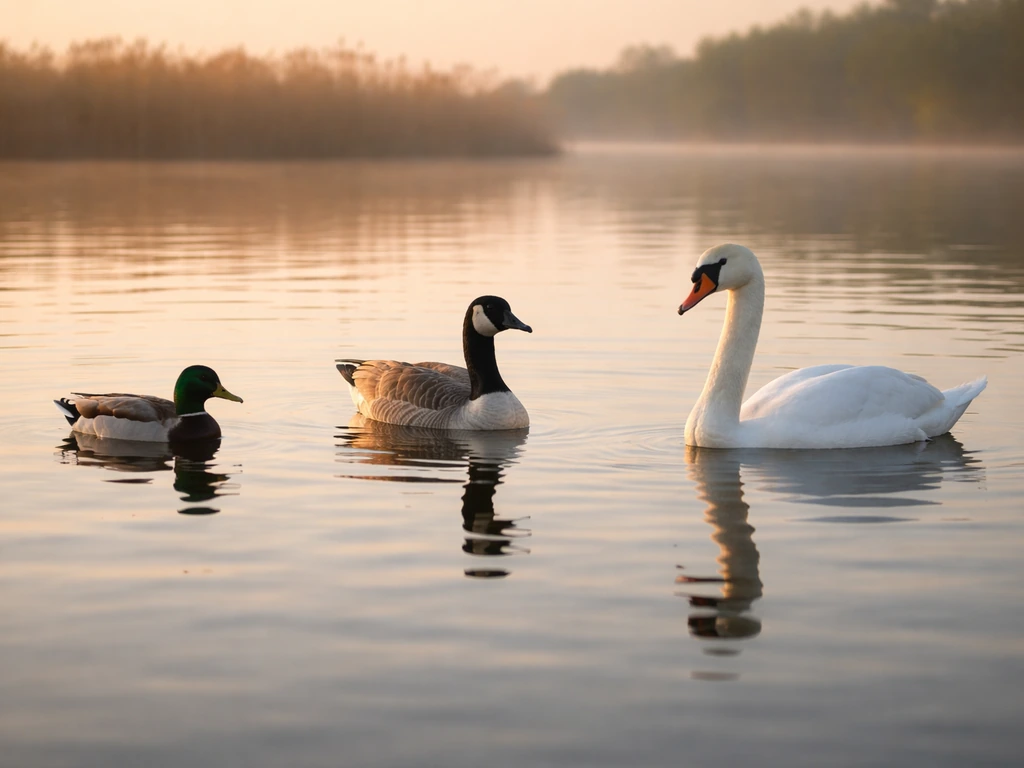
The confusion usually comes from a few directions. First, people sometimes conflate waterfowl generally: geese, swans, and ducks are all large, familiar water birds, and it is easy to misremember which specific bird a country chose. Second, some national birds belong to the broader waterfowl family and share physical traits with ducks, which muddles things further. Third, informal or regional symbols sometimes get mistaken for official national designations.
The swan is a good example of a waterfowl that does hold national bird status in multiple countries, and it is frequently mixed up with ducks in these searches. For example, the swan is the national bird of Denmark swan is the national bird of which country. If you are chasing down a waterfowl-based national bird, the swan is the more likely candidate worth looking into.
The cultural story of ducks and national symbolism
Even though no country has made the duck its national bird, it is worth appreciating why ducks show up so often in national imagery and folklore. Ducks have been a food source, a hunting game bird, and a domestic animal across nearly every inhabited continent for thousands of years. In East Asian cultures, the mandarin duck is a powerful symbol of marital fidelity and love, appearing in wedding art and poetry throughout China, Korea, and Japan. In North America, the mallard is one of the most hunted and painted birds in history, deeply tied to rural and outdoor identity.
That cultural ubiquity actually works against a duck achieving national bird status in many ways. Because ducks belong to so many places and peoples simultaneously, no single nation has a particularly exclusive or defining claim on them the way Guatemala does with the resplendent quetzal or India does with the peacock. National birds tend to be chosen precisely because they feel singular and representative of a specific place.
Interesting facts about ducks as birds
- There are roughly 120 recognized species of duck worldwide, spread across every continent except Antarctica.
- The mallard (Anas platyrhynchos) is the most common wild duck on Earth and the ancestor of most domestic duck breeds.
- Mandarin ducks (Aix galericulata) are native to East Asia and are considered one of the most visually striking of all waterfowl — the male's breeding plumage features orange, green, white, and chestnut feathers.
- Ducks have waterproof feathers thanks to an oil gland near the tail, which they use to preen and coat their plumage.
- The eider duck, found in Arctic and sub-Arctic regions, produces eiderdown, one of the warmest and lightest natural insulators known.
- Some duck species, like the wood duck (Aix sponsa) of North America, nest in tree cavities rather than on the ground.
- Ducks have been domesticated for at least 4,000 years, primarily in China, for eggs, meat, and feathers.
Clearing up common confusion
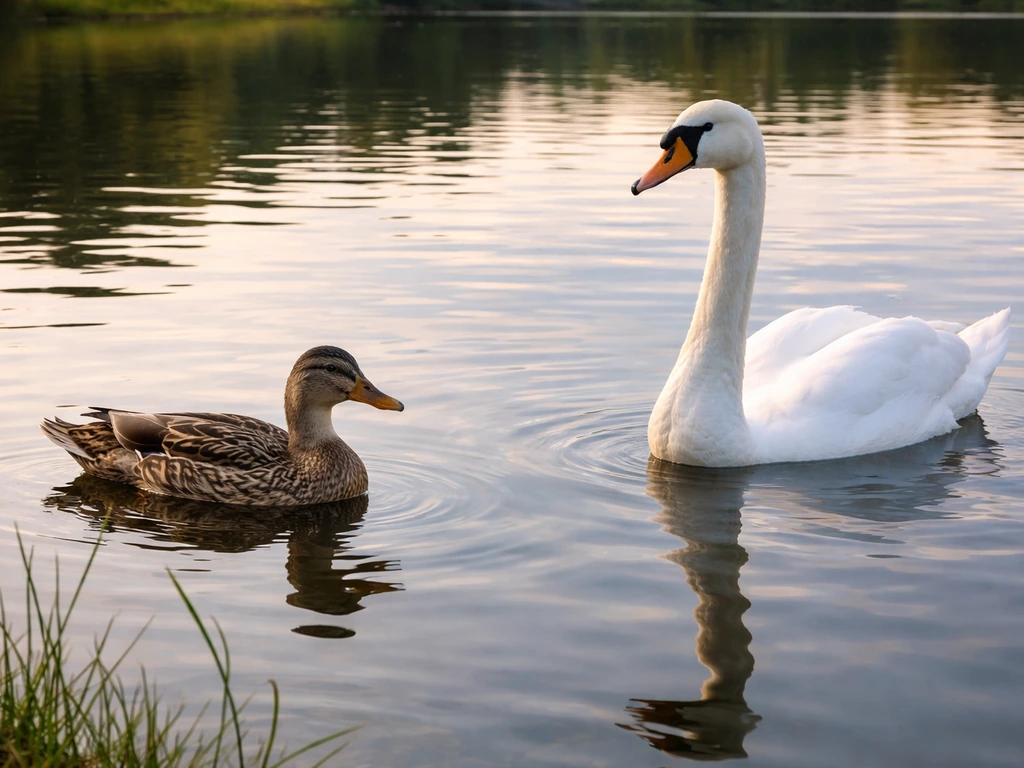
Ducks vs. swans as national birds
Swans and ducks belong to the same family (Anatidae) and are often lumped together in casual conversation. The swan, however, is a confirmed national bird in several countries. If someone told you a country's national bird is a large white water bird, there is a real chance they meant a swan, not a duck. This is probably the single most common mix-up in this category of national birds.
The steamer duck of the Falkland Islands
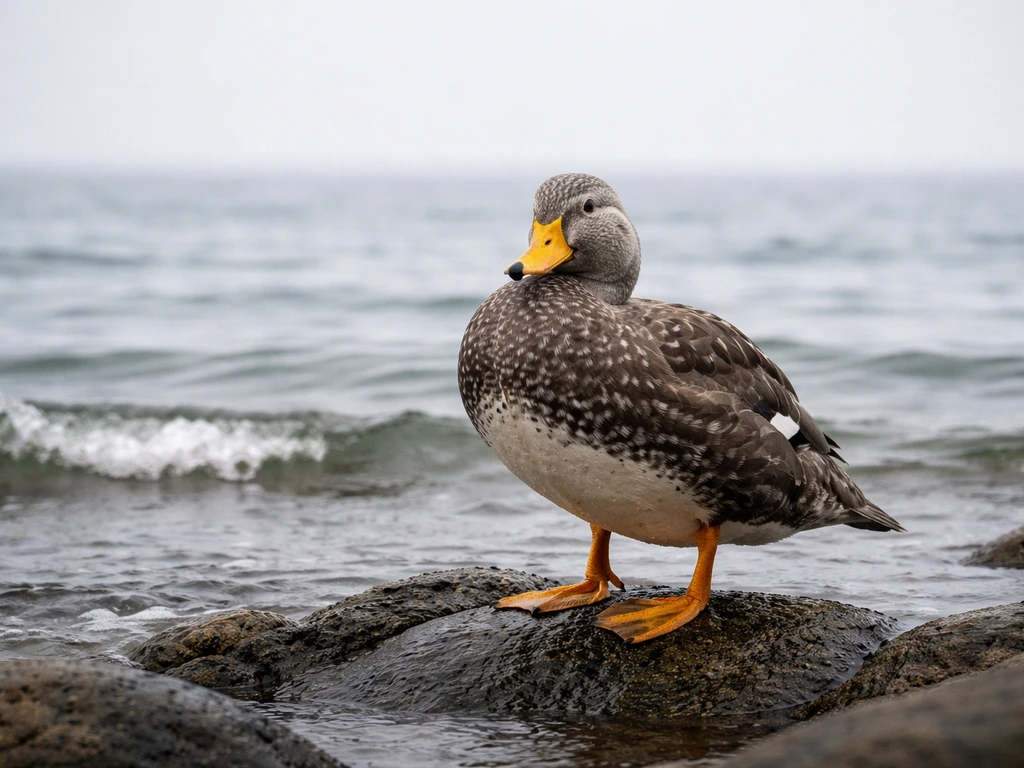
The Falkland Islands are sometimes mentioned in connection with ducks and national symbols. The Falkland steamer duck (Tachyeres brachypterus) is a flightless duck endemic to the islands and is culturally significant there. It appears on the Falkland Islands coat of arms. However, the Falkland Islands is a British Overseas Territory, not a sovereign nation, and the steamer duck is not formally designated as a national bird in the way sovereign countries designate theirs.
Other waterfowl national birds to know
| Bird | Country / Territory | Family |
|---|---|---|
| Mute Swan | Denmark | Anatidae (same family as ducks) |
| Black Swan | Western Australia (state symbol) | Anatidae |
| Giant Ibis | Cambodia | Threskiornithidae |
| Common Kingfisher | Bangladesh | Alcedinidae |
| Penguin (various species) | No sovereign national bird status | Spheniscidae |
As you can see, waterfowl-adjacent and water-loving birds show up as national symbols in various ways, but the duck specifically has not made it to the official list for any country. The giant ibis is the national bird of Cambodia.
Language and translation pitfalls
In some languages, the word for a particular national bird can be loosely translated or colloquially shortened to something that sounds like 'duck.' This sometimes generates false claims online. Always look for the scientific name of the bird alongside any national designation: if the scientific genus or species does not correspond to the family Anatidae (which covers true ducks), it is not a duck regardless of what the common-name translation suggests.
Where to go from here
If you are researching national birds for a school project, a trivia night, or just personal curiosity, the best next step is to cross-check any claim against a government proclamation or a well-documented official source. For the Philippines, that is Proclamation No. 615 in the Supreme Court E-Library. For the United States, it is 36 U.S. Code § 306. Most countries with formally designated national birds have equivalent government documents you can track down.
On this site, you can explore the full catalog of national birds country by country, which is the fastest way to settle any 'which bird belongs to which country' question. Related birds worth exploring include the swan (which does hold national bird status and is in the same waterfowl family as ducks), the giant ibis of Cambodia, the kingfisher, and even the penguin, which regularly comes up in similar searches. Each of those has its own history, cultural story, and set of interesting facts that are worth knowing.
The short practical takeaway: if someone asks you which country has a duck as its national bird, the accurate answer is none. Point them toward the swan if they are thinking of a waterfowl national bird, and use the country-by-country catalog here to verify any other claims you come across.
FAQ
Are any territories or non-sovereign regions allowed to call a duck their national bird?
National-bird labels are typically reserved for sovereign states with formal government acts or widely recognized official traditions. For example, the Falkland Islands may feature a duck species on the coat of arms, but that does not make the duck an official “national bird” in the same way countries do.
If a duck appears on a country’s coat of arms or currency, does that automatically mean it is the national bird?
Not automatically. Many places use animals for symbolism without issuing an official national-bird designation. The key test is whether there is a specific proclamation, law, or clearly documented official status, not just visual appearance.
Why do some websites claim a specific country has a duck as its national bird?
Most of these claims come from confusion between ducks and other waterfowl such as swans, or from informal regional symbols being mistaken for official national emblems. Another common cause is language mix-ups, where a local term is loosely translated as “duck” even when the referenced species is different.
How can I verify a claim quickly for a school project or trivia game?
Look for a government proclamation or statute that explicitly names the bird as the national bird. If the claim lacks an official document, treat it as unverified. As a practical check, compare the cited bird’s scientific name and family, because true ducks fall under Anatidae.
What is the most common mix-up between “duck” and “national bird” answers?
The swan is the most common substitute. If someone describes a large white water bird as a national bird, it is frequently referring to a swan rather than a duck, since swans do have national-bird status in multiple countries.
Can a duck be a national bird if it is a local endemic species?
Endemic species can be culturally important and even appear in national imagery, but endemism alone does not create the formal “national bird” status. The decisive factor is an official designation by the relevant governing authority.
If the national bird is “near-duck” in appearance, should I treat it as a duck?
No. Appearance can be misleading. Use the scientific name and taxonomic group as your decision rule. If the bird is not in the Anatidae family (true ducks), it should not be treated as a duck for national-bird comparisons.
What should I answer if someone asks me the exact primary question directly?
You can state the accurate bottom line: no country has officially designated a duck as its national bird. If they are thinking of a waterfowl national symbol instead, guide the conversation to swan-based national birds as the more likely match.
Next Article
Giant Ibis Is the National Bird of Which Country?
Giant ibis is the national bird of Senegal, with history and symbolism plus how to verify this status.