
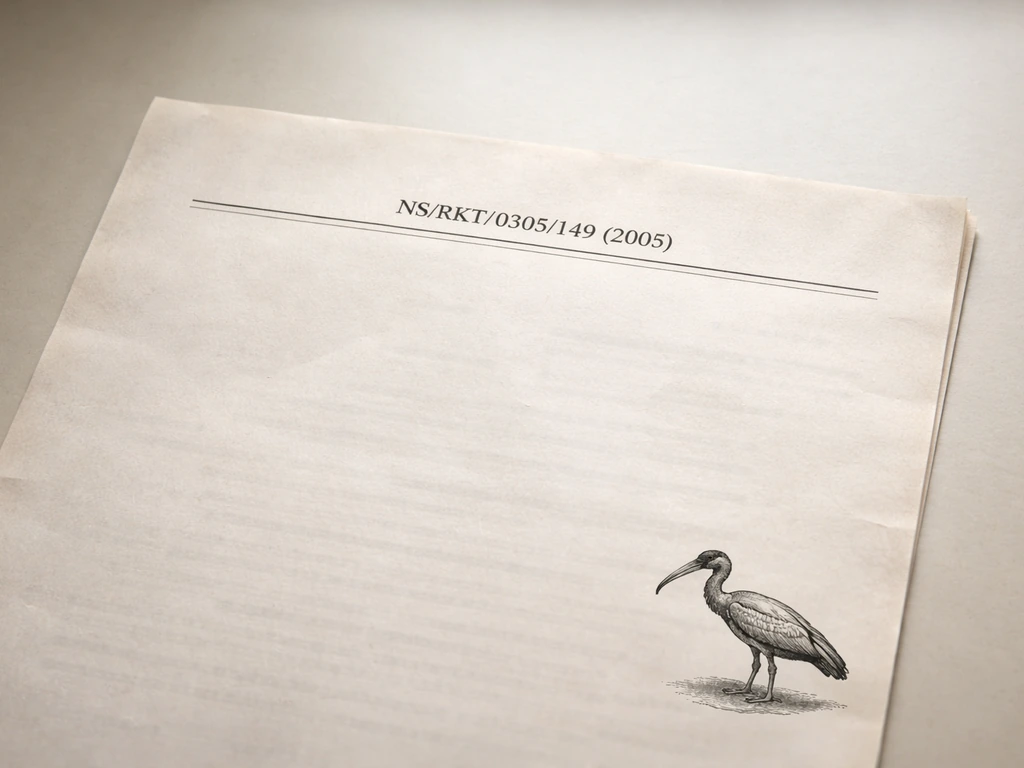
The giant ibis (Thaumatibis gigantea) is the national bird of Cambodia. If you're wondering which country national bird it is, the giant ibis is Cambodia's national bird. It was officially designated by Royal Decree (NS/RKT/0305/149) on March 21, 2005, making it one of seven national symbols enshrined in that decree alongside other plants and animals representing the Kingdom of Cambodia.
Giant Ibis Is the National Bird of Which Country?

Marcus Chen
1 Jun 2026
Quick answer and how to verify
Cambodia. That's the answer, and it's well documented. The Royal Decree from 2005 lists the giant ibis in Appendix 2 as 'The National Bird of the Kingdom of Cambodia.' If you want to double-check, WWF Cambodia and WCS Cambodia both state it plainly on their species pages. The Wildlife Friendly Enterprise Network and BirdLife-affiliated sources like Edge of Existence also confirm the designation. Any of those sources will give you a confident, reliable confirmation.
One thing worth noting: the decree uses the older scientific name 'Pseudibis gigantea,' while most modern sources use 'Thaumatibis gigantea.' They refer to the same bird. If you come across both names while searching, don't let that throw you off.
Cambodia's national bird in a nutshell
Cambodia is the only country that officially recognizes the giant ibis as its national bird. The designation is not informal or traditional in the way some national-bird assignments can be. It is codified in a royal decree signed by King Norodom Sihamoni, giving it the same legal standing as Cambodia's national flower (rumduol) and national animal (kouprey). The bird's name even appears in Khmer songs and traditional tales, which is part of why it made the list.
About the giant ibis
Species and size

The giant ibis is exactly what the name suggests: enormous. Adults measure 102 to 106 cm in length, and the Royal Decree itself records a body length of 104 cm. It is the largest member of the ibis family (Threskiornithidae) and the only member of its genus, Thaumatibis. That taxonomic uniqueness, one species in its own genus, puts it in a rare category among the world's birds.
What it looks like
The giant ibis has dark grey-brown plumage across most of its body, but the upperwing-coverts shift to a distinctive silvery grey, giving the bird a two-toned look in flight. Its bill curves downward in the classic ibis shape, its legs are light red, and its eyes are red. Those features make it recognizable in the field once you know what to look for.
Where it lives

The giant ibis is now almost entirely confined to northern Cambodia, specifically the dry forests and wetlands of Preah Vihear and Mondulkiri provinces. Very small numbers occur in extreme southern Laos, and historical records exist for Vietnam and Thailand, but Thailand's population is considered locally extinct. Edge of Existence, using IUCN and BirdLife information, describes Thaumatibis gigantea as critically endangered and explains its severely reduced range centered on Cambodia. Conservation literature consistently describes Cambodia as the species' stronghold, making the national-bird designation geographically fitting as well as symbolic.
The bird relies on seasonal pools, shallow wetlands, and open forest in the dry season. It forages in and around these watering holes, which makes it sensitive to habitat disturbance. The Mekong's flooded forests are also part of its ecosystem, and WCS Cambodia has documented nesting activity in those areas.
Conservation status
The giant ibis is listed as Critically Endangered on the IUCN Red List. The Wildlife Friendly Enterprise Network’s “Giant Ibis” page also lists the species as Critically Endangered (IUCN Status: CRITICALLY ENDANGERED) and highlights that it is Cambodia’s national bird. The main threats are hunting and ongoing human disturbance to its dry-forest habitat. Population numbers are low enough that individual nest discoveries make conservation news, which tells you something about how rare this bird has become.
Why Cambodia chose the giant ibis
The symbolism works on several levels. First, the giant ibis is genuinely unique to Cambodia in the modern world. No other country has a wild population of significance, so claiming it as a national symbol makes geographic and ecological sense. Second, the bird has cultural roots in Khmer heritage, appearing in traditional songs and folk tales. That oral tradition gives it a presence in Cambodian identity that goes beyond ecology.
Third, designating a Critically Endangered bird as the national symbol sends a conservation message. By enshrining it in a royal decree, Cambodia effectively tied the country's national identity to the survival of the species. Organizations like WWF and WCS have used that status to rally conservation attention and funding. The national-bird designation became, in effect, a conservation tool as well as a cultural one.
How the national-bird designation came about
Before March 2005, Cambodia did not have a formal set of official national symbols enshrined in law. The Royal Decree of March 21, 2005 (NS/RKT/0305/149) changed that by formally designating seven national symbols covering animals, plants, and a bird. The giant ibis was placed in Appendix 2 of the decree as the national bird, alongside the kouprey (national animal) and other emblems. This was a deliberate act of national identity-building, giving legal standing to symbols that represent Cambodia's natural and cultural heritage.
Phnom Penh Post coverage at the time framed the decree as 'saving seven symbols,' reflecting a recognition that several of the designated species were threatened. The choice of a Critically Endangered bird as the national emblem was not accidental. It was a conscious way of spotlighting a species that needed protection.
Common mix-ups and how to avoid them
The scientific name confusion
The most common source of confusion is the scientific name. The 2005 Royal Decree uses 'Pseudibis gigantea,' which was the accepted classification at the time. Modern taxonomy places the bird in its own genus as 'Thaumatibis gigantea.' Both names refer to the same species, but if you search for one and find sources using the other, you might doubt whether they're describing the same bird. They are.
Mixing up ibis species
There are several ibis species in Southeast Asia, and online sources occasionally mislabel them. The straw-necked ibis, the black-headed ibis, and the glossy ibis all share the region to varying degrees. None of them are the giant ibis. The giant ibis is the largest, has that distinctive silvery-grey wing-covert patch, and is the one listed in the Royal Decree. If a source describes a national bird without giving a scientific name, it's worth cross-referencing with WWF Cambodia or IUCN to confirm.
Checking sources you find online
For national-bird claims in general, the most reliable confirmation comes from government decrees, IUCN species profiles, or established conservation organizations with country-specific programs. For Cambodia specifically, WWF Cambodia, WCS Cambodia, and the Royal Decree itself (available through sources like DocsLib) are the references to use. Casual list-style websites that aggregate national birds sometimes get them wrong, or repeat outdated information, so cross-checking against at least one primary or major conservation source is a good habit.
Is it ever listed under a different country?
Occasionally you'll find poorly sourced articles suggesting the giant ibis is associated with Laos or Vietnam, likely because the bird does occur in small numbers in southern Laos. But neither country has designated it as a national bird. For the record, the duck is the national bird of which country is a different question, and this article is specifically about Cambodia’s giant ibis. Cambodia is the only country with this designation, confirmed by royal decree. Laos and Vietnam's national birds are different species entirely.
How the giant ibis fits among national birds globally
Most national birds are chosen because they're visible, widespread, and already embedded in popular culture, think swans, pigeons, or kingfishers. Kingfishers are national birds of different countries depending on the species and local designation. Swans are the national bird of which country swans, pigeons, or kingfishers. The pigeon is the national bird of India pigeon is the national bird of which country.
The giant ibis is a different kind of choice. It's rare, hard to spot, and critically endangered. Choosing it reflects Cambodia's specific conservation priorities and the deep roots the bird has in Khmer cultural memory. That makes it a genuinely distinctive national symbol compared to the more common choices you'll find across Southeast Asia and the world.
FAQ
Is the giant ibis the national bird of Cambodia, or is it only a national symbol?
It is the national bird in Cambodia, and the designation is legal and formal, placed in a royal decree (not just a cultural or ceremonial symbol). The decree specifically lists it as “The National Bird of the Kingdom of Cambodia.”
What if a source says the giant ibis is a national bird of Laos or Vietnam?
Small sightings and historical records can make confusion more likely, but neither Laos nor Vietnam has an official national-bird designation for the giant ibis. Cambodia is the only country that codified it as the national bird in law.
Why do some references use Pseudibis gigantea while others use Thaumatibis gigantea?
Those are two scientific-name labels for the same species. The royal decree used an older classification (Pseudibis gigantea), while current taxonomy commonly uses Thaumatibis gigantea.
How can I tell the giant ibis apart from other ibis species listed online in the same region?
Rely on the combination of identifiers, not just the word “ibis.” The giant ibis is very large, has a characteristic downward-curving bill, and shows a distinctive two-toned wing appearance with silvery-gray upperwing coverts.
If I only see a national-bird list website, what should I do to verify the claim?
Cross-check the claim with at least one primary or authoritative reference, such as the royal decree text, an IUCN species profile, or a major Cambodia-focused conservation organization. Aggregator sites sometimes repeat outdated or mistaken national-bird assignments.
When was Cambodia’s official national symbols list created, and does that affect the giant ibis claim?
Cambodia’s formal legal set of national symbols was created in March 2005. The giant ibis national-bird designation comes from that 2005 royal decree, so earlier informal mentions should not be treated as official.
Is the giant ibis designation tied to conservation efforts, or is it purely symbolic?
It is both symbolic and conservation-linked in practice. Because the bird is critically endangered and geographically restricted, using it as an official national emblem has been used to draw attention to threats like hunting and habitat disturbance.
Next Article
Swan Is the National Bird of Which Country? Answer
Discover which country’s national bird is the swan, plus the meaning and history behind its national symbol status.