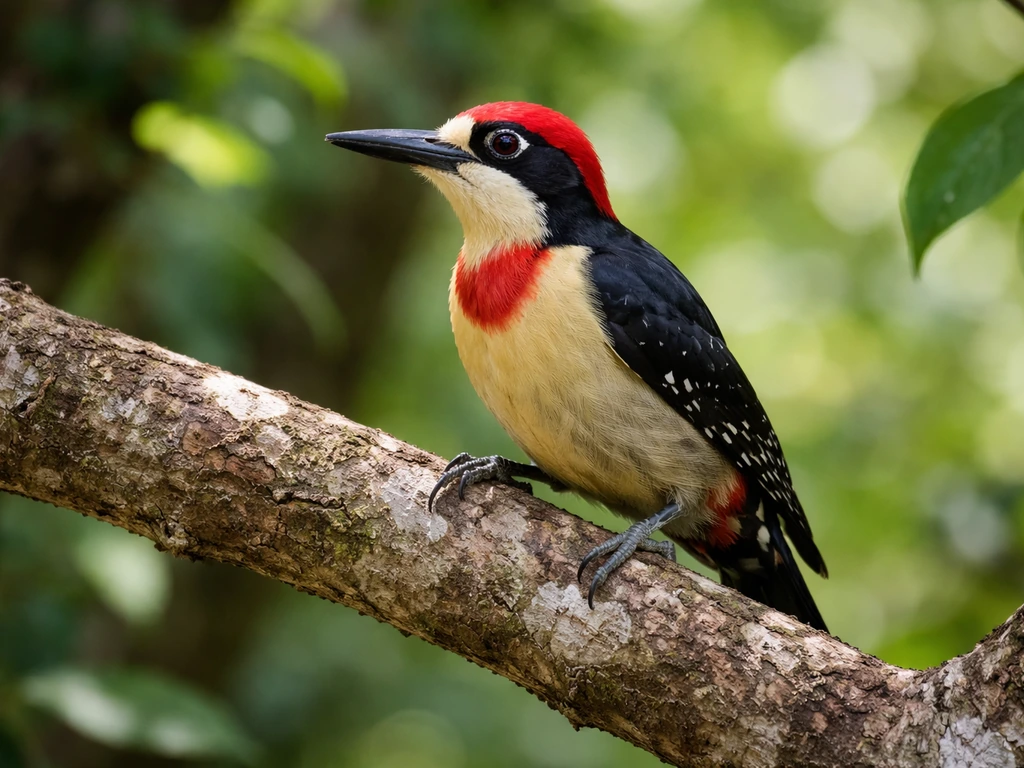
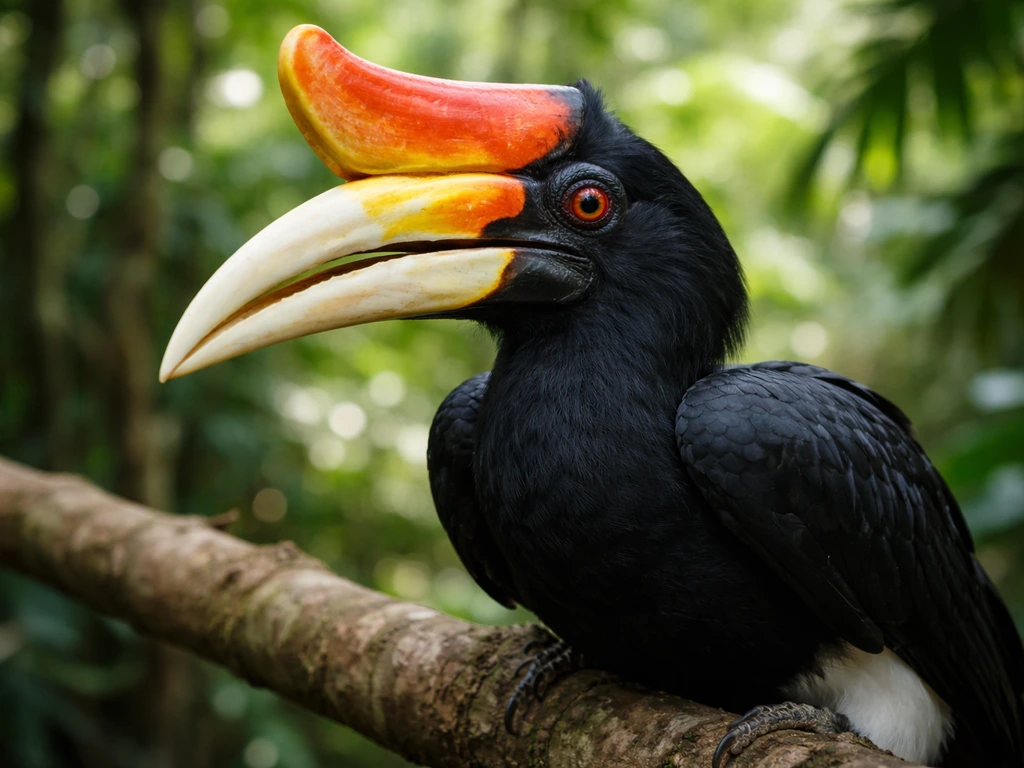
The hornbill is the national bird of Malaysia, and the specific species is the rhinoceros hornbill (Buceros rhinoceros), known locally as Burung Kenyalang. This is not a generic hornbill designation. Malaysia's national bird is that one particular species, and it's worth knowing the distinction because there are over 50 hornbill species worldwide and the confusion between them is surprisingly common.
Hornbill National Bird of Which Country: Answer and Meaning

Marcus Chen
29 May 2026
Which hornbill, exactly? Clearing up the confusion
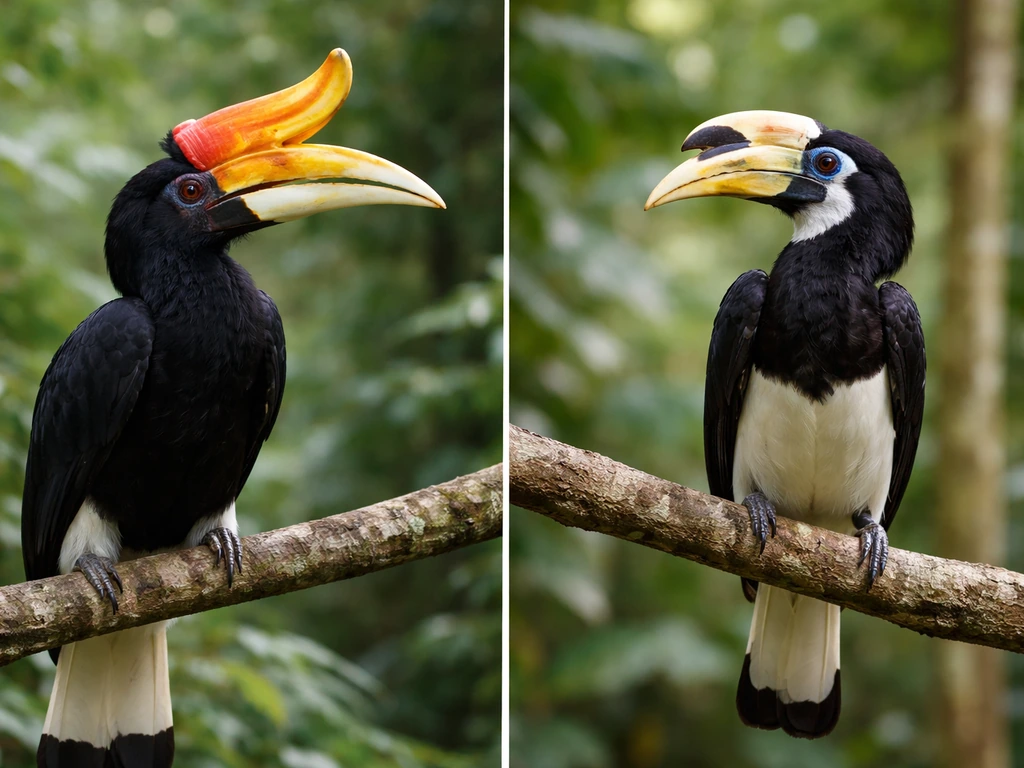
The word 'hornbill' covers a large family of birds. When people ask which country has the hornbill as its national bird, they sometimes assume the answer refers to hornbills broadly, but that's not how national bird designations work. Malaysia's national bird is specifically the rhinoceros hornbill (Buceros rhinoceros), named for the upward-curving casque on top of its bill that vaguely resembles a rhinoceros horn.
This distinction matters in practice. A well-known real-world example: Affin Bank once used an image of the wrong hornbill species in materials referencing Sarawak's iconic bird and faced public backlash for it. A Borneo Post report on Affin Bank’s mistake highlights that even institutions can mix up hornbill species, underscoring the need to verify the species rather than rely on the general term “hornbill.”. People in Malaysia and Sarawak take the specific identity of the Kenyalang seriously. If you are looking up this bird for a quiz, a school project, or just personal curiosity, make sure you record the species name alongside the country: rhinoceros hornbill, Buceros rhinoceros, Malaysia.
The rhinoceros hornbill is not to be confused with the great hornbill (Buceros bicornis), which is native to parts of South and Southeast Asia and is sometimes mistaken for Malaysia's national bird because of its similar dramatic appearance. The two are related but distinct species.
Why Malaysia chose the rhinoceros hornbill
The rhinoceros hornbill carries enormous symbolic weight in Malaysian and especially Bornean culture. In the oral traditions and mythology of the Dayak peoples of Borneo, the rhinoceros hornbill holds a position at the very top of the bird hierarchy. It is associated with supreme leadership, chiefly authority, and spiritual power. The Iban people of Sarawak in particular revere the Kenyalang as a warrior bird and a symbol of courage and strength. Hornbill feathers and carvings of the bird appear in traditional warrior headdresses, longhouse carvings, and ceremonial objects.
Beyond mythology, the bird is also a natural emblem of the Malaysian rainforest. The rhinoceros hornbill is a large, fruit-eating forest bird that depends on old-growth tropical rainforest to survive. Choosing it as a national symbol ties Malaysia's identity directly to its extraordinary forest heritage, particularly on the island of Borneo, which contains one of the oldest rainforests on Earth. The bird's survival is linked to the health of those forests, so it also carries an unspoken environmental message.
The history behind the designation
The rhinoceros hornbill has been embedded in Malaysian cultural and governmental identity for decades, with Sarawak state materials and the Forest Department of Sarawak formally referencing it by species name in official publications. The Kenyalang is woven into Sarawak's official imagery, appearing on the state's coat of arms. At the national level, the rhinoceros hornbill is consistently listed as Malaysia's national bird across government-adjacent and institutional sources.
It is worth noting that a precise government gazette date for when Malaysia officially proclaimed the rhinoceros hornbill as its national bird is not easy to locate in publicly available primary sources. This is actually a common issue with national bird designations globally. Some countries have formal legislative proclamations, while others have designations that emerged through long-standing cultural consensus and institutional adoption rather than a single decree. Malaysia's hornbill designation appears to fall more into the latter category, reinforced over time through state and national institutions rather than a single dated announcement.
What makes the rhinoceros hornbill a fitting national symbol
A few key facts about this bird explain why it resonates so strongly as a national emblem.
- Size and presence: The rhinoceros hornbill is one of the largest hornbill species, reaching up to 90 cm in length. Its sheer size and dramatic black-and-white plumage with a vivid orange-red casque make it visually unmistakable.
- The casque: The hollow, upward-curving casque on top of the bill is the bird's most iconic feature. In Dayak tradition, the casque is carved and used in ceremonial headdresses worn by warriors and chiefs.
- Forest dependence: The species is found in lowland and montane rainforest across the Thai-Malay Peninsula, Sumatra, Java, and Borneo. Malaysia sits at the heart of this range.
- Fruit dispersal role: As a large frugivore, it disperses seeds across the forest, making it ecologically important, not just symbolically.
- Conservation status: The rhinoceros hornbill is classified as Vulnerable on the IUCN Red List, largely due to habitat loss from deforestation. Its status as a national bird gives conservation efforts an added cultural dimension.
- Cultural longevity: The Kenyalang has appeared in Sarawak's official imagery, including the state coat of arms, for generations, giving the designation deep historical roots.
How to verify this and find other national birds
If you want to confirm the rhinoceros hornbill's status as Malaysia's national bird, the most reliable approach is to cross-check multiple types of sources. You can use the same cross-checking approach to find the parrot that is the national bird of a specific country parrot national bird of which country. Start with consolidated national bird reference lists, then open the species-specific page for Buceros rhinoceros and look for an explicit 'national bird' mention. A consolidated reference list for national birds is available via the Wikipedia compilation “List of national birds” [consolidated national bird reference lists](https://en. wikipedia.
org/wiki/Listofnational_birds). Then check a Malaysia national symbols page to see the species named there. Finally, consult the Forest Department of Sarawak's official materials, which reference the rhinoceros hornbill by its full scientific name in a government context. When all three types of sources agree on both the country and the species name, you can be confident in the answer.
If you are curious about other countries, you can use the same approach to confirm what bird is the national bird of each one.
One practical tip: always look for the scientific name, not just the common name. 'Hornbill' by itself is too broad, and even 'rhinoceros hornbill' has been applied loosely in some informal sources. Buceros rhinoceros is the definitive identifier.
If you landed on this question while actually trying to identify a different country's national bird, it helps to know that several other striking tropical birds serve as national symbols elsewhere. Sparrow is the national bird of which country, and you can verify that detail with the same source-checking approach used for the rhinoceros hornbill.
If you are comparing other national birds, note that the toucan is the national bird of which country varies by reference list, so confirm it with a reliable source. The toucan, macaw, parrot, and hummingbird each belong to different countries across Latin America and the Caribbean, while the Andean condor represents Andean nations in South America.
If you are curious about another national bird, the hummingbird is the national bird of which country hummingbird is national bird of which country. If you are curious about the parrot national bird of which country, it is worth checking the exact species name in an official or national-symbols reference. The Andean condor is the national bird of Ecuador Andean condor represents Andean nations in South America. The Andean condor is the national bird of Ecuador.
Browsing a structured national bird reference by region is the fastest way to find the right match if your search started with a bird image rather than a country name.
| Bird | Country | Species |
|---|---|---|
| Rhinoceros Hornbill | Malaysia | Buceros rhinoceros |
| Great Hornbill | Not a national bird | Buceros bicornis |
| Helmeted Hornbill | Not a national bird | Rhinoplax vigil |
| Oriental Pied Hornbill | Not a national bird | Anthracoceros albirostris |
The table above shows why the species name matters. Of the hornbill species found in Malaysia and nearby regions, only one carries the national bird designation. Knowing that it is Buceros rhinoceros protects you from the kind of mix-up that has embarrassed more than one institution when they reached for the wrong hornbill image.
FAQ
Is the national bird of Malaysia “hornbill” in general, or a specific species?
It is a specific species, the rhinoceros hornbill (Buceros rhinoceros). Using “hornbill” alone is too broad because many different hornbill species exist, and only the rhinoceros hornbill is used for Malaysia’s national bird designation.
How can I tell which hornbill image is correct when websites mix them up?
Confirm the scientific name if the page lists one, then check for the distinctive casque shape and the species label (rhinoceros hornbill, Buceros rhinoceros). If a source only says “hornbill” or shows a different hornbill body shape, treat it as likely incorrect for national-bird purposes.
What is the local name of Malaysia’s national bird, and does it appear in references?
The rhinoceros hornbill is locally known as Burung Kenyalang. Some materials, especially those connected to Sarawak, may emphasize the local name in addition to the species and scientific name.
Is the national bird designation for Malaysia legally dated, or does it rely on tradition and institutional use?
Malaysia’s designation is not easy to pin to a single publicly available proclamation date. Practical confirmation often comes from repeated institutional adoption over time, such as national-symbol listings and Sarawak government-linked materials that use the species name.
What should I do if a quiz or worksheet lists “great hornbill” instead?
If the question claims a hornbill broadly or uses great hornbill (Buceros bicornis), that is a common mistake. For Malaysia, the correct species for national bird is Buceros rhinoceros, the rhinoceros hornbill.
Does Sarawak have a different hornbill as its symbol than the national bird?
Sarawak’s widely used emblem is strongly associated with the Kenyalang (rhinoceros hornbill). In other words, Sarawak uses the same hornbill concept that aligns with Malaysia’s national bird, but some documents might emphasize Sarawak context and local naming rather than the national-bird wording.
Are there other countries that also have a hornbill as their national bird?
Yes, multiple countries can use hornbill species or related birds as national symbols, but the exact species matters. If you are comparing countries, always verify the scientific name for each country rather than assuming “hornbill” means the same thing everywhere.
Why is checking the scientific name (Buceros rhinoceros) so important?
Common names are reused informally and can blur species boundaries. The scientific name is the most decision-stable identifier, especially because great hornbill (Buceros bicornis) and rhinoceros hornbill look similar in pictures but are different species.