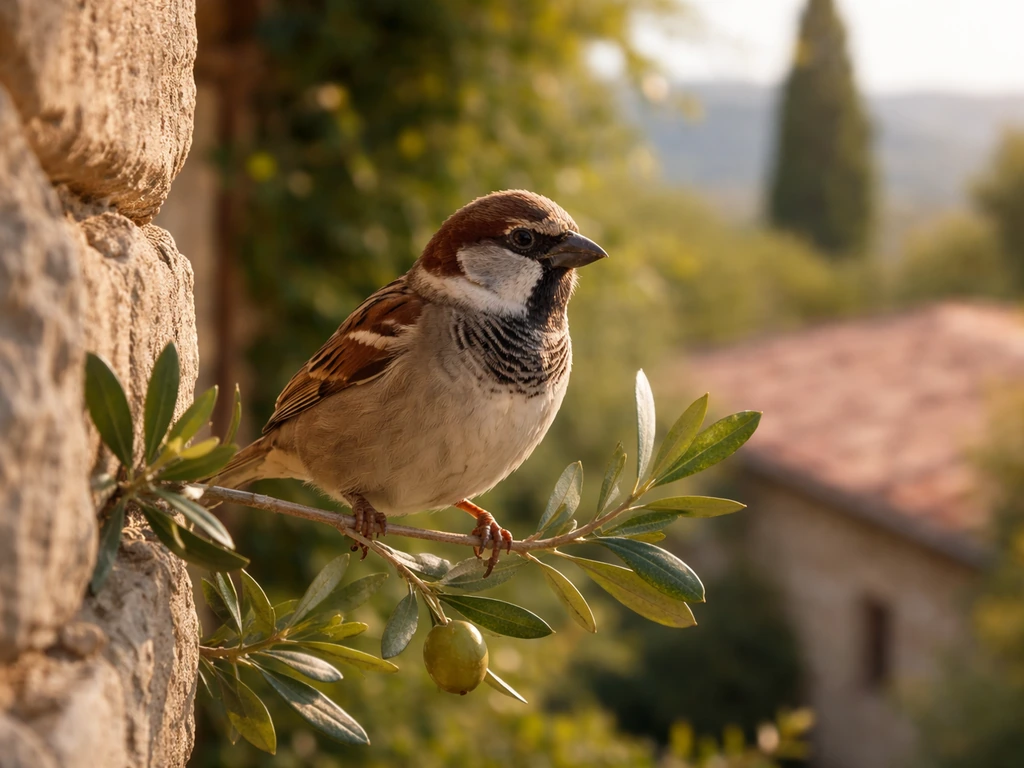
The sparrow is the national bird of Italy. Specifically, it's the Italian sparrow (Passer italiae), known in Italian as 'Passera d'Italia' or 'Passero Italiano.' One important nuance worth knowing upfront: this status is unofficial. The Italian sparrow was elected as Italy's symbolic bird through a birdwatcher consultation rather than by government decree, which is why you'll see some sources call it the national bird and others hedge with 'unofficially considered.'
Sparrow Is the National Bird of Which Country?

Marcus Chen
1 Jun 2026
Why sources disagree on this one

If you've already searched around and found conflicting answers, that's completely normal. The confusion comes from a few overlapping issues, and it's worth understanding them so you can trust the sources you find.
First, there's the official vs. unofficial distinction. Wikipedia's 'List of national birds' includes Italy's Italian sparrow but marks its official status as 'No.' This means it is widely recognized as Italy's symbolic bird, but it was never formally adopted by the Italian state through legislation or a government proclamation. Many secondary sites just call it the 'national bird' and leave out that detail, which is where the contradiction starts.
Second, there's a naming and taxonomy problem. The word 'sparrow' covers a big family of birds, and Italy has several sparrow-like species. The Italian sparrow (Passer italiae) is distinct from the common house sparrow (Passer domesticus, called 'passera domestica' in Italian) and the Spanish sparrow (Passer hispaniolensis, 'passera sarda'). Some inaccurate lists substitute one for another. Always check for the scientific name Passer italiae when verifying Italy's symbolic sparrow.
Third, Passer italiae itself has a contested taxonomic history. Italian sources such as Passer italiae also note that the species’ taxonomic status has been historically debated, including treatments as subspecies or hybrids related to the house and Spanish sparrows blank" rel="noopener noreferrer">contested taxonomic history. Some researchers have classified it as a stable hybrid between the house sparrow and Spanish sparrow rather than a fully independent species. This debate means different references may describe the bird in different ways, which can create further errors as those descriptions get copied across the web.
How to verify the claim yourself
- Check for the scientific name. Any credible source should reference Passer italiae, not just the common name 'sparrow' or 'Italian sparrow.'
- Look for the official status flag. Wikipedia's 'List of national birds' has an 'Official status' column. Italy's entry is marked 'No,' which is an honest and useful signal.
- Cross-reference with LIPU (Lega Italiana Protezione Uccelli), Italy's main bird conservation organization. Their species page for 'Passera d'Italia' provides authoritative natural-history details about the bird, even though it doesn't make formal national-symbol declarations.
- Treat any claim of 'national bird' as possibly unofficial unless backed by a government source or statute. For Italy's sparrow, the origin is a birdwatcher vote, not a state decree.
What the Italian sparrow means culturally
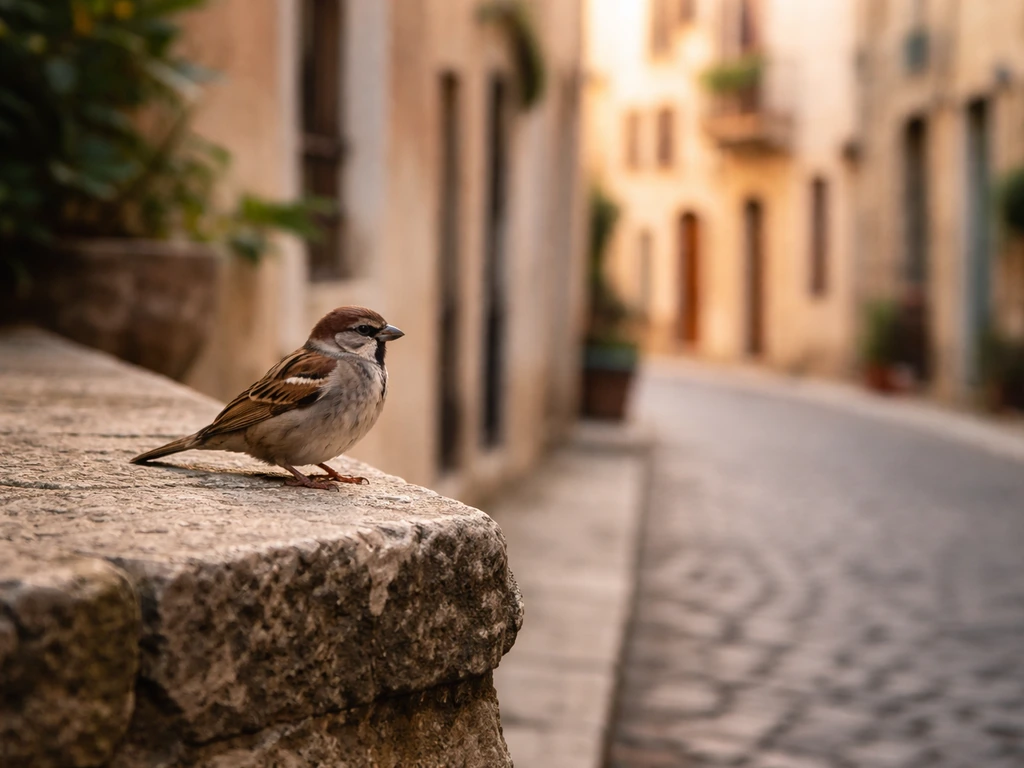
The Italian sparrow's symbolic role is tied closely to national identity. Italian reporting on the bird's selection uses the phrase 'simbolo del Belpaese,' which translates roughly as 'symbol of the beautiful country,' a common affectionate nickname for Italy. The choice reflects a bird that is genuinely embedded in everyday Italian life: small, familiar, found across the peninsula, and distinct enough from its European relatives to feel like it belongs specifically to Italy.
An ornithological motto sometimes associated with the species, 'Passer italiae, parvus sed omnino italicus,' captures this sentiment directly. Translated: 'The Italian sparrow, small but entirely Italian.' That framing, a humble bird carrying a proud national identity, is a common thread in how Italian conservationists and birdwatchers discuss the species.
There's also a conservation dimension to the symbolism. Because the bird is linked to Italian identity, its declining population carries extra weight. LIPU describes the Italian sparrow as having a 'stato di conservazione cattivo' (poor conservation status), driven by shrinking habitat and population contraction. That gives the national-symbol status a sense of urgency that goes beyond simple pride.
How the Italian sparrow became Italy's symbol bird
Unlike many national birds chosen by government committees or enshrined in official ceremonies, Italy's sparrow earned its status through a public birdwatcher vote organized by EBN (European Birdwatching Network) Italy. The Italian sparrow 'won' this consultation, effectively being elected as the bird emblem by the birding community rather than the state.
This grassroots origin explains both the genuine popular recognition of the bird as a national symbol and the 'unofficial' label that more rigorous sources apply. It's a bottom-up designation, not a top-down one. That's not unusual globally: many countries have nationally recognized symbol birds that exist through cultural consensus rather than formal law. What makes Italy's case worth noting is that the selection process is well-documented, so you can actually trace where the claim comes from.
The Focus.it report covering the EBN consultation frames it clearly: the Italian sparrow was 'eletto uccello simbolo del Belpaese' (elected as the symbol bird of the homeland) through this community-driven process. That framing, 'elected' rather than 'designated,' gives you a good sense of the spirit behind the selection.
Quick facts about the Italian sparrow (Passer italiae)
| Feature | Detail |
|---|---|
| Scientific name | Passer italiae |
| Italian name | Passera d'Italia / Passero Italiano |
| Primary range | Italy and parts of the broader Mediterranean region |
| Taxonomic note | Considered a distinct species by many authorities; historically debated as a stable hybrid between house sparrow and Spanish sparrow |
| Conservation status | Poor (cattivo) — documented by LIPU due to range contraction and habitat loss |
| Average fledglings per brood | Approximately 3.5 young per clutch |
| Reproductive success rate | Around 60% (as reported by LIPU) |
| Official national bird status | Unofficial — selected by birdwatcher community vote, not government decree |
Where to go from here
If you found this interesting, the Italian sparrow is just one example of how national bird designations can be more complex than a simple trivia answer suggests. Across the world, some national birds are enshrined in law and some exist purely by cultural tradition, and the difference matters when you're trying to verify a claim.
The sparrow sits in an interesting spot among national birds because it's a small, common species rather than a dramatic raptor or colorful tropical bird. That makes it a useful counterpoint to symbols like the Andean condor, which represents power and altitude across South American nations, or the toucan and macaw, whose vivid appearances make them natural candidates for national emblems in Latin American countries. In some lists, the toucan is described as the national bird of a particular country, but the claim can vary by source. Hummingbirds, hornbills, woodpeckers, and parrots round out a diverse group of birds that various countries have chosen to represent their identity, each for different cultural and ecological reasons. Parrots like macaws are also used in some countries' national bird traditions. Woodpeckers are often cited as national birds too, but it depends on the country and the source, so always verify with reliable references. In some places people also ask, “hummingbird is national bird of which country,” but those designations vary by source and are not universal Hummingbirds. For example, some countries have identified specific parrot species as their national bird. If you are curious about hornbills as national birds, check which country’s list names a specific hornbill species.
For any national bird claim you want to verify, the same method applies: find the scientific name, check whether the status is official or unofficial, and cross-reference with a national wildlife organization for the species details. That approach will give you a reliable answer every time, whether you're researching for a school project, satisfying your own curiosity, or building a broader picture of how countries use birds as symbols of who they are.
FAQ
If Italy’s national sparrow is unofficial, what’s the simplest way to verify I’m looking at the right claim?
Use Passer italiae, which is the Italian sparrow. Common house sparrow (Passer domesticus) and Spanish sparrow (Passer hispaniolensis) are different species, and some websites mix them up when they use the generic word “sparrow.” If a page does not provide the scientific name, treat it as less reliable.
What does “unofficial national bird” mean in practice for the Italian sparrow?
When lists mark the status as “not official,” it usually means there was no government law or formal proclamation adopting the species as a national emblem. Cultural use can still be strong, but the “national bird” wording is more descriptive than legal. Checking whether the source mentions a government decree versus a community selection will clarify the difference.
Why do some ornithology sources describe Passer italiae differently, and could that affect the “national bird” answer?
Yes. The taxonomy debate matters because some researchers describe Passer italiae as a hybrid or otherwise not a fully independent species, which can shift how older or specialty references present the bird. If two sources disagree, compare how each one defines Passer italiae (species versus hybrid framing) rather than assuming one is simply wrong.
How can I avoid getting the wrong sparrow when searching in Italian or using translation terms?
Different languages can make confusion worse. In Italian, Passera d’Italia and Passero Italiano refer to the Italian sparrow, while passera domestica is the house sparrow. If you are searching in Italian, also try the scientific name Passer italiae to avoid species swap errors.
If I want to understand the conservation angle mentioned for the Italian sparrow, what should I check?
Rely on the scientific name and the conservation organization’s species profile, not a general trivia list. For the Italian sparrow, look for habitat and population trend notes, since the symbolic status is tied to real-world decline. That helps you separate “is it a symbol” from “is it currently threatened or declining.”
How can I tell whether a “selected as Italy’s national bird” claim is based on a community vote or government designation?
The grassroots election story is about an emblem chosen by birdwatching communities, not a state-led selection. If a source claims “designated by the Italian government,” verify it, because the article’s key distinction is that the process was described as a public birdwatcher consultation. A mismatch here is a common reason for conflicting answers online.
What wording or details should I look for to confirm the Italian sparrow was “elected” as a symbol bird?
Look for whether the source uses the word “elected” or “chosen” and whether it connects the selection to a birdwatching organization or consultation. The core decision aid is process, not just the final label “national bird.” If the process is not described at all, the page may be repeating another source’s wording.
How should I phrase the answer for an assignment if sources disagree on whether it’s official?
If your goal is a school-style answer, you can phrase it as “Italy’s Italian sparrow (Passer italiae) is widely cited as the national bird symbol, but it is not officially adopted by law.” If your goal is strict trivia accuracy, report the unofficial or symbolic nature rather than claiming a legal national status.
Next Article
Hornbill National Bird of Which Country: Answer and Meaning
Find which country’s national bird is the hornbill and why it became a symbol in national culture