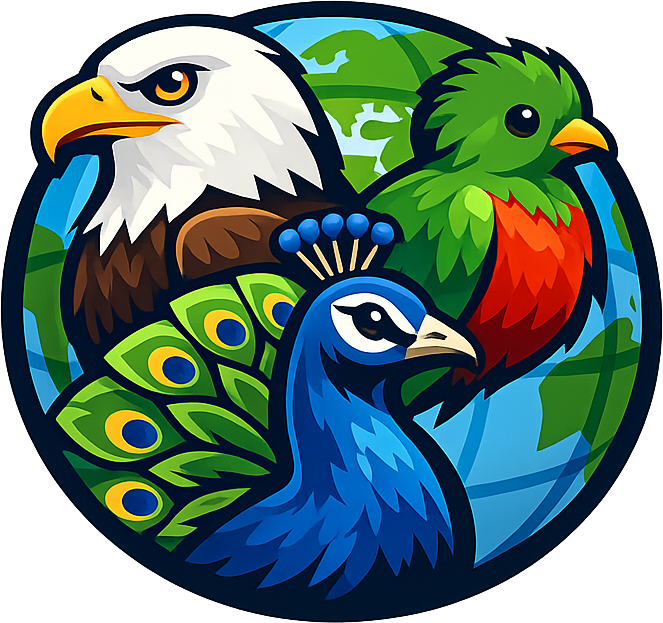
India's national bird is the Indian Peacock, scientifically known as Pavo cristatus. This is the official answer, confirmed directly by the Government of India's National Portal under its "National Identity Elements" section. There is no ambiguity here: the Indian peafowl (the species name) or Indian peacock (the common name for the male) is India's designated national bird, and has been since 1963. The President of India’s site also maintains a page titled “Indian Peafowl” describing the bird at the President’s Estate India's designated national bird.
What Is the National Bird of India? Official Answer

Marcus Chen
4 Apr 2026
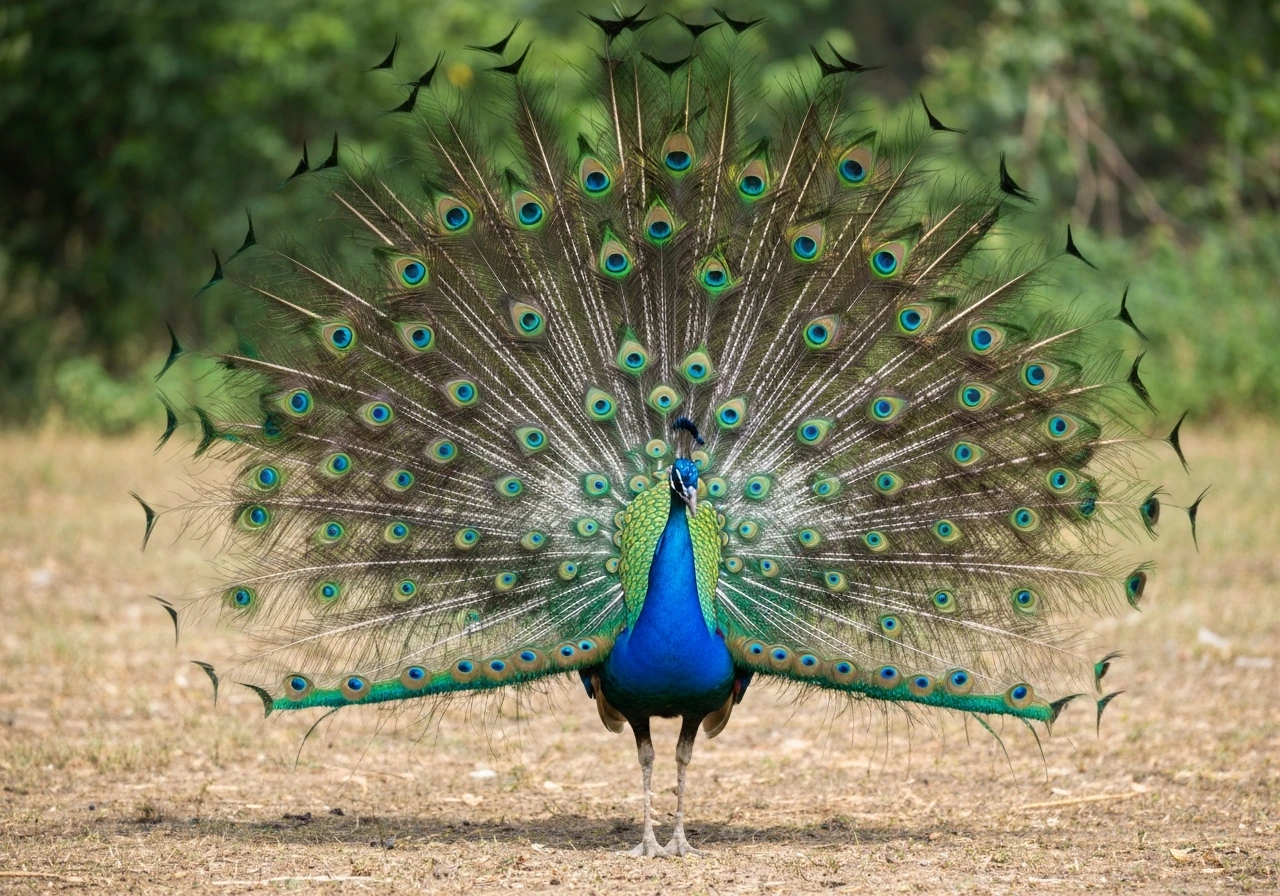
What the Peacock Looks Like
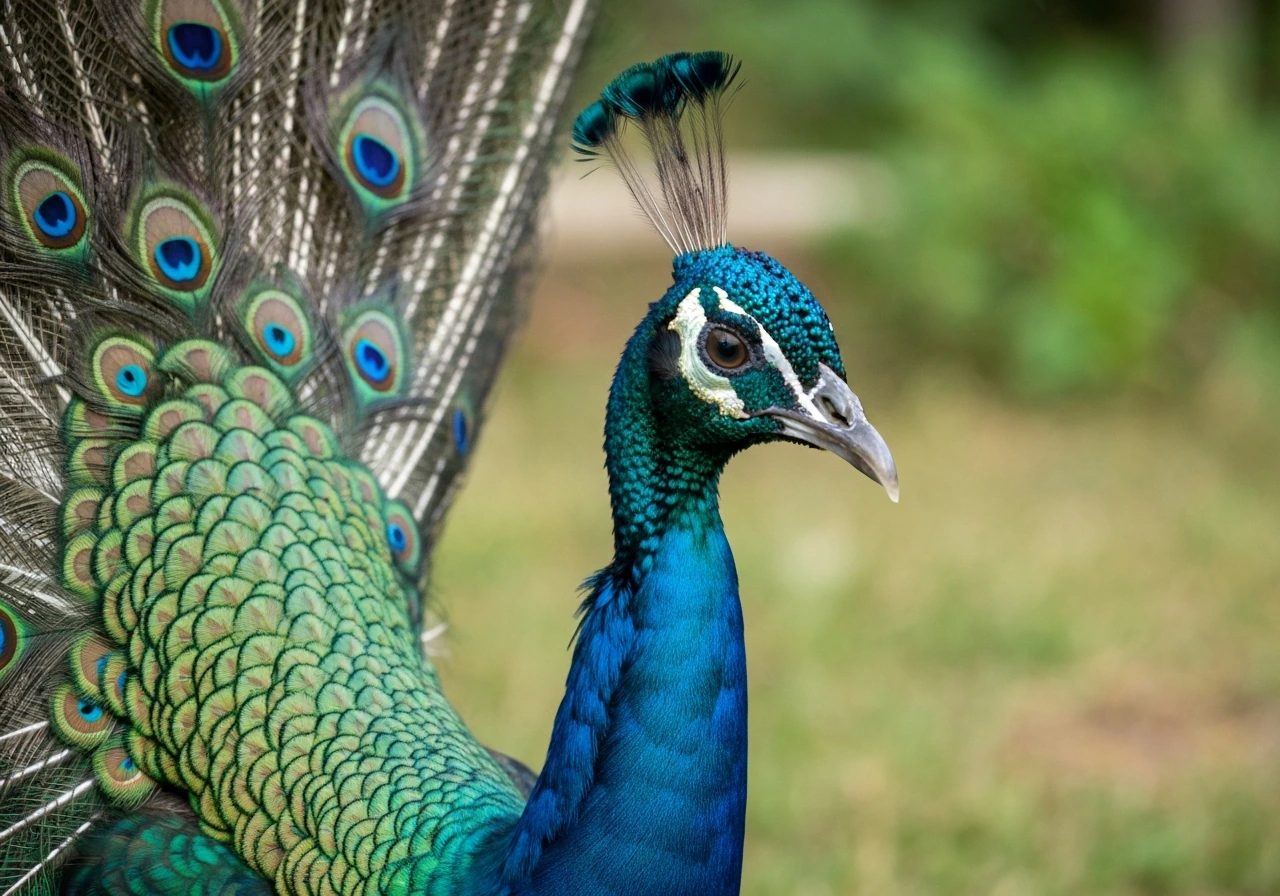
The Indian peacock is hard to miss. The Government of India describes it as a colourful, swan-sized bird with a fan-shaped crest of feathers, a white patch under the eye, and a long, slender neck. The male is the one everyone pictures: brilliant blue-green plumage and that dramatic tail (technically called a "train") made of elongated upper tail-coverts that fan out into the iconic display. The female, called a peahen, is more muted in colour. The species is native to the Indian subcontinent and is found widely across India, Sri Lanka, and parts of Pakistan.
When It Became the National Bird
The Indian peacock was officially designated as India's national bird on February 1, 1963. The decision came from the Government of India and was formally communicated to states and union territories through official notifications. A re-notification document from the Government of Puducherry, for example, explicitly records the declaration of the "Peacock as the National Bird" received from the Government of India, showing how the designation was formally circulated.
The timing matters: 1963 was a period when India was actively formalizing its national symbols after independence. The lion capital became the state emblem, the Bengal tiger was later named the national animal (1973), and the lotus was chosen as the national flower. The peacock fit naturally into this project of building a distinct national identity rooted in India's own cultural landscape.
Why the Peacock? Symbolism and Cultural Meaning
The peacock was not a random pick. It carries deep roots in Indian culture, mythology, and religion, which made it a strong candidate for a symbol representing the entire country.
- Hindu mythology: The peacock is the mount (vahana) of Kartikeya, the god of war and son of Lord Shiva. It also appears prominently in stories connected to Lord Krishna, who famously wore a peacock feather in his crown.
- Cultural presence: The bird has been depicted in Indian art, architecture, and textiles for thousands of years, from Mughal miniature paintings to temple carvings.
- Greek and wider mythology: The Indian peafowl is also venerated in Greek mythology, connected to the goddess Hera, showing its ancient cross-cultural significance.
- Aesthetic richness: The peacock's display of colours was seen as a reflection of India's own cultural diversity and natural beauty.
- Conservation value: The peacock is native to India and is protected under the Wildlife Protection Act of 1972, which gives its national symbol status real legal weight.
As the Times of India has noted, the peacock holds "a special place in Indian culture and mythology," which is precisely why it was chosen over other candidates. It is not just a pretty bird. It is woven into the country's stories, rituals, and artistic traditions in a way few other animals are.
The National Bird in Hindi
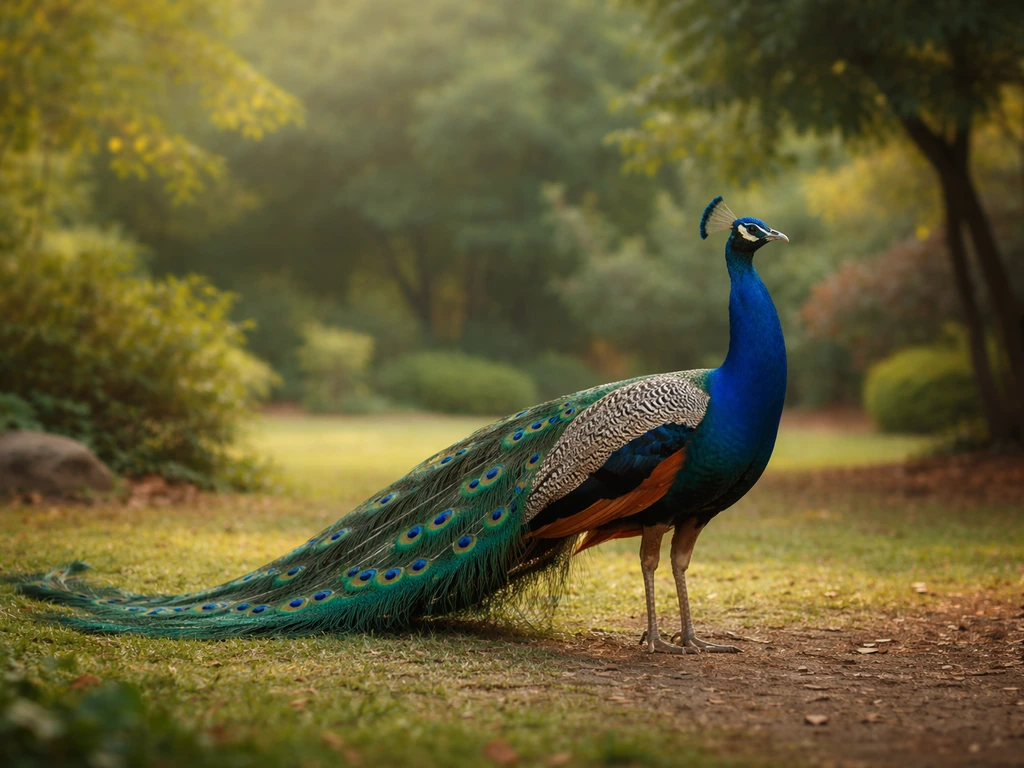
In Hindi, the peacock is called मोर (Mor). The full phrase "national bird of India" translates to राष्ट्रीय पक्षी (Rashtriya Pakshi), so you will often see it written as भारत का राष्ट्रीय पक्षी मोर है, which simply means "The national bird of India is the Mor (Peacock)." The word Mor is used universally across Hindi-speaking regions and is how the bird is referred to in school textbooks, government documents, and everyday conversation across much of India.
If you are a student filling in an exam answer, the correct phrasing in Hindi is: भारत का राष्ट्रीय पक्षी मोर (Pavo cristatus) है। That covers both the Hindi name and the scientific name, which most exams expect.
National Bird vs. State Bird: What People Get Mixed Up
A lot of people search for the "state bird of India" and end up confused. Here is the simple clarification: India has one national bird (the peacock, for the whole country), but every individual state also has its own separate state bird. These are two different things.
Each of India's states has its own set of state symbols, including a state animal, state bird, state flower, and state tree. These vary widely. For instance, the national bird of West Bengal is the White-throated Kingfisher, which is completely different from India's national bird. Similarly, the national bird of Jammu and Kashmir is the Black-necked Crane, also distinct from the peacock.
So when someone asks "who is the state bird of India," there is no single answer because "state bird" refers to the individual states' chosen birds, not one national symbol. If you want the one bird that represents all of India, that is the peacock, full stop.
How India Compares to Its Neighbors
It is worth knowing that nearby South Asian countries have their own national birds, and they are all different. The national bird of Pakistan is the Chukar Partridge, locally called the Chakor. If you are curious about the reasoning behind that choice, understanding why the Chakor is the national bird of Pakistan gives interesting context about how neighboring countries approach national symbolism differently. The national bird of Bangladesh is the Oriental Magpie-Robin, called the Doel in Bengali.
| Country | National Bird | Local Name |
|---|---|---|
| India | Indian Peacock (Pavo cristatus) | Mor (मोर) |
| Pakistan | Chukar Partridge | Chakor |
| Bangladesh | Oriental Magpie-Robin | Doel |
| Nepal | Himalayan Monal | Danphe |
Memes, Jokes, and Wrong Answers Going Around Online
If you have seen memes or social media posts suggesting that India's national bird is something other than the peacock, those are jokes. A common format involves replacing serious answers with absurd ones (crows, pigeons, or fictional birds) for comedic effect. None of those are real. The official, government-confirmed answer is the Indian Peacock, Pavo cristatus, designated on February 1, 1963.
Another misconception that circulates is that the peacock's status was changed or revoked at some point. This is false. The peacock remains India's national bird as of today. No announcement has been made changing this designation. If you ever want to verify, the Government of India's official portal (india.gov.in) lists it under National Identity Elements.
There is also occasional confusion caused by people conflating the national bird with state birds, as covered earlier. Someone from West Bengal might casually call the Kingfisher "India's bird" because it is their state bird, but that is a local symbol, not the national one.
If You Want to Draw the National Bird
Students and kids often look this up for school projects. If you need to draw the peacock for a project, there are structured guides that walk you through it step by step. You can find help with how to draw the national bird of India if you want a practical breakdown of sketching the peacock's distinctive crest, neck, and tail feathers. There are also general guides on how to draw a national bird that cover technique applicable to any country's emblem bird. And if your project covers the broader region, how to draw the national bird of Nepal (the Himalayan Monal) follows a similar structured approach.
The Quick-Reference Summary
- Official national bird of India: Indian Peacock (Indian Peafowl)
- Scientific name: Pavo cristatus
- Hindi name: मोर (Mor)
- Designation date: February 1, 1963
- Chosen for: Deep cultural, mythological, and aesthetic significance in Indian tradition
- Legal protection: Protected under India's Wildlife Protection Act, 1972
- Not to be confused with: State birds, which each Indian state designates independently
FAQ
Is the national bird “Indian peacock” or the “Indian peafowl,” and does it matter which one I mention?
“Indian peacock” is the common name for the male, but the national bird designation covers the species Pavo cristatus in general. In real-world photos, you may see females (peahens) too, which look different, but they are still the same national bird.
What is the best way to write the answer for school, only the bird name or also the scientific name?
If your assignment allows both, write “Indian peacock (Pavo cristatus).” If it requires only one, the safest exam phrasing is “Indian peacock,” followed by the scientific name in parentheses, since the article’s official identification uses both.
Does the national bird change in different parts of India or different languages?
No, the national bird does not vary by language or region within India. Hindi calling it “मोर (Mor)” is just the local name for the same bird, Pavo cristatus.
How do I avoid confusing the national bird with my state’s bird in my homework answer?
For exams that specifically ask “national bird of India,” you should not mention any state bird. For example, even if your state’s bird is the Kingfisher or the Black-necked Crane, those are separate symbols chosen by the state.
What detail can I add so my project clearly shows I picked the right bird (and not a random peacock-like bird)?
If you are making a poster or writing a short note, include one clear detail that matches the national bird, like the long display tail (often called a “train”) and the fan-shaped crest. This helps graders recognize you did not mix it up with a different species.
What should I do if I find online posts saying India’s national bird is something else?
A meme claiming a different “national bird” is not just incorrect, it is usually a joke format. For a reliable check, match the answer to the Government of India’s “National Identity Elements” listing rather than social media claims.
Has India ever changed its national bird, and how can I confirm the designation date?
There has been no official change or revocation mentioned in the article. If you need to confirm for a report, cite the bird as Pavo cristatus and use the stated designation date (February 1, 1963) to show it is the original, not a rumor-driven update.
If I answer in Hindi, should I write only “मोर (Mor)” or include “Pavo cristatus” too?
“Mor” is widely used for peafowl in Hindi-speaking regions, but the official national identity uses the Indian peacock, Pavo cristatus. If your teacher expects accuracy, keep “Mor” as a translation and also include the scientific name.