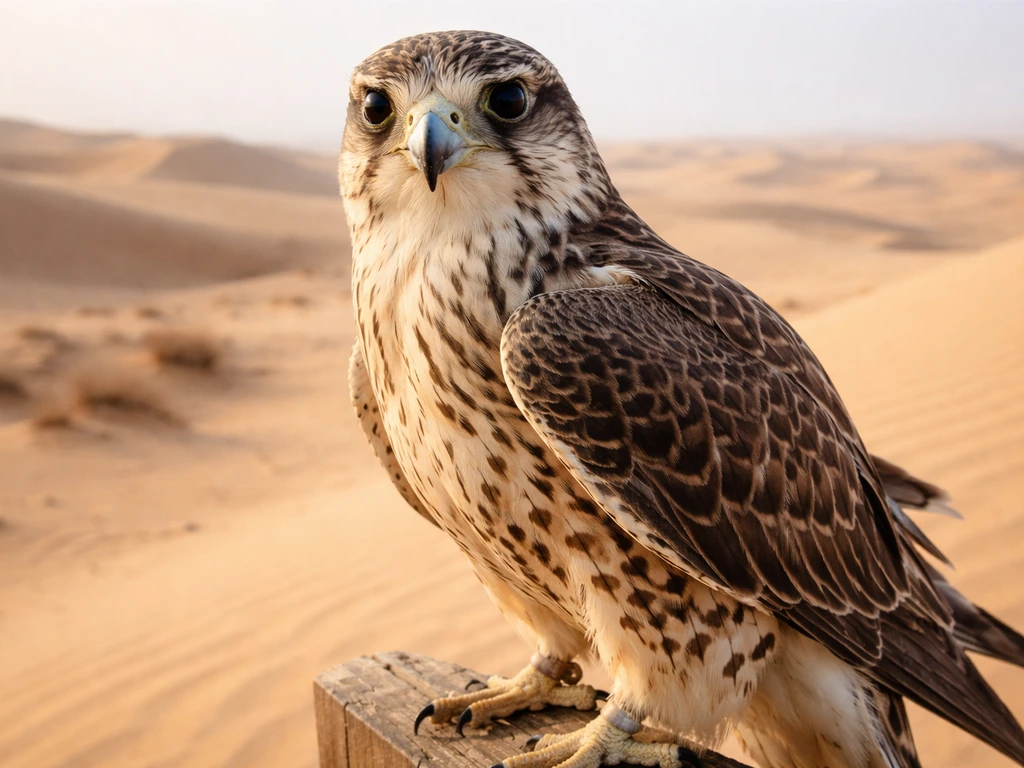
Qatar's national bird is the falcon. Specifically, the two falcon species most closely tied to Qatar's identity are the Saker Falcon (Falco cherrug), known locally as the "Hur," and the Peregrine Falcon (Falco peregrinus), called the "Shaheen." Both are deeply woven into the country's heritage, but when Qatar references its national bird, it's this broader falcon identity rooted in thousands of years of falconry tradition. If you’re wondering what is the national bird of Iraq, the answer is also tied to the region’s local symbolism.
What Is the National Bird of Qatar? Facts and Meaning

Marcus Chen
14 May 2026
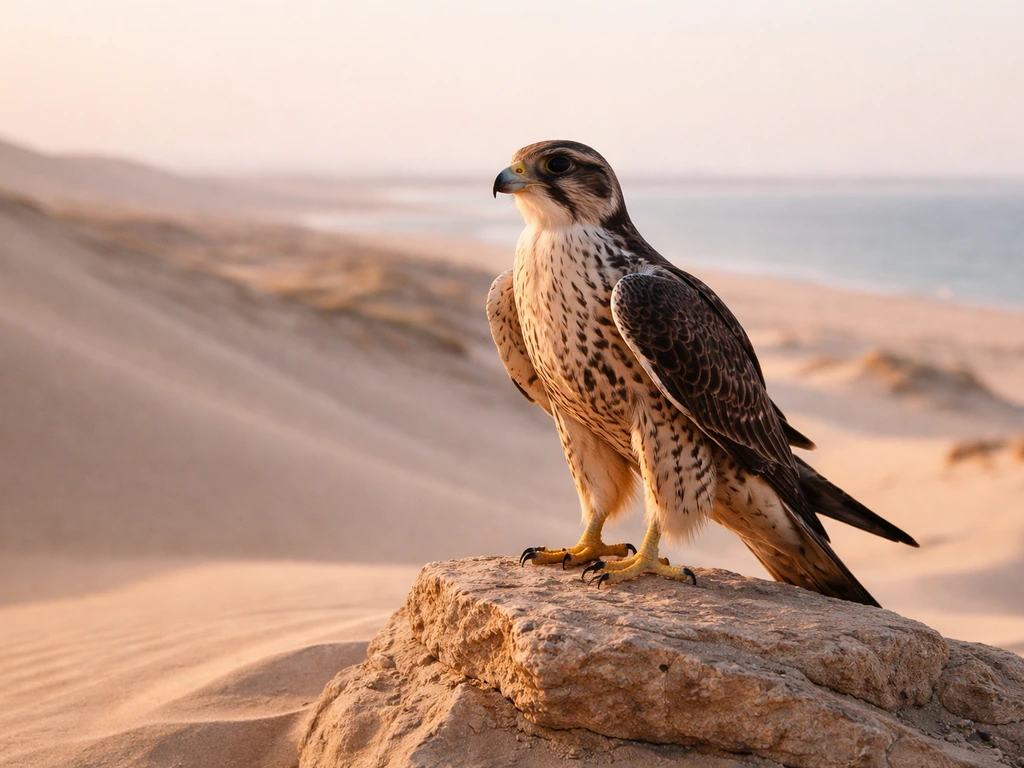
What exactly is Qatar's national bird?
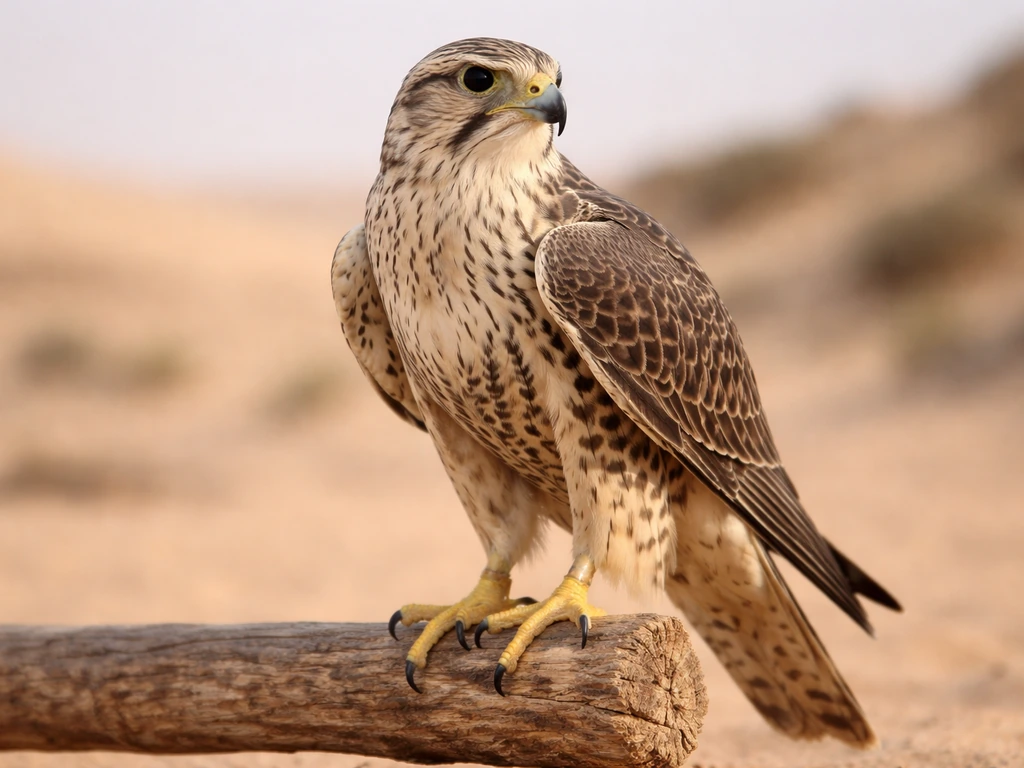
The falcon is Qatar's official national bird, confirmed by Visit Qatar, Qatar's Ministry of Culture, and referenced across national media. Rather than pinning the designation to one single species, the national symbol draws from the two falcons most central to the Gulf's falconry culture: the Saker and the Peregrine. These birds are not interchangeable in the field, though, so it helps to know the difference.
How to identify a Saker Falcon (Hur)
The Saker Falcon is a large, powerful bird. Adults typically show a pale, streaked brown plumage on the upperparts with a whitish head and relatively faint facial markings compared to other falcons. Its wingspan can reach around 120 cm. Falconers prize it for its strength and stamina, which makes it ideal for hunting larger quarry like the Houbara bustard.
How to identify a Peregrine Falcon (Shaheen)
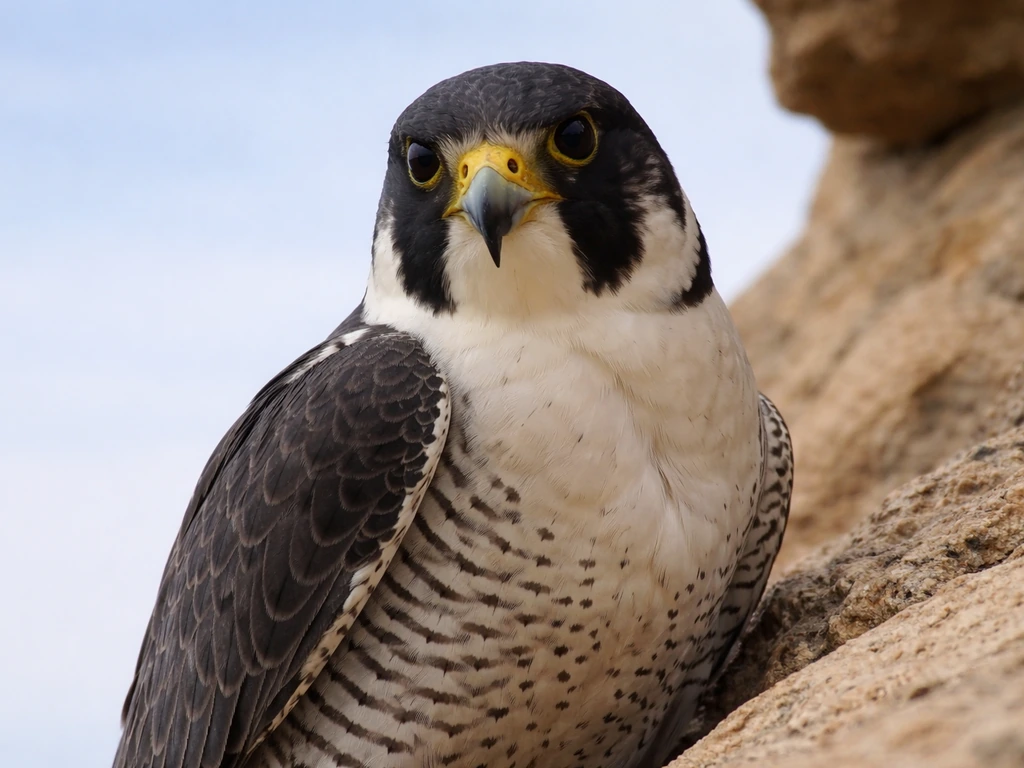
The Peregrine is arguably the more recognizable of the two. Adults have a dark, almost black crown and a bold dark moustache stripe that contrasts sharply with a clean white throat and cheek patch. The underparts are pale and heavily barred. It's a compact, athletic bird built for speed, and that speed is no myth: the Peregrine is the fastest recorded animal on earth, clocking dive speeds of up to 389 km/h. The Qatar Tribune PDF issue (via qatar.qa) also describes the Peregrine Falcon as the fastest recorded animal, with dive speeds of up to 389 km/h fastest recorded animal on earth.
Where these falcons are found in and around Qatar
Qatar's landscape is mostly flat, arid desert with some coastal mudflats and open water, and falcons are well suited to all of it. Qatar e-Nature lists the habitat categories for both the Saker and Peregrine Falcon in Qatar as desert, fields, and water. In practice, that means you can spot them in open desert stretches, along agricultural edges, and around coastal areas where wading birds and waterfowl provide easy hunting.
The Peregrine is a regular passage migrant and winter visitor in Qatar, while Sakers are more commonly seen in falconry contexts, often arriving during the hunting season which starts in October. Wild Peregrines can sometimes be seen stooping at shorebirds along the coast, while Sakers in the wild tend to favor open, flat terrain that mirrors the steppe environments of their Central Asian breeding grounds.
Why Qatar chose the falcon as its national symbol
The choice of the falcon isn't ceremonial or arbitrary. It goes straight to the heart of how Bedouin communities survived in the desert. Falconry as a practice is estimated to be over 5,000 years old, with origins traced to Iran before spreading across the Middle East over centuries. For desert nomads in Qatar and across the Gulf, falcons were working partners: they hunted fresh meat, including Houbara bustard, partridge, pigeon, and wild rabbit, at a time when refrigeration and steady food supplies simply didn't exist.
The falcon's qualities, its speed, precision, obedience to a trained handler, and its wild instincts held in balance with human partnership, made it a symbol of exactly the values that Gulf society admired: strength, discipline, and loyalty. Choosing the falcon as a national emblem isn't just nostalgia. It's an acknowledgment that this bird helped define how Qatar's ancestors lived and endured.
Today, that connection is institutionalized. Qatar has dedicated falcon souqs, specialized falcon hospitals, and a full calendar of falconry events. The falconry season opens in October, and visitors can observe the tradition as an active, living practice rather than a museum piece. UNESCO recognized Arabian falconry as an Intangible Cultural Heritage of Humanity, which gives that national symbol a global endorsement.
How this designation was established and what the sources say
The national bird status is cited by Qatar's official tourism authority, Visit Qatar, in both English and Arabic. In the same way, people often ask what the national bird of Dubai is and which species it represents. The Ministry of Culture reinforces this through its falconry heritage pages, naming the Saker (Hur) and Peregrine (Shaheen) as the two principal falcon types in Qatar's falconry tradition. The Qatar Tribune has also referred to the falcon as the country's national bird in published print editions.
It's worth noting that Qatar's national designation sits at the level of "falcon" as a type rather than naming one single species by Latin name in a formal decree, at least in any widely available public document. This is consistent with how the bird functions culturally: both the Saker and Peregrine are flown, traded, and celebrated, with the Saker often considered the more prestigious falconry bird in Gulf tradition and the Peregrine the more ecologically widespread in Qatar's wild bird records.
An interesting cultural-art footnote: Hamad International Airport in Doha features a large public sculpture simply titled "Falcon" by artist Tom Claassen, described by Qatar Museums as an abstract representation of Qatar's national bird. That kind of integration into public infrastructure speaks to how seriously the symbol is taken at a national level.
Interesting facts worth knowing
- The Peregrine Falcon is the fastest animal ever recorded, reaching dive speeds of up to 389 km/h.
- Qatar's Ministry of Culture identifies the two main falconry species as the Saker (Hur) and Peregrine (Shaheen), each with distinct hunting strengths.
- Falconry in Qatar targets Houbara bustard, partridge, pigeon, and wild rabbit, and in some cases even gazelles.
- The falconry season in Qatar starts in October, drawing enthusiasts from across the Gulf and internationally.
- Qatar has purpose-built falcon hospitals that provide veterinary care specifically for these birds, reflecting the economic and cultural importance placed on individual birds.
- A single prize Saker or Peregrine Falcon in Gulf falconry markets can sell for tens of thousands of dollars.
- The falcon motif appears throughout Qatari visual culture, from state crests to architecture to public art at the country's flagship international airport.
- UNESCO recognized Arabian falconry as an Intangible Cultural Heritage of Humanity, a designation that covers Qatar alongside other Gulf nations.
How Qatar's falcon compares to its Gulf neighbors
Qatar isn't alone in this choice. Falcons hold national or deeply symbolic status across the entire Gulf region. The UAE, Saudi Arabia, Bahrain, Kuwait, and Oman all share the falconry tradition and much of the same reverence for the bird. Oman's national bird is also the falcon, but the specific species and traditions can vary from country to country what is the national bird of oman.
W hile Qatar uses the falcon as its national bird, people often ask what Kuwait's national bird is as well. Saudi Arabia's national bird is the falcon, reflecting the long-standing falconry tradition across the Arabian Peninsula. The UAE's national bird is also the falcon, and the story of why falconry became so central to Gulf identity follows the same thread: survival in a harsh desert environment, translated over generations into a cultural institution.
The UAE also uses the falcon as a national symbol, rooted in falconry traditions across the Gulf. If you're exploring the national birds of neighboring countries, you'll find strong parallels, though each nation brings its own regional nuances to which species it favors and how the tradition is practiced today. If you're curious what is the national bird of Dubai, it also fits into the broader falconry traditions that shaped Gulf identity.
Jordan's national bird is also popularly identified as the falcon, so you can learn what species is recognized there by checking the same national bird sources. Bahrain’s national bird is the bulbul, a small songbird often associated with the country’s natural heritage what is the national bird of bahrain.
| Country | National Bird | Primary Falconry Species |
|---|---|---|
| Qatar | Falcon | Saker (Hur), Peregrine (Shaheen) |
| UAE | Falcon | Saker, Peregrine |
| Saudi Arabia | Falcon | Saker, Peregrine |
| Bahrain | Falcon (Hawar Islands) | Peregrine |
| Kuwait | Falcon | Saker, Peregrine |
| Oman | Falcon | Saker, Peregrine |
The shared falcon identity across these countries reflects a genuinely shared history. The Bedouin falconry tradition didn't follow modern borders; it followed the same desert geography and the same migratory patterns of prey birds across the Arabian Peninsula. Qatar's designation of the falcon as its national bird is, in that sense, both a local statement of identity and a regional one. For a quick country-by-country contrast, see what is the national bird of saudi arabia next.
FAQ
Is Qatar’s national bird a specific falcon species or just the falcon in general?
In practice, Qatar’s national bird is treated as the falcon category (the “falcon” identity), with the Saker (Hur) and Peregrine (Shaheen) highlighted as Qatar’s key falcon types. So if you need one answer for a quiz, use “falcon,” and if you need names for context, cite Hur and Shaheen.
Why do some sources mention the Shaheen or Hur instead of “falcon” only?
Because Qatar’s cultural and falconry heritage often emphasizes those two flagship species. The national symbolism uses the broader falcon identity, but the public-facing falconry tradition commonly explains the Hur and Shaheen as the principal species to know.
Can you tell the Saker (Hur) and Peregrine (Shaheen) apart quickly?
Yes, a fast field clue is the Peregrine’s dark crown and bold moustache stripe with a contrasting pale throat, while the Saker usually shows a paler, streaked brown look on the upperparts with a more lightly marked face. Their hunting behavior differs too, Peregrines are often linked with coastal stoops on birds.
When is the best time in Qatar to see falcons associated with falconry tradition?
The falconry season begins in October, which is when sightings and related activities typically increase. For wildlife-style viewing, Peregrines are more regularly seen as passage migrants and winter visitors, while Sakers are more commonly encountered through falconry contexts.
Are falcons in Qatar protected, and is it legal to approach or interfere with them?
Falcons are protected wildlife and also part of a regulated cultural tradition. Even if you see them near open fields or coastlines, avoid getting too close, do not disturb handlers, and treat any near-human activity as part of an organized program rather than an open-access encounter.
Do falcon hospital and souq programs mean Qatar still hunts wild quarry?
Falconry today focuses on the training, care, and management of birds, and the hunting aspect is governed by rules and seasonal permissions. The existence of falcon hospitals and souqs mainly reflects conservation-minded husbandry and cultural continuation, not uncontrolled hunting.
If I am writing a travel quiz or school answer, what is the safest exact wording for Qatar’s national bird?
Use “the falcon” as the national bird. If the question allows extra detail, add that Qatar’s principal falcon types in its falconry heritage are the Saker (Hur) and the Peregrine (Shaheen).
Does Qatar’s national-bird designation differ from neighboring Gulf countries’ national birds?
They share the broader falconry heritage, but national symbols can be handled differently, sometimes emphasizing the falcon and sometimes specifying other birds in the national context. If you’re comparing countries, confirm whether each asks for “falcon” broadly or for a named species.
Next Article
What Is the National Bird of Kuwait? Meaning and Facts
Find Kuwait’s national bird, what it symbolizes, why it was chosen, and how to spot conflicting listings online.