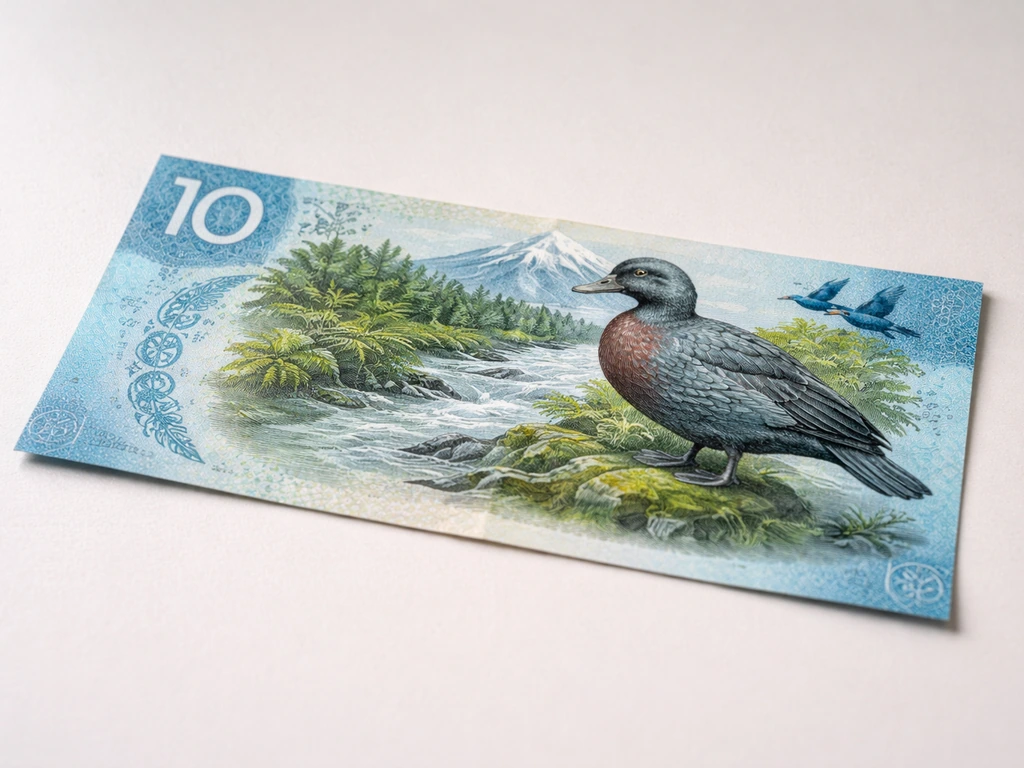
The bird on the New Zealand $10 note is the whio, also known as the blue duck. It appears on the back (reverse) of the note, alongside native plant imagery, while the front features suffragist Kate Sheppard. This has been the case since the early 1990s redesign, and the current Series 7 'Brighter Money' polymer notes (introduced from late 2015) keep the same pairing.
What bird is on the NZ 10 dollar note? Identify it fast

Marcus Chen
16 May 2026
Where the whio appears on the note
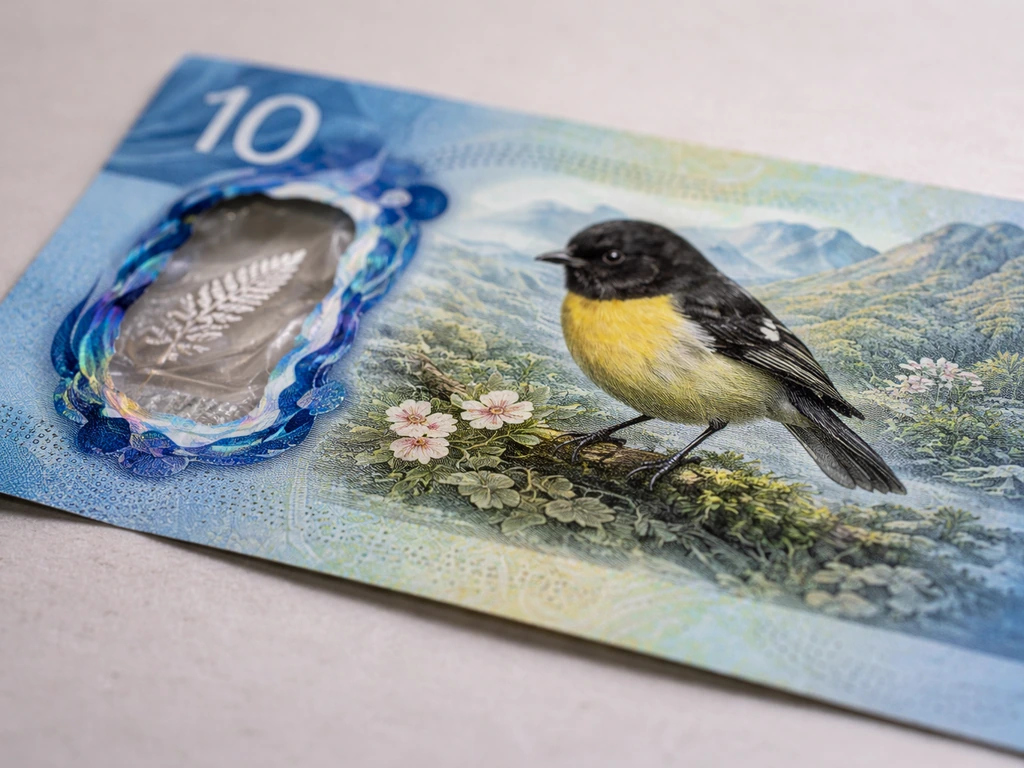
Flip the $10 note over to the back and you'll find the whio illustrated there. The Reserve Bank of New Zealand is explicit about this layout: Kate Sheppard is on the front, the blue duck (whio) is on the back. The bird is depicted in the characteristic blue-grey plumage that gives it the common name 'blue duck,' and it sits alongside native flora in the design.
On the current polymer Series 7 note, there's also a holographic security window. If you hold the note up to the light and look through that window, you should see the bird's silhouette as part of the holographic element, along with a map of New Zealand and a 3-D value feature. This is one of the Reserve Bank's recommended checks for spotting a genuine note.
Older vs newer $10 note designs
If your note looks noticeably different or doesn't show the whio, there's a good chance you're looking at an older series. New Zealand's third-series $10 banknote, which pre-dates the 1991 redesign, featured the kea on the reverse, not the whio. Te Ara describes the third-series $10 banknote as featuring a kea and the Mt Cook lily on the reverse, rather than the whio-on-$10 pairing used later. So the bird on the $10 note has changed over time, which is a common source of confusion.
From 1991 onwards (introduced with a complete redesign of NZ banknotes), the whio has been the bird on the back of the $10. The Series 7 'Brighter Money' notes rolled out from late 2015 kept that same imagery but upgraded the security features significantly, switching to a polymer substrate. Both Series 6 and Series 7 $10 notes show the whio.
| Note Series | Introduced | Bird on Back | Substrate |
|---|---|---|---|
| Third series (pre-1991) | Mid-20th century | Kea | Paper |
| Series 6 (from 1991 redesign) | 1991 | Whio (blue duck) | Paper |
| Series 7 'Brighter Money' | Late 2015 | Whio (blue duck) | Polymer |
Not sure which version you have? Here's how to confirm
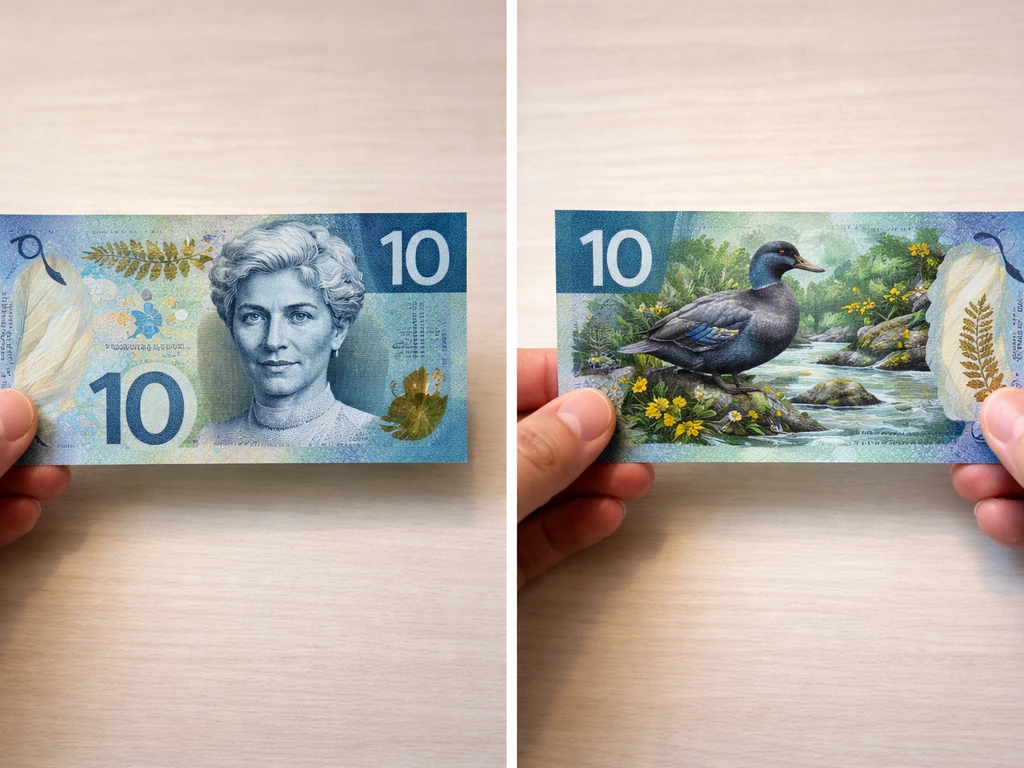
If you have a note in hand and want to pin down exactly which series it is, follow these three steps: The Reserve Bank of New Zealand publishes Series 6 serial-number tools that list serial ranges by year, denomination, prefix range, and serial range.
- Check the front and back layout: the front should show Kate Sheppard and the denomination '10'; the back should show the whio illustration. If you see a different bird (like a kea), you have a pre-1991 note.
- Look at the serial number prefix and year code. The Reserve Bank publishes serial-number range tables for each series. For example, Series 6 $10 notes from 2007 used prefix range AA–DA with year prefix 07. Match your note's serial to the published tables to confirm which series you have.
- Check the material: if the note is plastic-feeling (polymer) and has a clear holographic window, it's a Series 7 note from 2015 or later. Look through the window for the bird silhouette. Paper notes without a clear window are Series 6 or earlier.
What makes the whio significant in New Zealand
The whio (Hymenolaimus malacorhynchos) is one of New Zealand's most distinctive native birds. It's a torrent duck, meaning it lives in fast-flowing mountain rivers and streams in the back country, particularly on the South Island and in parts of the North Island. The Department of Conservation describes it as 'an iconic back-country species,' and its presence on the $10 note reflects New Zealand's deep cultural and conservation commitment to its unique native wildlife.
The name 'whio' is Māori and comes from the male duck's distinctive whistling call. In the South Island, the bird was sometimes referred to as 'ko whio whio,' reflecting the same sound. It's a species found nowhere else on Earth, which is exactly the kind of bird New Zealand wants on its currency.
One thing worth clarifying: the whio being on the $10 note does not make it New Zealand's national bird. Those are two separate things. New Zealand's official national bird is the kiwi (Apteryx mantelli). The banknote birds were chosen by designers and the Reserve Bank to celebrate native species more broadly, not to designate official national emblems. WWF-New Zealand frames the banknote birds collectively as a showcase of the country's unique wildlife, which is a slightly different role to that of a national bird symbol.
Quick facts about the whio
- Species name: Hymenolaimus malacorhynchos
- Common names: Blue duck, whio
- Habitat: Fast-flowing mountain rivers and streams, primarily in New Zealand's back country
- Found only in: New Zealand (endemic species)
- Conservation status: Nationally vulnerable, with active DOC recovery programmes
- Name origin: Māori name derived from the male's whistling call
- Appears on: The back of the New Zealand $10 banknote (Series 6 and Series 7)
The whio in the context of NZ's banknote birds
New Zealand is one of the few countries that consistently features native birds across its entire banknote set. Each denomination has its own bird on the reverse, making the NZ banknote series something of a field guide in your wallet. The $10 and its whio sit alongside other denominations, each celebrating a different endemic or native species.
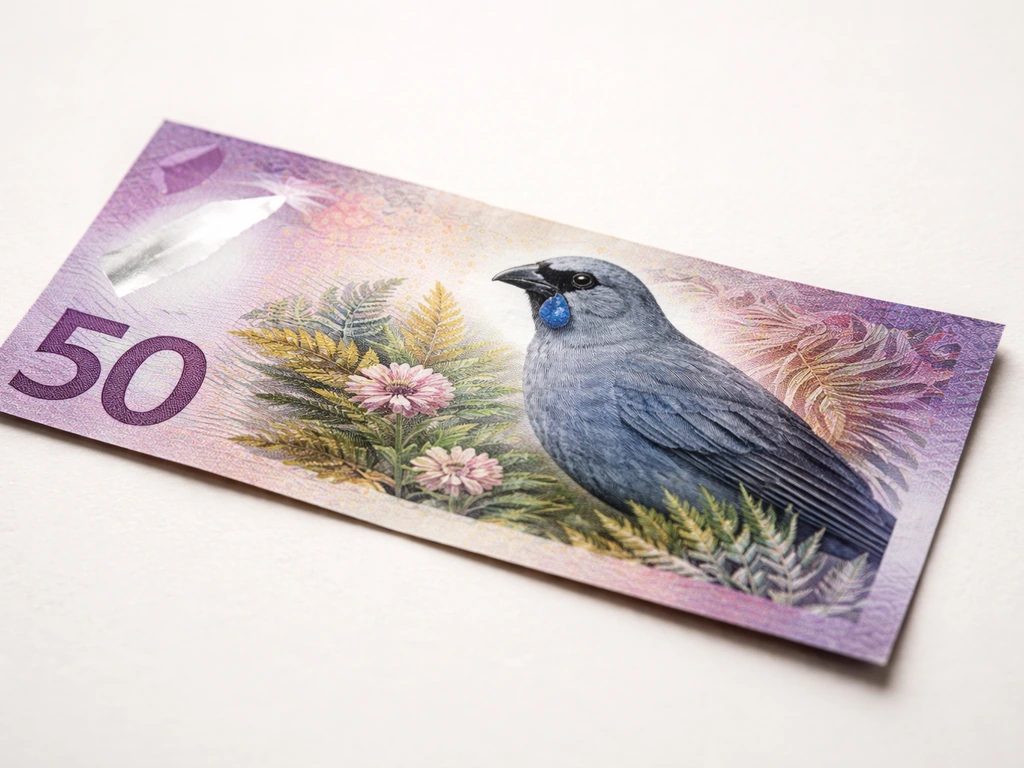
If you're curious about the other notes in the set, the $2 coin, the $20 note, and the $50 note each tell their own native bird story worth exploring. On the NZ 20 dollar note, the bird design is the kererū, also known as the New Zealand pigeon the $20 note. For the $2 New Zealand coin, the bird you see is the kiwi the $2 coin.
For anyone interested in going deeper on the whio itself, the Department of Conservation's website has detailed information on the bird's habitat, behaviour, and the ongoing conservation work to protect it. WWF-New Zealand's 'Banknote Birds' explainer is also a great starting point for understanding how and why these birds were chosen for New Zealand's currency in the 1991 redesign.
FAQ
Is the whio on the front or the back of the NZ $10 note?
It’s on the back (reverse). The front (obverse) shows Kate Sheppard, so if you’re looking at the whio on the wrong side, flip the note over and re-check.
How can I tell if my $10 note is Series 6 or Series 7?
Both show the whio, so the key is the material and security window. Series 7 is the polymer “Brighter Money” family introduced from late 2015, while Series 6 is polymer too but may have different layout details, so compare against a clear “Brighter Money” reference look rather than relying only on the bird.
What should I see when I check the security window?
Hold the polymer note up to the light and look through the holographic security window. You should see a hologram effect that includes the bird’s silhouette along with other elements (like a New Zealand map and a 3-D value feature).
What if my $10 note does not show the whio at all?
That’s a strong sign you have an older design. The pre-1991 reverse bird was the kea, so missing the whio usually means the note predates the 1991 redesign.
Are all $10 notes with the whio the same bird illustration?
The bird is consistently the whio, but the artwork style and security features vary by series. The “fast check” is the bird identity, then fine differences come from the series and production dates.
Does seeing the whio on currency mean New Zealand’s national bird is the whio?
No. The national bird of New Zealand is the kiwi. Banknote birds are selected as native wildlife highlights for the denominations, not as an official national emblem designation.
If I’m not sure whether it’s whio or a similar-looking duck, what visual cue can I use?
Use the distinctive blue-grey appearance associated with the “blue duck” name, plus the fact it sits with native plant imagery on the $10 reverse design. If your note’s reverse has a different bird, it’s likely an older series.
Does the $10 note always pair the whio with native plant imagery?
Yes, in the redesigned layout, the whio is shown alongside native flora on the back. If the reverse artwork looks fundamentally different, you may be looking at a different series or earlier design.
Are there other birds on New Zealand banknotes, and do they all change by series?
In the NZ banknote set, each denomination has its own native bird on the reverse, and the general bird identities are stable across the modern redesign era. Series changes mainly affect security features and material, not the basic denomination-to-bird pairing in the post-1991 layout.